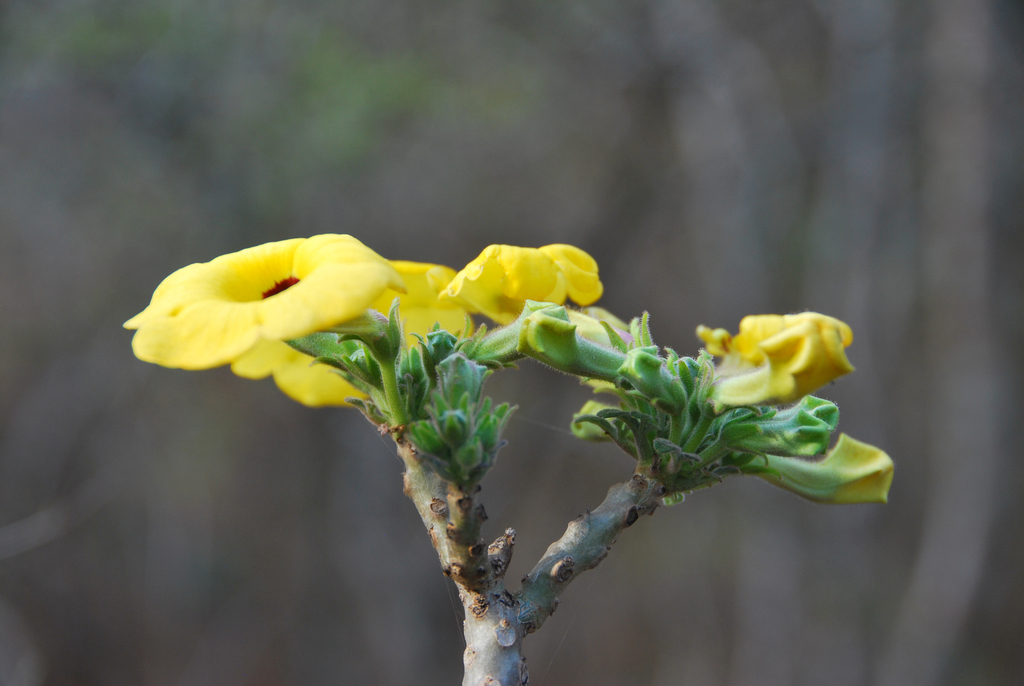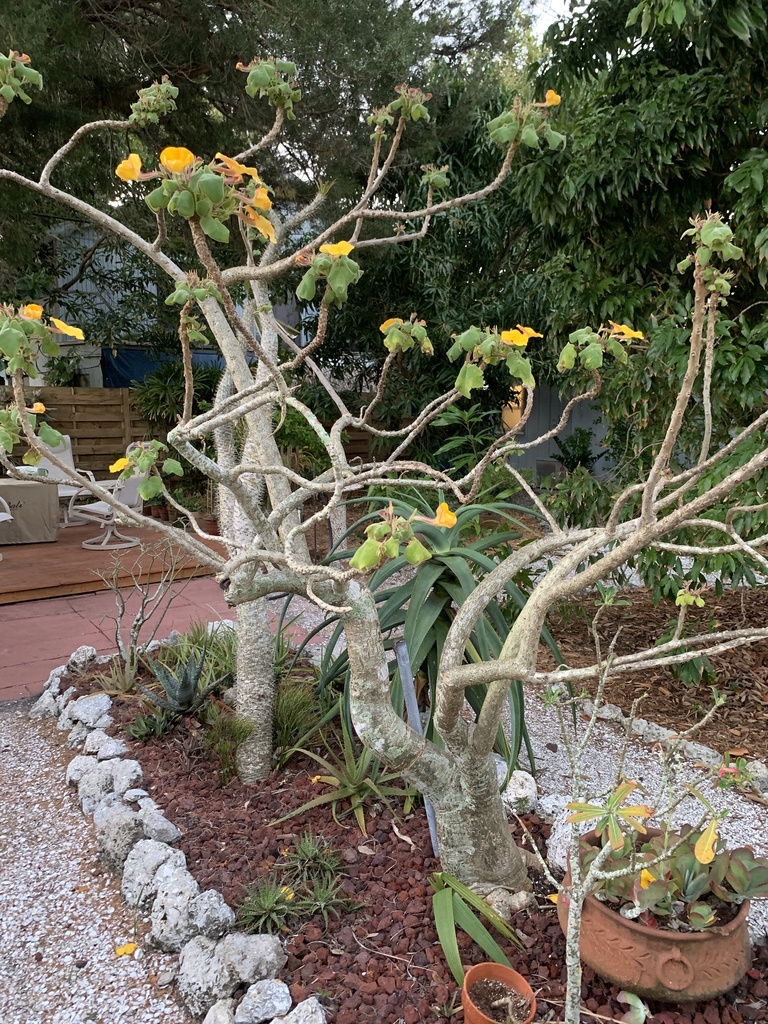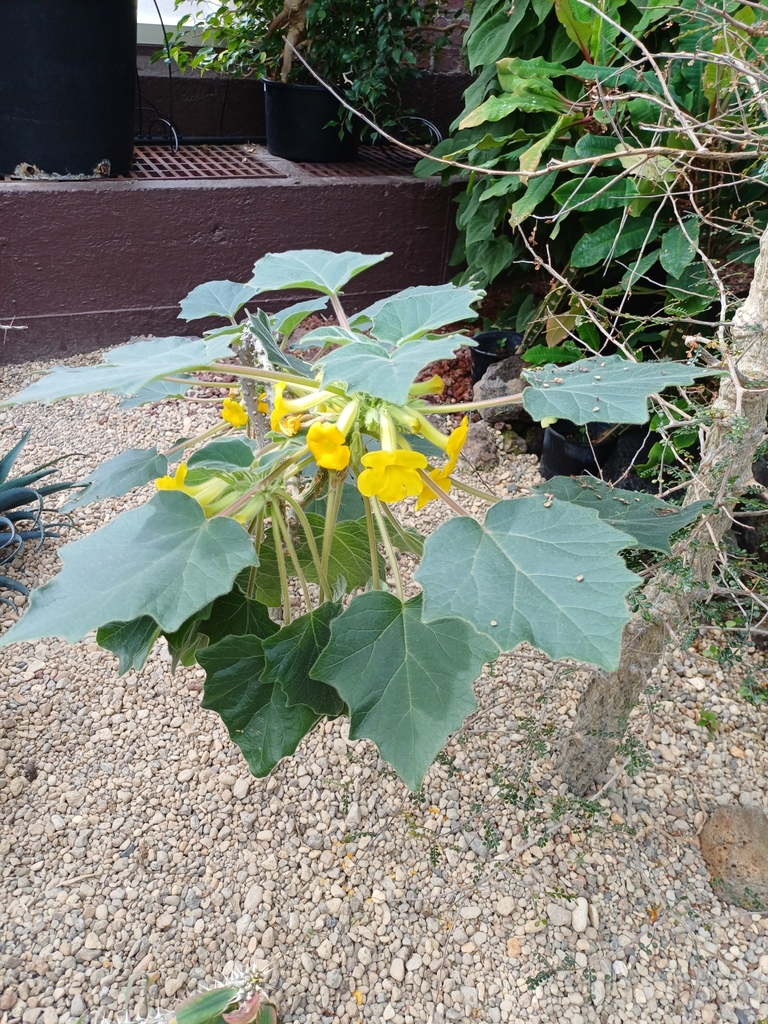
A small-to-medium caudex from southern Madagascar, native to the dry shrubland of the Anosy and Toliara regions. Authority is Rauh, 1996 — a relatively recent description within the genus — with the specific epithet honouring the Swiss plant collector Reto Rösli. Mature plants reach 1–3 m, smaller than grandidieri or decaryi, with heart-shaped, lightly lobed leaves and large 5-petalled summer flowers in pink to magenta — the species' chief draw and a striking contrast to the yellow flowers of its main relatives. The hooked seed pods are the genus's shared feature. Less common in the trade than grandidieri or decaryi, sought out from seed by collectors drawn to the colour.
Native climate
Rain concentrates in the warm season, with a distinct dry season. Overall a warm climate.
* Accurate distribution data is scarce for this species, so these values are taken from the climate near the approximate center of its native range instead.
Sources: climate & elevation WorldClim 2.1 (1970–2000) · occurrences GBIF · native range POWO · current weather Open-Meteo
Care
Light & Placement

A summer-grower from southern Madagascan dry shrubland, used to strong sun and a hard dry season. Full direct sun outdoors during the growing season keeps the compact form tight and supports steady flowering. A 20–30% shade cloth helps through Japan's worst midsummer; raise pots off the ground for airflow. Overwinter on a bright sunny window kept above 8°C and dry, sheltered from rain.
Watering
In active growth, water deeply once the substrate has dried, then dry it out fully again. This species runs a touch drier than the larger Uncarina, and is more rot-prone if pushed. Taper as autumn cools, then go nearly dry through winter, with at most a single light misting per month.
Substrate
Drainage first, inorganic-led. Akadama : Kanuma : pumice = 4:3:3 is reliable. The species is small with modest root development, so a medium-deep pot suits it better than a tall one.
Fertilizer & Supplements
A diluted liquid fertilizer monthly through active growth, or a small pinch of slow-release at repotting. Since this species is grown partly for its flowers, a phosphorus-leaning feed helps stabilize bloom production.
Temperature & Overwintering
Optimal 22–35°C with an 8°C minimum. As a Madagascan species it is cold-sensitive — branch tips suffer below 5°C, and damp soil with cold is fatal. As autumn cools and leaves drop, taper water early and overwinter on a bright indoor window, holding the dry-warm rhythm until spring.

Starting from Seed
Where to source seeds
Pre-sowing treatment
Soak seeds for about half a day (overnight) in a mix of a registered seed-treatment fungicide (Benlate or Daconil) and a plant tonic (Menedael; outside Japan, SUPERthrive or a chelated iron / seaweed extract works similarly), each diluted per label. Any that remain on the surface are usually past their prime. The seed coat is hard, typical of Pedaliaceae — light scarification (gentle abrasion with sandpaper) improves water uptake.
Substrate
Use a separate seedling mix that's fine-grained and near-sterile: fine Akadama, fine Kanuma, and vermiculite in 1:1:1 parts. Sterilizing beforehand reduces damping-off.
Sowing method
Sow with no covering, or only the thinnest dusting so the seeds remain partly visible. Space at least 1 cm apart.
Light & temperature
Bright shade, 25–30°C steady. Germination spreads over 10–30 days; given limited stock circulation, expect more variable results than for the more widespread Uncarina.
Watering
Bottom-water with the level 1–2 cm up the pot. For the first 2–3 weeks, prioritize not letting things dry out, then drop the water level gradually.
Fertilizer
No feeding right after germination. Once true leaves emerge, give diluted liquid fertilizer at double dilution, once or twice a month.
From Germination to Repotting
Germination through true leaves
Continue bottom watering, keep strong light off them.
Weaning off bottom watering
Phase out gradually over 1–2 months.
First repotting
In year one or two, once roots have filled the pot.
Common Pitfalls
Mold & damping-off
- Cause: excess moisture, contamination, poor air flow
- Prevention: sterilize the substrate, refresh the bottom-water, and use a circulation fan
Etiolation
- Cause: insufficient light
- Prevention: move LEDs closer right after germination, or shift the tray to bright shade outdoors
Seeds fail to germinate
- Cause: stale seed, insufficient warmth, hard seed coat blocking water uptake
- Prevention: source fresh seed from reputable sellers given the species' thin trade circulation, lightly scarify before soaking, hold 25–30°C steady on a heat mat
Notes
Mature fruits carry sharp hooks that grip clothing and fingers tenaciously. Use leather gloves when pruning or harvesting seed.