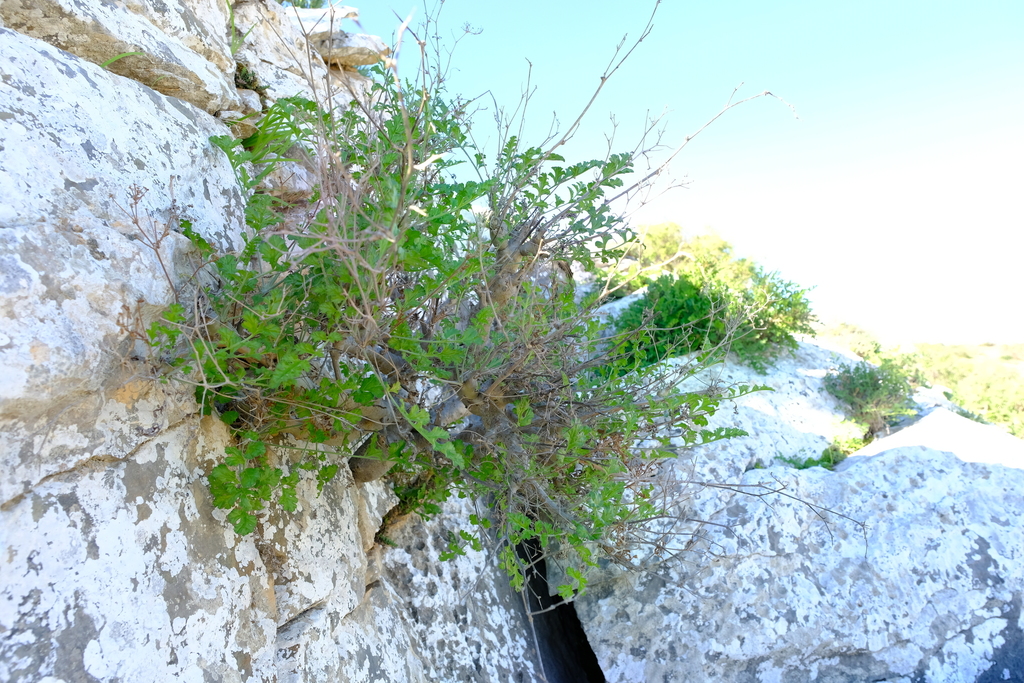
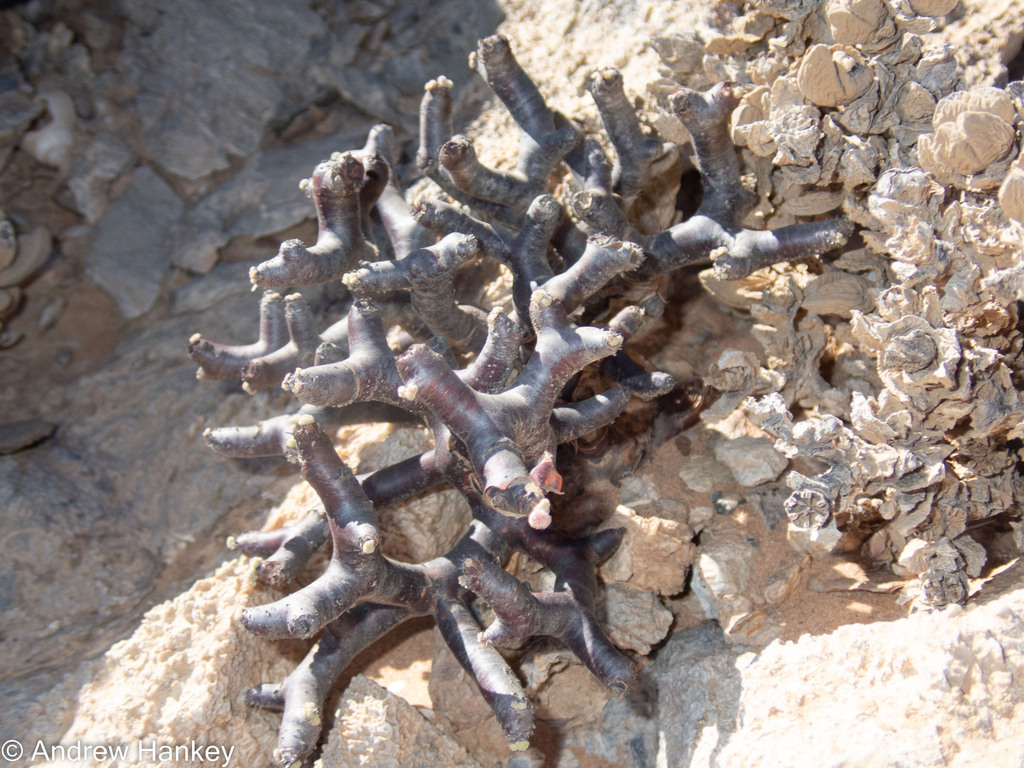
A tuberous Pelargonium from the winter-rainfall belt of South Africa, ranging from the Cape Peninsula north to the southern edge of Namaqualand in the Western and Northern Cape. Authority is (L.) L'Hér., 1789. The epithet triste — Latin for "dull" or "sad" — refers to the unshowy pale yellow flowers marked with dark maroon to nearly black. Above ground there is barely a stem; instead, finely divided, carrot-like leaves spread directly from the half-buried tuber, and at dusk the small flowers release a strong, sweet clove-like scent to attract long-tongued nocturnal moths. Carried back to England by John Tradescant the Younger in 1632, it is one of the very first Cape pelargoniums to enter European cultivation — a classical, beginner-friendly species for anyone starting out from seed.
Native climate
Rain concentrates in the cool season, with a dry season of roughly 6 months. Overall mild, with a wide temperature range.
* Accurate distribution data is scarce for this species, so these values are taken from the climate near the approximate center of its native range instead.
Sources: climate & elevation WorldClim 2.1 (1970–2000) · occurrences GBIF · native range POWO · current weather Open-Meteo
Care
Light & Placement

Native ground runs from the Cape Peninsula north into the southern Knersvlakte — Mediterranean climate, 200–600 mm of rain a year falling almost entirely in winter, dry summers. In habitat the plants sit on sandy slopes and stony flats with the tuber half-buried in grit. During the autumn-to-spring active season in Japan, give it as much direct outdoor or windowsill sun as possible — strong light keeps the petioles short and the foliage tight at ground level. The dangerous season is summer dormancy after the rainy season ends. Move the pot to bright shade out of direct sun (30–50% shade cloth), raise it on a bench, and run a circulation fan. Winter indoors above 5°C on a bright window is straightforward.
Watering
Restart in small amounts in September–October as nights cool, then water thoroughly when the substrate has dried once leaves are out. Cut water in April–May once leaves yellow and drop, and keep dry through summer. Kirstenbosch keeps a few light summer waterings to maintain evergreen plants, but in Japan's hot humid summer full drying is the safe call.
Substrate
Drainage first, inorganic-led. Akadama : Kanuma : pumice = 3:3:4. Native soils are sandy, so a deeper pot that lets the tuber sit comfortably half-buried suits the plant.
Fertilizer & Supplements
Liquid feed at heavy dilution once a month through the active season, or a pinch of slow-release at repotting. The species comes from poor soils — pushing fertilizer elongates the petioles and delays flowering. Nothing through summer.
Temperature & Overwintering
Optimal 15–25°C; minimum around 5°C. Less heat-tolerant than summer-growing pelargoniums; sustained 35°C+ deepens dormancy. Damp soil under cold is fatal — the rule for winter is "kept dry, above 5°C." Summering is harder than overwintering: through June–September, prioritize shade, ventilation and dry soil.

Starting from Seed
Where to source seeds
links go directly to the product page; the rest are scientific-name searches. Stock fluctuates — verify availability on the destination site.
Pre-sowing treatment
Soak seeds for about half a day (overnight) in a mix of a registered seed-treatment fungicide (Benlate or Daconil) and a plant tonic (Menedael; outside Japan, SUPERthrive or a chelated iron / seaweed extract works similarly), each diluted per label. The floating ones are unlikely to be fresh. The seeds are spindle-shaped with a long spiral awn at one end — leave the awn attached and sow as is.
Substrate
A separate seedling mix, fine-grained and near-sterile: fine Akadama, fine Kanuma, and vermiculite in 1:1:1, sterilized with boiling water or a microwave pass. A thin topping of coarse sand helps anchor the awns.
Sowing method
Stand each seed awn-up and press lightly so the body is half-buried. In habitat the awn absorbs moisture and twists to drill the seed into the soil — that mechanism handles the rest.
Light & temperature
Bright shade, 15–22°C. As a winter-grower, heating above 25°C actively suppresses germination. September through November is the right window in Japan; germination takes 10 days to about a month.
Watering
Bottom-water 1–2 cm up the pot. Don't let things dry out for the first 2–3 weeks, then drop the level gradually. Avoid cold water; room-temperature is preferable.
Fertilizer
None right after germination. Once true leaves emerge, a heavily diluted liquid feed once or twice a month. Compared to other winter-growing tuberous species, this one is precocious — leaves spread and the tuber begins to swell in the first season, which makes it one of the easier entries to the genus.
From Germination to Repotting
Germination through true leaves
Continue bottom watering, keep in bright shade.
Weaning off bottom watering
Phase out gradually over 1–2 months.
First repotting
In the first or second year, in autumn, into a deeper pot.
Common Pitfalls
Mold & damping-off
- Cause: excess moisture, contamination, poor airflow
- Prevention: sterilize the substrate, refresh the bottom-water, run a circulation fan
Etiolation
- Cause: insufficient light. The active winter season runs through low-sun months
- Prevention: run an LED close indoors, or move to bright shade outdoors on clear days
Seeds fail to germinate
- Cause: stale seed, temperatures too high
- Prevention: sow as soon as a batch arrives. Skip the heat mat — keep room temperature 15–22°C
Summer stall and rot
- Cause: watering in summer dormancy, or sitting in hot, humid, poorly-ventilated spots
- Prevention: cut water in April–May once leaves yellow; through summer prioritize shade and ventilation, with an air-conditioned room as a legitimate option
Notes
Not CITES-listed; no import restrictions. Most Pelargonium are non-toxic, though sap can irritate sensitive skin.