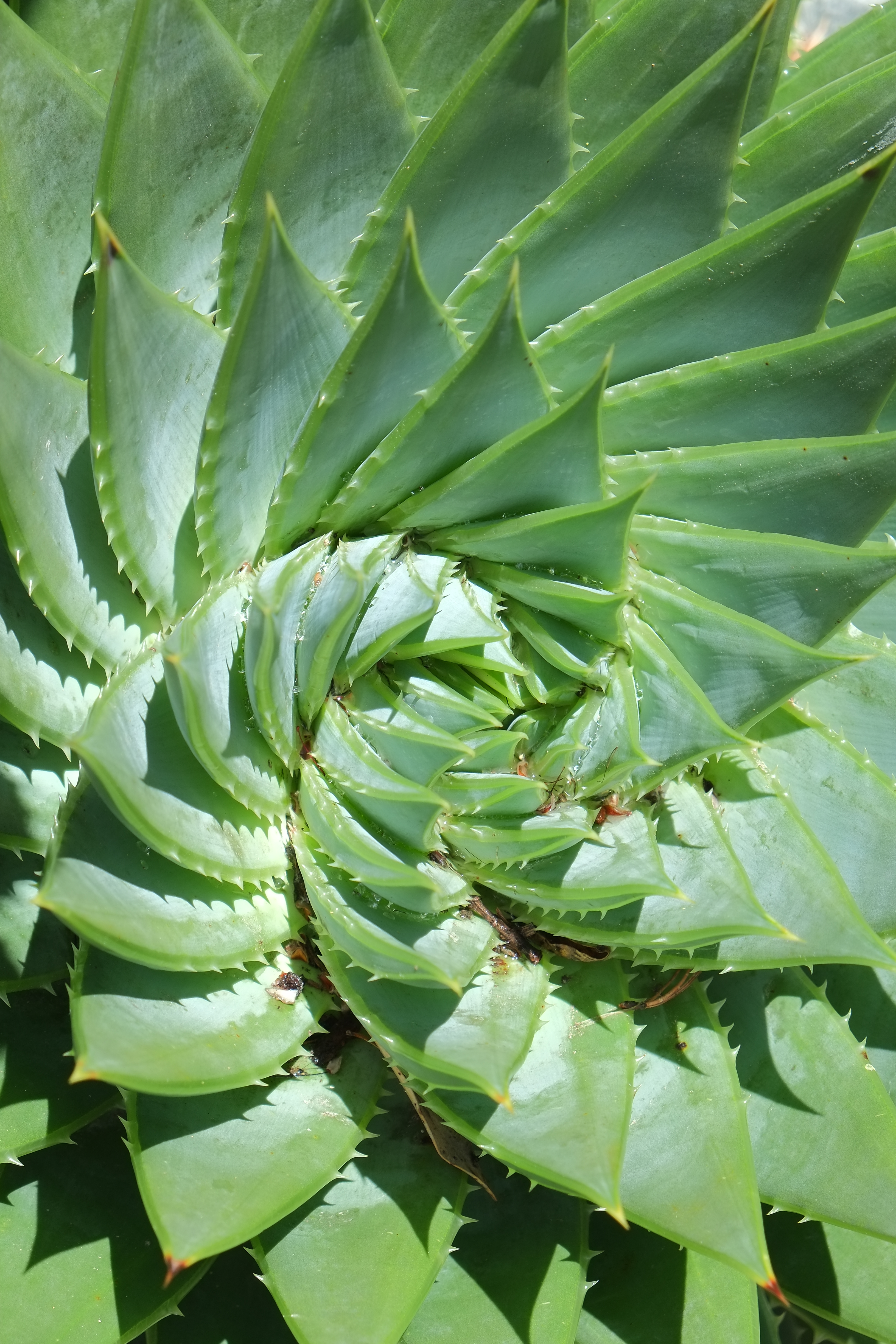
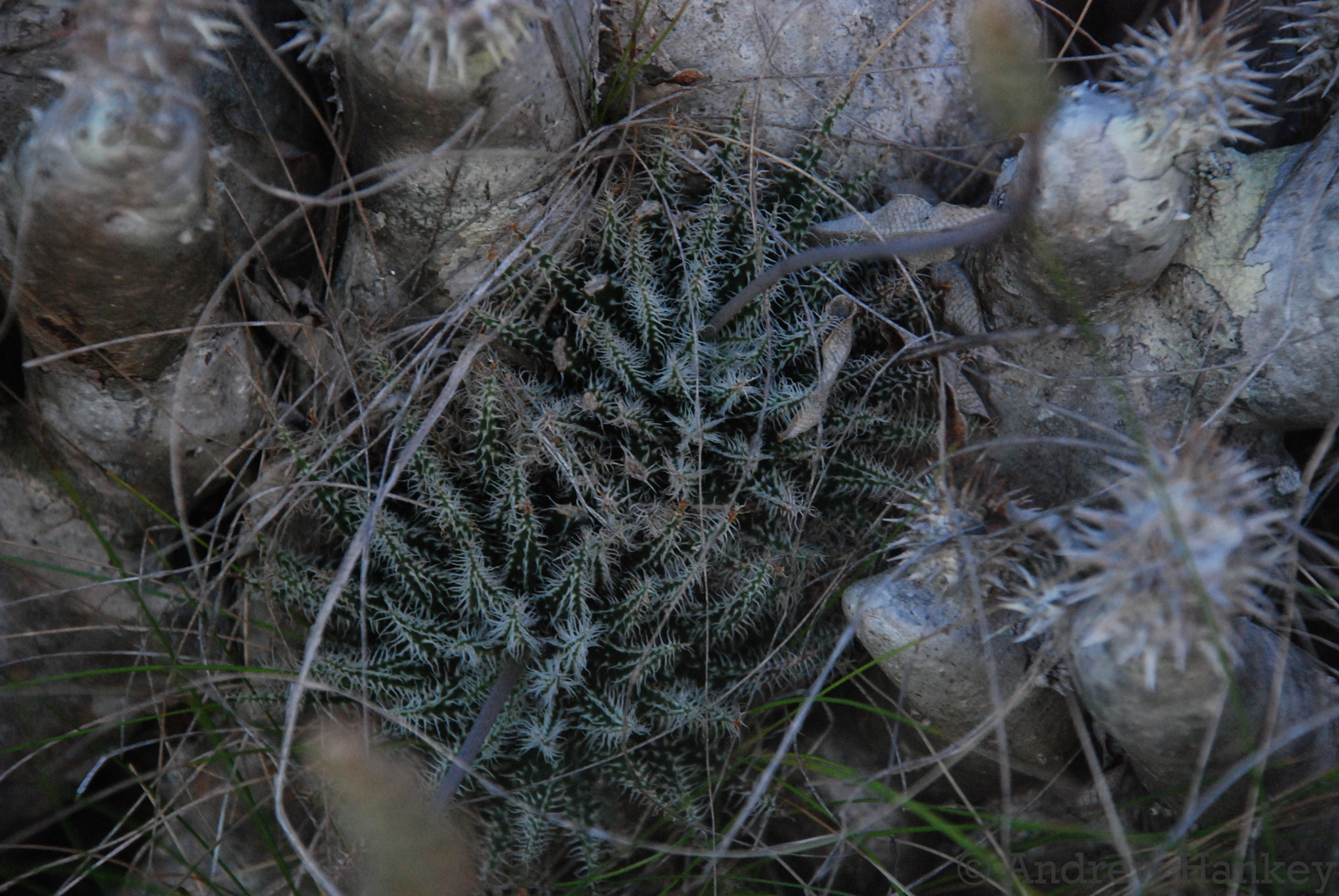
A small rosette aloe from the rocky outcrops and high grasslands of Madagascar's Central Highlands, growing at 1,500–2,000 m around Antananarivo and Antsirabe. The whole plant is clothed in soft white teeth, giving it a remarkably Haworthia-like appearance — the epithet haworthioides ("resembling Haworthia") captures that likeness precisely. The leaf undersides carry fine white hairs, and slender orange tubular flowers rise in autumn to early winter. The entire genus (except A. polyphylla) is listed on CITES Appendix II, so legal documentation accompanies any international trade. Among the smaller Aloes it is on the more tractable end, making it a quiet introduction to highland Madagascar species.
Native climate
Rain concentrates in the warm season, with a distinct dry season. Overall mild, at high elevation.
* Accurate distribution data is scarce for this species, so these values are taken from the climate near the approximate center of its native range instead.
Sources: climate & elevation WorldClim 2.1 (1970–2000) · occurrences GBIF · native range POWO · current weather Open-Meteo
Care
Light & Placement
A spring-and-fall grower from the cool highlands, this species dislikes the combination of high summer heat and humidity in Japan, as well as hard winter cold. Spring and autumn are its active seasons. During those periods, full sun outdoors with good airflow suits it well. Once midsummer arrives, 30–40% shade cloth together with generous ventilation helps it sit quietly through the heat. Move indoors to a bright window once temperatures start dropping in autumn, keeping above 5°C and largely dry through winter.
Watering
During active growth, water thoroughly once the substrate has fully dried. In the hot midsummer period, hold back considerably to avoid rot from stagnant warmth. Through winter, almost no water is needed — a small amount once a month is plenty.
Substrate
A well-draining, primarily inorganic mix. Small-grain Akadama : Kanuma : pumice = 4:3:3 is a reliable starting point. A taller pot suits the small plant well and makes the wet-dry cycle easier to manage.
Fertilizer & Supplements
A small amount of slow-release fertilizer in spring and autumn, plus a diluted liquid feed once a month during those seasons. No feeding in summer or winter.
Temperature & Overwintering
Optimal 15–28°C, with a 5°C winter floor. Frost and persistent wet cold are the main risks. Midsummer heat slows growth, so shade and airflow keep the plant stable rather than pushing growth during that period.

Starting from Seed
Where to source seeds
Pre-sowing treatment
Soak seeds for about half a day in a mix of a registered seed-treatment fungicide (Benlate or Daconil; outside Japan, a copper-based or thiram fungicide works similarly) and a plant tonic (Menedael; SUPERthrive or a chelated iron / seaweed extract outside Japan), each at label dilution. Seeds that float tend to be past their prime. Sowing soon after receipt is the safer course.
Substrate
Fine Akadama, fine Kanuma, and vermiculite in equal 1:1:1 parts. Sterilize the mix with boiling water or a microwave pass before sowing.
Sowing method
Sow with no covering, or only the thinnest dusting so the seeds remain partly visible. Space seeds at least 1 cm apart so they don't clump.
Light & temperature
Keep the tray in bright shade at a steady 22–28°C. Expect germination in 7–21 days. Germination depends on seed freshness, but with fresh seed it is reasonably steady.
Watering
Bottom-water with the level 1–2 cm up the pot. For the first 2–3 weeks, prioritize not letting things dry out, then drop the water level in steady stages once seedlings are up.
Fertilizer
No feeding right after germination. Once the true leaves appear, a heavily diluted liquid feed once or twice a month is sufficient — err on the weaker side.
From Germination to Repotting
Germination through true leaves (first month)
Continue bottom watering and keep humidity up in bright shade.
Weaning off bottom watering (months 1–2)
Lower the water level gradually, transitioning to saucer watering.
First repotting (year 1–2)
Once roots reach the pot bottom, move into a regular inorganic mix.
Common Pitfalls
Mold & damping-off
- Cause: contaminated substrate, excess moisture, poor airflow
- Prevention: sterilize substrate, change bottom water regularly, use a circulator
Etiolation
- Cause: insufficient light
- Prevention: ensure bright shade after germination and gradually move toward more light as the plant grows
Seeds fail to germinate
- Cause: old seeds, insufficient temperature
- Prevention: choose a trusted source, use a heat mat to stabilize temperature
Summer stall and rot
- Cause: heat and humidity during the rainy season and midsummer
- Prevention: shade, ventilation, and reduced watering — let the plant sit through the heat quietly
Notes
Sap contains aloin — keep out of mouth and away from children and pets.