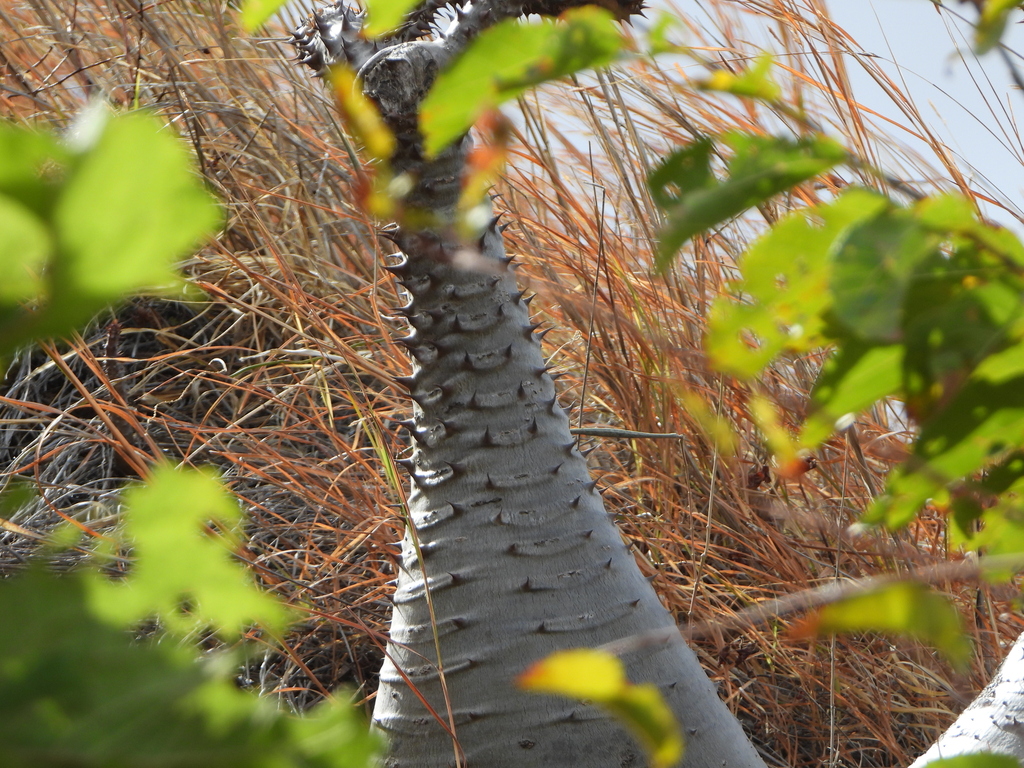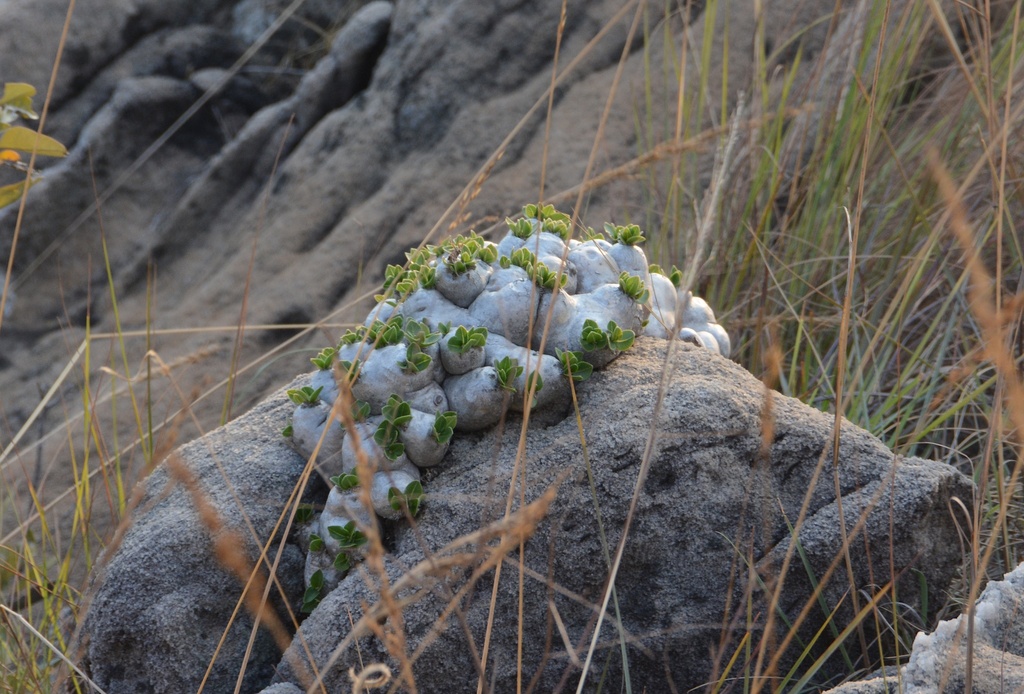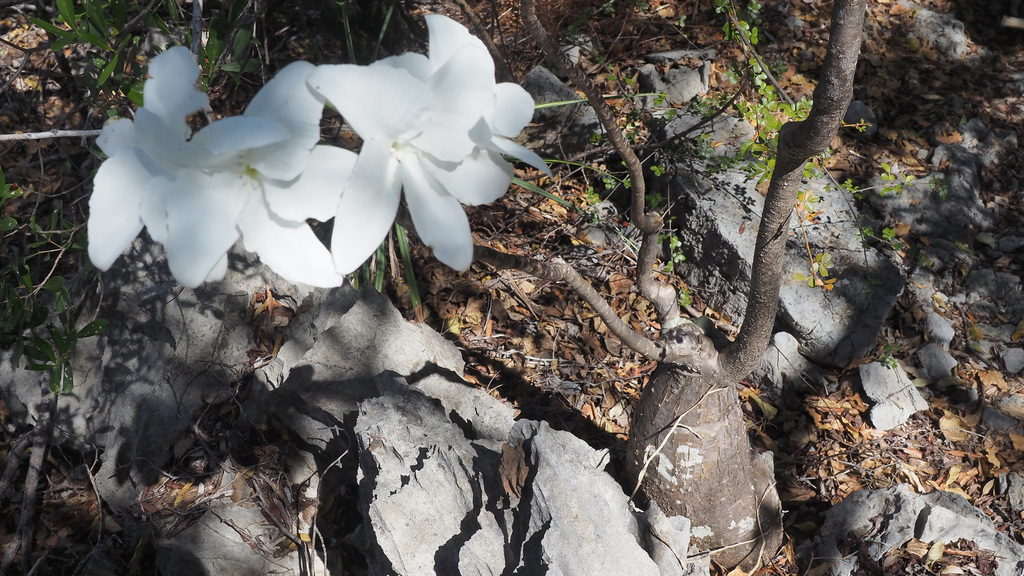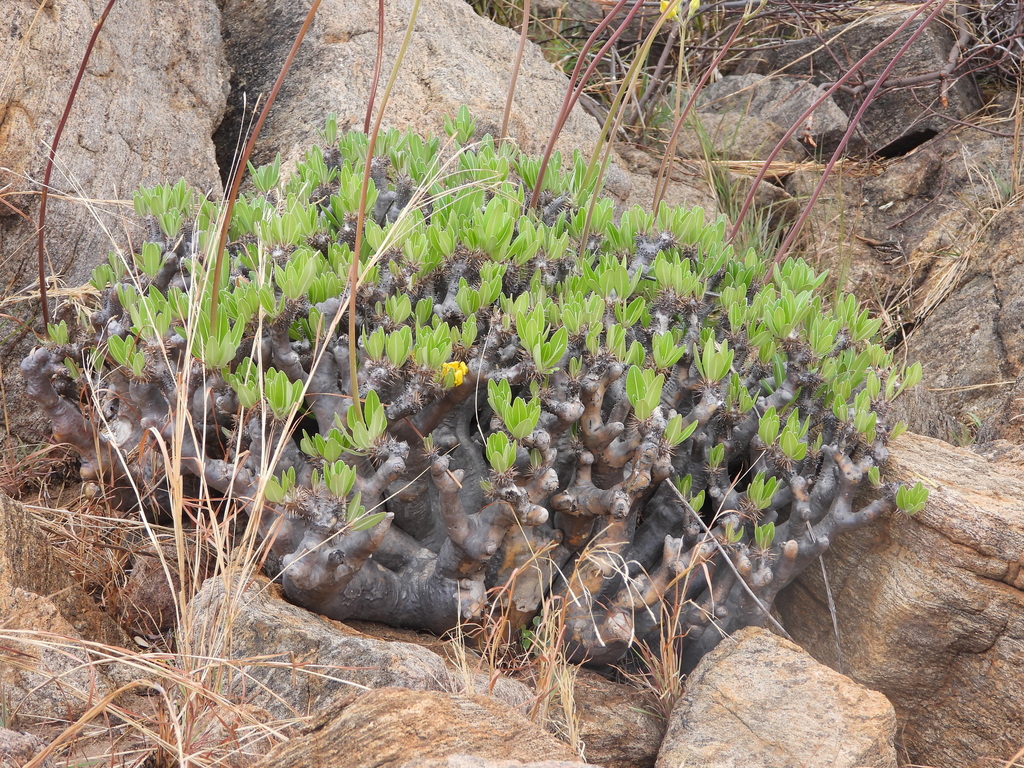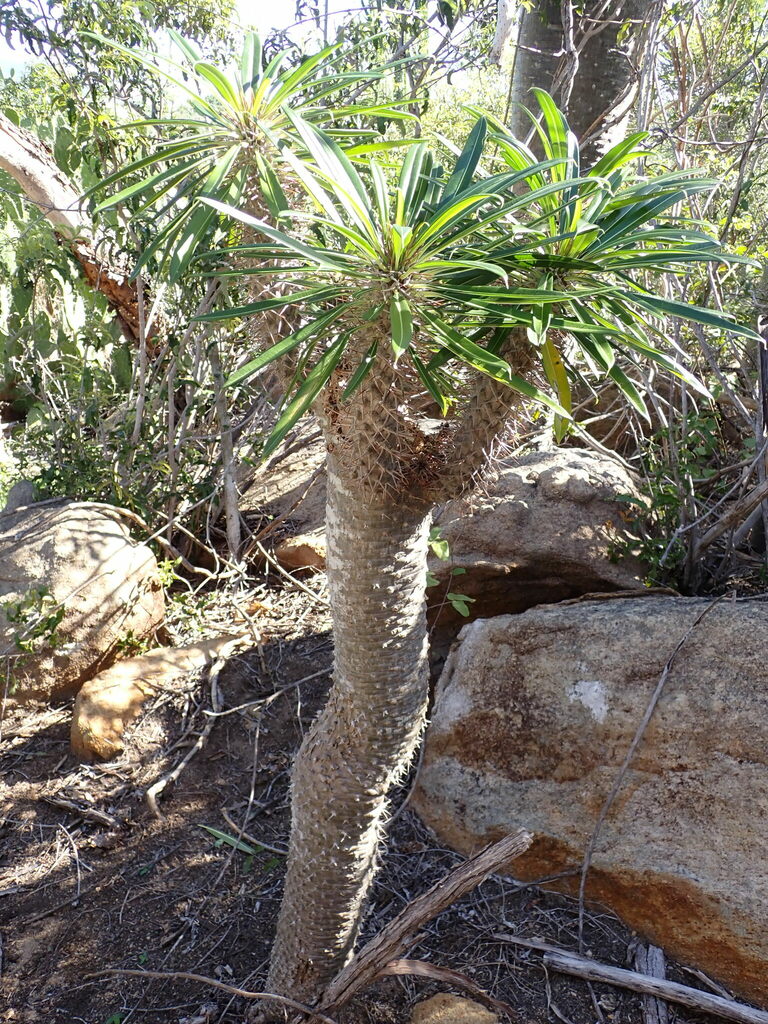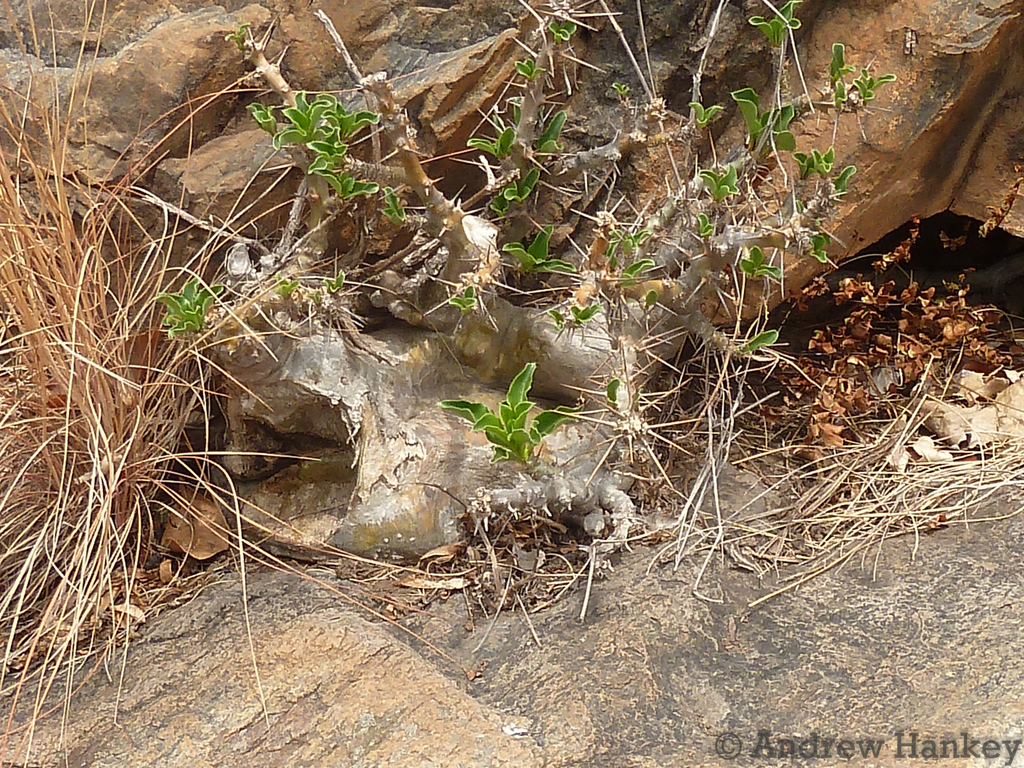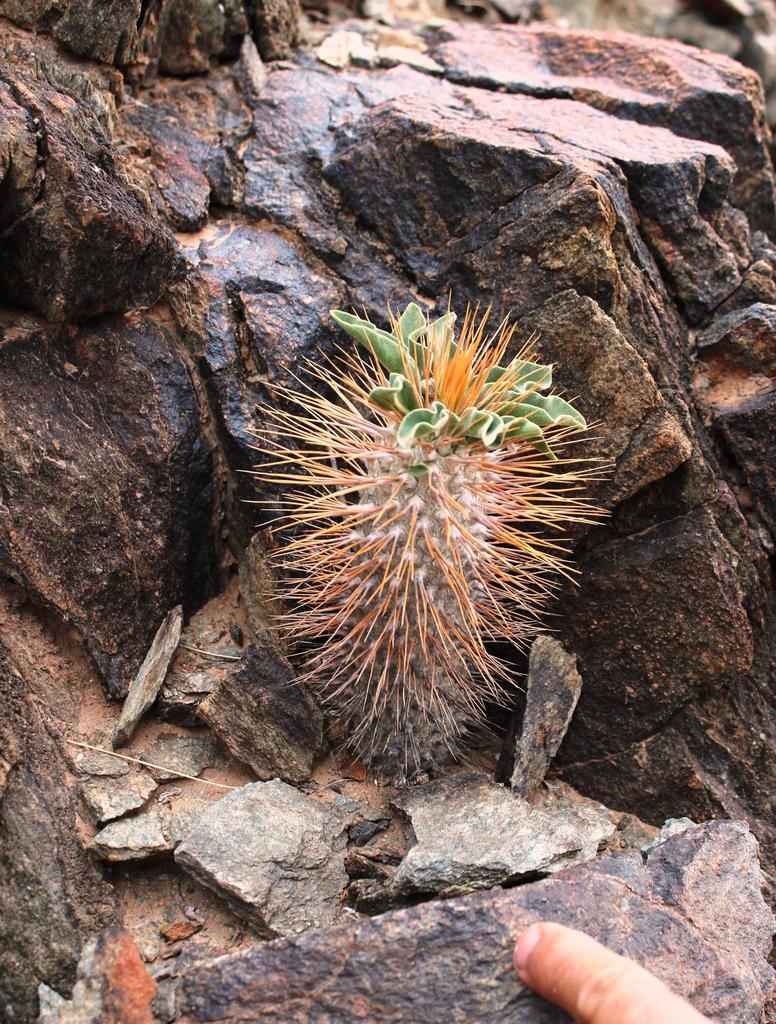
A single-stemmed Pachypodium from the volcanic rock mountains of the Richtersveld in northwestern South Africa and southern Namibia, where annual rainfall of 50–150 mm falls almost entirely in winter and Atlantic fog drifts inland to supplement it. A spine-covered, grey-brown trunk rises and leans gently to the north — the form behind the Afrikaans name "halfmens" (half-human) and the Japanese trade name 光堂 (Hikari-dō). It is the only winter-growing species in Pachypodium, leafing out in winter and going dormant in summer, so watering it on the same rhythm as its summer-growing relatives easily leads to failure. Growth is extremely slow; wild plants are protected under CITES Appendix II.
Native climate
Rain concentrates in the warm season, with a dry season of roughly 6 months. Overall mild, with a wide temperature range.
* Accurate distribution data is scarce for this species, so these values are taken from the climate near the approximate center of its native range instead.
Sources: climate & elevation WorldClim 2.1 (1970–2000) · occurrences GBIF · native range POWO · current weather Open-Meteo
Care
Light & Placement

Native to roughly 28°S in the Richtersveld, it grows under intense sun and dry wind year-round and wants strong light at every stage. In Japan its growing season runs from late autumn through spring, so the default is outdoors under an open eave or on a south-facing rack where it can take full sun all day — that's what keeps the leaf crown short and prevents stretching. Bring it to a bright indoor window on nights when temperatures drop below about 8°C. Summer is its dormant period, when heat and rain are the real risks; keep it under an eave in light shade with airflow as the top priority, and avoid placing pots directly on the ground.
Watering
Water only after the substrate has fully dried, keeping things on the drier side than for other Pachypodium. The active period normally runs late autumn through spring, but the plant can start moving in midsummer too — read the plant rather than the calendar. In summer dormancy, drop to a monthly misting or near-total dryness.
Substrate
Drainage above all, in a primarily inorganic mix. Small-grain Akadama : Kanuma : pumice = 3:3:4, biased toward pumice, in a tall pot for sharper wet-dry cycling. Grain size on the coarser side helps.
Fertilizer & Supplements
A dilute liquid feed once a month through autumn and spring, or a pinch of slow-release at repotting. Growth is extremely slow, so overfeeding strains the roots and elongates the trunk — restraint is the rule here.
Temperature & Overwintering
Optimal 15–28°C — on the cooler side for the genus — with an 8°C floor. Even during winter active growth, freezes are fatal; stabilize on a window through cold nights. Heat plus moisture during summer dormancy is the largest single risk, and 35°C-plus tropical nights need to be carried through on ventilation alone.

Starting from Seed
Where to source seeds
links go directly to the product page; the rest are scientific-name searches. Stock fluctuates — verify availability on the destination site.
Pre-sowing treatment
Soak seeds for about half a day (overnight) in a mix of a registered seed-treatment fungicide (Benlate or Daconil) and a plant tonic (SUPERthrive), each diluted per label. Any that don't sink may be past their prime. Viability depends on how the seed has been stored, so sowing soon after receipt is the safer course.
Substrate
Build a separate seedling mix that's fine-grained and near-sterile: fine Akadama, fine Kanuma, and vermiculite in equal 1:1:1 parts. Sterilize with boiling water or a quick microwave pass before sowing.
Sowing method
Sow with no covering, or only the thinnest dusting of substrate so the seeds remain partly visible. Space them at least 1 cm apart and arrange them so they don't clump together or overlap.
Light & temperature
Keep the tray in bright shade or under LEDs at a steady 20–25°C. Expect germination in 10–30 days. Germination depends heavily on seed freshness, and even fresh seed stays on the lower side. A heat mat noticeably tightens the spread.
Watering
Bottom-water with the level 1–2 cm up the pot. For the first 2–3 weeks, prioritize not letting things dry out, then drop the water level in steady stages once the seedlings have come up.
Fertilizer
No feeding right after germination. Once the true leaves emerge, give a heavily diluted liquid fertilizer once or twice a month — lighter than the bottle suggests, since young seedlings stretch easily.
From Germination to Repotting
Germination through true leaves (first month)
Keep bottom watering and hold the humidity. Avoid strong light and keep the tray in bright shade.
Weaning off bottom watering (months 1–2)
Lower the water level in stages, eventually switching to bottom watering from a saucer. Drying it out abruptly kills the seedlings.
First repotting (year 2–3)
Growth is slow, so there's no rush — repotting is due once the roots have reached the bottom of the pot. Around the time the caudex begins to show, move the plant into a standard, primarily inorganic mix.
Common Pitfalls
Mold & damping-off
- Cause: excess moisture, contaminated substrate, poor ventilation during summer dormancy
- Prevention: sterilize the mix, keep air moving with a circulator, hold back water through summer
Etiolation
- Cause: insufficient light, overfeeding
- Prevention: full sun through the active season or a move outdoors into bright light, restrained feeding
Seeds fail to germinate
- Cause: old seeds, insufficient temperature
- Prevention: choose a trustworthy source, stabilize temperature with a heat mat
Seedlings die soon after germination
- Cause: sudden strong light, sudden drying
- Prevention: change the environment gradually — ease them in over the course of a week
Notes
Water that lands on the apical growth point can cause the growth point itself to rot. The only winter-grower in the genus, though it can start moving in midsummer too. The sap is among the more toxic in the genus — keep it away from children and pets. CITES Appendix II.