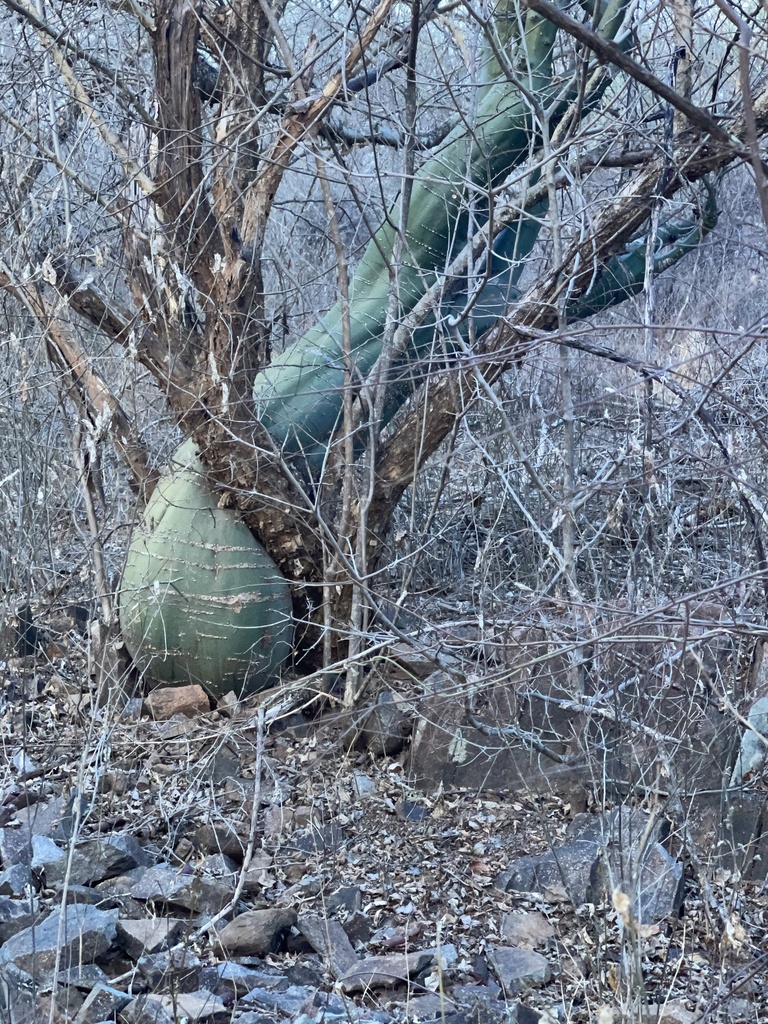
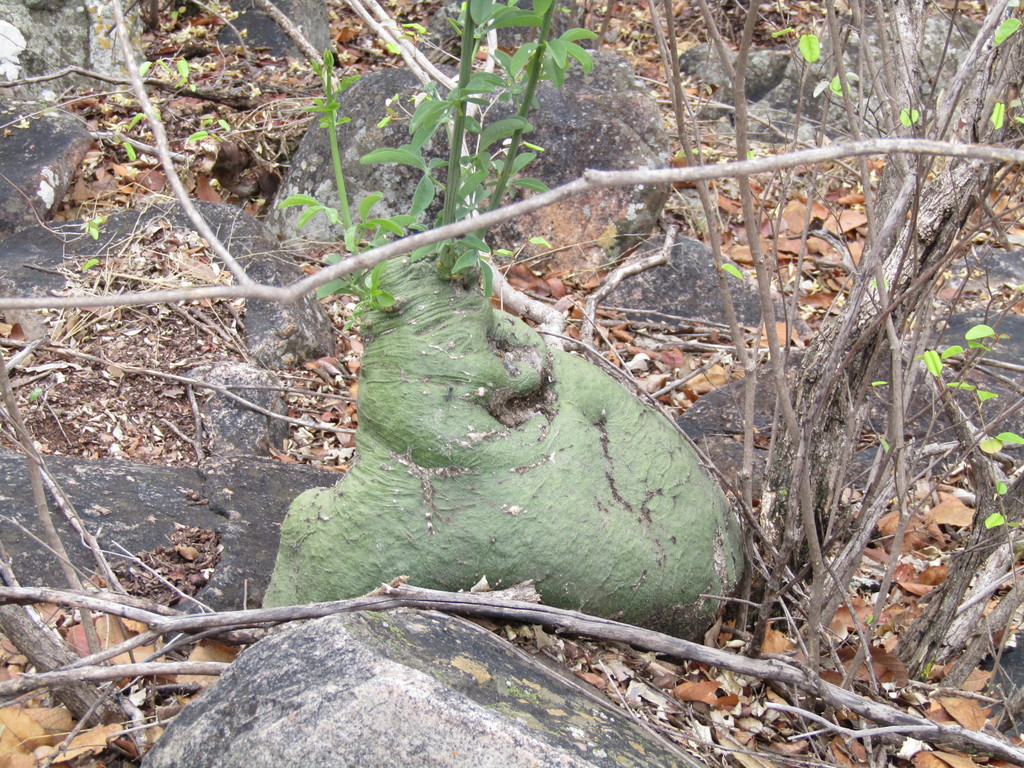
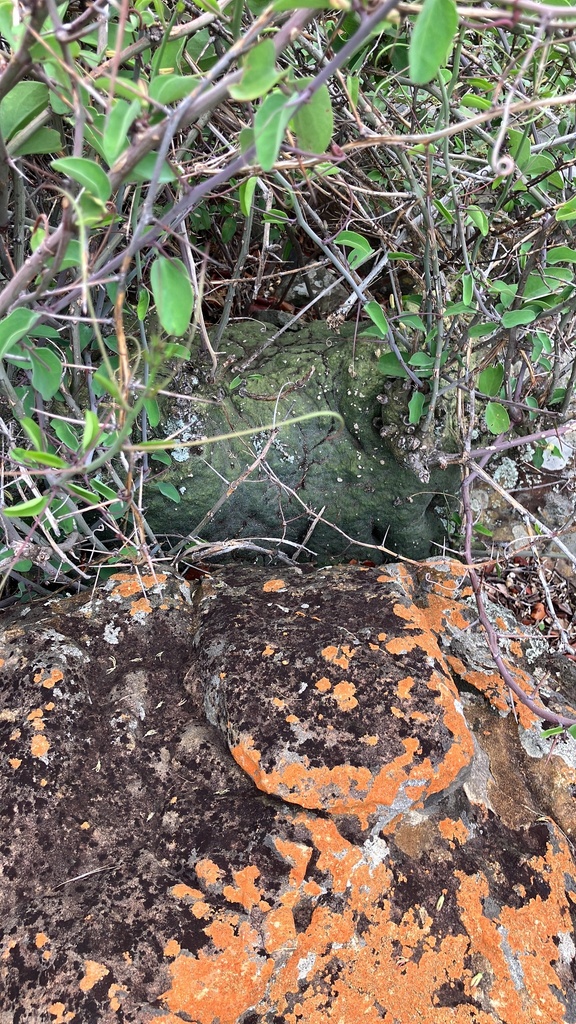
A bizarre Adenia from the arid rocky bushland of East Africa — Kenya, Tanzania, and Somalia. A spherical, gray-green caudex swells outward and sends spiny green branches radiating in all directions, looking almost like a piece of coral pushed up out of the rock. Leaves are tiny and easy to overlook; the green stems carry out photosynthesis themselves, allowing the plant to keep growing even after dropping its leaves in the dry season. This is a plant grown for the sculptural form of the caudex and stems themselves. Slow-growing and intolerant of cold and excess moisture, it demands careful temperature control and a clear wet-dry rhythm, making it a much-loved species for experienced caudex growers.
Native climate
Rainfall is spread fairly evenly across the year. Overall a warm climate.
A broad-scale picture of the native range. Real growing spots — rock crevices, fog belts — can be milder.
Sources: climate & elevation WorldClim 2.1 (1970–2000) · occurrences GBIF · native range POWO · current weather Open-Meteo
Care
Light & Placement

In habitat across East Africa it grows on sun-baked rocky bushland, and since the green stems handle most of the photosynthesis, strong light is essential. Give it full direct sun outdoors through the growing season. A 20–30% shade cloth helps in the harshest midsummer weeks, and pots should sit on a raised bench with strong airflow. Move indoors early to a bright sunny window for winter, well away from cold drafts.
Watering
Water thoroughly once the surface dries during active growth — the green photosynthetic stems still need water. Caudex thickening is slow, so overwatering is the bigger risk by far. In dormancy, withhold completely and hold temperatures at 12°C or above.
Substrate
Drainage first with the pumice ratio pushed higher. Akadama : Kanuma : pumice = 3:3:4 is a good target, in a deeper pot for strong vertical airflow. Keep any slow-release feed to the smallest pinch.
Fertilizer & Supplements
A dilute liquid feed at most once a month in active growth, applied very lightly. Growth is extremely slow and the plant asks little of fertilizer — overfeeding is the direct cause of leggy stems and root rot.
Temperature & Overwintering
Optimal 22–35°C with a firm 12°C minimum — among the most cold-sensitive in the genus. Below 10°C, blackening starts at the branch tips and can cascade quickly. Overwinter completely dry on a bright sunny window. Bring indoors early in autumn without hesitation and never combine damp soil with cold temperatures.

Starting from Seed
Where to source seeds
Pre-sowing treatment
Soak seeds for about half a day (overnight) in a mix of a registered seed-treatment fungicide (Benlate or Daconil) and a plant tonic (Menedael; outside Japan, SUPERthrive or a chelated iron / seaweed extract works similarly), each diluted per label. Any still floating are typically no longer viable, and seed loses viability fast — sow promptly after receiving fresh stock.
Substrate
Use a separate seedling mix that's fine-grained and near-sterile: fine Akadama, fine Kanuma, and vermiculite in 1:1:1 parts. Sterilizing beforehand with boiling water or a microwave pass meaningfully reduces damping-off losses.
Sowing method
Sow with no covering, or only the thinnest dusting of substrate so the seeds remain partly visible. Space the seeds at least 1 cm apart so they don't clump or overlap on the surface.
Light & temperature
Keep the tray in bright shade at a steady 28–32°C — heat-loving, with a heat mat effectively mandatory. Germination takes its time at 14–30 days, so settle in for patient waiting.
Watering
Bottom-water with the level 1–2 cm up the pot. For the first 2–3 weeks, prioritize not letting things dry out, then drop the water level gradually once seedlings are stable.
Fertilizer
No feeding right after germination. Once the true leaves emerge, give diluted liquid fertilizer at double dilution once or twice a month, applied very lightly.
From Germination to Repotting
Germination through true leaves
Continue bottom watering and keep strong light off them.
Weaning off bottom watering
Phase it out gradually over 1–2 months.
First repotting
In the first or second year, once roots have filled the pot.
Common Pitfalls
Mold & damping-off
- Cause: excess moisture, contamination
- Prevention: sterilize the substrate, ensure good air flow
Etiolation
- Cause: insufficient light
- Prevention: move LEDs closer right after germination, or shift the tray to bright shade outdoors
Seeds fail to germinate
- Cause: stale seeds, insufficient warmth
- Prevention: use fresh seeds and a heat mat
Notes
Cold-sensitive and prone to root rot at low temperatures. Winter temperature control is critical. The sap is mildly toxic.