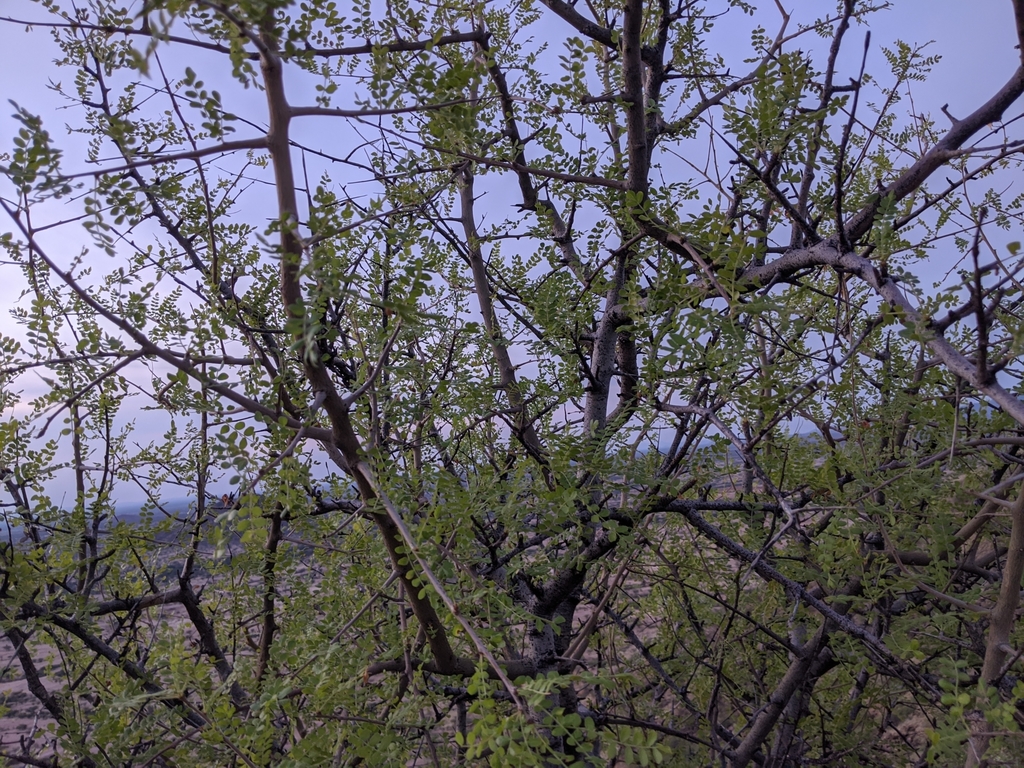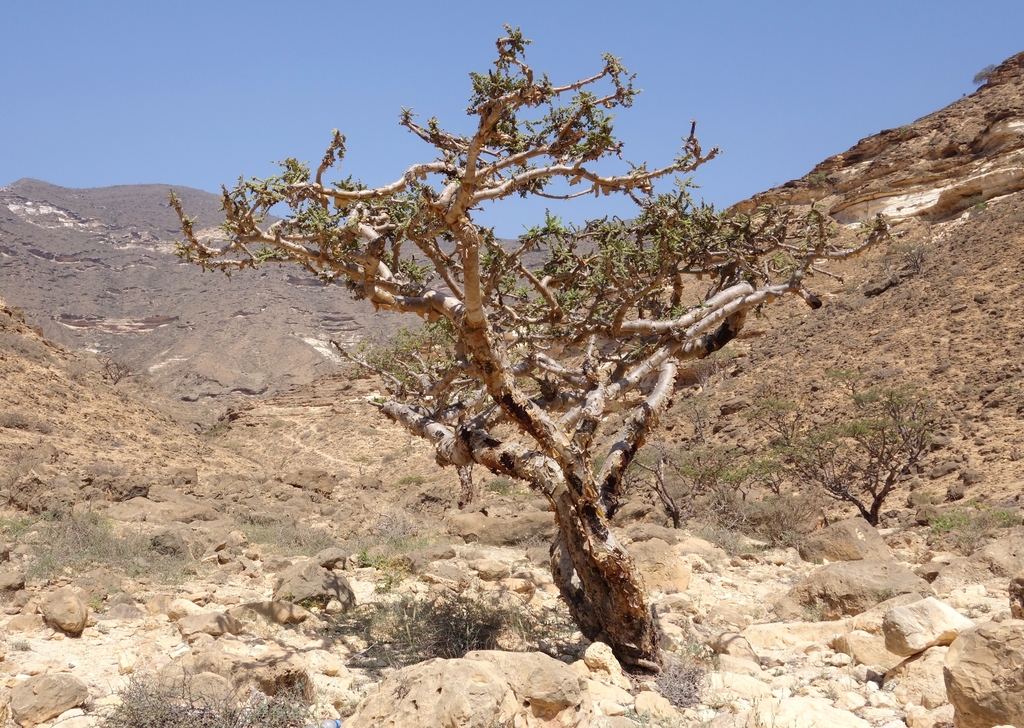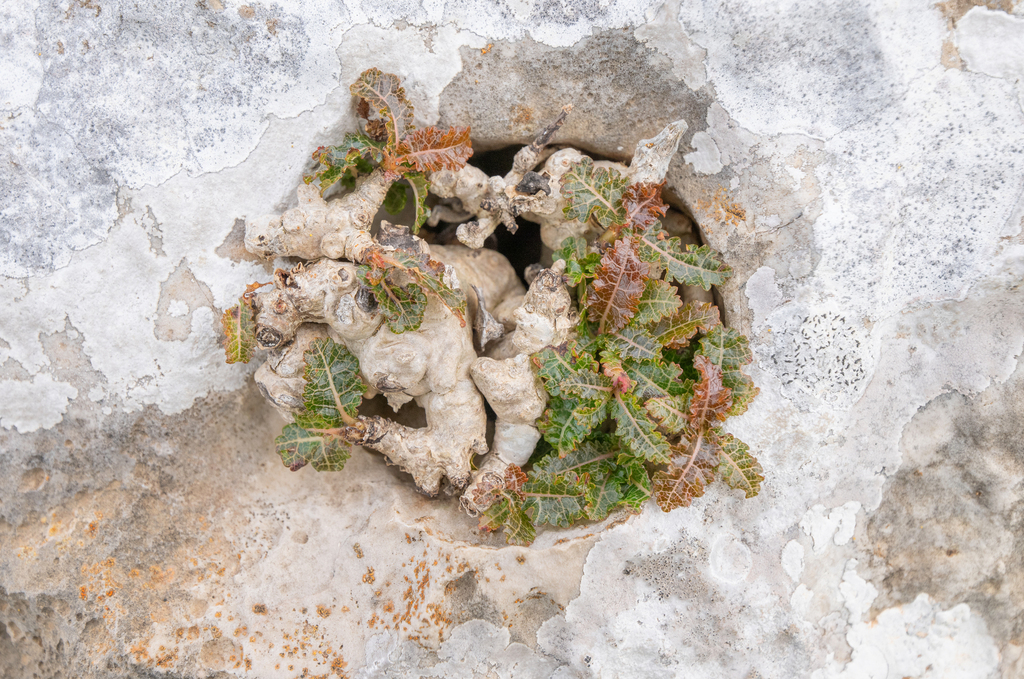
A diminutive Boswellia endemic to the island of Socotra, off the coast of Yemen, and one of the most charming members of the frankincense-producing family. It grows wedged into fissures in bare limestone, staying naturally dwarf and spending its entire life as a stout, swollen-trunked miniature shaped by wind and unrelenting sun. The little pinnate leaves seem almost endearingly out of scale with the chunky caudex, and any cut into the bark releases the clear, resinous fragrance of true frankincense. Because it carries the look of an aged, weather-beaten tree even at a small size, B. nana has become one of the most coveted caudex species in recent years — though decidedly an advanced-grower's plant.
Native climate
Very little rain falls all year — an arid setting. Overall warm, with little seasonal swing.
* Accurate distribution data is scarce for this species, so these values are taken from the climate near the approximate center of its native range instead.
Sources: climate & elevation WorldClim 2.1 (1970–2000) · occurrences GBIF · native range POWO · current weather Open-Meteo
Care
Light & Placement

Dwarfed by the searing sun and heat radiating off Socotra's bare limestone, this species depends on intense direct light and warmth to hold its compact, sculptural form. Give it full sun outdoors with strong airflow through the growing season, then move it to a bright indoor window well before any cold weather arrives.
Watering
In active growth, water thoroughly only after the topsoil has dried fully, then dry the rootball quickly with strong airflow. Taper through autumn and withhold water entirely once it drops its leaves and enters dormancy until spring movement resumes.
Substrate
Drainage above all else. Akadama : Kanuma : pumice = 2:3:5, with pumice as the dominant component, topped with a thin layer of fine pumice grit so the surface dries fast. A shallow unglazed terracotta pot is easiest to manage.
Fertilizer & Supplements
Feed sparingly, using a heavily diluted liquid fertilizer no more than once a month around midsummer. Heavy feeding causes etiolated growth and elongated internodes, so pair minimal feed with a tonic such as Menedael to keep the silhouette tight.
Temperature & Overwintering
Optimal 22–32°C; a true heat-lover and one of the most cold-sensitive Boswellias. Leaf drop and dormancy through the cool months is normal — keep above 12°C, bring indoors before temperatures fall, and overwinter largely dry, ideally with greenhouse-level warmth.

Starting from Seed
Where to source seeds
links go directly to the product page; the rest are scientific-name searches. Stock fluctuates — verify availability on the destination site.
Pre-sowing treatment
Soak seeds for about 7 hours in a mix of a registered seed-treatment fungicide (Benlate or Daconil) and a plant tonic (Menedael; outside Japan, SUPERthrive or a chelated iron / seaweed extract works similarly), each diluted per label. Freshness strongly governs germination — old seed lots may turn out to be empty, so source recent seed and sow promptly.
Substrate
Use a fine-grained inorganic mix of roughly equal parts small akadama and hyuga-tsuchi, and always sterilize beforehand with boiling water or a fungicide drench. Level the surface with very fine grit.
Sowing method
Do not cover the seed — set each one on the surface of the mix, broadcast-sown in a shallow tray, with light reaching them and ample airflow rather than a sealed dome.
Light & temperature
Hold at 25–32°C until germination, in bright shade out of direct sun. A heat mat dramatically improves germination percentages with this species.
Watering
Until the seedlings emerge, keep the tray bottom-watered so the mix stays uniformly damp without soaking the surface, paired with constant strong air movement from a circulator.
Fertilizer
Once two or three true leaves have opened, begin feeding with a liquid fertilizer diluted to half the label rate or weaker, applied very lightly every two or three weeks.
From Germination to Repotting
Germination through true leaves
Continue bottom watering and avoid strong light.
Weaning off bottom watering
Wean gradually over 1–2 months.
First repotting
From year 2 onward, once roots have filled the pot.
Common Pitfalls
Mold & damping-off
- Cause: Excess moisture, microbes, poor ventilation
- Prevention: Sterilize the substrate; an air circulator is essential
Low germination rate
- Cause: Seed freshness, insufficient heat
- Prevention: Use fresh seed, use a heat mat
Failure to overwinter
- Cause: Extreme sensitivity to cold
- Prevention: Maintain at least 12°C; a greenhouse is recommended
Notes
Among the most cold-sensitive of the genus — hold a strict 12°C minimum. A heated greenhouse is the safest winter setup.