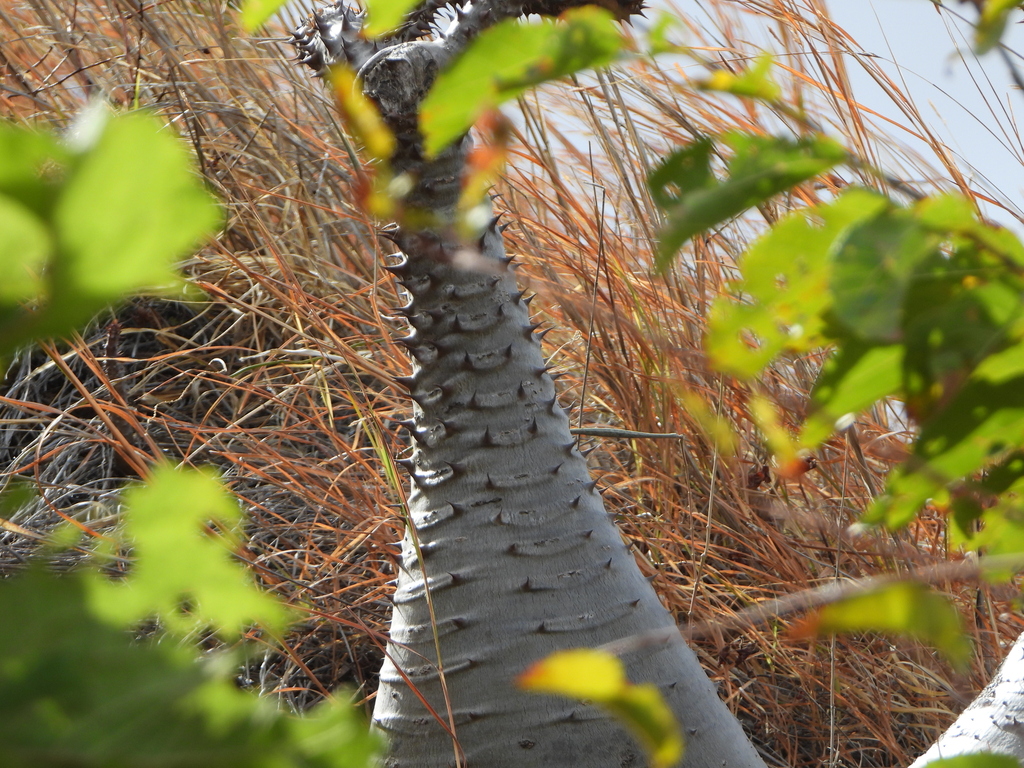
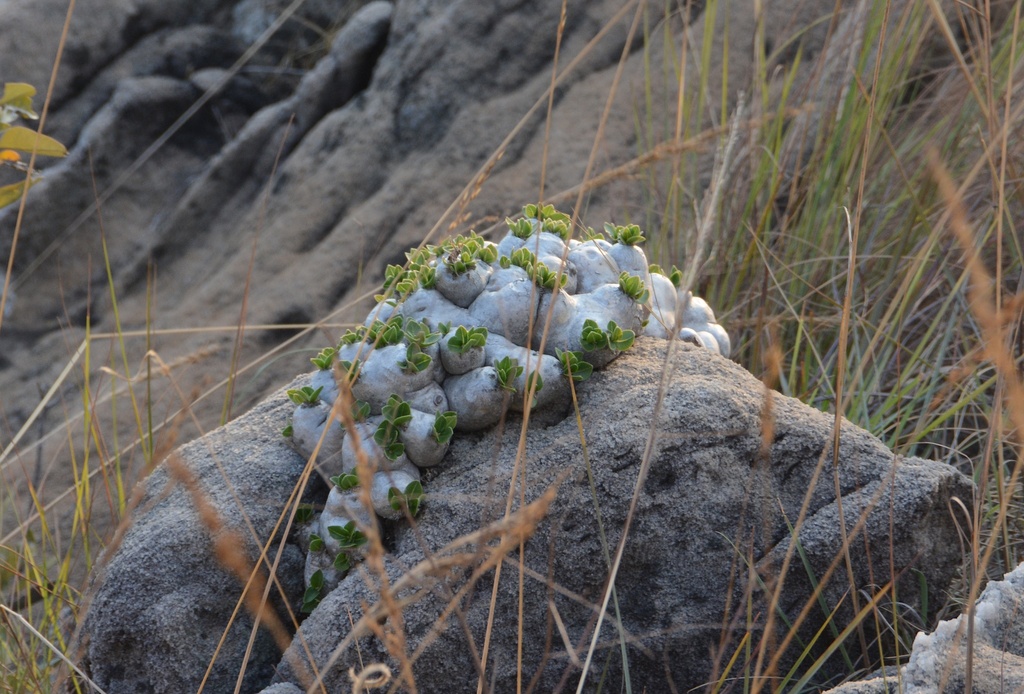
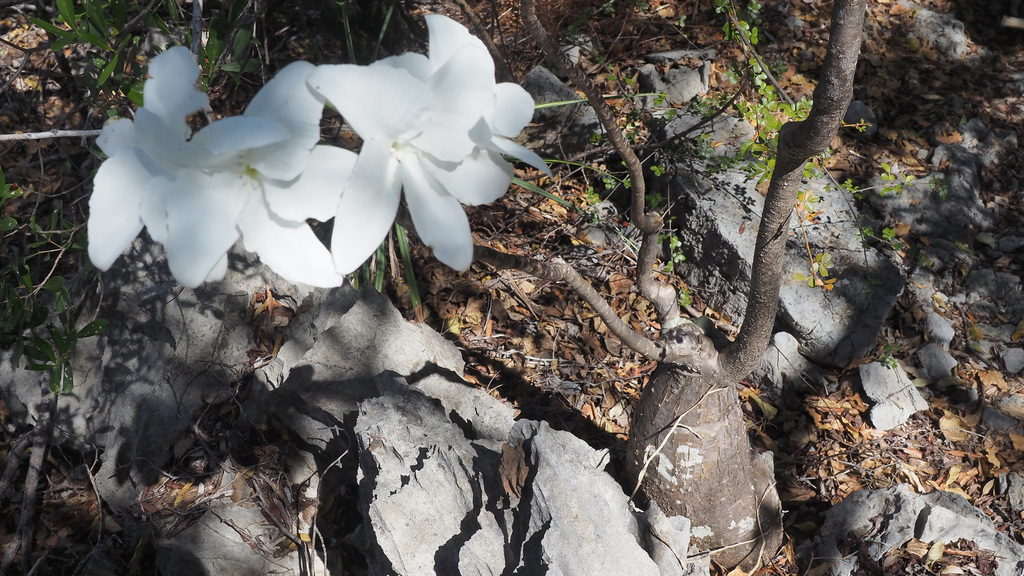
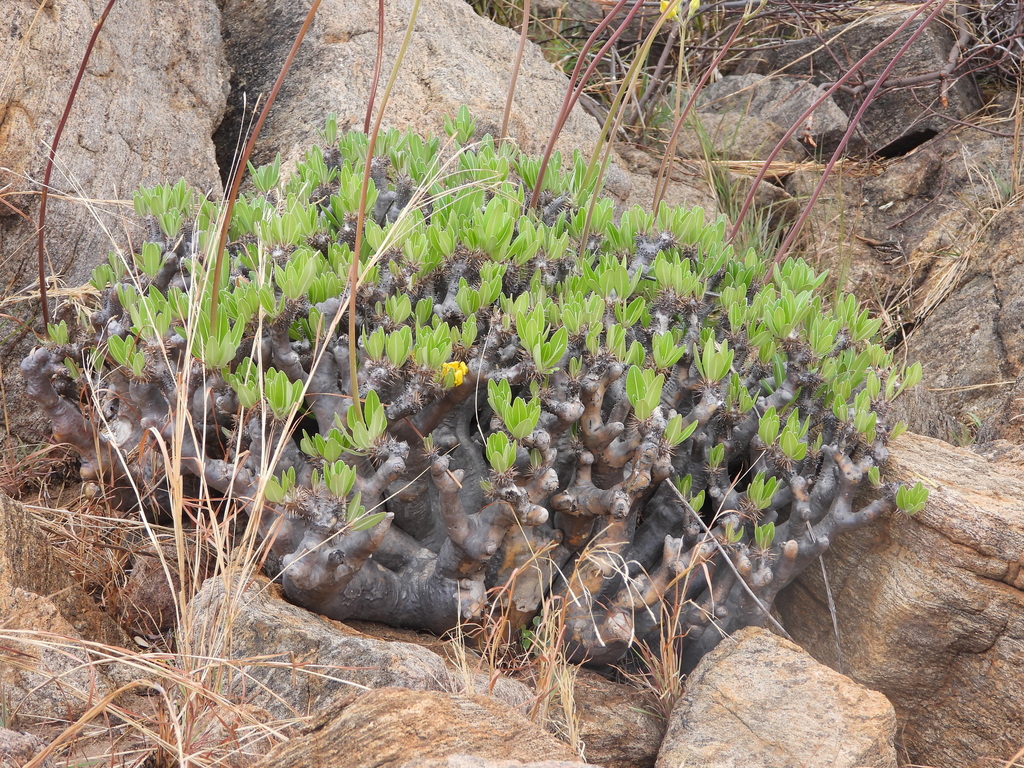
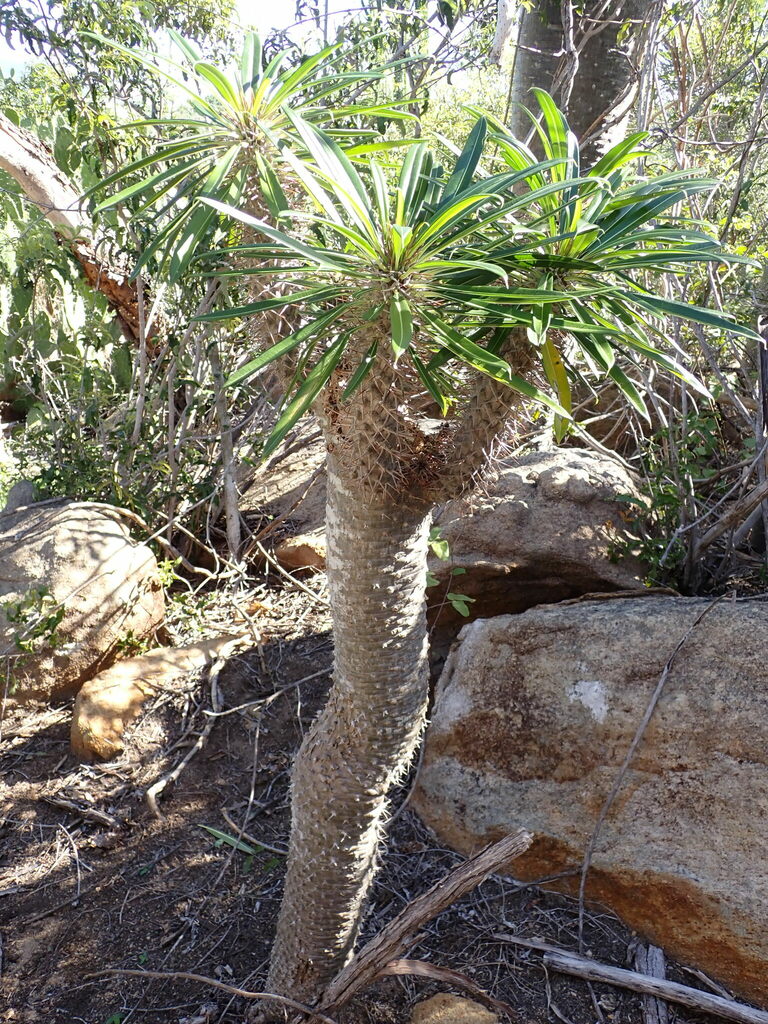
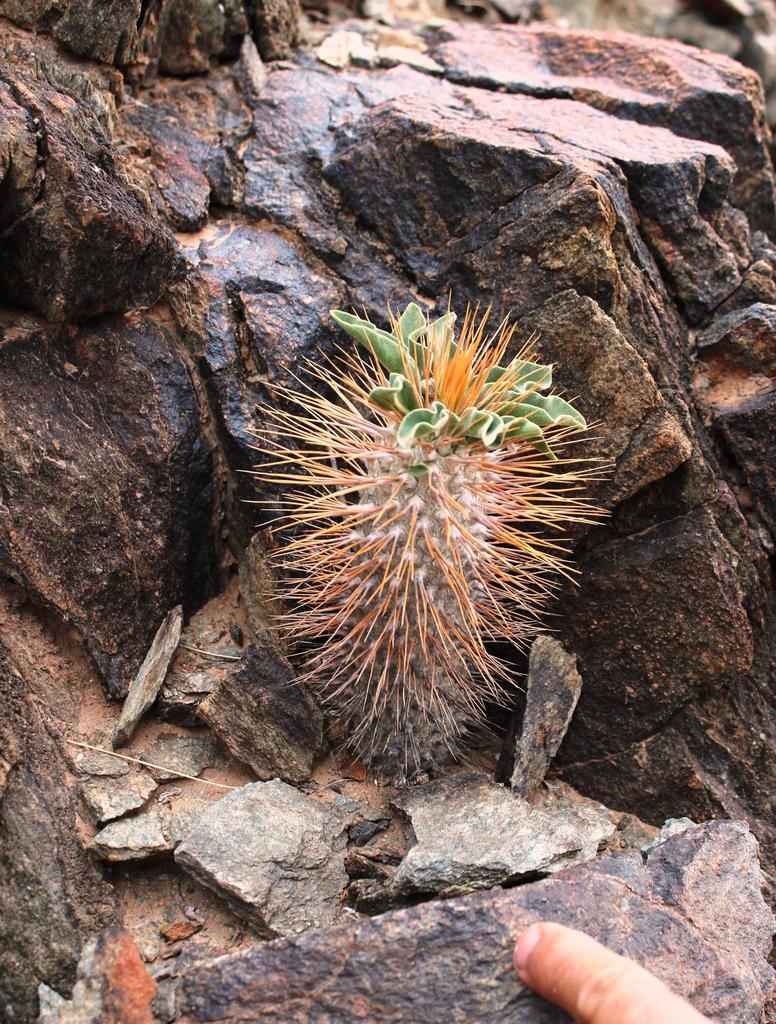
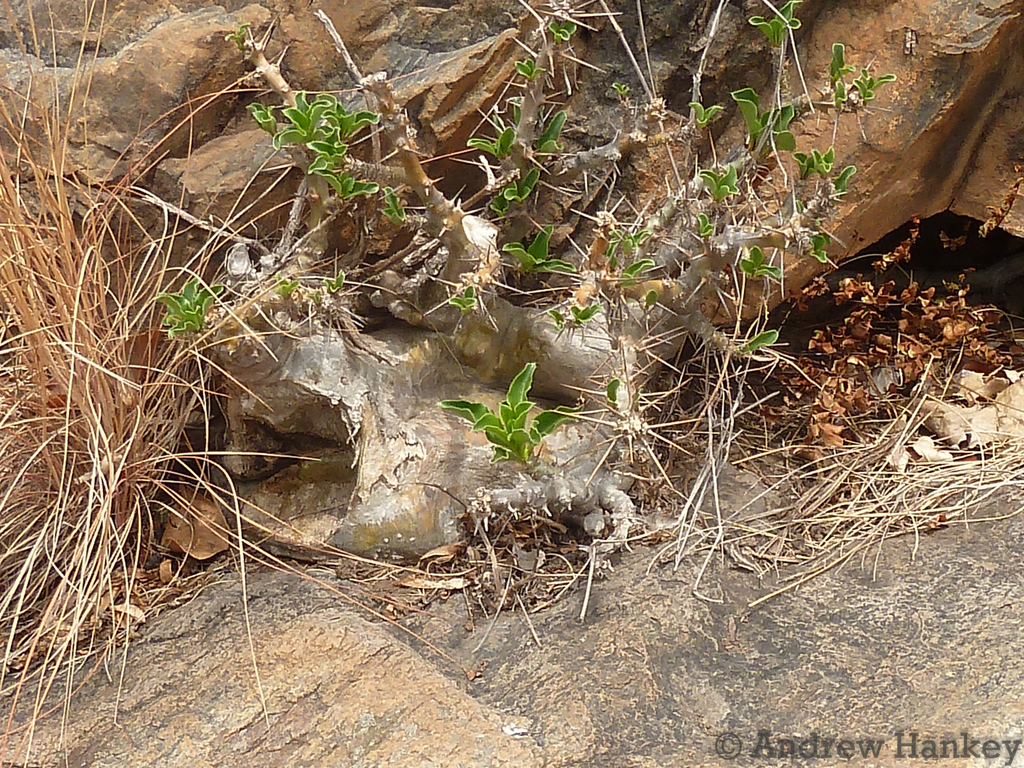
A caudex-forming Pachypodium from the dry scrublands of South Africa's Eastern Cape. When not in flower it closely resembles P. succulentum, a near relative whose range overlaps its own, so the two are often told apart only once they bloom. It is recognizable by its swollen, often partly buried caudex-like trunk, the neatly paired spines (the species name bispinosum means "two spines"), and the pink flowers that appear on the branch tips. The trunk fattens slowly over the years, taking on real character with age. Winter deciduous and dormant, it asks for a clear seasonal rhythm but is otherwise forgiving — a long-standing favorite among hobbyists who enjoy watching a caudex thicken at its own unhurried pace, and a solid entry-to-intermediate species for anyone starting a Pachypodium collection.
Native climate
Rainfall is spread fairly evenly across the year. Overall mild, with a wide temperature range.
* Accurate distribution data is scarce for this species, so these values are taken from the climate near the approximate center of its native range instead.
Sources: climate & elevation WorldClim 2.1 (1970–2000) · occurrences GBIF · native range POWO · current weather Open-Meteo
Care
Light & Placement

Coming from the dry scrublands of South Africa's Eastern Cape, this species loves strong sun. Give it full sun outdoors during the growing season for a tight, compact caudex. In Japan's hot, humid midsummer, light shading (around 30–50%) helps prevent scorch and stagnant heat around the pot. Keep airflow generous — raise the pot off the ground on a rack or shelf. During winter dormancy, move it under cover where rain can't reach it, ideally near a bright, sunny window indoors.
Watering
During active growth, water thoroughly once the surface dries — this plumps the caudex. Always empty the saucer. As leaves drop in autumn, taper off; through winter dormancy hold the plant completely dry to overwinter.
Substrate
Prioritize drainage and aeration with an inorganic mix: Akadama : Kanuma : pumice = 4:3:3. A taller pot encourages clean wet-dry cycles. Keep any top dressing thin so moisture doesn't get trapped against the caudex.
Fertilizer & Supplements
A dilute liquid feed once a month in active growth, or a pinch of slow-release at repotting. Overfeeding causes etiolation and root rot, so go light — the goal with a caudex plant is slow, dense growth rather than fast, sappy bulk.
Temperature & Overwintering
Active growth runs 20–32°C; aim for a 5°C winter minimum. Among the more cold-tolerant Pachypodiums, but damp soil under cold is what kills it — overwinter dry on a bright indoor window. In humid summers, raise the pot and use a fan to keep air moving.

Starting from Seed
Where to source seeds
links go directly to the product page; the rest are scientific-name searches. Stock fluctuates — verify availability on the destination site.
Pre-sowing treatment
Soak seeds for about half a day (overnight) in a mix of a registered seed-treatment fungicide (Benlate or Daconil) and a plant tonic (SUPERthrive), each diluted per label. Floaters tend to have a low germination rate.
Substrate
Use a separate seedling mix that's fine-grained and near-sterile: fine Akadama, fine Kanuma, and vermiculite in equal 1:1:1 parts. Sterilize the mix with boiling water or a quick microwave pass before sowing for peace of mind.
Sowing method
Sow with no covering, or only the thinnest dusting of substrate so the seeds remain partly visible. Space seeds at least 1 cm apart and arrange them so they don't clump together or overlap on the surface.
Light & temperature
Until germination, keep the tray in bright shade or under a low-intensity LED at a steady 22–28°C. Expect germination in 7–21 days. Germination depends on seed freshness, but with fresh seed it is reasonably steady; stable warmth gives the most consistent flush.
Watering
Bottom-water with the water level 1–2 cm up the side of the pot. For the first 2–3 weeks, prioritize not letting the substrate dry out at all, then drop the water level gradually once seedlings come up.
Fertilizer
No feeding right after germination. Once the true leaves emerge, give a heavily diluted liquid fertilizer once or twice a month — go lighter than the bottle suggests, since young seedlings are easily pushed into etiolation.
From Germination to Repotting
Germination through true leaves (first month)
Keep bottom-watering to hold the humidity up. Avoid strong light and keep the tray in bright shade.
Weaning off bottom watering (months 1–2)
Lower the water level by degrees until you switch to bottom-feeding from a saucer. Drying the seedlings out abruptly will kill them.
First repotting (year 1–2)
The right time is once roots reach the bottom of the pot. Around when the caudex starts to show, move the seedling into a normal inorganic-based mix.
Common Pitfalls
Mold & damping-off
- Cause: microbes in the substrate, excess moisture, poor airflow
- Prevention: sterilize the substrate, change the bottom water often, and keep air moving with a fan
Etiolation
- Cause: insufficient light
- Prevention: bring the LED closer right after germination, or move the seedlings to bright shade outdoors
Seeds fail to germinate
- Cause: old seeds, insufficient temperature
- Prevention: choose a trusted source and steady the temperature with a heat mat
Seedlings die soon after germination
- Cause: sudden strong light, sudden drying out
- Prevention: make every change gradual — acclimate them little by little over a week
Notes
Watch out for heat-and-humidity stress and overwatering. The sap is mildly toxic.