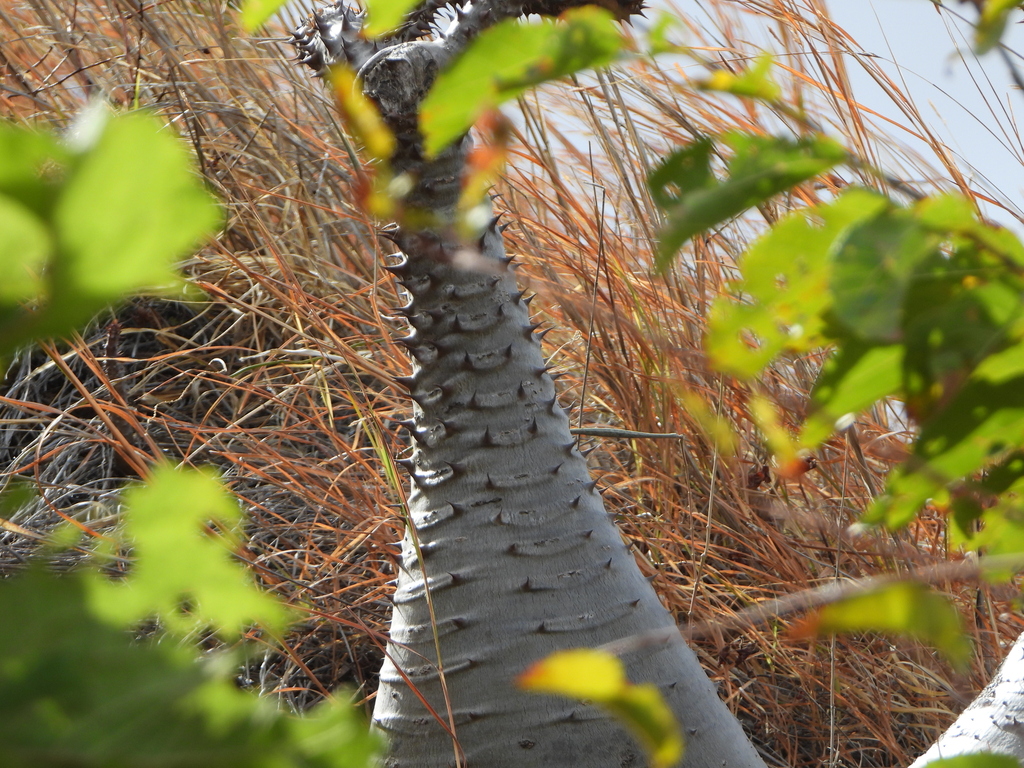
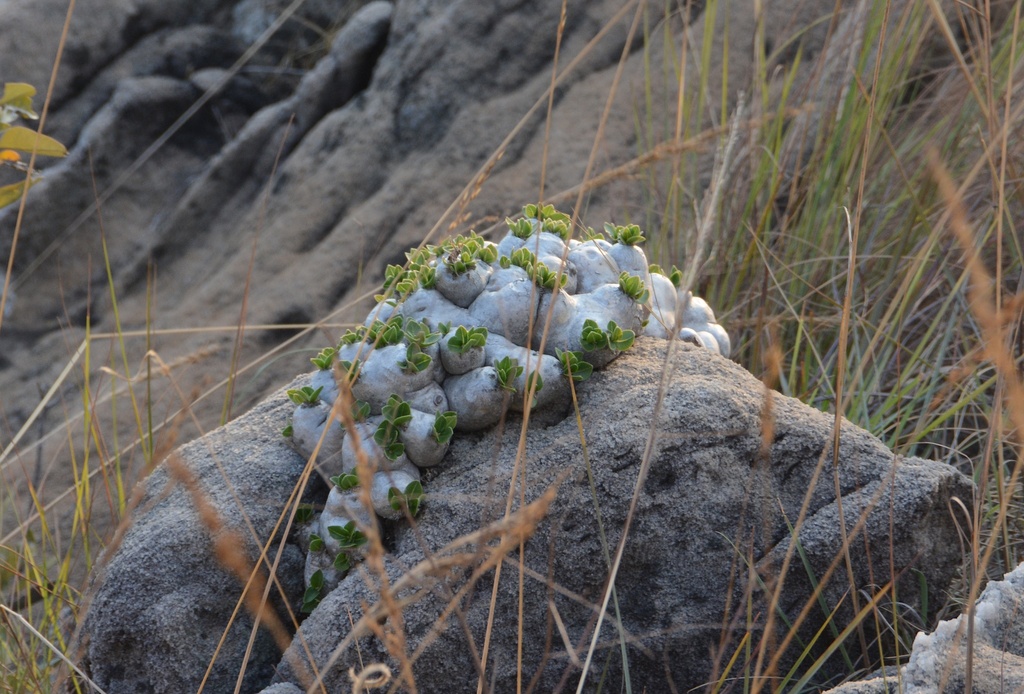
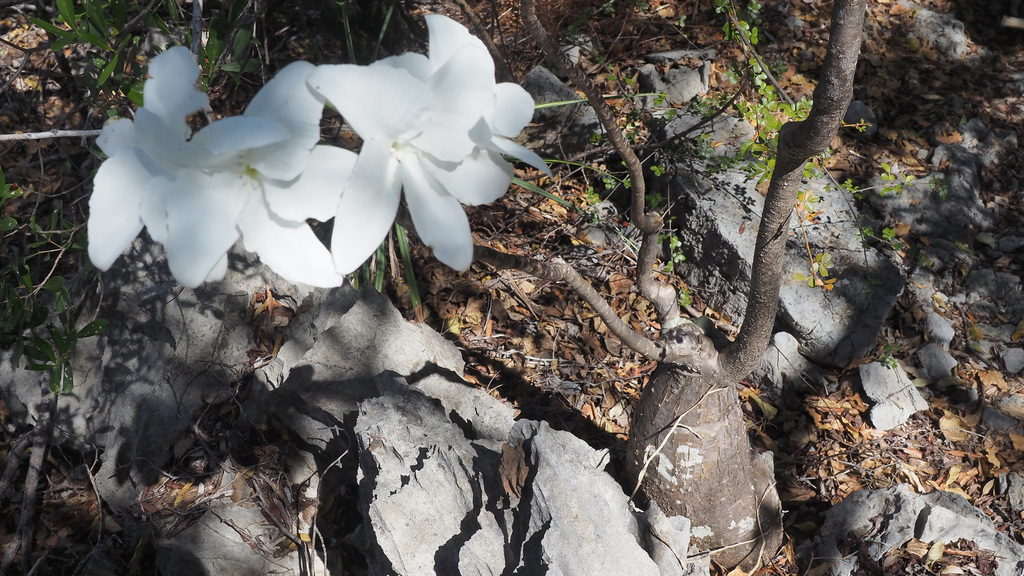
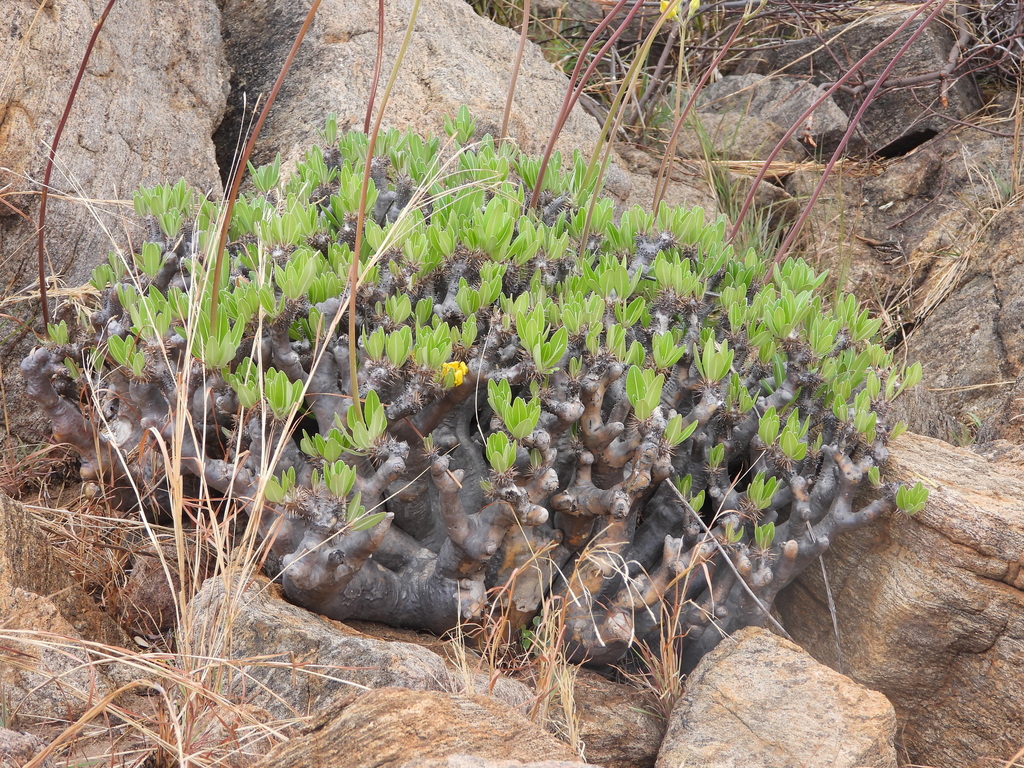
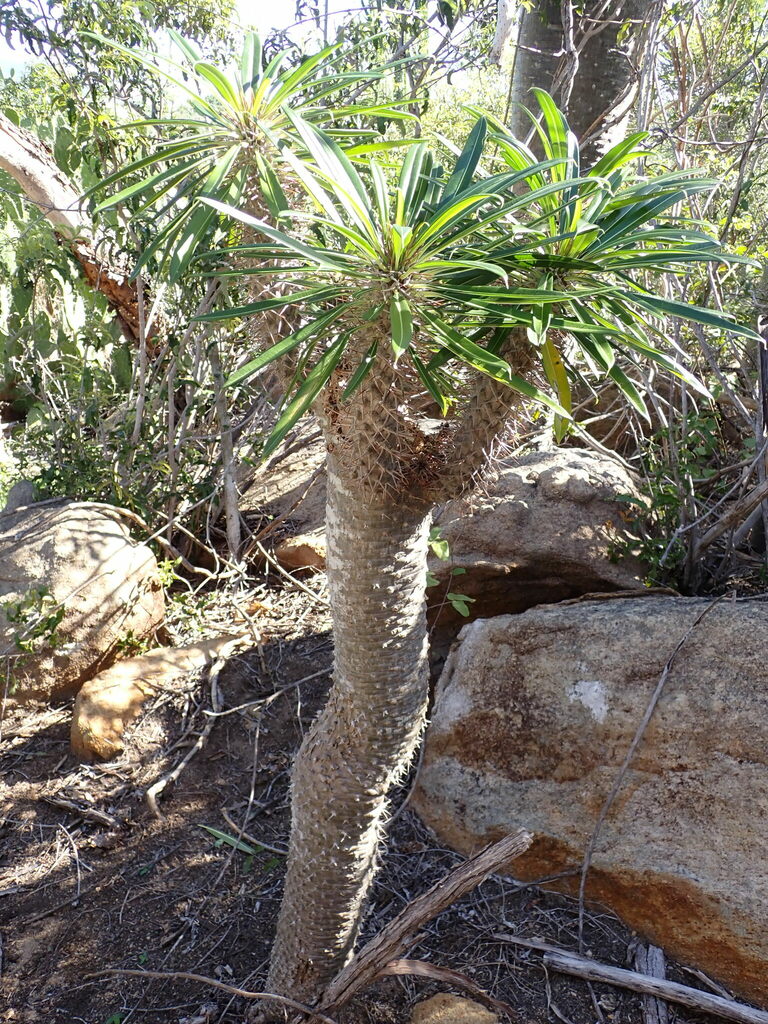
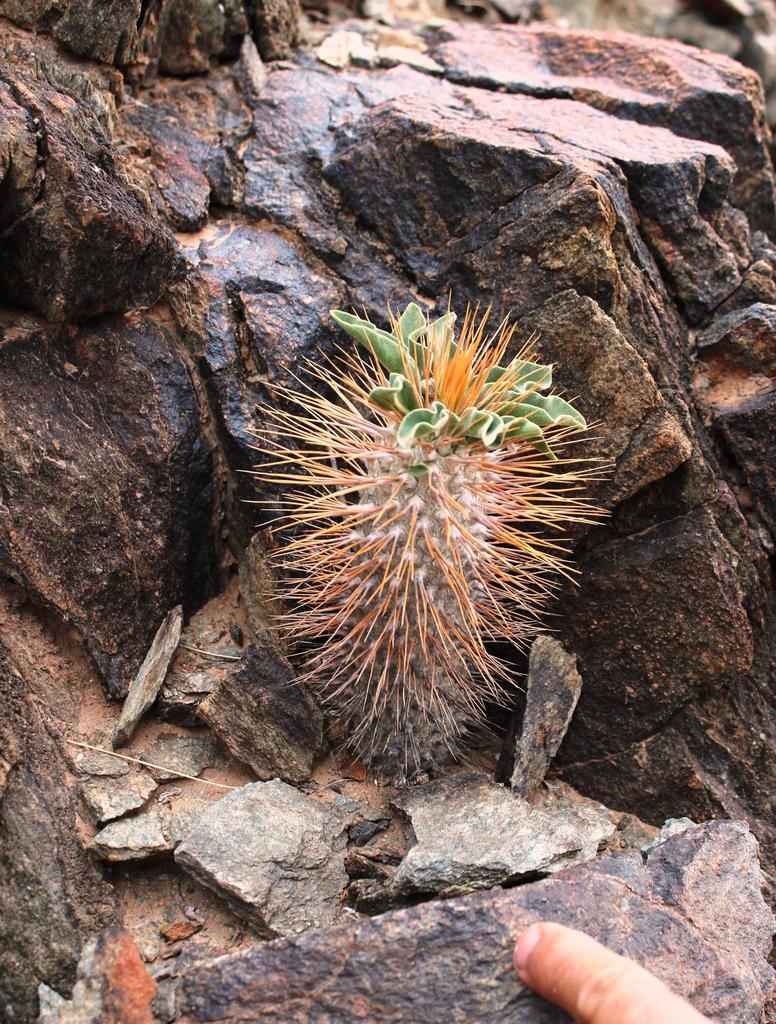
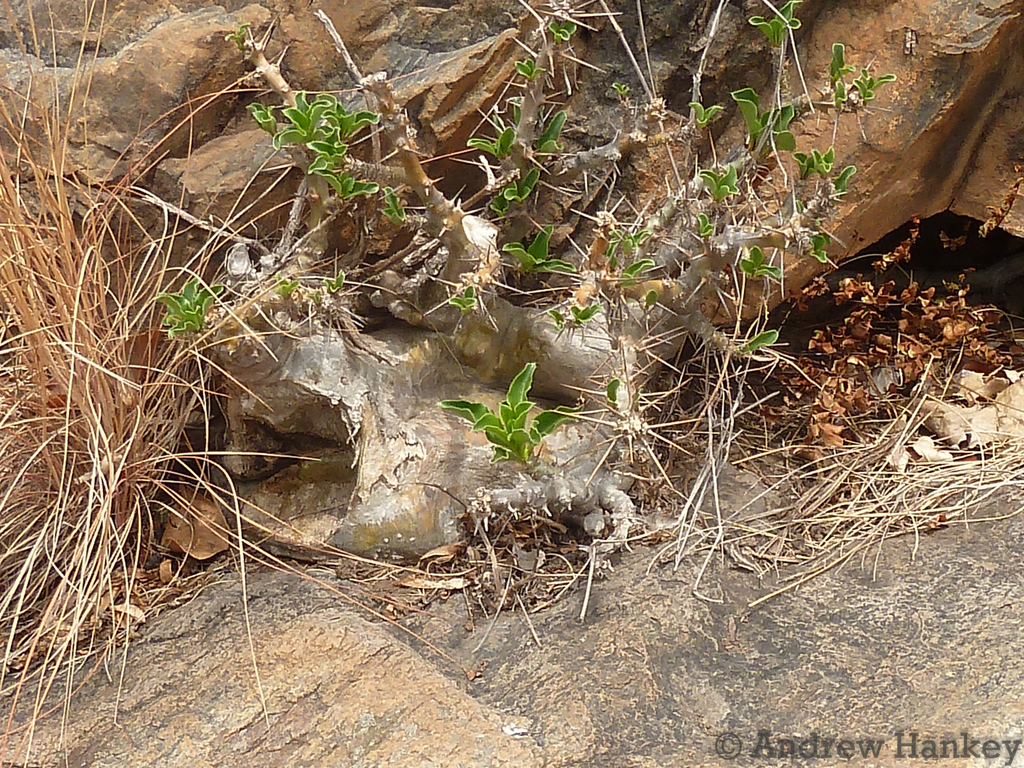
A rare species centered on Mt. Ibity, south of Antsirabe in the central Madagascar highlands, listed as Critically Endangered (IUCN CR); the species is on CITES Appendix II. Its records cluster on the quartzite outcrops of Mt. Ibity, with only a few scattered farther southwest toward the Itremo Massif. It has a flattened caudex reminiscent of P. brevicaule and — most distinctively — ivory white flowers with a yellow throat. The species name eburneum means "ivory-colored," and those pale petals combined with skin set with fine short spines make it a long-standing collector's piece. Growing among rocks at altitude, exposed to dry air and wide temperature swings, it stays famously slow in cultivation too — watching the caudex spread millimeter by millimeter is exactly the appeal of raising one from seed. Seed supply is limited and germination runs on the low side, so this species generally suits more experienced growers.
Native climate
Rain concentrates in the warm season, with a distinct dry season. Overall a mild climate.
* Accurate distribution data is scarce for this species, so these values are taken from the climate near the approximate center of its native range instead.
Sources: climate & elevation WorldClim 2.1 (1970–2000) · occurrences GBIF · native range POWO · current weather Open-Meteo
Care
Light & Placement
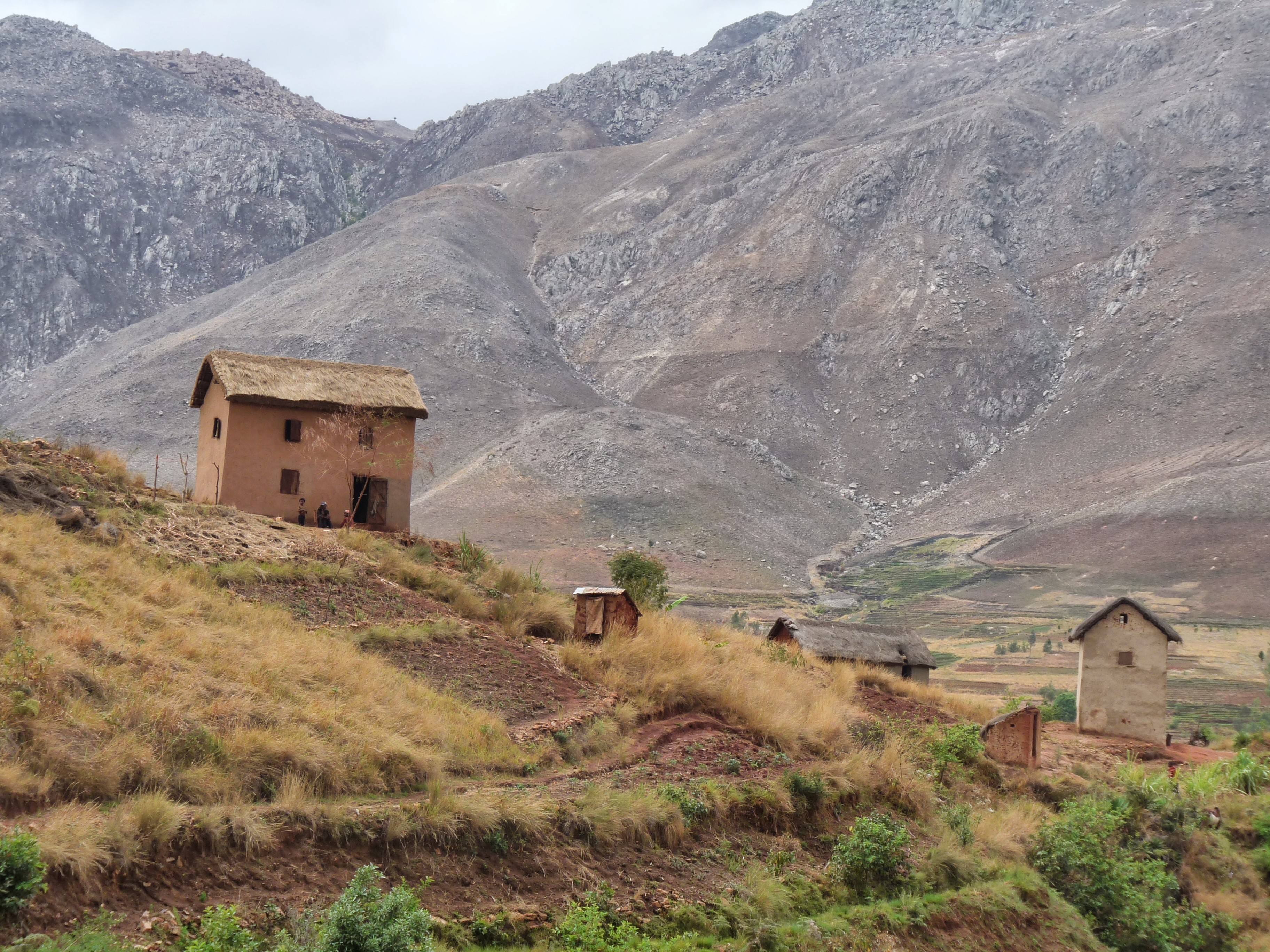
This high-altitude quartzite rock-dweller enjoys strong light but copes poorly with hot, humid lowland summers. Place it outdoors in full sun through spring and autumn — strong light tightens the caudex and brings out the ivory flowers. In midsummer, shift to roughly 30–50% shade with steady airflow to avoid stagnant heat at the base. An air circulator is effectively essential. Overwinter indoors near a bright window, kept above 5°C and out of rain. Year-round indoor culture leads to weak, drawn growth, so treat outdoor placement as the default.
Watering
In active growth, water thoroughly once the surface has clearly dried — this fattens the flat caudex. Highland origins mean it hates stagnant moisture, so skip watering on overcast or cool stretches. Overwinter essentially dry.
Substrate
Drainage and aeration first, with an inorganic mix. Akadama : Kanuma : pumice = 4:3:3 is a safe baseline; a touch more pumice is fine. A taller pot improves airflow under the caudex and reduces rot from trapped moisture.
Fertilizer & Supplements
A pinch of slow-release at repotting, or a very dilute liquid feed about once a month during growth — keep it light. Growth is unhurried on this highland species, and overfeeding deforms the caudex and brings on etiolation and root rot.
Temperature & Overwintering
Optimal 20–32°C, with a 5°C winter floor. A highland rock dweller used to wide swings, but it sulks in tropical nights, browning leaf tips — peak-summer shade and forced airflow help. Hold bone-dry through winter; wet soil plus cold is what kills it.

Starting from Seed
Where to source seeds
links go directly to the product page; the rest are scientific-name searches. Stock fluctuates — verify availability on the destination site.
Pre-sowing treatment
Soak seeds for about half a day (overnight) in a mix of a registered seed-treatment fungicide (Benlate or Daconil) and a plant tonic (SUPERthrive), each diluted per label. Floaters often indicate stale stock, and freshness has a strong effect on germination rate in this species, so source new-harvest seed whenever possible.
Substrate
Use a separate seedling mix that's fine-grained and near-sterile: fine Akadama, fine Kanuma, and vermiculite in equal 1:1:1 parts. Microwave-sterilize the mix before sowing for peace of mind — this species is especially sensitive to soilborne mold.
Sowing method
Sow with no covering, or only the thinnest dusting of substrate so the seeds remain partly visible. Space seeds at least 1 cm apart and arrange them so they don't clump together or overlap on the surface.
Light & temperature
Keep the tray in bright shade at a steady 25–30°C. Expect germination in 7–21 days. Germination depends heavily on seed freshness, and even fresh seed stays on the lower side. Be patient and don't give up early.
Watering
Bottom-water with the level 1–2 cm up the pot. Don't let the substrate dry out even after germination — hold steady humidity through the first 2–3 weeks, as this highland species is fussy about even moisture.
Fertilizer
No feeding right after germination. Once the true leaves emerge, give a heavily diluted liquid fertilizer about once a month — keep it lighter than label strength, since this slow-growing highland species etiolates quickly with excess nutrients.
From Germination to Repotting
Germination through true leaves (first month)
Keep up the bottom watering and hold the humidity steady. Avoid strong light and keep the tray in bright shade. This is a slow highland species, so wait patiently until the true leaves are fully out.
Weaning off bottom watering (months 1–2)
Gradually lower the water level, then switch to bottom watering from a saucer. The roots are still shallow at this stage, so a sudden dry-out will kill the seedlings — take longer to harden them off than you would with other species.
First repotting (years 1–2)
The right time is once the roots have reached the bottom of the pot. As the flat caudex begins to show, move the plant into a standard inorganic mix. Growth is unhurried, so step up pot size gradually rather than jumping straight to a large container.
Common Pitfalls
Mold & damping-off
- Cause: soilborne microbes, excess moisture, poor airflow
- Prevention: sterilize the substrate, change the bottom water often, keep air moving with a circulator
Etiolation
- Cause: insufficient light
- Prevention: bring the LED closer right after germination, or move the tray to bright shade outdoors
Seeds fail to germinate
- Cause: stale seed, too-low temperature
- Prevention: choose a reliable source, and steady the temperature with a heat mat
Seedlings die soon after germination
- Cause: sudden strong light, sudden drying
- Prevention: change conditions gradually — harden seedlings off over about a week
Notes
The sap is mildly toxic.