
A Chaco Boreal cactus from northern Paraguay, identified by field number LB2178. LB is the initial of Ludwig Bercht, a Dutch Gymnocalycium specialist who documented the population near Agua Dulce, Alto Paraguay. The flattened body, deeply incised ribs, and broad pale cross-banding give it a distinctly geometric silhouette. This page follows the trade name Gymnocalycium friedrichii; the current POWO classification places it as a synonym of Gymnocalycium stenopleurum F.Ritter. Japanese name: "Botangyoku" (牡丹玉). CITES Appendix II (genus-wide); IUCN Least Concern.
Native climate
Rain concentrates in the warm season, with a distinct dry season. Overall a mild climate.
A broad-scale picture of the native range. Real growing spots — rock crevices, fog belts — can be milder.
Sources: climate & elevation WorldClim 2.1 (1970–2000) · occurrences GBIF · native range POWO · current weather Open-Meteo
Care
Light & Placement
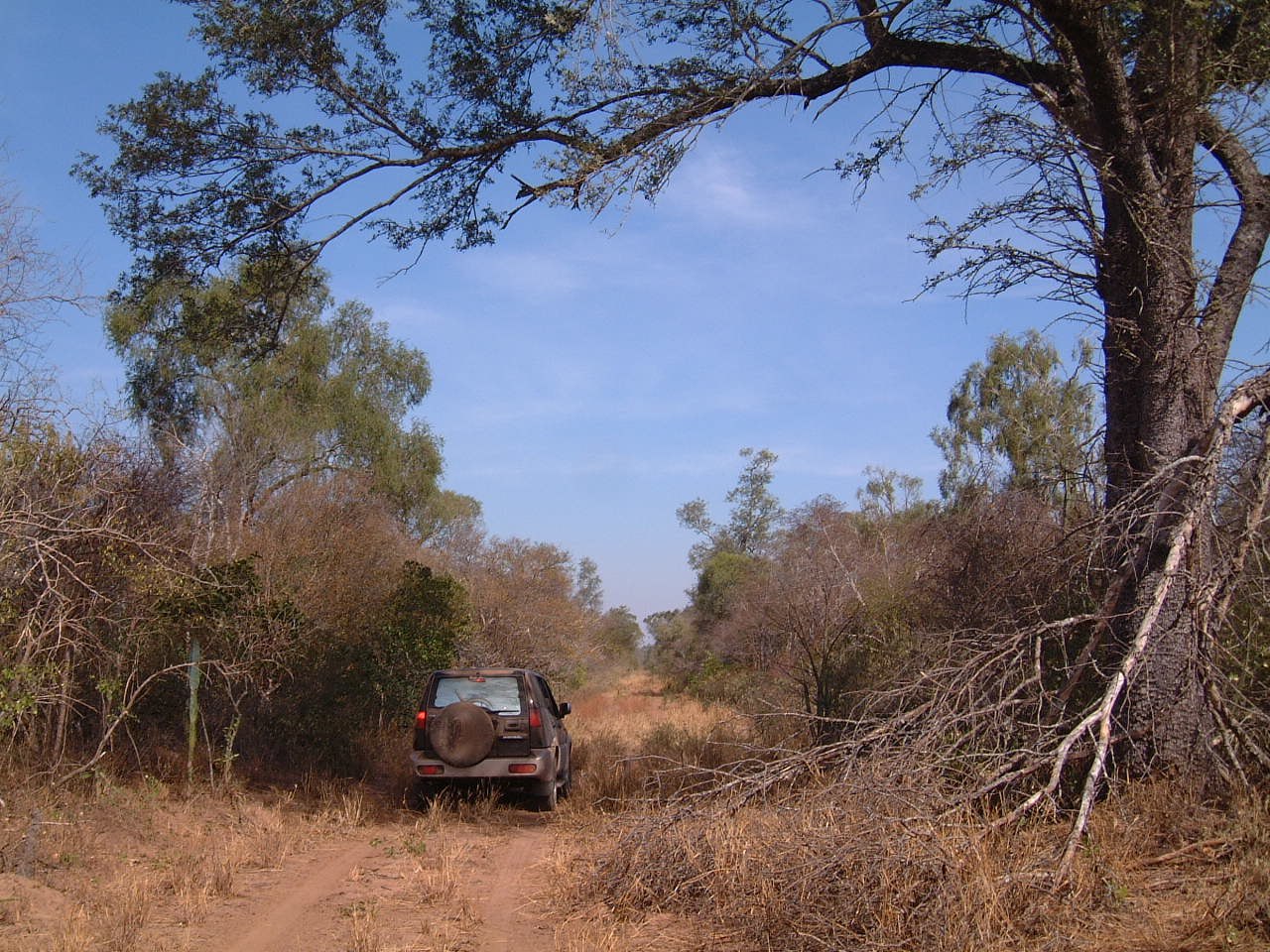
In habitat it grows on calcareous sandy-gravel flats of Paraguay's Chaco Boreal at 100–300 m, under strong sun, so give it full sun outdoors through the growing season — strong light is what keeps the ribs tight, the cross-banding crisp, and the body color saturated. In Japan's harshest midsummer weeks, a light 20–30% shade cloth helps prevent epidermal scorch without inducing etiolation. Raise pots off the ground and keep airflow generous; a circulator helps. Move indoors to a bright window for winter dormancy, keeping above 5°C and largely dry.
Watering
In active growth, water thoroughly only after the substrate has fully dried, then let it dry again. Less tolerant of prolonged damp than of swings. In winter, a single light misting per month is plenty.
Substrate
Drainage above all, leaning slightly alkaline to suit a calcareous-soil native. Small-grain Akadama : Kanuma : pumice = 4:3:3 is a reliable baseline, with a pinch of dolomitic lime to nudge the pH. A taller pot improves wet-dry cycling and reduces rot.
Fertilizer & Supplements
A small amount of slow-release during active growth, plus a monthly dilute liquid feed (around twice the label dilution). Overfeeding causes etiolation and elongates the ribs, blurring the flattened, geometric silhouette. Aim for slow density, not fast bulk.
Temperature & Overwintering
Optimal range 20–32°C. Above 35°C CAM efficiency drops, so support the plant with airflow and a light shade cloth through the hottest weeks. Overwinter dry on a bright window; cold combined with damp soil is the main risk, with a 5°C floor.
Starting from Seed
Where to source seeds
Pre-sowing treatment
Soak seeds for about half a day (overnight) in a mix of a registered seed-treatment fungicide (Benlate or Daconil) and a plant tonic (Menedael; outside Japan, SUPERthrive or a chelated iron / seaweed extract works similarly), each diluted per label. Cactus seeds are tiny and tolerate dry storage well, but viability still drifts over time — sowing soon after receipt is the safer course.
Substrate
Use a separate seedling mix that's fine-grained and near-sterile: fine Akadama, fine Kanuma, and vermiculite in equal 1:1:1 parts. Sterilize the mix with boiling water or a quick microwave pass before sowing for peace of mind.
Sowing method
The seeds are very small, so sow uncovered directly onto the substrate surface. Space them at least 5 mm apart and arrange them with tweezers so they don't clump together or overlap.
Light & temperature
Keep the tray in bright shade at a steady 25–30°C. Expect germination in 7–21 days. Fresh seed germinates readily — easy by cactus standards — and tends to come up evenly.
Watering
Bottom-water with the level 1–2 cm up the pot. For the first 2–3 weeks, prioritize not letting things dry out at all, then drop the water level in steady stages once the seedlings have come up.
Fertilizer
No feeding right after germination. Once the true body begins to show, give a heavily diluted liquid fertilizer once or twice a month — go lighter than the bottle suggests, since young seedlings are easily pushed into etiolation.
From Germination to Repotting
Germination through true leaves (first month)
Continue bottom watering; keep in bright shade.
Weaning off bottom watering (months 1–2)
Gradually lower the water level; switch to saucer watering.
First repotting (year 1–2)
Repot into a primarily inorganic mix.
Common Pitfalls
Mold & damping-off
- Cause: contaminated substrate, excessive moisture, poor ventilation
- Prevention: sterilize the substrate, change the bottom water frequently, use an air circulator for ventilation
Etiolation & rib stretching
- Cause: insufficient light, overfeeding
- Prevention: bring the LED closer right after germination, or move the seedlings to bright shade outdoors
Seeds fail to germinate
- Cause: old seeds, insufficient temperature
- Prevention: choose a trusted source, stabilize temperature with a heat mat
Epidermal scorch
- Cause: abrupt strong light, no shade in midsummer
- Prevention: change conditions gradually; add 20–30% shade through the hottest weeks
Notes
Spines are short and easy to handle, but the rib edges can still graze the skin.