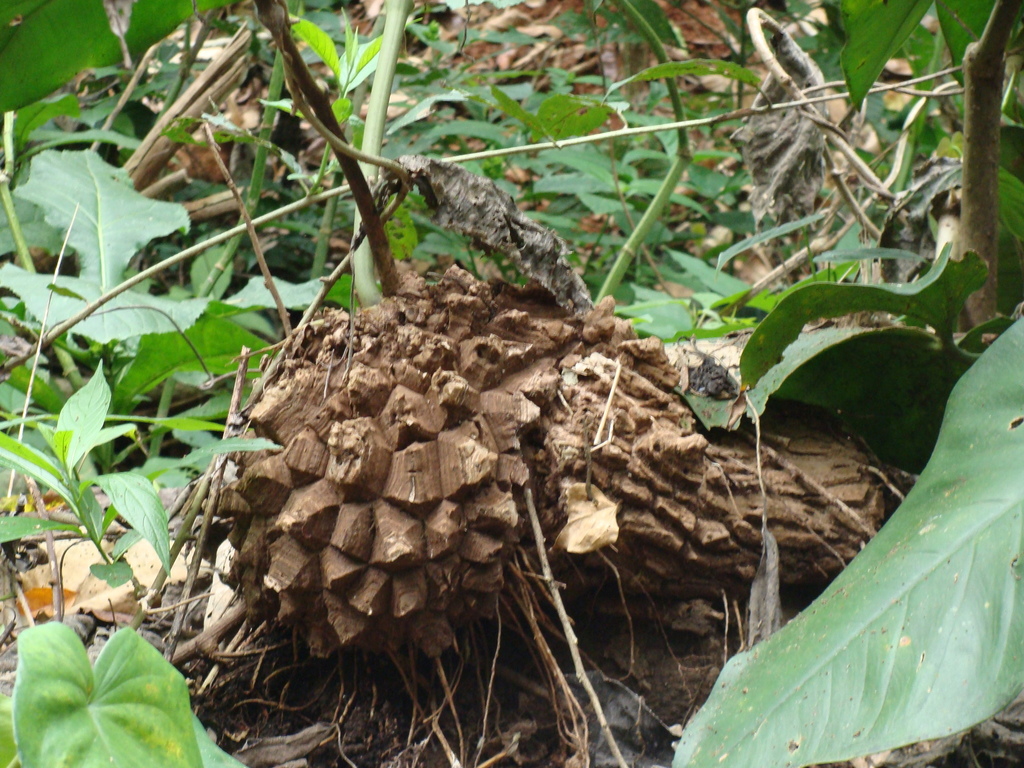
A popular Dioscorea native to the dry forests of Mexico and Central America, standing alongside D. elephantipes as a collector favorite. Whereas elephantipes is a winter-grower, mexicana is a summer-grower, characterized by a flatter, more spreading caudex that sits half-buried in the soil. The surface cracks into angular, plate-like sections, broader and more flattened than elephantipes — a dynamic, sculptural look that is part of the appeal. From spring through autumn, vines climb out of the crown and unfold glossy heart-shaped leaves, twining their way up any nearby support in a quiet show of vigor. Growth is reasonably brisk and the species is comparatively forgiving and a touch more cold-tolerant than its cousin — a solid mid-level pick among caudex plants.
Native climate
Rainfall is spread fairly evenly across the year. Overall a warm climate.
A broad-scale picture of the native range. Real growing spots — rock crevices, fog belts — can be milder.
Sources: climate & elevation WorldClim 2.1 (1970–2000) · occurrences GBIF · native range POWO
Care
Light & Placement

In habitat across Mexico and Central America it grows in dappled, semi-shaded rocky dry forest, so give it bright light without harsh full-day direct sun. Morning sun with afternoon shade, or roughly 30% shade cloth, works best — harsh direct sun scorches the leaves and stiffens the vines. Set up a support for the climbing vine and keep airflow good on a raised bench. Overwinter on a bright indoor window kept above 8°C and dry.
Watering
As a summer-grower, resume watering in spring when the vine extends, then water thoroughly once the surface dries through the spring-through-autumn active season. The long vines are water-thirsty, so don't let big plants go bone-dry. In winter, withhold completely and hold 8°C or above.
Substrate
Drainage first, inorganic-led. Akadama : Kanuma : pumice = 4:3:3 is a reliable baseline. Plant with the caudex sitting up out of the soil so the tortoise-shell pattern develops cleanly — a shallow wider pot stabilizes its sprawling silhouette.
Fertilizer & Supplements
A dilute liquid feed once a month through the spring-through-autumn active season, or a small pinch of slow-release at repotting. The long vines respond, but overfeeding loses the tight caudex and invites root rot.
Temperature & Overwintering
Optimal 20–35°C with an 8°C minimum. Unlike its cousin D. elephantipes (a winter-grower), this is a summer-grower — cold exposure yellows the leaves and triggers dormancy. Overwinter completely dry on a bright indoor window. If you keep both species on the same bench, label them clearly to avoid mixing up their opposing wet-dry calendars.

Starting from Seed
Where to source seeds
links go directly to the product page; the rest are scientific-name searches. Stock fluctuates — verify availability on the destination site.
Pre-sowing treatment
Soak seeds for about half a day (overnight) in a mix of a registered seed-treatment fungicide (Benlate or Daconil) and a plant tonic (Menedael; outside Japan, SUPERthrive or a chelated iron / seaweed extract works similarly), each diluted per label. Ones that don't sink are likely past their prime. The thin papery seeds blow away easily, so handle them carefully during soaking.
Substrate
Use a separate seedling mix that's fine-grained and near-sterile: fine Akadama, fine Kanuma, and vermiculite in 1:1:1 parts. Sterilizing beforehand with boiling water or a microwave pass meaningfully reduces damping-off losses.
Sowing method
Sow with no covering, or only the thinnest dusting of substrate so the seeds remain partly visible. Space the seeds at least 1 cm apart so they don't clump or overlap on the surface.
Light & temperature
Keep the tray in bright shade at 25–30°C. As a summer-grower, sow April through July — note this is the opposite season from elephantipes, so don't mix the two up.
Watering
Bottom-water with the level 1–2 cm up the pot. For the first 2–3 weeks, prioritize not letting things dry out, then drop the water level gradually once seedlings are stable.
Fertilizer
No feeding right after germination. Once the true leaves emerge, give diluted liquid fertilizer at double dilution once or twice a month through the spring-through-autumn active season.
From Germination to Repotting
Germination through true leaves
Continue bottom watering and keep strong light off them.
Weaning off bottom watering
Phase it out gradually over 1–2 months.
First repotting
In the first or second year, once roots have filled the pot.
Common Pitfalls
Mold & damping-off
- Cause: excess moisture, contamination
- Prevention: sterilize the substrate, ensure good air flow
Etiolation
- Cause: insufficient light
- Prevention: move LEDs closer right after germination, or shift the tray to bright shade outdoors
Seeds fail to germinate
- Cause: stale seeds, insufficient warmth
- Prevention: use fresh seeds and a heat mat
Notes
Root rot from excess moisture is the main risk. Counter it with a well-draining substrate.