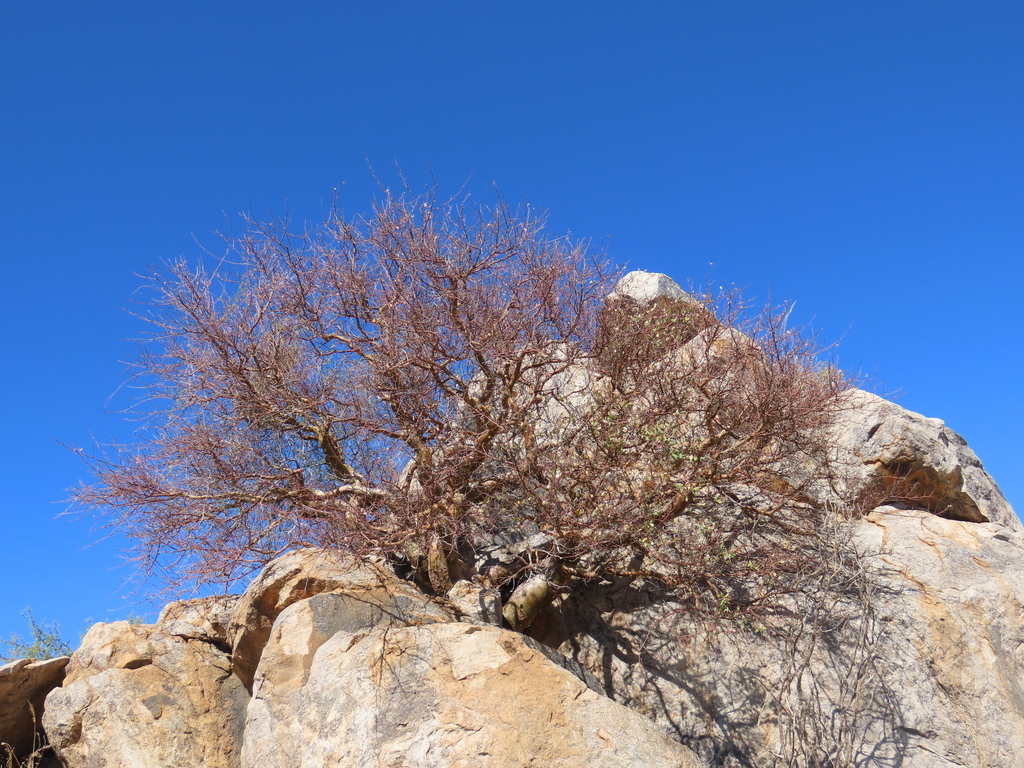
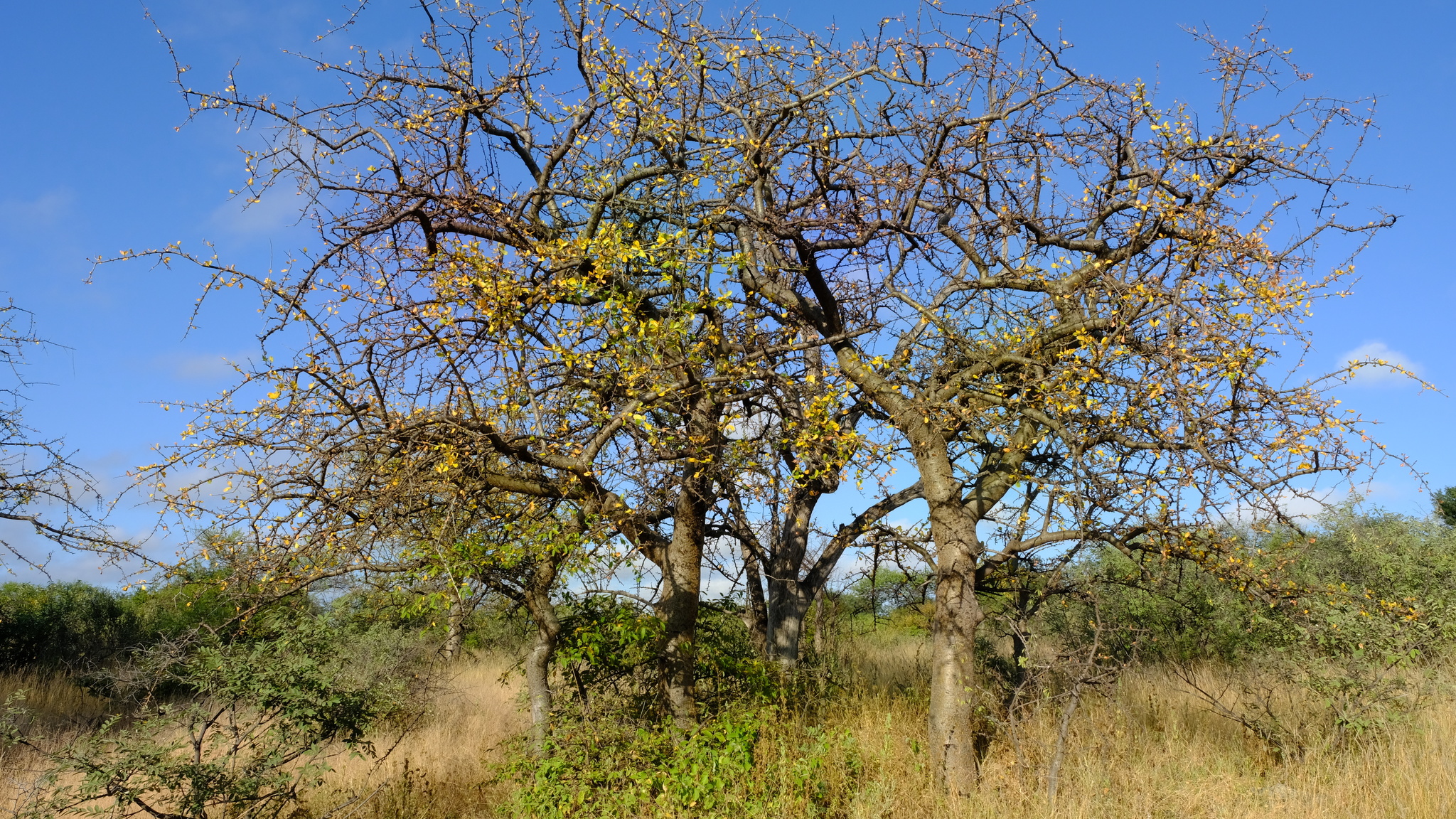
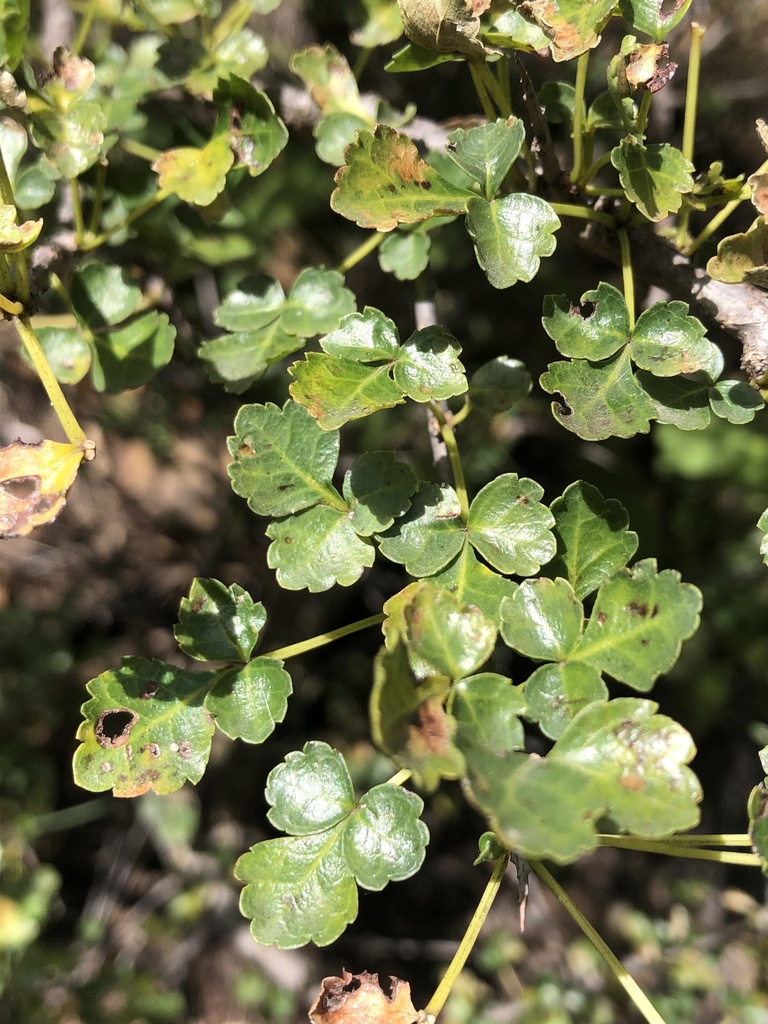
A Commiphora of the spiny forest country of southwestern Madagascar, and one of the most singular species in the genus. The base swells into an extraordinary, almost grotesque caudex, while the bark layers itself in burls, ridges and irregular knobs that justify the epithet "monstruosa" at a glance. Wounded bark exudes a faintly aromatic resin in true Commiphora fashion, and small leaves are shed in the dry season to lay the sculpted trunk bare. The species is uncommon even in habitat, and seedling-grown plants reach the market only in limited numbers — making it as much a long-term project as a plant, rewarding experienced growers who can offer heat, strong light, and an austere mix.
Native climate
Rain concentrates in the warm season, with a dry season of roughly 6 months. Overall a warm climate.
A broad-scale picture of the native range. Real growing spots — rock crevices, fog belts — can be milder.
Sources: climate & elevation WorldClim 2.1 (1970–2000) · occurrences GBIF · native range POWO · current weather Open-Meteo
Care
Light & Placement

A heat-loving species from the spiny forest of southwestern Madagascar — strong direct sun through the growing season is what brings out the burls, ridges and "monstrous" trunk sculpture that define the species. Humidity is the larger risk than light, so shelter from rain and prioritize airflow under an open structure; mild shading helps through Japan's worst summer heat. Bring indoors to a bright window before temperatures fall below 8°C.
Watering
During active growth, soak thoroughly once the topsoil is fully dry, let water drain freely, and dry the surface quickly — water lingering in burls and crevices invites rot. Withhold water completely through dormancy.
Substrate
A sharply draining inorganic mix is essential. Akadama : Kanuma : pumice at 4:3:3 works well; sift out fines to keep the caudex base aerated and prevent rot.
Fertilizer & Supplements
A dilute liquid fertilizer once a month through the growing season. Keep nitrogen low to preserve the burled sculpture; phosphorus-leaning feeds support burl development and a denser, harder bark.
Temperature & Overwintering
Optimal 20–35°C on the warmer end, with poor cold tolerance — aim for an 8°C winter floor. Below 5°C the heavy caudex can develop soft-rot lesions that rarely recover. Rest fully dry indoors in a bright, warm spot and pull back from cold windows on freezing nights.

Starting from Seed
Where to source seeds
links go directly to the product page; the rest are scientific-name searches. Stock fluctuates — verify availability on the destination site.
Pre-sowing treatment
Soak seeds for about 7 hours in a mix of a registered seed-treatment fungicide (Benlate or Daconil) and a plant tonic (Menedael; outside Japan, SUPERthrive or a chelated iron / seaweed extract works similarly), each diluted per label. Freshness strongly governs germination — old seed lots may turn out to be empty, so source recent seed and sow promptly.
Substrate
A fine-grained inorganic mix — fine akadama and fine hyuga in roughly equal parts. Sterilize with boiling water or a brief microwave pass before sowing.
Sowing method
Level the surface, lay seeds on their sides, and cover with the thinnest possible dusting of substrate. Deep sowing is fatal on this caudex-former.
Light & temperature
Bright shade out of direct sun at 25–32°C. Lean to the warmer end of the range and stabilize the temperature with a heat mat.
Watering
Bottom-water continuously until germination to keep the mix evenly moist. Continue shallow bottom watering afterward and never let the substrate dry out.
Fertilizer
Once two or three true leaves are open, feed a liquid fertilizer diluted to less than half strength, monthly. Stronger doses burn fine roots.
From Germination to Repotting
Germination through true leaves
Continue bottom watering and keep humidity up.
Weaning off bottom watering
Wean gradually over 1–2 months.
First repotting
Year 1–2, once roots have filled the pot.
Common Pitfalls
Mold & damping-off
- Cause: Excess moisture, microbes
- Prevention: Sterilize the substrate, ensure ventilation
Low germination rate
- Cause: Seed freshness, insufficient heat
- Prevention: Use fresh seed, supplemental heat
Etiolation
- Cause: Insufficient light
- Prevention: Manage light levels
Notes
Below 5°C, soft rot spreads quickly through the heavy caudex and is very hard to reverse.