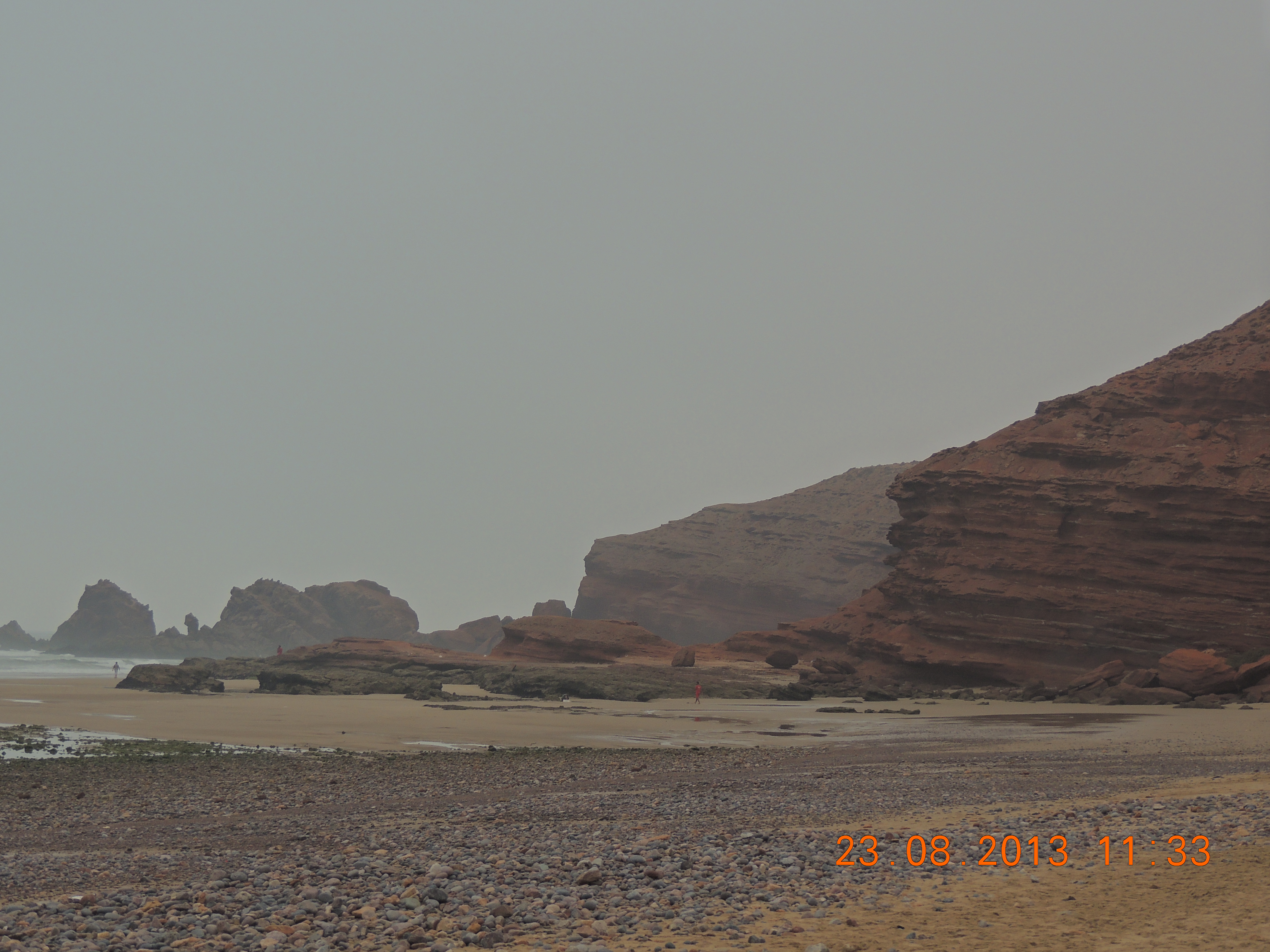
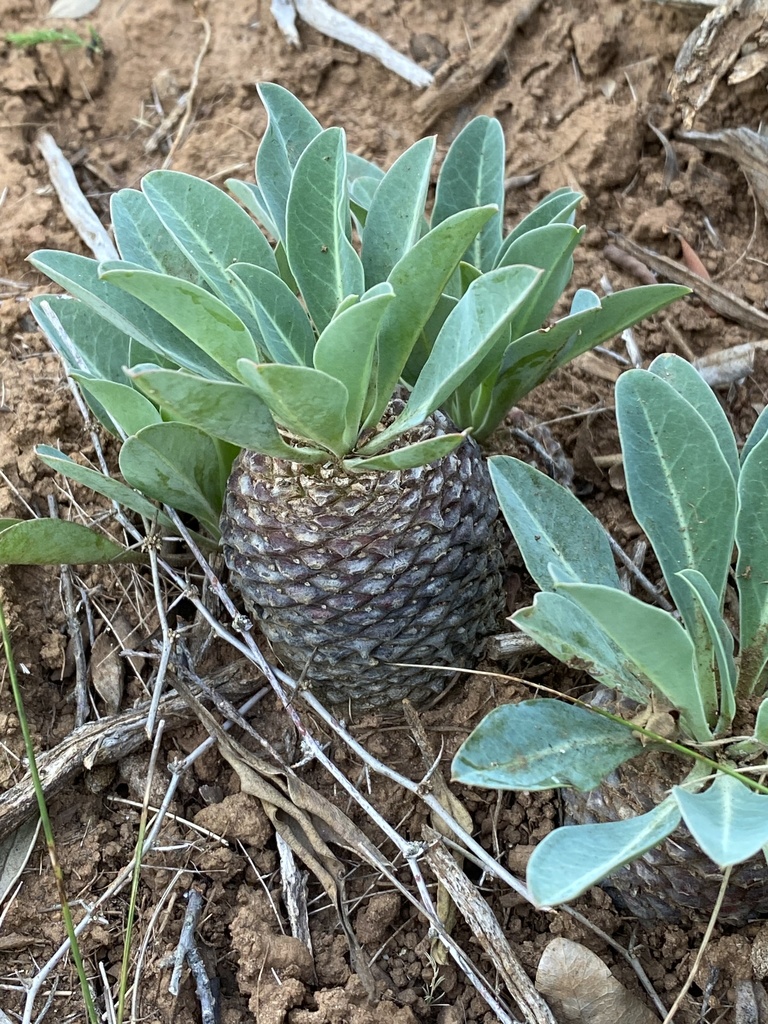
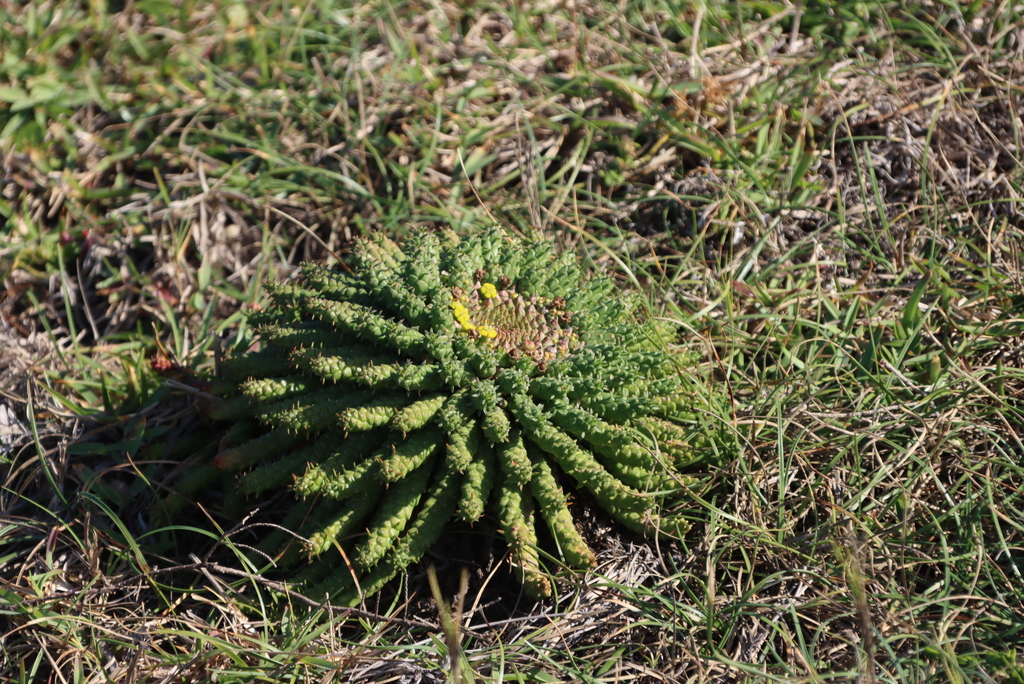
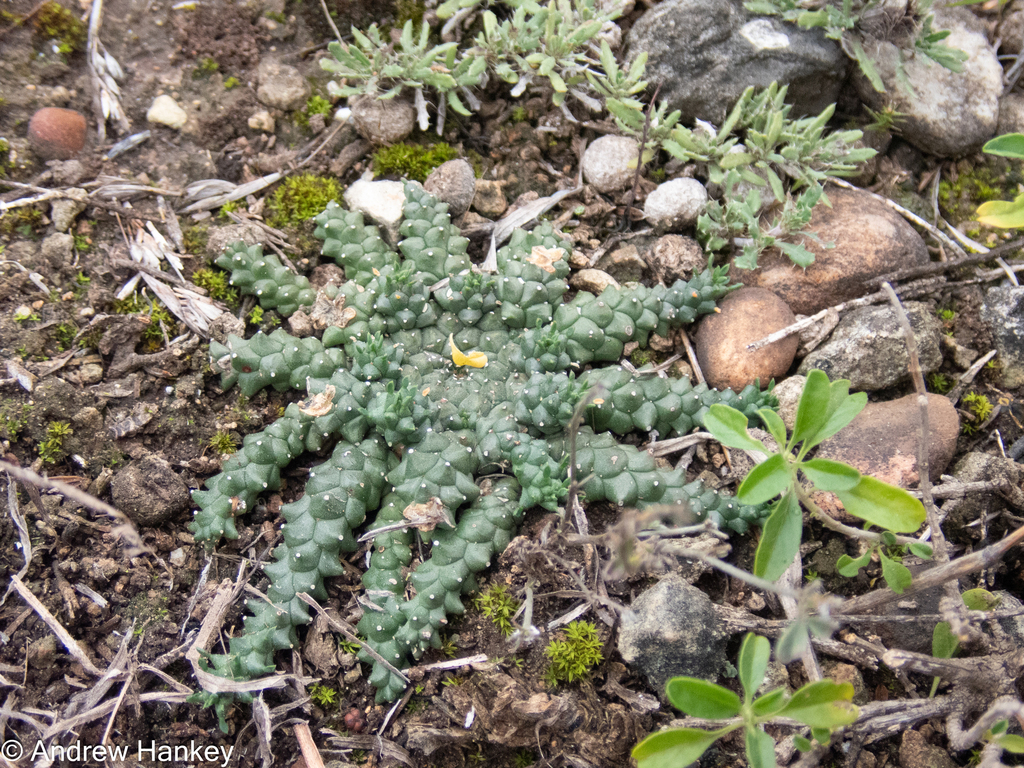
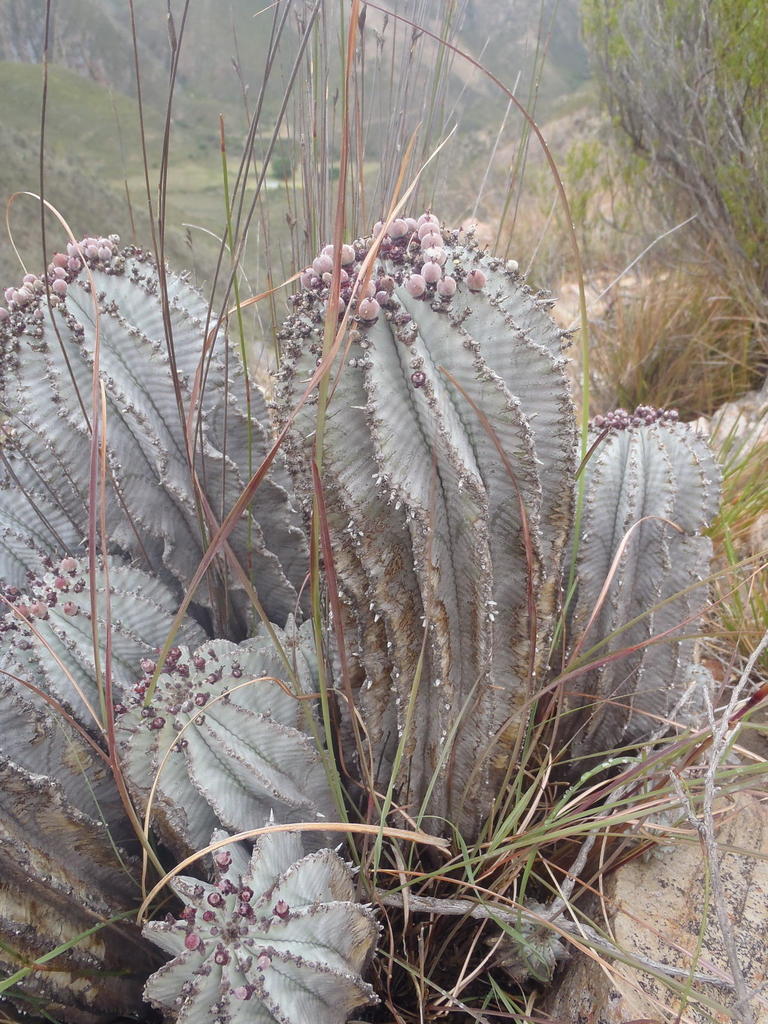
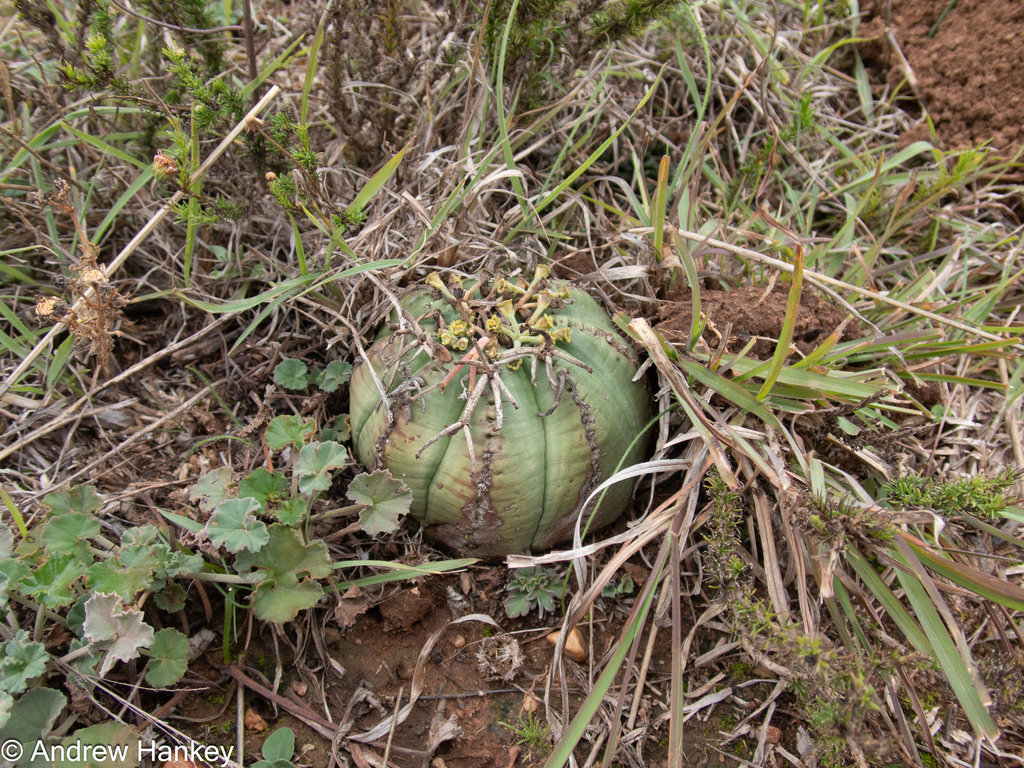
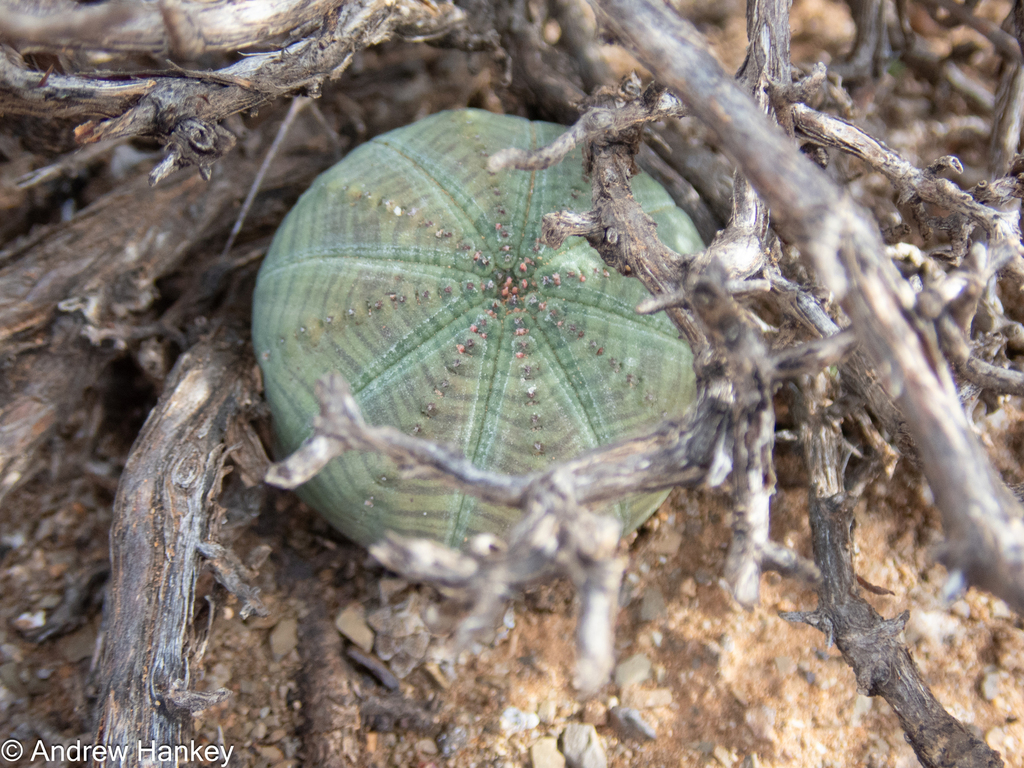
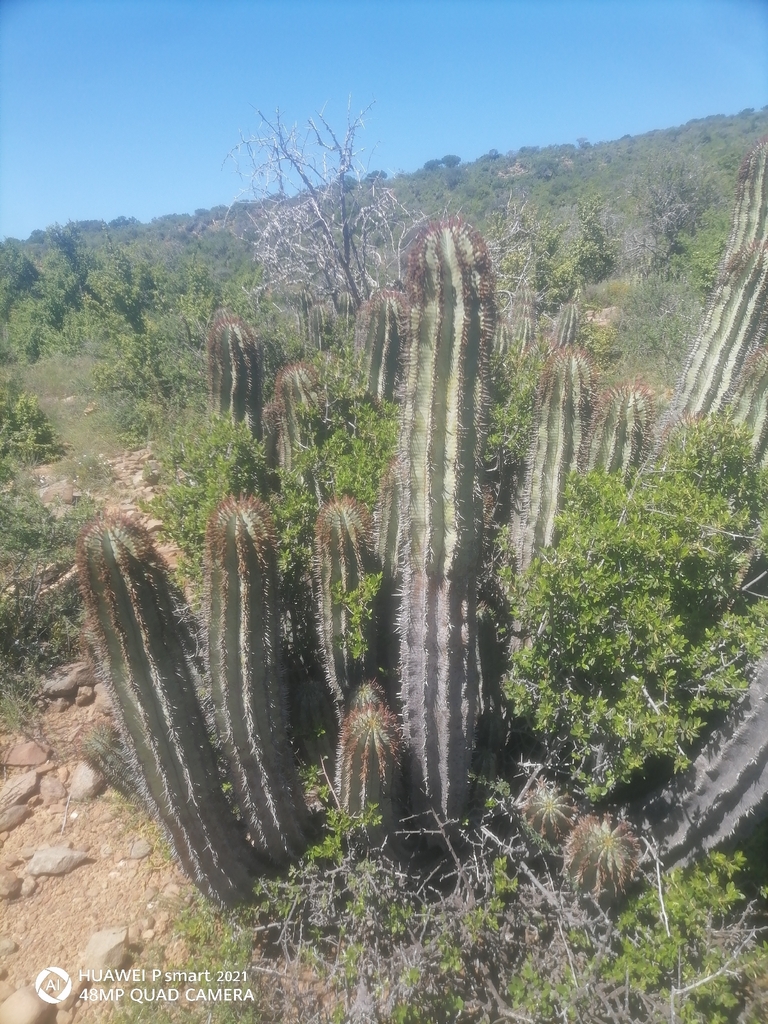
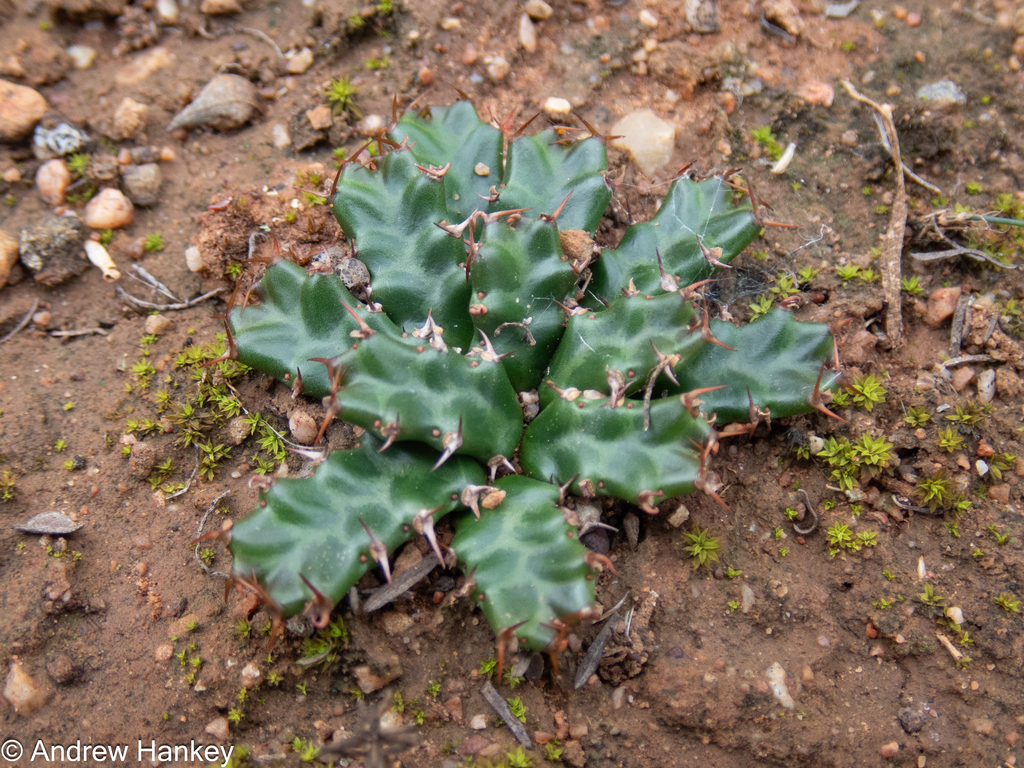
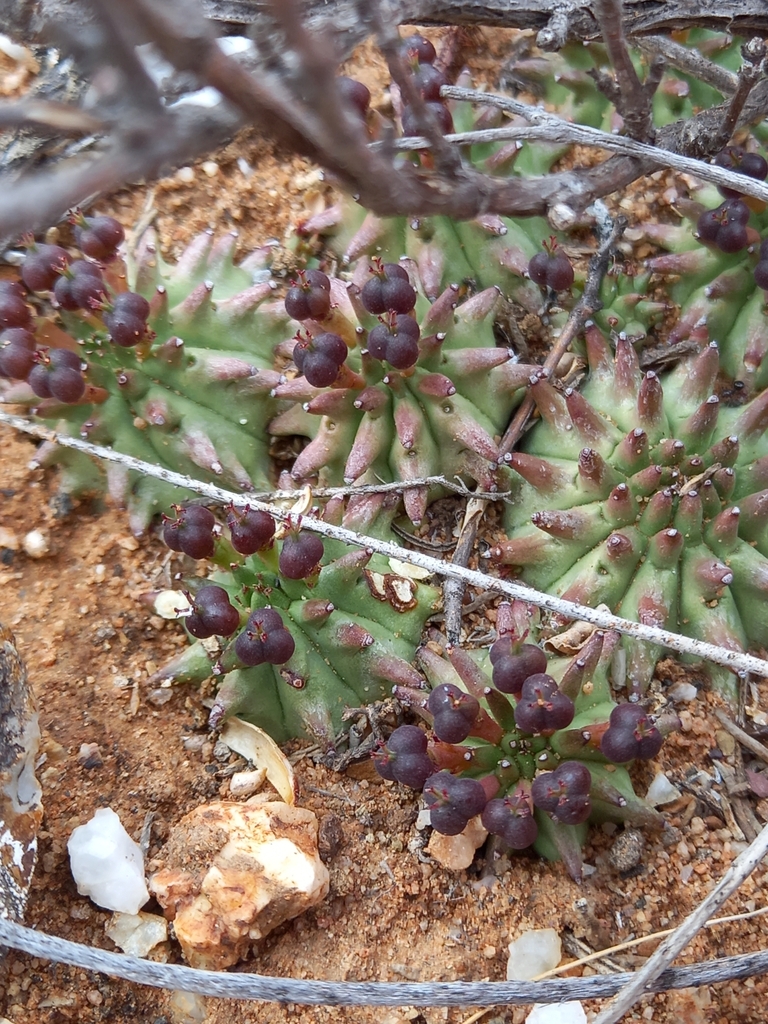
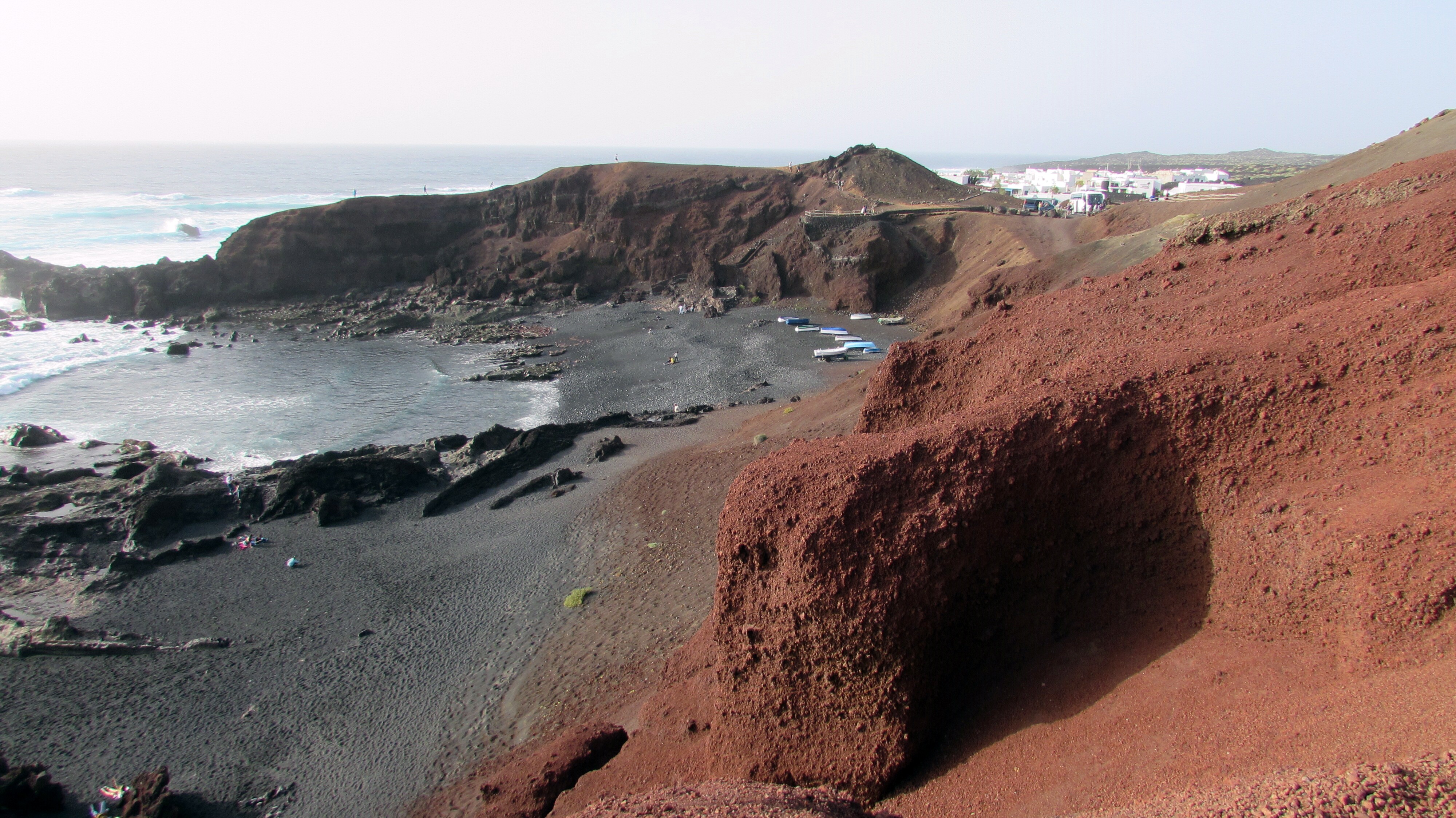
"Balsamifera" is the low shrub that defines the dry coastal slopes of the Canary Islands — wind-pruned branches creeping across the ground, with small leaves that open only during the rains. On Lanzarote and Fuerteventura it builds the loose communities known locally as tabaibal dulce. Across the Atlantic strait it continues in scattered stands through southern Morocco, Western Sahara, Mauritania, and northern Senegal — an old plant of the arid northwest African coast. It moves in the cooler months and rests through high summer, with a quietly thickening, woody habit. The latex is reported to be gentler than that of many Euphorbia species, but it still irritates skin and mucous membranes on contact.
Native climate
Rain concentrates in the cool season, with a dry season of roughly 5 months. Overall a mild climate.
A broad-scale picture of the native range. Real growing spots — rock crevices, fog belts — can be milder.
Sources: climate & elevation WorldClim 2.1 (1970–2000) · occurrences GBIF · native range POWO · current weather Open-Meteo
Care
Light & Placement

A species shaped by the salty wind of the Canary coast, balsamifera prefers strong light and steady airflow, and resents stagnant moisture. In its growing season — autumn through spring — give it full outdoor sun and let the leaves come out. In the Japanese summer it tends toward dormancy and will drop leaves, so move it to half shade, out of rain, on a raised shelf with airflow. In colder regions, bring it to a bright indoor window when winter night temperatures fall.
Watering
Because it grows in the cool months, water generously after the substrate has dried, from autumn through spring. In high summer it leans dormant and sheds leaves, so cut back to a light misting once or twice a month. Prolonged rain and waterlogged soil go straight to root rot, so keep it sheltered under eaves.
Substrate
Drainage above all, in an inorganic mix. Small-grain Akadama : pumice : Kanuma = 4:3:3 is a reliable baseline. A pinch of slow-release such as Magamp K helps early growth, and a taller pot improves the wet-dry cycle.
Fertilizer & Supplements
A small amount of slow-release during active growth, plus a monthly dilute liquid feed (around twice the label dilution). Overfeeding stretches the branches and disturbs the slow pace of woodiness.
Temperature & Overwintering
Optimal 18–30°C with a 5°C winter floor. It's relatively sensitive to winter cold, and damp soil at low temperatures is the most common failure mode. From autumn, taper water gradually and move it to a bright indoor window before night temperatures drop below 5°C.
Starting from Seed
Where to source seeds
Pre-sowing treatment
Soak seeds for about half a day (overnight) in a mix of a registered seed-treatment fungicide (Benlate or Daconil) and a plant tonic (Menedael; outside Japan, SUPERthrive or a chelated iron / seaweed extract works similarly), each diluted per label. Floaters tend to germinate poorly.
Substrate
Use a separate seedling mix that's fine-grained and near-sterile: fine Akadama, fine Kanuma, and vermiculite in equal 1:1:1 parts. Sterilize the mix with boiling water or a quick microwave pass before sowing.
Sowing method
Sow with no covering, or only the thinnest dusting of substrate so the seeds remain partly visible. Space them at least 1 cm apart so they don't clump or overlap on the surface.
Light & temperature
Keep the tray in bright shade at a steady 20–26°C. Expect germination in 10–28 days. Germination depends on seed freshness, but with fresh seed it is reasonably steady.
Watering
Bottom-water with the level 1–2 cm up the pot. For the first 2–3 weeks, prioritize not letting things dry at all, then drop the level in steady stages once the seedlings have come up.
Fertilizer
No feeding right after germination. Once the true leaves emerge, give a heavily diluted liquid fertilizer once or twice a month — go lighter than the label suggests for safety.
From Germination to Repotting
Germination through true leaves
Continue bottom watering and avoid strong light.
Weaning off bottom watering
Wean off gradually over 1–2 months.
First repotting
In year 1 or 2, once the plant becomes root-bound.
Common Pitfalls
Mold & damping-off
- Cause: Excess moisture, contamination
- Prevention: Sterilize substrate, ensure ventilation
Etiolation
- Cause: Insufficient light
- Prevention: Move the LED closer right after germination, or move outdoors to bright shade
Seeds fail to germinate
- Cause: Stale seeds, insufficient temperature
- Prevention: Use fresh seeds and a heat mat
Notes
The latex can irritate if it gets on skin or mucous membranes — take care with hands and eyes.