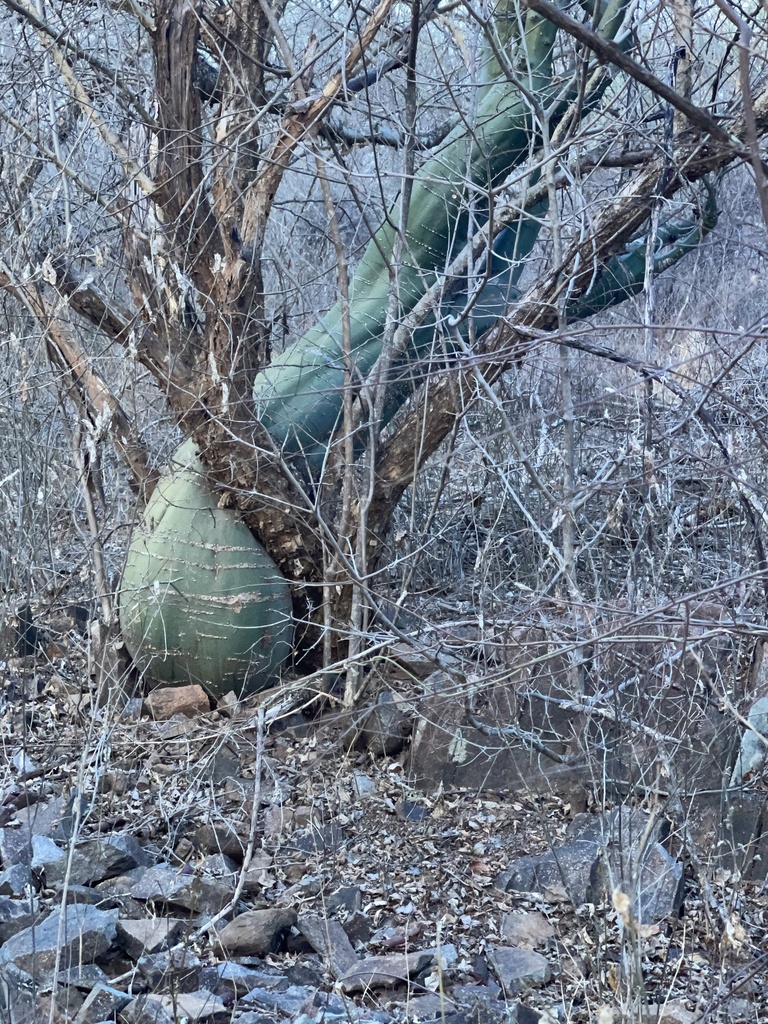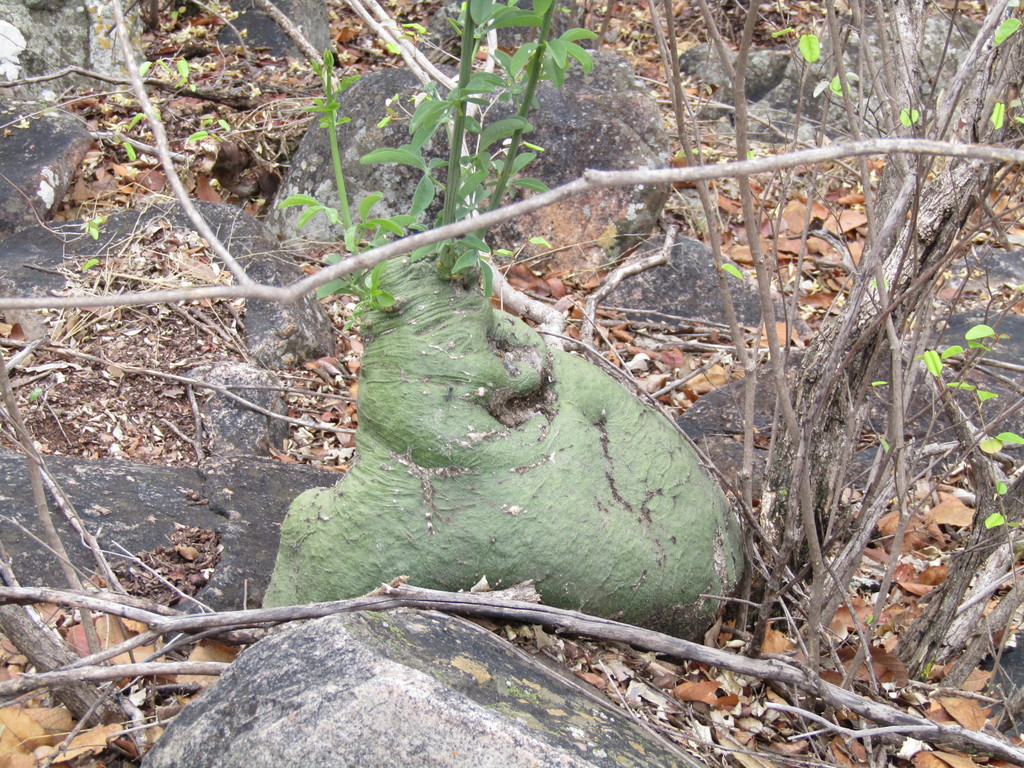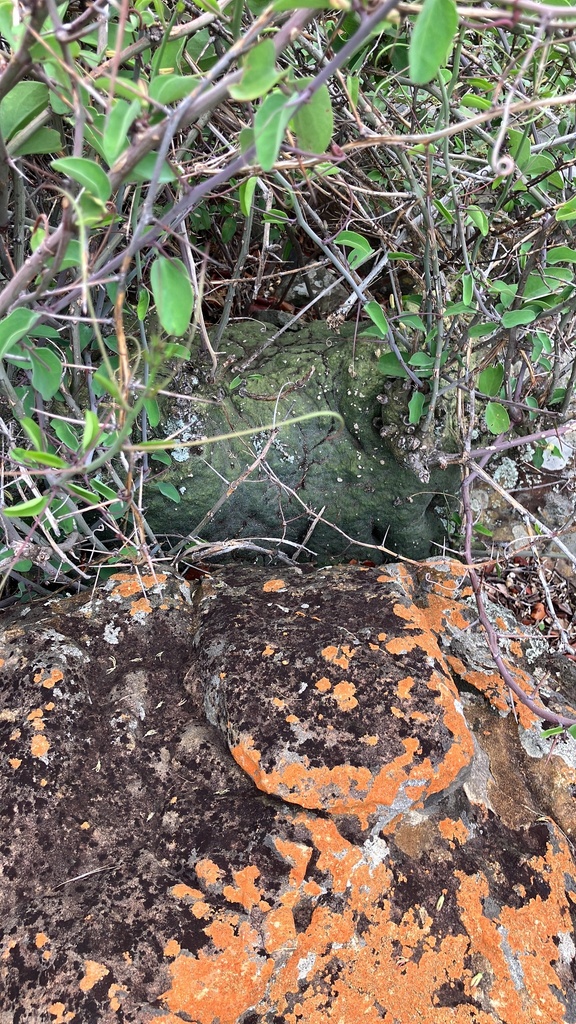
A commanding Adenia with a hefty caudex and sharply spined branches, native to the dry bushland of South Africa and Mozambique. A rough, gray-brown caudex slowly swells at ground level like weathered rock, sending out vining stems armed with spines in a radiating, sculptural form. In habitat, some specimens grow truly massive over many decades, towering well above human height and earning legal protection in parts of their range. Small leaves appear sparsely along the spiny stems, lending a contrast to the bulk below. Slow-growing and notably intolerant of excess moisture, it is a species for experienced growers comfortable with a lean, careful watering regime.
Native climate
Rain concentrates in the warm season, with a distinct dry season. Overall a mild climate.
A broad-scale picture of the native range. Real growing spots — rock crevices, fog belts — can be milder.
Sources: climate & elevation WorldClim 2.1 (1970–2000) · occurrences GBIF · native range POWO · current weather Open-Meteo
Care
Light & Placement

In habitat on rocky outcrops in South Africa's Limpopo region it grows in strong sun, so give it full direct sunlight outdoors during the growing season — that keeps the caudex tight and brings out the deepest spine color. A light 20–30% shade cloth handles Japan's harshest midsummer weeks. Raise pots on a bench for airflow. Move indoors to a bright sunny window for winter, kept above 10°C and largely dry.
Watering
Water thoroughly once the surface dries during active growth to fatten the gnarled caudex. Once the vines extend, watch large plants for water stress. Ease back through dormancy, going fully dry once leaves drop and holding 10°C or above through winter.
Substrate
Drainage first with the pumice ratio pushed up. Akadama : Kanuma : pumice = 3:3:4 is a good target, in a deeper pot so the taproot can run straight down. Keep any slow-release feed to the smallest pinch.
Fertilizer & Supplements
A dilute liquid feed at most once a month in active growth, applied lightly. The plant grows slowly and asks little of fertilizer, so overfeeding pushes etiolation and root rot — prioritize a tight caudex over fast leafy push.
Temperature & Overwintering
Optimal 22–35°C with an 8°C minimum. Cold readily blackens branch tips and accelerates leaf drop. As autumn cools, taper water early and let the plant defoliate before going fully dry for dormancy. Overwinter on a bright window kept dry — damp soil with cold quickly rots the caudex and is the species' single biggest risk.

Starting from Seed
Where to source seeds
Pre-sowing treatment
Soak seeds for about half a day (overnight) in a mix of a registered seed-treatment fungicide (Benlate or Daconil) and a plant tonic (Menedael; outside Japan, SUPERthrive or a chelated iron / seaweed extract works similarly), each diluted per label. Any still floating are likely no longer viable; seed is uncommon and loses viability quickly, so sow promptly after receiving fresh stock.
Substrate
Use a separate seedling mix that's fine-grained and near-sterile: fine Akadama, fine Kanuma, and vermiculite in 1:1:1 parts. Sterilizing beforehand with boiling water or a microwave pass meaningfully reduces damping-off losses.
Sowing method
Sow with no covering, or only the thinnest dusting of substrate so the seeds remain partly visible. Space the seeds at least 1 cm apart so they don't clump or overlap on the surface.
Light & temperature
Keep the tray in bright shade at 25–30°C. Germination takes its time at 14–30 days, and a heat mat helps even out the flush. Stay patient with later-emerging sprouts.
Watering
Bottom-water with the level 1–2 cm up the pot. For the first 2–3 weeks, prioritize not letting things dry out, then drop the water level gradually once seedlings are stable.
Fertilizer
No feeding right after germination. Once the true leaves emerge, give diluted liquid fertilizer at double dilution once or twice a month, applied very lightly.
From Germination to Repotting
Germination through true leaves
Continue bottom watering and keep strong light off them.
Weaning off bottom watering
Phase it out gradually over 1–2 months.
First repotting
In the first or second year, once roots have filled the pot.
Common Pitfalls
Mold & damping-off
- Cause: excess moisture, contamination
- Prevention: sterilize the substrate, ensure good air flow
Etiolation
- Cause: insufficient light
- Prevention: move LEDs closer right after germination, or shift the tray to bright shade outdoors
Seeds fail to germinate
- Cause: stale seeds, insufficient warmth
- Prevention: use fresh seeds and a heat mat
Notes
The sap is mildly toxic.