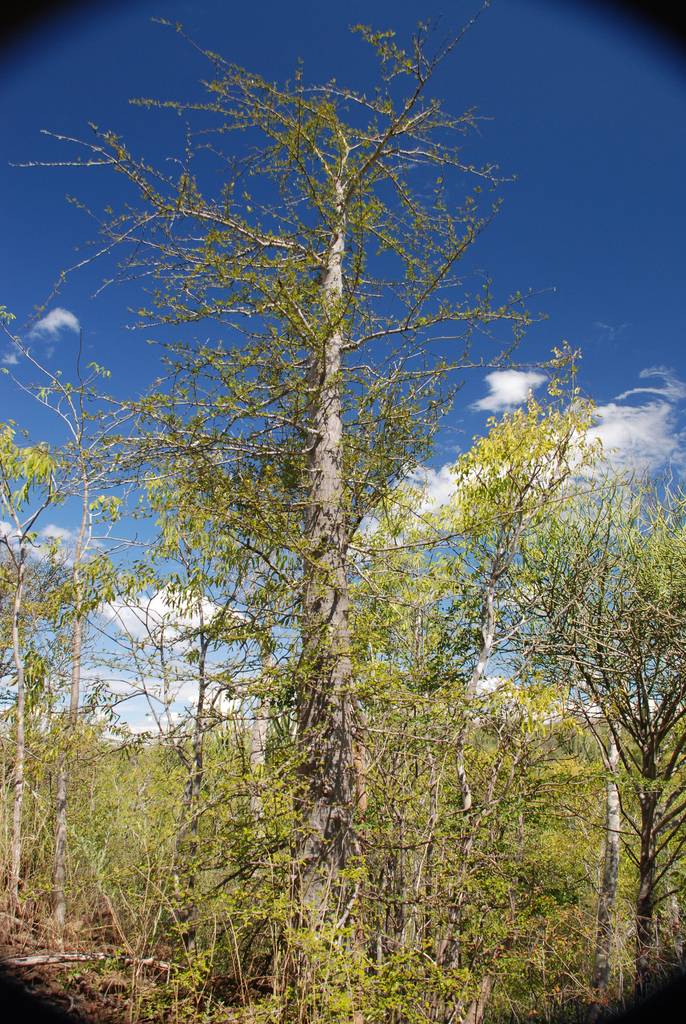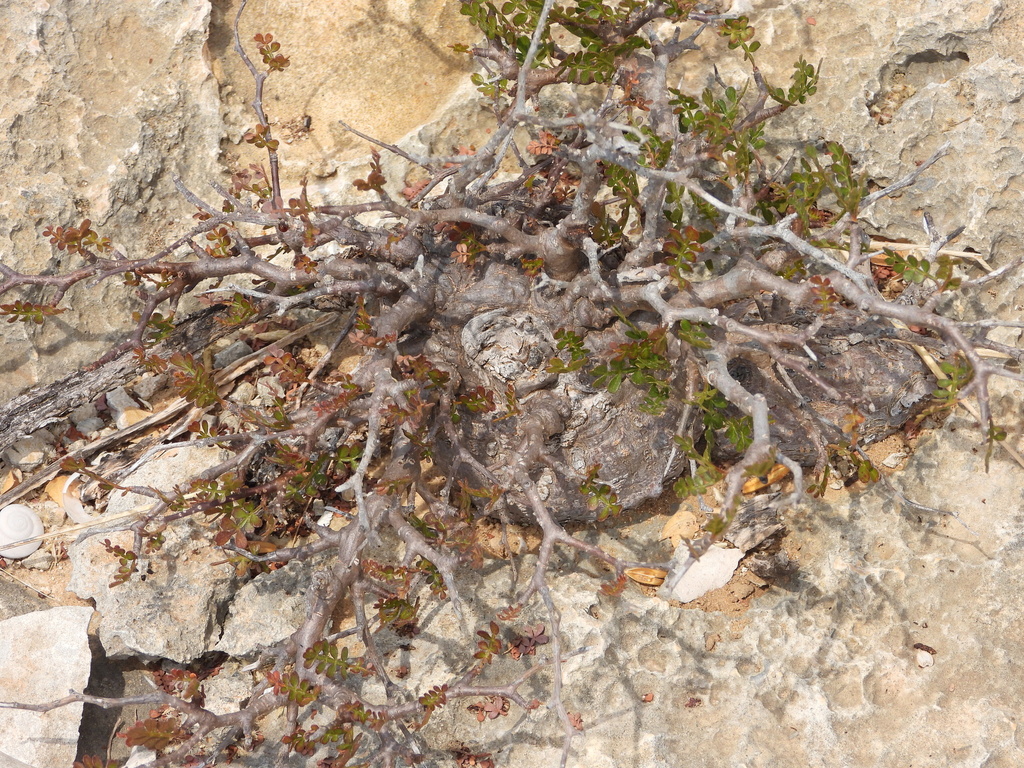
A rare Operculicarya from a restricted area of arid southwestern Madagascar, and the most coveted species in this cashew-family genus endemic to the island. It builds a thick, upright caudex-like trunk packed with knots, burls and ridges, clothed in deeply cracked bark that flakes away in fine papery layers — every surface looks ancient even on a small plant. From that heavy, sculptural trunk the canopy unfurls into extraordinarily fine pinnate leaves, and the contrast between massive woody base and feather-light foliage gives the species its much-loved "natural bonsai" character. Seed supply is scarce and germination low, making it a genuinely high-difficulty species — yet for many caudex enthusiasts, the eventual grail.
Native climate
Rain concentrates in the warm season, with a dry season of roughly 6 months. Overall a warm climate.
A broad-scale picture of the native range. Real growing spots — rock crevices, fog belts — can be milder.
Sources: climate & elevation WorldClim 2.1 (1970–2000) · occurrences GBIF · native range POWO · current weather Open-Meteo
Care
Light & Placement

The species' signature thick, upright caudex is built under the intense sun and heat of a tiny corner of arid southwestern Madagascar, so strong direct light is what preserves that "natural bonsai" silhouette. Grow it outdoors in full sun on an airy bench through the growing season, then move it to a bright indoor window before the weather turns cool.
Watering
In active growth, water thoroughly only after the topsoil has dried completely, then dry the rootball quickly with strong airflow to mimic the natural soak-and-bake rhythm. Taper through autumn as leaves fall, then withhold water entirely through dormancy until spring movement resumes.
Substrate
Drainage above all else. Aim for akadama : kanuma : pumice at roughly 3:3:4, topped with a thin cap of fine pumice grit so the surface dries fast. Given the species' rarity, a shallow unglazed terracotta or proper bonsai pot helps prevent any pocket of stagnant moisture around the roots.
Fertilizer & Supplements
Feed sparingly through midsummer with a liquid fertilizer diluted to half the label rate or weaker, no more than once a month. Heavy feeding stretches shoots and softens the "natural bonsai" character, so keep the dose minimal and pair it with a tonic such as Menedael.
Temperature & Overwintering
Optimal 20–35°C with a 5°C winter floor. A semi-deciduous to deciduous response in autumn is normal — leaf drop into dormancy is expected. Overwinter completely dry on a bright indoor window, well clear of rain and cold drafts. Given the species' rarity, cold-plus-damp accidents can be unforgiving, so err on the conservative side.

Starting from Seed
Where to source seeds
links go directly to the product page; the rest are scientific-name searches. Stock fluctuates — verify availability on the destination site.
Pre-sowing treatment
If fruit pulp remains, soak briefly to soften it and remove it completely before treating. Soak seeds for about half a day (overnight) in a mix of a registered seed-treatment fungicide (Benlate or Daconil) and a plant tonic (Menedael; outside Japan, SUPERthrive or a chelated iron / seaweed extract works similarly), each diluted per label. Seed freshness is the single most important factor for germination success.
Substrate
Use a fine-grained, sterile inorganic mix of roughly equal parts small akadama and hyuga-tsuchi, and treat it before sowing with both boiling water and a fungicide drench for thorough sterilization.
Sowing method
Cover the seed with only a very thin layer of fine substrate, just deep enough to hide it at about its own diameter, so the surface does not dry out unevenly and the seed stays in contact.
Light & temperature
Hold the tray at 25–30°C until germination, in bright shade out of direct sun. A heat mat is the key to lifting the otherwise low germination percentages of this species.
Watering
Bottom-water through the wait so the mix stays uniformly damp without standing water on top, paired with constant airflow from a circulator. Patience is required — germination is genuinely slow.
Fertilizer
Once two or three true leaves have opened, begin a liquid fertilizer at half the label rate or weaker, applied very lightly every two or three weeks.
From Germination to Repotting
Germination through true leaves
Continue bottom watering and avoid strong light.
Weaning off bottom watering
Wean gradually over 2–3 months.
First repotting
From year 2 onward, once roots have filled the pot.
Common Pitfalls
Mold & damping-off
- Cause: Excess moisture, microbes
- Prevention: Thorough substrate sterilization, ensure ventilation
Extremely low germination rate
- Cause: Seed freshness (most important), insufficient heat
- Prevention: Use the freshest seed you can get; a heat mat is essential
Giving up because germination takes so long
- Cause: Mismatched expectations
- Prevention: Go in expecting it to take several months to half a year
Notes
A prized rarity — wet soil with cold can be fatal, so winter management has to be careful. The sap, typical of the Anacardiaceae, may irritate sensitive skin.