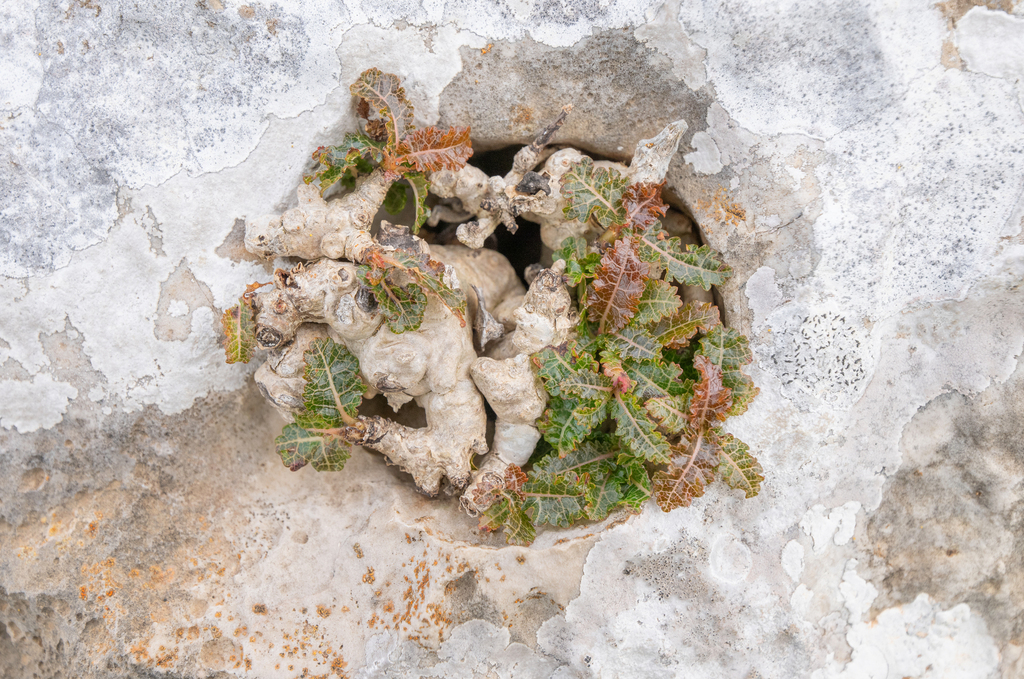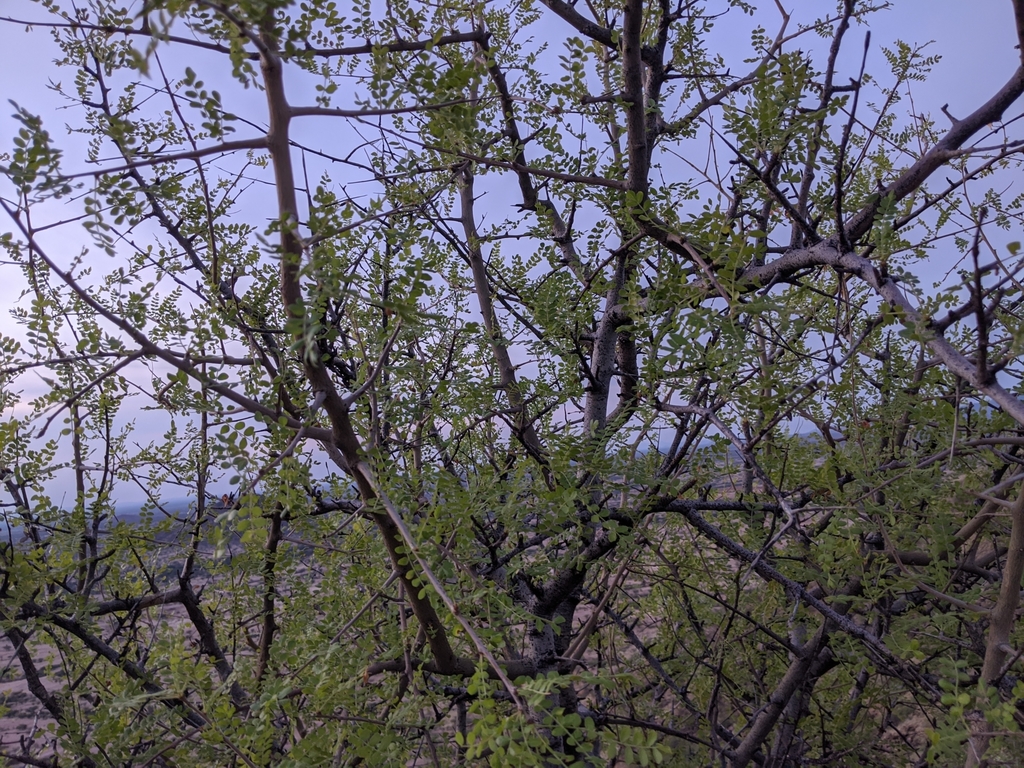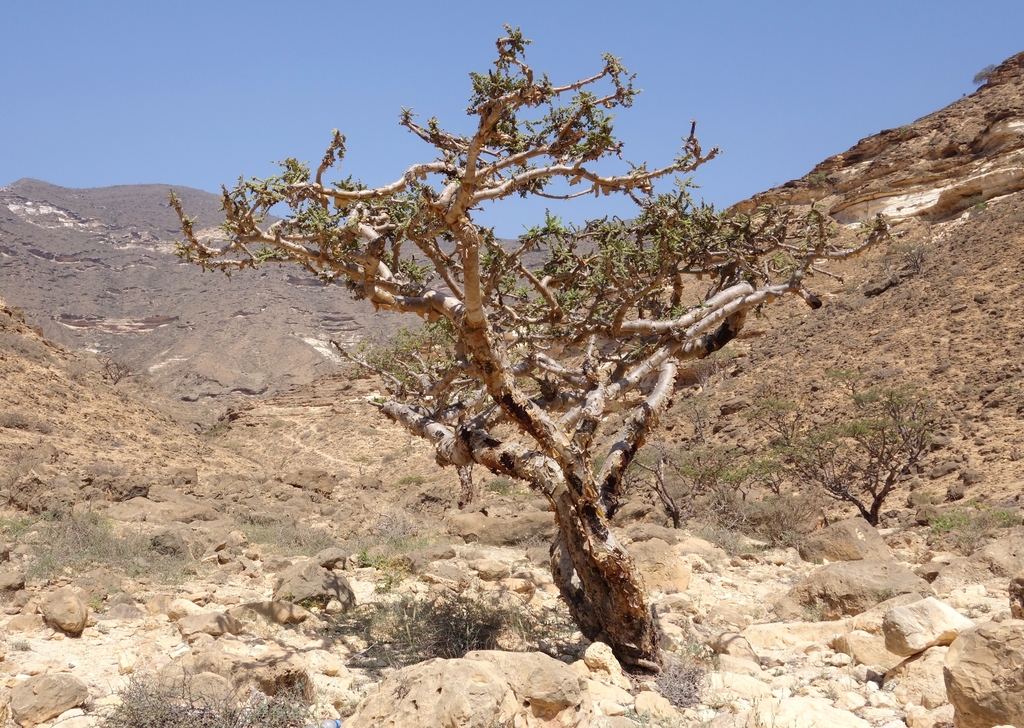
The classical frankincense tree — the original source of the resin that scented Egyptian temples, threaded through the trade routes of antiquity, and was famously laid before the infant Christ. Native to the searing dry country of southern Arabia, especially Oman and Yemen, with populations reaching Somalia, it characteristically grows wedged into cracks in exposed bedrock. From those austere footholds it builds a twisted, sinuous trunk clothed in paper-thin bark that peels away in fine sheets. Wounds in the bark weep the milky, gold-tinged resin that is true frankincense — one of humanity's oldest traded commodities. The soft pinnate leaves drop in the dry season, accentuating every gnarled curve of the trunk.
Native climate
Very little rain falls all year — an arid setting. Overall a hot climate.
A broad-scale picture of the native range. Real growing spots — rock crevices, fog belts — can be milder.
Sources: climate & elevation WorldClim 2.1 (1970–2000) · occurrences GBIF · native range POWO · current weather Open-Meteo
Care
Light & Placement

Forged by the intense sun and arid heat of the limestone country of Oman and Yemen, the classical frankincense tree truly needs unfiltered light. Grow it outdoors in full sun with generous airflow through the growing season to bring out the sinuous, papery-barked trunk, and move it to a bright indoor window before nights turn cool.
Watering
In active growth, water thoroughly only after the topsoil has dried completely, then dry the rootball quickly with strong airflow to mimic the natural rhythm of soaking rain followed by hard sun. Taper through autumn and withhold entirely once dormancy begins until spring.
Substrate
Drainage above all else. Akadama : kanuma : pumice at roughly 3:3:4, leaning toward a higher pumice fraction, topped with a thin cap of fine pumice grit so the surface dries fast. A shallow unglazed terracotta pot is easier to manage than a tall deep one.
Fertilizer & Supplements
Feed sparingly through midsummer, using a liquid fertilizer diluted to around half the label rate no more than once a month. Heavy feeding causes shoot elongation and lost character, so combine minimal feed with a tonic such as Menedael to preserve the gnarled trunk silhouette.
Temperature & Overwintering
Optimal 22–32°C; tolerates serious heat but is decisively cold-sensitive. Leaf drop and dormancy through cool months is normal and expected. Hold at 10°C minimum and overwinter dry on a bright indoor window away from rain and cold drafts — wet soil combined with low temperatures is the chief risk.

Starting from Seed
Where to source seeds
Pre-sowing treatment
Soak seeds for about 7 hours in a mix of a registered seed-treatment fungicide (Benlate or Daconil) and a plant tonic (Menedael; outside Japan, SUPERthrive or a chelated iron / seaweed extract works similarly), each diluted per label. Handle the fragile, almost weightless seed very carefully. Freshness strongly governs germination — old seed lots may turn out to be empty, so source recent seed and sow promptly.
Substrate
Use a fine-grained inorganic mix of roughly equal small akadama and hyuga-tsuchi, and always sterilize before sowing with boiling water or a fungicide drench. Level the surface with very fine grit.
Sowing method
Either leave the seed uncovered or barely cover so the papery wings are just hidden, pressing each one lightly into the surface so it stays in contact without sinking.
Light & temperature
Hold the tray at 25–32°C until germination, in bright shade out of direct midday sun, leaning toward the warmer side. A heat mat noticeably improves germination percentages.
Watering
Until the seedlings appear, bottom-water so the mix stays uniformly damp without standing water on top, paired with constant strong airflow from a circulator to keep a wet-dry rhythm on the surface.
Fertilizer
Once two or three true leaves have opened, begin a liquid fertilizer at half the label rate or weaker, applied very lightly every two or three weeks throughout the growing season.
From Germination to Repotting
Germination through true leaves
Continue bottom watering and avoid strong light.
Weaning off bottom watering
Wean gradually over 1–2 months.
First repotting
From year 2 onward, once roots have filled the pot.
Common Pitfalls
Mold & damping-off
- Cause: Excess moisture, low temperatures
- Prevention: Sterilize the substrate, manage temperature, ensure ventilation
Extremely low germination rate
- Cause: Seed freshness, insufficient heat
- Prevention: Use fresh seed; a heat mat is essential
Failure to overwinter
- Cause: Cold sensitivity
- Prevention: Maintain at least 10°C
Notes
Wet soil combined with cold is the single biggest killer. Hold above 10°C in winter and keep the pot bone dry.