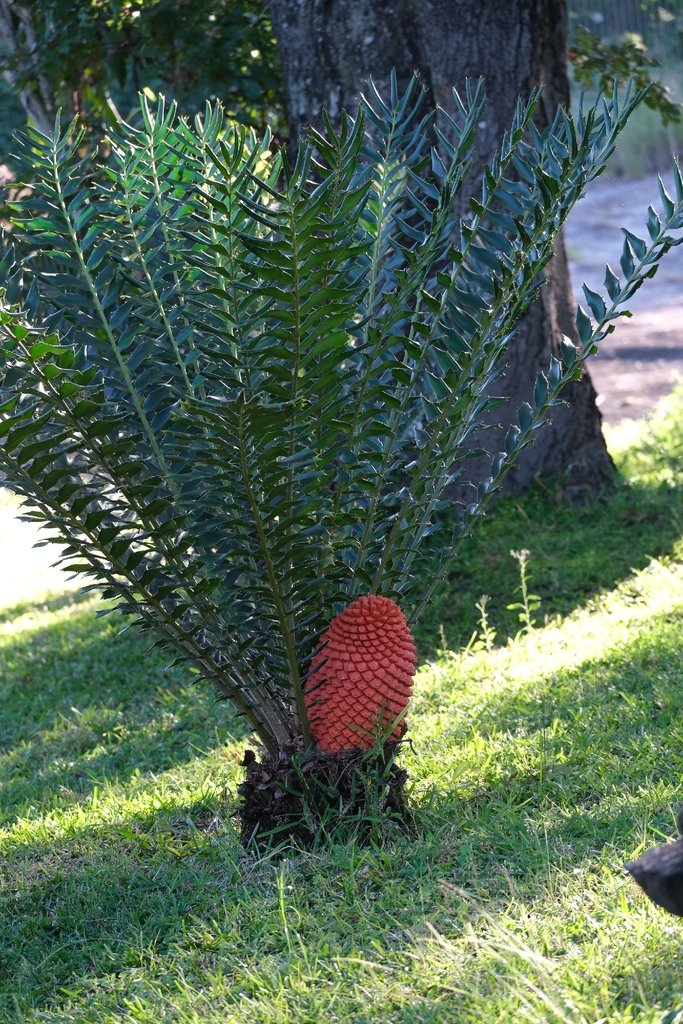
A cycad of the subtropical coastal forests and dune scrub of northern KwaZulu-Natal — from Sodwana Bay and Kosi Bay up the Mozambique coast as far as Vilanculos. Described by G. Bertoloni in 1851, the species name ferox ("fierce") refers to the rigid, spine-tipped lobes of the holly-like dark green leaves. Not an angiosperm but a gymnosperm in the order Cycadales, family Zamiaceae, E. ferox reaches 1–2 m and is famous for the most flamboyant cone in the whole genus — large, glossy, bright red-orange — making it one of the most recognizable cycads in cultivation. Zulu names umthobane / uthobani. CITES Appendix I; IUCN Near Threatened. Coming from a humid, frost-free coast it tolerates moisture better than most Encephalartos and ranks among the easier species to grow from seed.
Native climate
Rainfall is spread fairly evenly across the year. Overall a warm climate.
A broad-scale picture of the native range. Real growing spots — rock crevices, fog belts — can be milder.
Sources: climate & elevation WorldClim 2.1 (1970–2000) · occurrences GBIF · native range POWO · current weather Open-Meteo
Care
Light & Placement
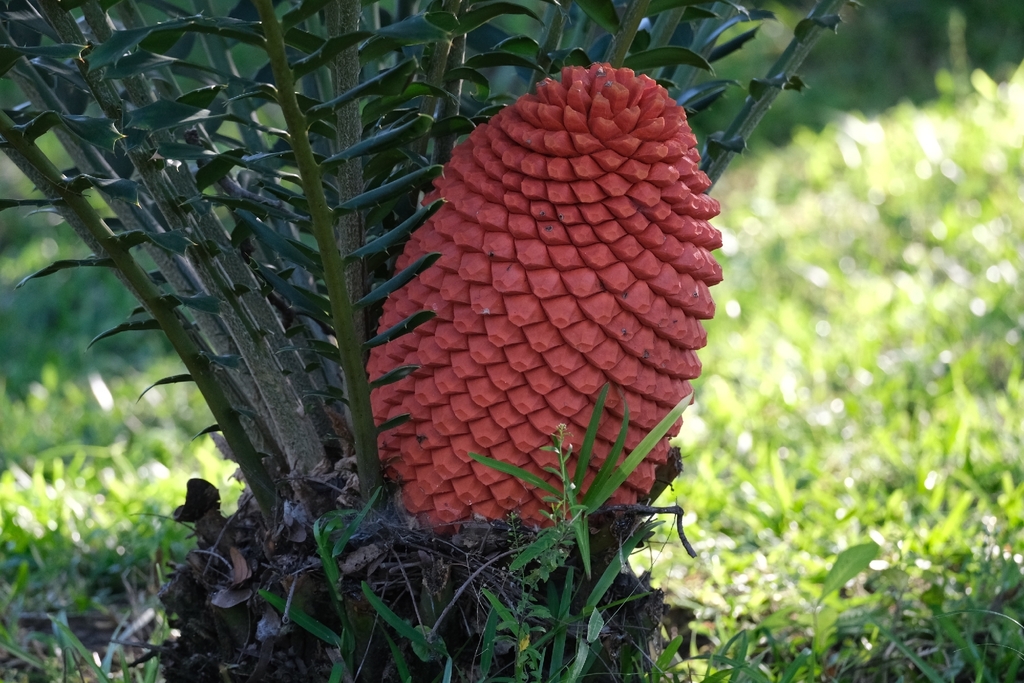
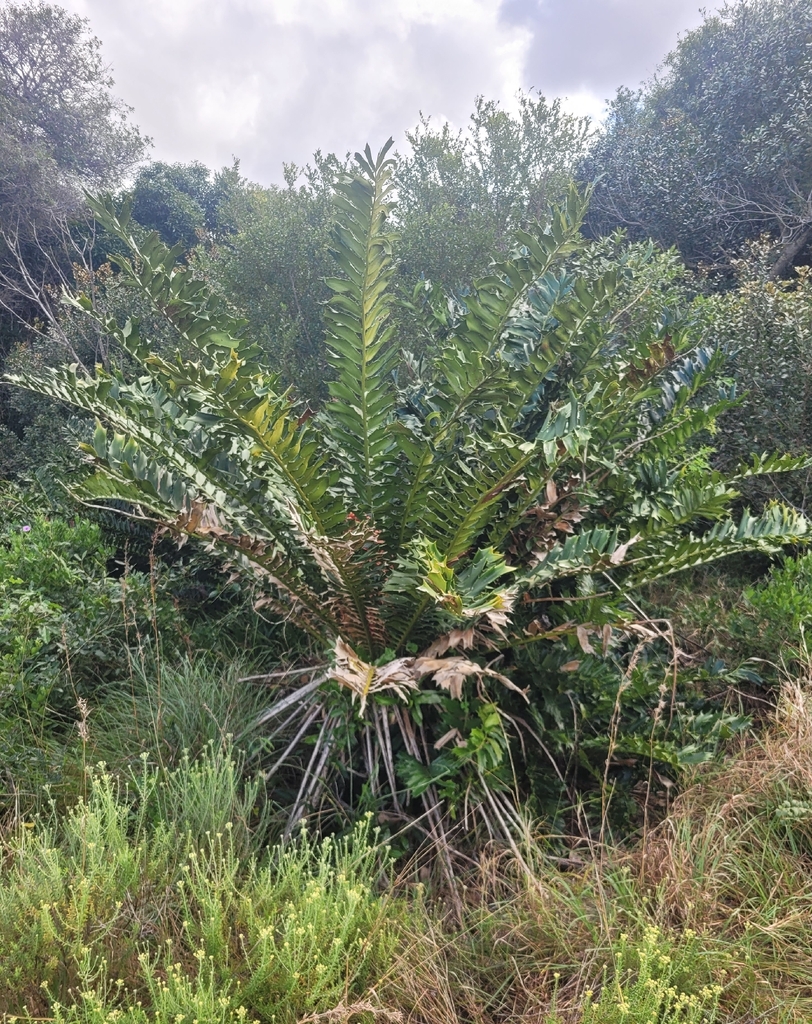
Native to the shaded edges of coastal dune forest and wooded grassland in northern KZN and southern Mozambique, this species prefers bright partial shade or morning direct sun over relentless midday glare. In active growth, give it a well-ventilated outdoor spot with 30–50% summer shade to prevent leaf scorch. Too much shade slackens the leaves and softens the spiny lobes, so keep the light generous. While more tolerant of moisture than other Encephalartos, pots still need to be raised off the ground for airflow. Overwinter on a bright indoor window above 8°C.
Watering
Water thoroughly once the surface dries in active growth. Annual rainfall in habitat is 1000–1250 mm, so this species takes more water than the Cape cycads and shouldn't be kept bone-dry. Cut back to once or twice a month through winter.
Substrate
Aim for a draining-but-retentive inorganic mix: Akadama : Kanuma : pumice = 4:3:3. A higher Akadama share than horridus gives the moisture buffer this coastal species expects.
Fertilizer & Supplements
A dilute liquid feed once a month in active growth, or a small pinch of slow-release at repotting. Growth is brisk by Encephalartos standards, but overfeeding softens the leaf character — go modest.
Temperature & Overwintering
Optimal 22–32°C, minimum 8°C. As a subtropical species, ferox is noticeably less cold-hardy than horridus or lehmannii and intolerant of frost. Bone-dry plants may shrug off brief dips near 5°C, but damp soil below ~10°C is lethal. Bring indoors to a bright window before nights cool.
Starting from Seed
Where to source seeds
Pre-sowing treatment
The red fleshy seed coat (sarcotesta) invites rot — soak briefly to soften and remove it before sowing. Soak seeds for about half a day (overnight) in a mix of a registered seed-treatment fungicide (Benlate or Daconil) and a plant tonic (Menedael; outside Japan, SUPERthrive or a chelated iron / seaweed extract works similarly), each diluted per label. Floaters tend to be unfertilized or stale. Germination requires steady warmth of 25–32°C.
Substrate
A near-fully inorganic mix: mostly fine pumice, or fine Akadama : pumice = 1:2. The taproot drives deep early, so always use a deep pot, and sterilize the mix with boiling water or a microwave pass first.
Sowing method
The rule is to lay seeds on their side, with only a thin covering that leaves the upper half visible. Space seeds 2–3 cm apart to avoid crowding.
Light & temperature
Bright shade with a steady 25–30°C; a heat mat is recommended. Germination is faster than horridus — typically 1–3 months. Germination depends strongly on seed freshness, but fresh seed tends to come up well.
Watering
Bottom-water with the level 1–2 cm up the pot. Refresh the water often to suppress rot, and step the level down once seedlings appear.
Fertilizer
No feeding right after germination. Once the pinnate true leaves open, give a heavily diluted liquid fertilizer once or twice a month — ferox responds better than horridus but still doesn't want strong doses.
From Germination to Repotting
Germination through true leaves
Cotyledons first, then pinnate true leaves.
Weaning off bottom watering
Phase out gradually over 2–3 months.
First repotting
In the first or second year, into a deep pot to accommodate the taproot.
Common Pitfalls
Mold & damping-off
- Cause: residual sarcotesta, excess moisture, poor air flow
- Prevention: strip the fleshy coat fully, sterilize the substrate, refresh bottom water often, and run a circulation fan
Etiolation
- Cause: insufficient light
- Prevention: even a part-shade species needs plenty of light — bright outdoor placement or a high-output LED to keep petioles firm
Seeds fail to germinate
- Cause: stale seed, low temperatures, sarcotesta left on
- Prevention: source fresh seed from a reliable supplier, hold 25–30°C on a heat mat, and always remove the fleshy outer coat
Notes
Listed on CITES Appendix I and protected in Japan under the Act on Conservation of Endangered Species; live plant transfers require a registration certificate. The holly-like spiny leaflets cut easily — handle with leather gloves. The seeds are highly toxic; keep them out of reach of children and pets.