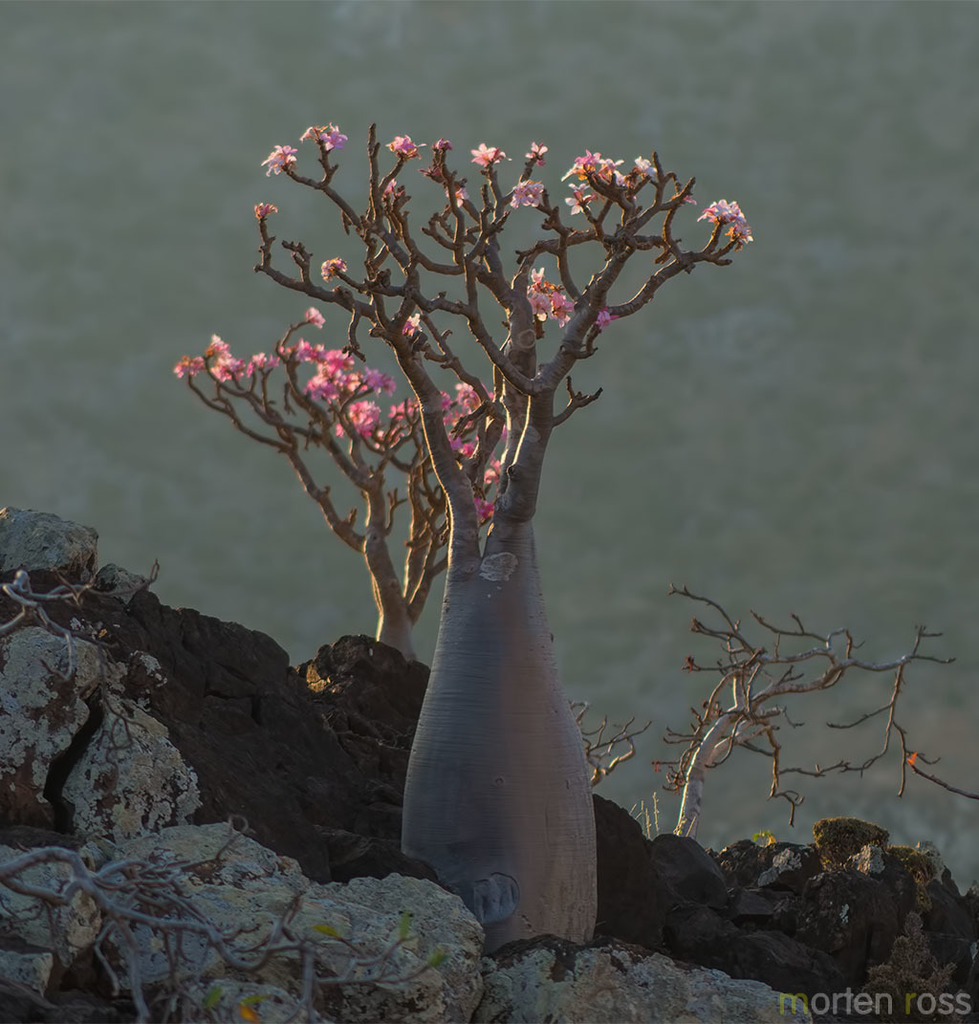
Known worldwide as the "Desert Rose," this is the flagship Adenium, native to dry savannas from East Africa to the Arabian Peninsula. Slender branches rise from a swollen gray caudex and carry showy trumpet flowers in pink, red, white, and bicolor — the blooms that earned it the common name. Glossy dark-green leaves and the gently bottle-shaped trunk give it a balance that holds up well as a houseplant, even outside of flowering season. Forgiving and quick to flower within a few years from seed, it is ideal for first-time caudex growers. Active breeding in Thailand has produced a huge range of cultivars including doubles, striped, and multi-color forms, giving it strong global collector appeal.
Native climate
Rainfall is spread fairly evenly across the year. Overall a warm climate.
A broad-scale picture of the native range. Real growing spots — rock crevices, fog belts — can be milder.
Sources: climate & elevation WorldClim 2.1 (1970–2000) · occurrences GBIF · native range POWO
Care
Light & Placement

In habitat across sub-Saharan Africa's hot, dry savannas it takes full tropical sun, so give it as much direct sunlight as possible outdoors through the growing season — low light leads to etiolation and poor flowering. A light 20–30% shade cloth helps in the harshest midsummer weeks. Move indoors to the brightest possible window for winter and keep airflow generous.
Watering
Water thoroughly once the surface dries during active growth to fatten the bottle-shaped caudex and push flower buds. Big plants drop buds when stressed, so don't let them go bone-dry. Through dormancy, hold back, with just one or two light mistings a month in winter.
Substrate
Drainage and aeration first, in an inorganic mix. Akadama : Kanuma : pumice = 4:3:3 is the reliable baseline, and a pinch of slow-release at potting speeds early growth. Use a deeper pot to encourage vertical caudex thickening.
Fertilizer & Supplements
A dilute liquid feed once a month in active growth, or a small pinch of slow-release at repotting. The plant responds readily and rewards feeding with flowers, but overdoing it pushes etiolated growth and invites root rot — keep doses modest.
Temperature & Overwintering
Optimal 25–35°C — one of the most heat-loving caudex species, thriving through tropical midsummer. The 10°C minimum is firm: cold exposure blackens leaves and triggers drop. Bring it in early and overwinter dry on a bright window away from cold drafts. Damp soil combined with cold is the main cause of rot.

Starting from Seed
Where to source seeds
links go directly to the product page; the rest are scientific-name searches. Stock fluctuates — verify availability on the destination site.
Pre-sowing treatment
Soak seeds for about half a day (overnight) in a mix of a registered seed-treatment fungicide (Benlate or Daconil) and a plant tonic (Menedael; outside Japan, SUPERthrive or a chelated iron / seaweed extract works similarly), each diluted per label. Seeds that don't sink are usually past their prime.
Substrate
Use a separate seedling mix that's fine-grained and near-sterile: fine Akadama, fine Kanuma, and vermiculite in 1:1:1 parts. Sterilize beforehand with boiling water or a quick microwave pass for peace of mind.
Sowing method
Sow with no covering, or only the thinnest dusting of substrate so the seeds remain partly visible. Space the seeds at least 1 cm apart so they don't clump or overlap on the surface.
Light & temperature
Keep the tray in bright shade at 28–32°C. Expect germination in 3–10 days. Germination depends strongly on seed freshness, but fresh seed tends to come up well.
Watering
Bottom-water with the level 1–2 cm up the pot. For the first 2–3 weeks, prioritize not letting things dry out, then drop the water level gradually once seedlings are stable.
Fertilizer
No feeding right after germination. Once the true leaves emerge, give diluted liquid fertilizer once or twice a month at double the usual dilution — this species responds quickly to feeding.
From Germination to Repotting
Germination through true leaves
Continue bottom watering and keep strong light off them.
Weaning off bottom watering
Phase it out gradually over 1–2 months.
First repotting
In the first or second year, once roots have filled the pot.
Common Pitfalls
Mold & damping-off
- Cause: excess moisture, contamination
- Prevention: sterilize the substrate, ensure good air flow
Etiolation
- Cause: insufficient light
- Prevention: move LEDs closer right after germination, or shift the tray to bright shade outdoors
Seeds fail to germinate
- Cause: stale seeds, insufficient warmth
- Prevention: use fresh seeds and a heat mat
Notes
Root rot from excess moisture is the most common failure. Keep drainage and airflow on point. The sap is mildly toxic.