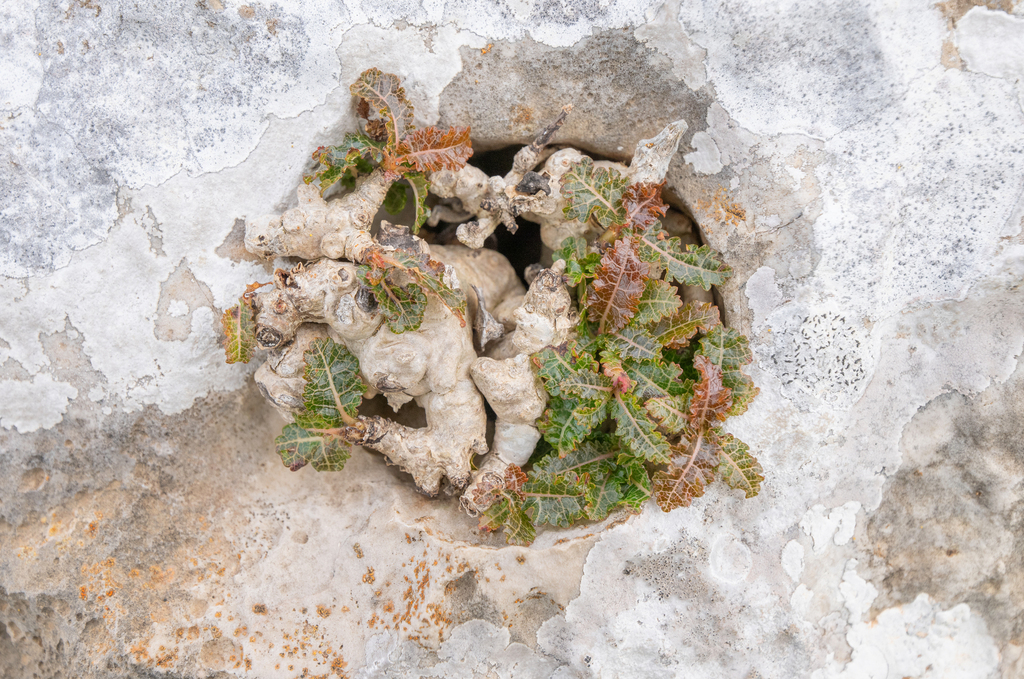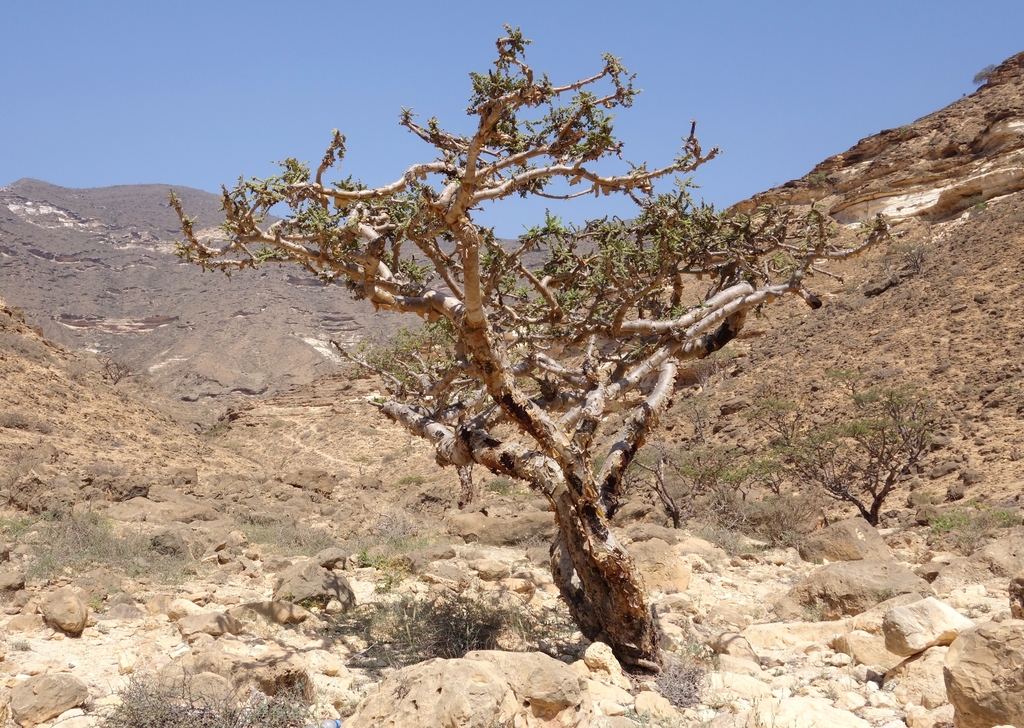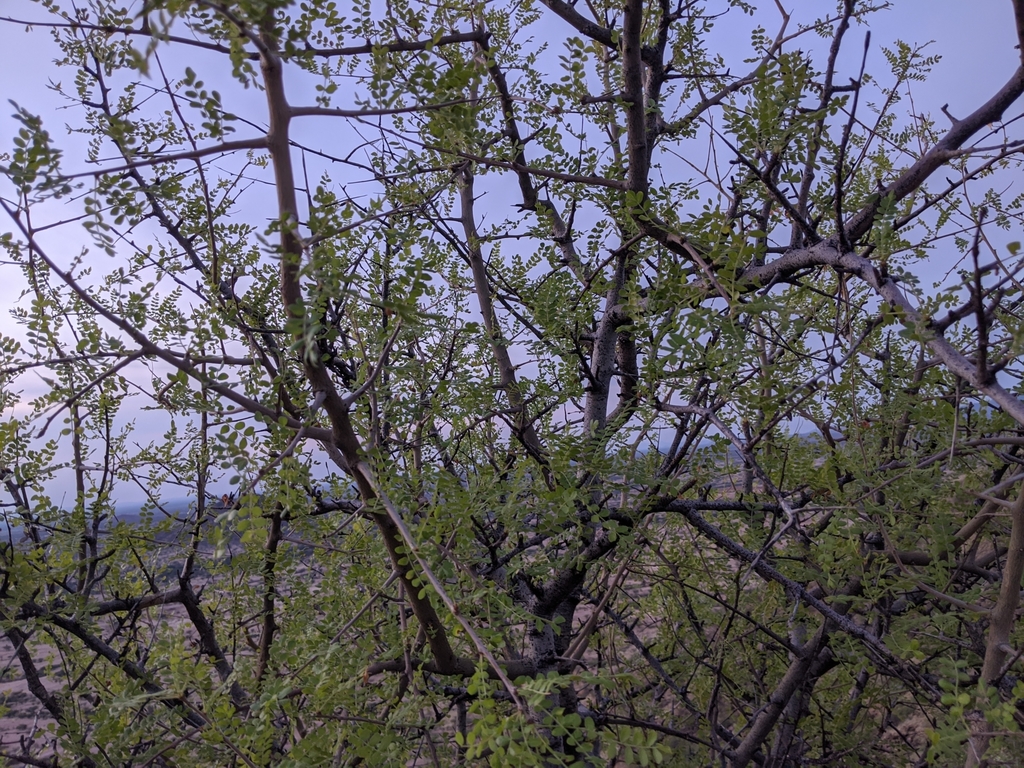
A Boswellia of the East African dry country, widespread through the rocky bushland and open woodland of Kenya, Ethiopia and Somalia. It tends to stay somewhat smaller than its famous relative B. sacra and carries an unmistakable habit of branching right from ground level, sending up several trunks at once to form a low, rounded, almost shrubby crown. The bark is thin and papery, peeling in fine layers to reveal smooth fresh tissue underneath — a hallmark of the genus — and any wound weeps a bright, fragrant resin long gathered alongside true frankincense for incense use. A clean spring-and-fall grower, it drops its leaves in the dry season to lay bare the cluster of trunks.
Native climate
Rainfall is spread fairly evenly across the year. Overall a warm climate.
A broad-scale picture of the native range. Real growing spots — rock crevices, fog belts — can be milder.
Sources: climate & elevation WorldClim 2.1 (1970–2000) · occurrences GBIF · native range POWO
Care
Light & Placement

Native to the rocky bushland of East Africa where long dry seasons, strong sun and steady airflow shape every branch, this is a classic full-sun species. Through the growing season, grow it outdoors in unfiltered direct light to keep the multi-trunk habit tight and well-proportioned, then move it to a bright indoor window before the weather cools.
Watering
In active growth, water thoroughly only after the topsoil has dried fully, then dry the rootball quickly with strong airflow to mimic the natural wet-and-dry rhythm. Taper through autumn and withhold water entirely once dormancy begins, until spring movement resumes.
Substrate
Drainage above all else. Aim for akadama : kanuma : pumice at roughly 3:3:4, topped with a thin cap of fine pumice grit so the surface dries fast. A shallow unglazed terracotta pot is easier to manage than a deep one and reduces stale moisture around the roots.
Fertilizer & Supplements
Feed sparingly through midsummer, using a liquid fertilizer diluted to around half the label rate no more than once a month. Heavy feeding causes shoot elongation and stretched internodes, so pair minimal feed with a tonic such as Menedael to hold the tight clumping silhouette.
Temperature & Overwintering
Optimal 22–32°C; tolerates real heat but is clearly cold-sensitive. Cleanly deciduous in the dry season — leaf drop into dormancy is normal and expected. Maintain at least 10°C, overwinter on a bright indoor window, and keep things largely dry; damp cold is the main killer.

Starting from Seed
Where to source seeds
links go directly to the product page; the rest are scientific-name searches. Stock fluctuates — verify availability on the destination site.
Pre-sowing treatment
Soak seeds for about 7 hours in a mix of a registered seed-treatment fungicide (Benlate or Daconil) and a plant tonic (Menedael; outside Japan, SUPERthrive or a chelated iron / seaweed extract works similarly), each diluted per label. Freshness strongly governs germination — old seed lots may turn out to be empty, so source recent seed and sow promptly.
Substrate
Use a fine inorganic mix of roughly equal small akadama and hyuga-tsuchi, and always sterilize the surface with boiling water or a fungicide drench before sowing the seeds out. Level with very fine grit.
Sowing method
Either leave the seed uncovered or barely cover so the papery wings are just hidden, pressing each lightly into the surface so it makes good contact without sinking.
Light & temperature
Hold the tray at 25–32°C until germination, in bright shade out of any direct midday sun. A heat mat significantly increases the percentage of seedlings that come up.
Watering
Until the seedlings appear, bottom-water so the mix stays uniformly damp without standing water on top, paired with constant strong airflow from a circulator to keep a wet-dry rhythm at the surface.
Fertilizer
Once two or three true leaves have opened, begin a liquid fertilizer at half the label rate or weaker, applied very lightly every two or three weeks.
From Germination to Repotting
Germination through true leaves
Continue bottom watering and avoid strong light.
Weaning off bottom watering
Wean gradually over 1–2 months.
First repotting
From year 2 onward, once roots have filled the pot.
Common Pitfalls
Mold & damping-off
- Cause: Excess moisture, low temperatures
- Prevention: Sterilize the substrate, manage temperature, ensure ventilation
Low germination rate
- Cause: Seed freshness, insufficient heat
- Prevention: Use fresh seed, use a heat mat
Failure to overwinter
- Cause: Cold sensitivity
- Prevention: Maintain at least 10°C
Notes
Cold, damp air is the worst combination. Lingering moisture during dormancy will rot the resting stems.