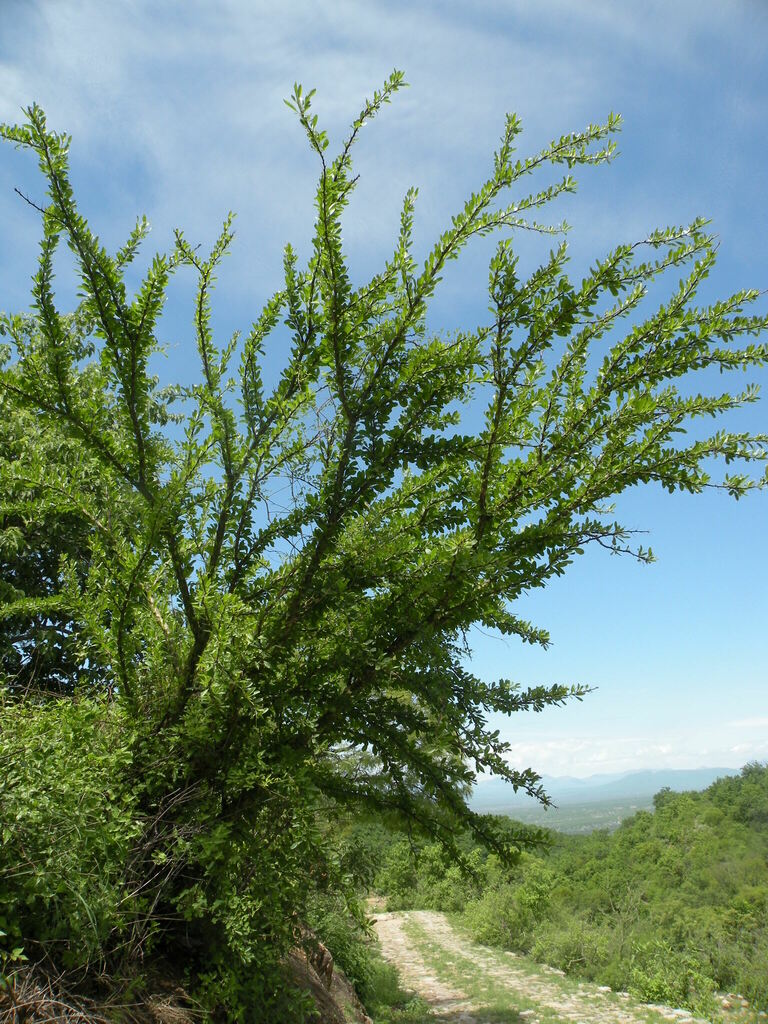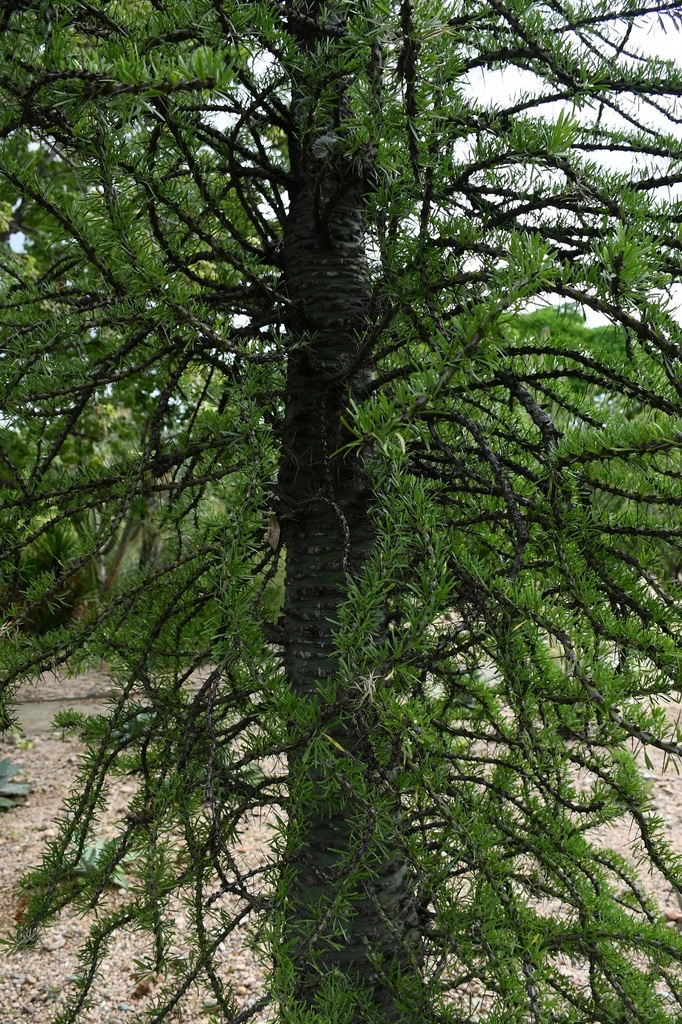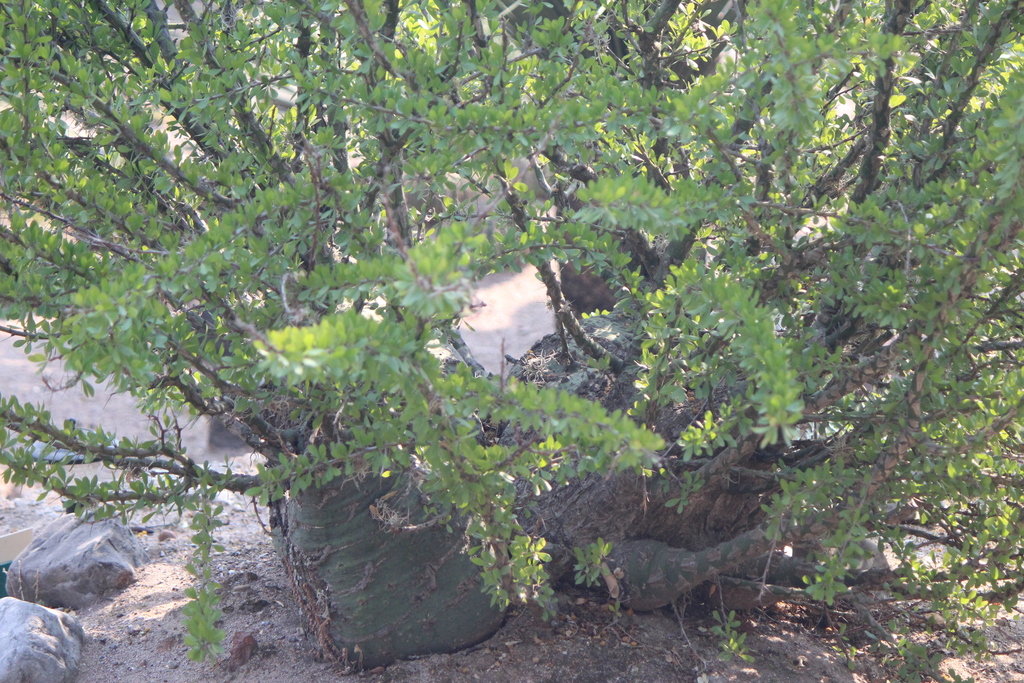
A rare species endemic to a small area of Querétaro in central Mexico. Growing among dry limestone outcrops, it forms a squat, swollen caudex-like trunk from which short branches radiate, their surfaces armored with sharp thorns. In the rainy season it pushes out small clustered leaves, then drops them in the dry season to rest as a bare, spiny silhouette — a textbook deciduous Fouquieria. During growth it produces clusters of vivid red tubular flowers. Extremely slow-growing, the gradual swelling of its caudex over the years is the whole pleasure of owning one, making it a collector's prize. CITES-listed, so circulation in the trade is limited.
Native climate
Rain concentrates in the warm season, with a distinct dry season. Overall a mild climate.
A broad-scale picture of the native range. Real growing spots — rock crevices, fog belts — can be milder.
Sources: climate & elevation WorldClim 2.1 (1970–2000) · occurrences GBIF · native range POWO · current weather Open-Meteo
Care
Light & Placement

A rare species from the limestone outcrops of Querétaro, central Mexico, requiring strong light. Give it full direct sun outdoors through the growing season to tighten that swollen trunk. A light 20–30% shade through peak Japanese summer, plus a raised shelf and circulator, keeps stagnation away. Growth is extremely slow, so avoid frequent moves. Overwinter on a bright indoor window, out of rain.
Watering
In active growth, water thoroughly after the substrate has fully dried, then let it dry again — that wet-dry rhythm tightens the swollen trunk. Prolonged rain is fatal. In dormancy, mist about once a month only.
Substrate
Drainage above all, in an inorganic mix with a high proportion of pumice. Small-grain Akadama : Kanuma : pumice = 3:3:4 is a reliable baseline. A pinch of slow-release such as Magamp K helps; a taller pot reduces rot.
Fertilizer & Supplements
A small amount of slow-release during active growth, plus a monthly dilute liquid feed (around twice the label dilution). Growth is extremely slow — overfeeding causes etiolation and rot, so never push it.
Temperature & Overwintering
Optimal 20–32°C with a 5°C winter floor. Deciduous — leaves drop with dry conditions and cooling temperatures, sending the plant dormant. Overwinter fully dry on a bright indoor window; damp soil at low temperatures rots the trunk itself.
Starting from Seed
Where to source seeds
Pre-sowing treatment
Soak seeds for about half a day (overnight) in a mix of a registered seed-treatment fungicide (Benlate or Daconil) and a plant tonic (Menedael; outside Japan, SUPERthrive or a chelated iron / seaweed extract works similarly), each diluted per label. The floating ones are likely no longer viable; the seeds have thin, papery wings — handle with care.
Substrate
Use a separate seedling mix that's fine-grained and near-sterile: fine Akadama, fine Kanuma, and vermiculite in equal 1:1:1 parts. Sterilize the mix with boiling water or a quick microwave pass before sowing.
Sowing method
Sow with no covering, or only the thinnest dusting of substrate enough to hide the wings. Space them at least 1 cm apart so they don't clump or overlap on the surface.
Light & temperature
Keep the tray in bright shade at a steady 25–30°C. Expect germination in 7–21 days. Germination depends heavily on seed freshness, and even fresh seed stays on the lower side.
Watering
Bottom-water with the level 1–2 cm up the pot. For the first 2–3 weeks, prioritize not letting things dry at all, then drop the level in steady stages once the seedlings have come up.
Fertilizer
No feeding right after germination. Once the true leaves emerge, give a heavily diluted liquid fertilizer once or twice a month — go lighter than the label suggests for safety.
From Germination to Repotting
Germination through true leaves
Continue bottom watering and avoid strong light.
Weaning off bottom watering
Wean off gradually over 1–2 months.
First repotting
From year 2 onward, once the plant becomes root-bound. Growth is slow — don't rush it.
Common Pitfalls
Mold & damping-off
- Cause: Excess moisture, contamination
- Prevention: Sterilize substrate, ensure ventilation
Etiolation
- Cause: Insufficient light
- Prevention: Manage light levels
Seeds fail to germinate
- Cause: Stale seeds, insufficient temperature
- Prevention: Use fresh seeds, provide warmth
Notes
The trunk is densely armed with sharp thorns — handle with care. Extended rain will rot the thickened trunk.