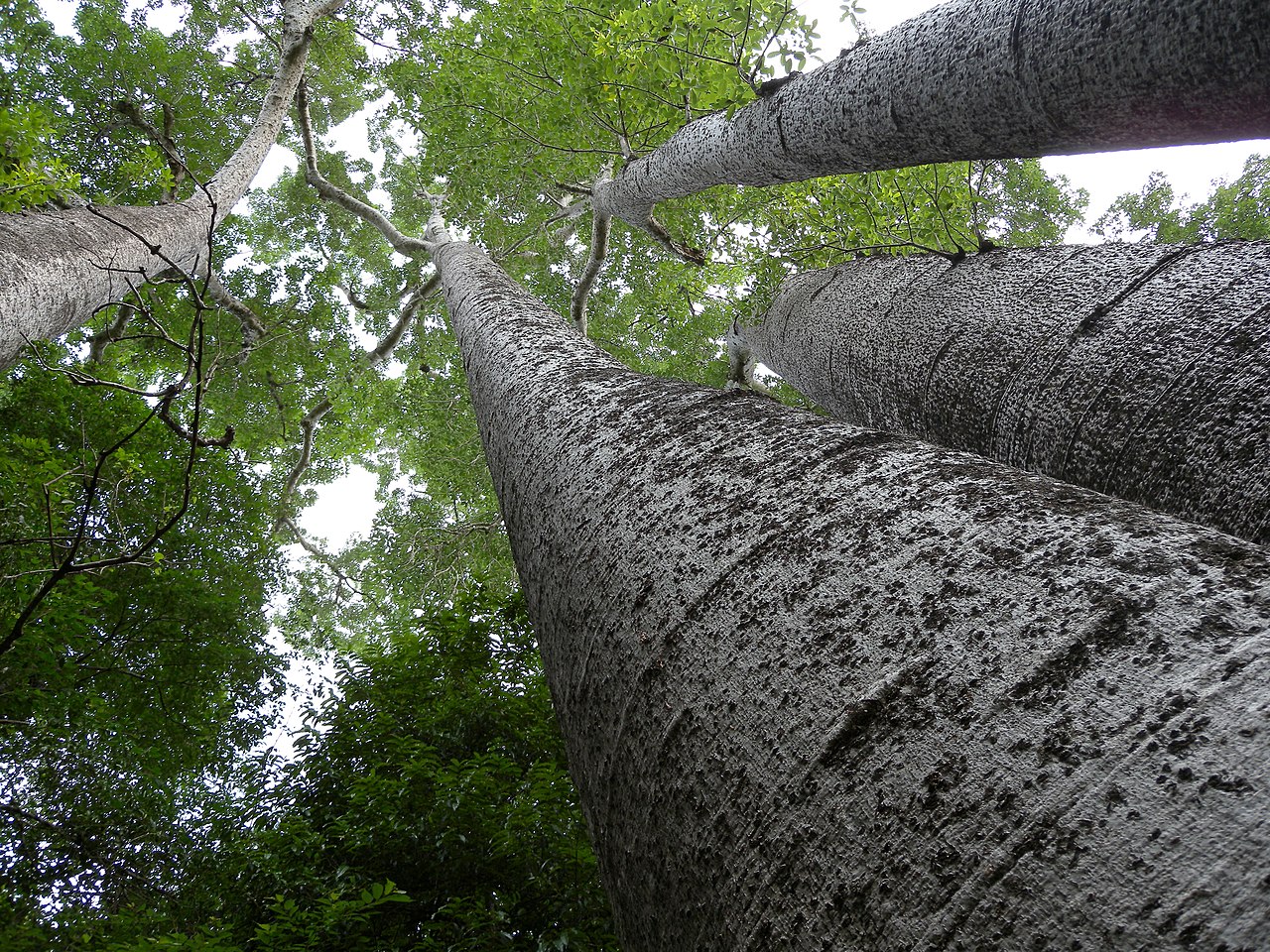
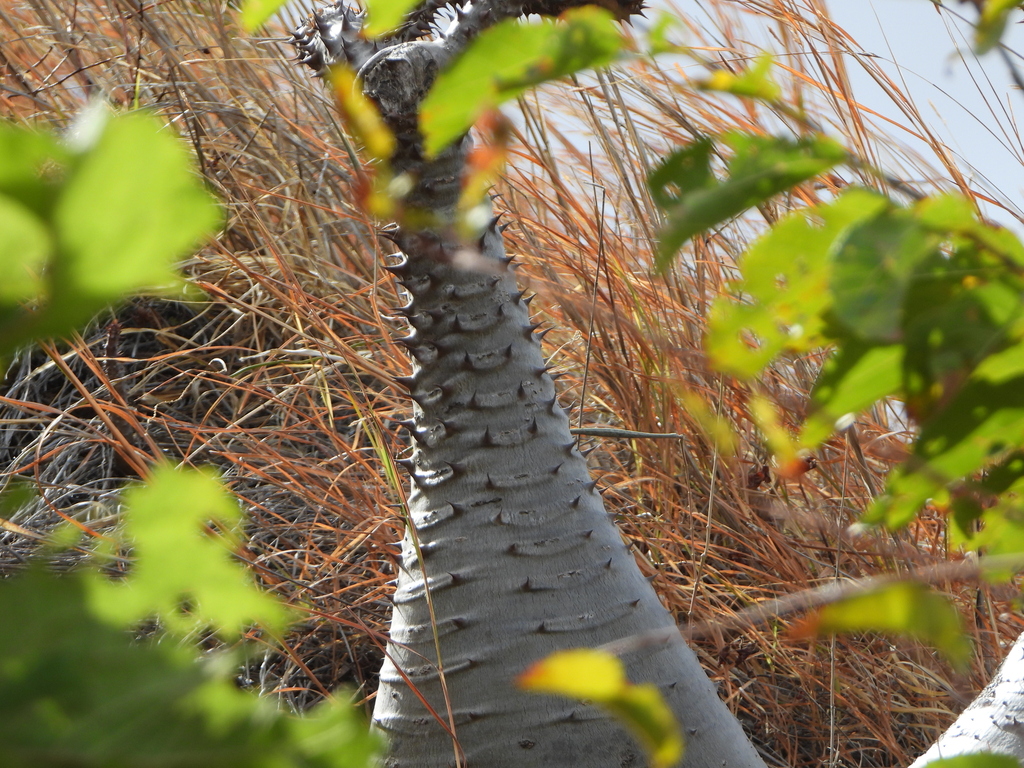
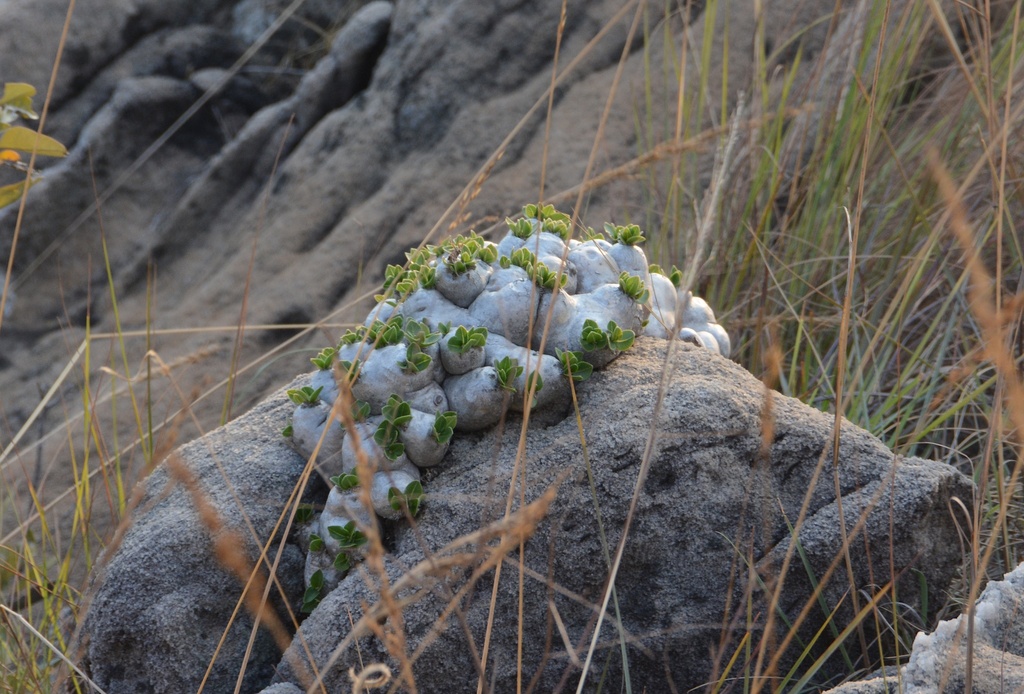
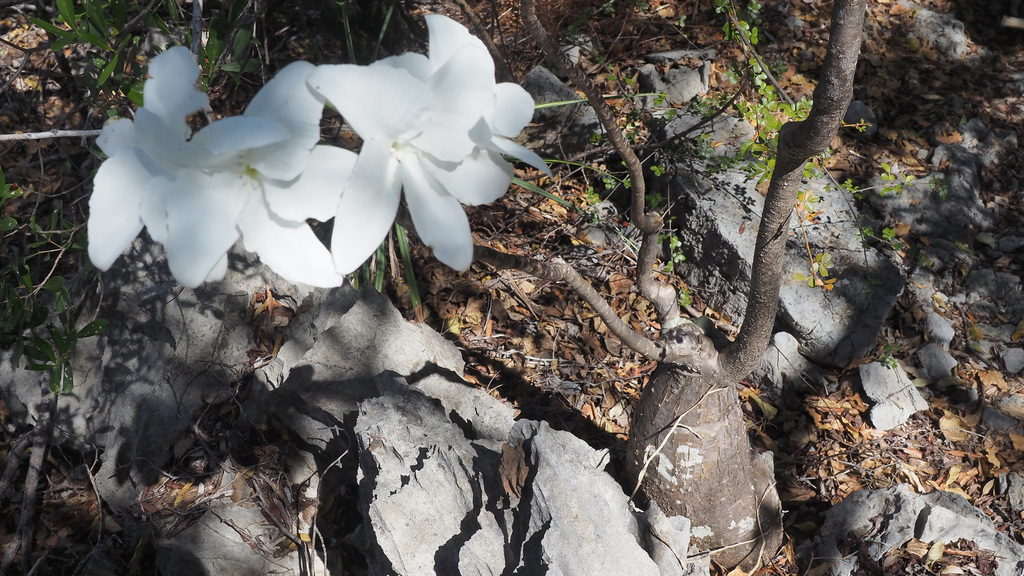
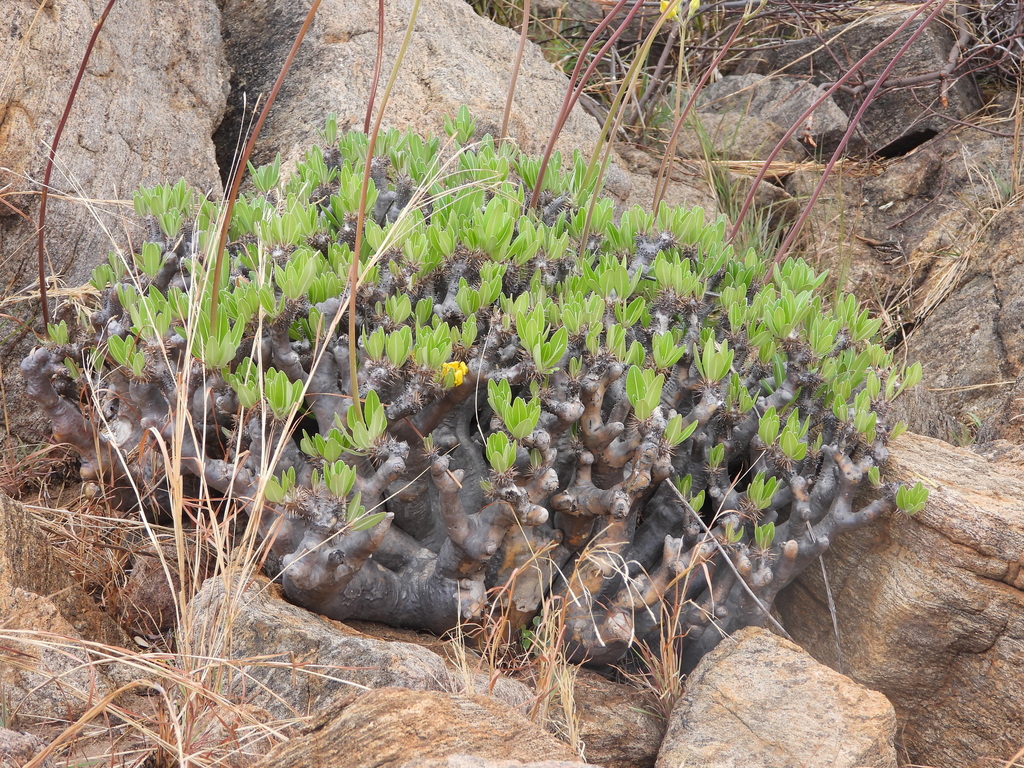
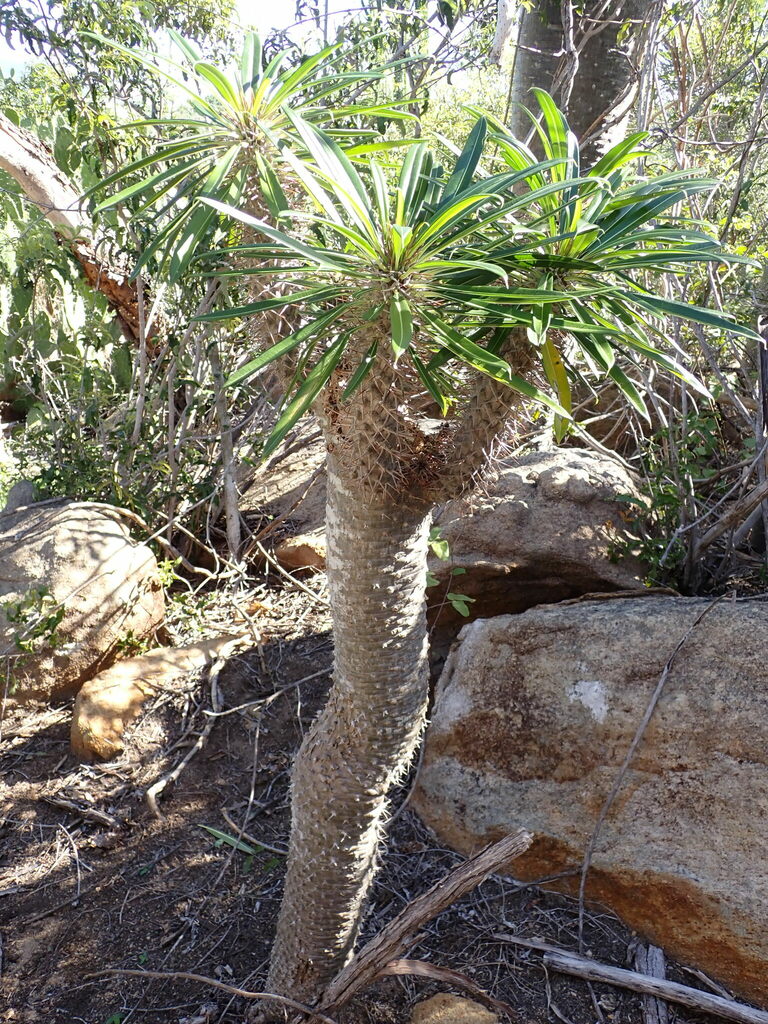
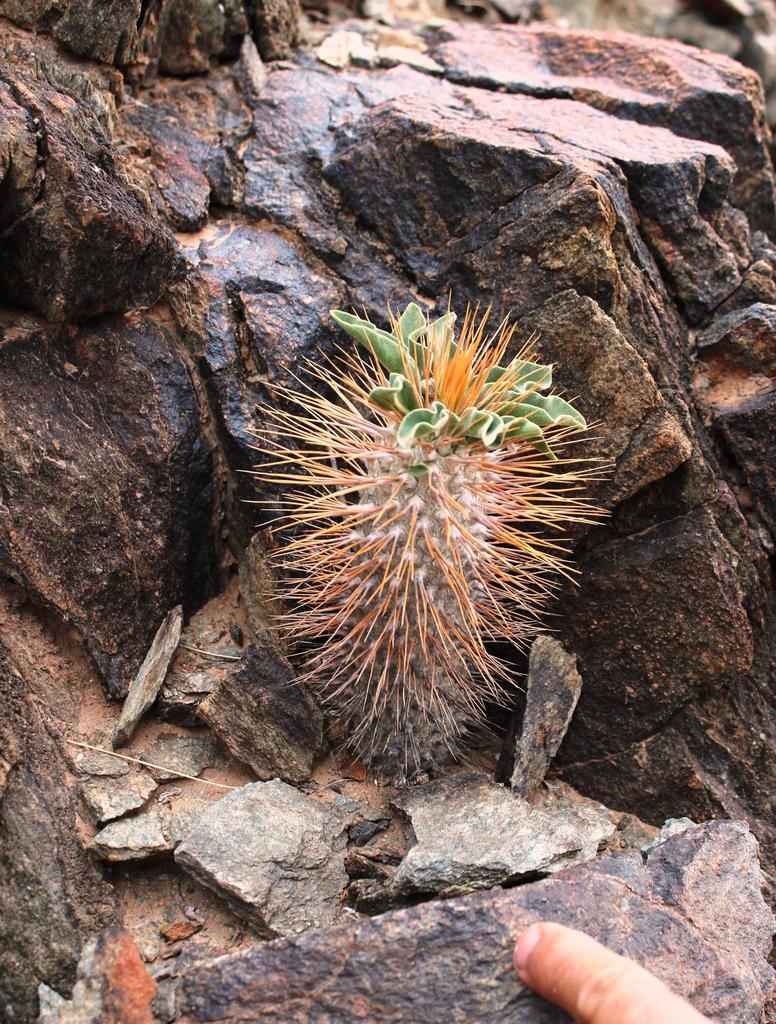
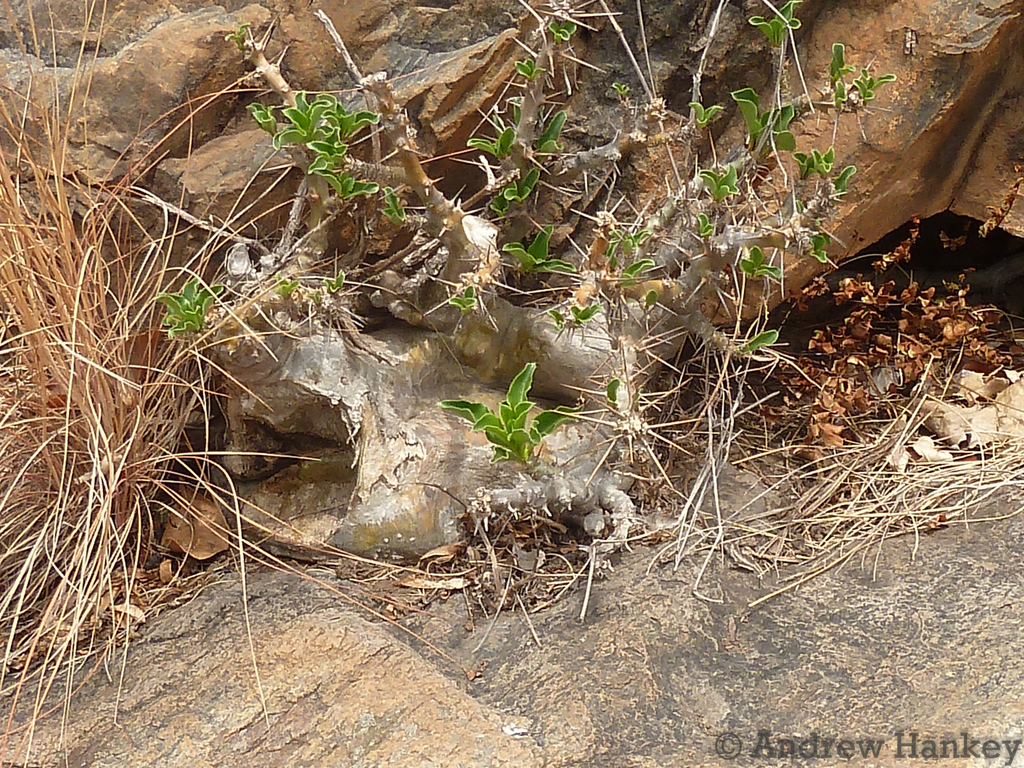
A small-to-medium rare species restricted to the low-elevation limestone tsingy of the Ambongo region in northwestern Madagascar, mainly around the Namoroka reserve below 100 m elevation. Described by Henri Poisson in 1924, with the epithet referring to the Ambongo river drainage where it was first collected. A slender, bottle-shaped trunk rises from a partly buried caudex and carries white flowers with a soft greenish-yellow throat; the trunk and branches are densely set with paired straight spines up to 100 mm long, making it one of the more conspicuously spiny species in the genus. The natural range is extremely narrow and the species is listed on CITES Appendix I, the strictest international trade tier; supply on the seed market is thinner than for almost any other Pachypodium, and the plant has long held a quiet place in serious collections.
Native climate
Rain concentrates in the one season, with a dry season of roughly 5 months. Overall a hot climate.
* Accurate distribution data is scarce for this species, so these values are taken from the climate near the approximate center of its native range instead.
Sources: climate & elevation WorldClim 2.1 (1970–2000) · occurrences GBIF · native range POWO · current weather Open-Meteo
Care
Light & Placement

Native to the strong-sun, fast-draining low-elevation limestone tsingy around Namoroka in northwestern Madagascar, this species thrives in bright direct light. Place it outdoors in full sun through the growing season — strong light tightens the trunk and keeps the leaf color rich. In Japan's hottest, most humid weeks of midsummer, light shading around 20–30% with steady airflow protects the foliage from scorch and stagnant heat. Keep pots up off the ground on a rack and run an air circulator. Coming from the warm northwest lowlands, it is more cold-sensitive than most Pachypodium, so move it indoors early to a bright window kept above 8°C and overwinter largely dry.
Watering
In active growth, water thoroughly once the surface has dried — this slowly fattens the partly buried caudex and the slender trunk above it. It hates stagnant moisture, so avoid long rainy spells and keep the pot drying out quickly between waterings. Through winter dormancy, a small monthly sip is plenty.
Substrate
Drainage and aeration first, with an inorganic mix. Akadama : Kanuma : pumice = 4:3:3 is a reliable baseline; leaning heavier on pumice mirrors its limestone substrate. A taller pot encourages clean wet-dry cycles.
Fertilizer & Supplements
A dilute liquid feed about once a month in active growth, or a pinch of slow-release at repotting. Overfeeding causes etiolation and root rot, and elongates the trim bottle shape — keep it light, aim for slow density.
Temperature & Overwintering
Optimal 22–35°C — warm-loving and one of the more cold-sensitive Pachypodiums, with an 8°C winter floor. Bring indoors early and overwinter essentially dry; damp soil under cold quickly triggers rot.

Starting from Seed
Where to source seeds
Pre-sowing treatment
Soak seeds for about half a day in a mix of a registered seed-treatment fungicide (Benlate or Daconil) and a plant tonic (SUPERthrive), each diluted per label. Floating seeds usually point to stale stock.
Substrate
Use a separate seedling mix that's fine-grained and near-sterile: fine Akadama, fine Kanuma, and vermiculite in equal 1:1:1 parts. Sterilize the mix with boiling water or a quick microwave pass before sowing for peace of mind.
Sowing method
Sow with no covering, or only the thinnest dusting of substrate so the seeds remain partly visible. Space seeds at least 1 cm apart and arrange them so they don't clump together or overlap on the surface.
Light & temperature
Keep the tray in bright shade at a steady 25–30°C. Expect germination in 7–21 days. Rates depend heavily on seed freshness, and even fresh seed stays on the lower side.
Watering
Bottom-water with the level 1–2 cm up the pot. For the first 2–3 weeks, prioritize not letting things dry out at all, then drop the water level gradually once the seedlings come up.
Fertilizer
No feeding right after germination. Once the true leaves emerge, give a heavily diluted liquid fertilizer about once a month — keep it lighter than label strength to avoid pushing the seedlings into etiolation.
From Germination to Repotting
Germination through true leaves (first month)
Keep the bottom water going and hold the humidity. Avoid strong light and keep the seedlings in bright shade.
Weaning off bottom watering (months 1–2)
Lower the water level gradually, eventually switching to bottom watering from a saucer. Drying things out abruptly will kill the seedlings.
First repotting (year 1–2)
The right time is once the roots have reached the bottom of the pot. As the caudex begins to show, move the plant into an ordinary inorganic-based mix.
Common Pitfalls
Mold & damping-off
- Cause: microbes in the substrate, excess moisture, poor airflow
- Prevention: sterilize the substrate, change the bottom water often, and keep a circulator running for airflow
Etiolation
- Cause: insufficient light
- Prevention: bring the LED closer right after germination, or move the seedlings to bright shade outdoors
Seeds fail to germinate
- Cause: stale seed, insufficient temperature
- Prevention: choose a reliable source, and use a heat mat to keep the temperature steady
Seedlings die soon after germination
- Cause: sudden strong light, sudden drying
- Prevention: change conditions in stages, easing the seedlings in over about a week
Notes
A CITES Appendix I species. The sap is mildly toxic.