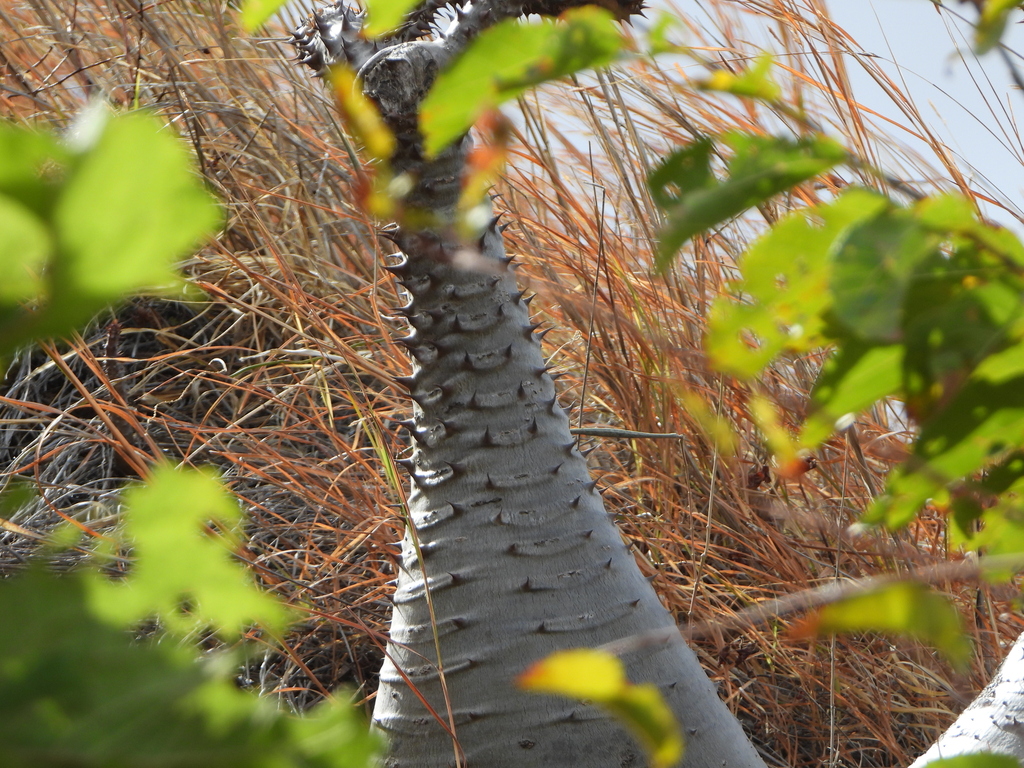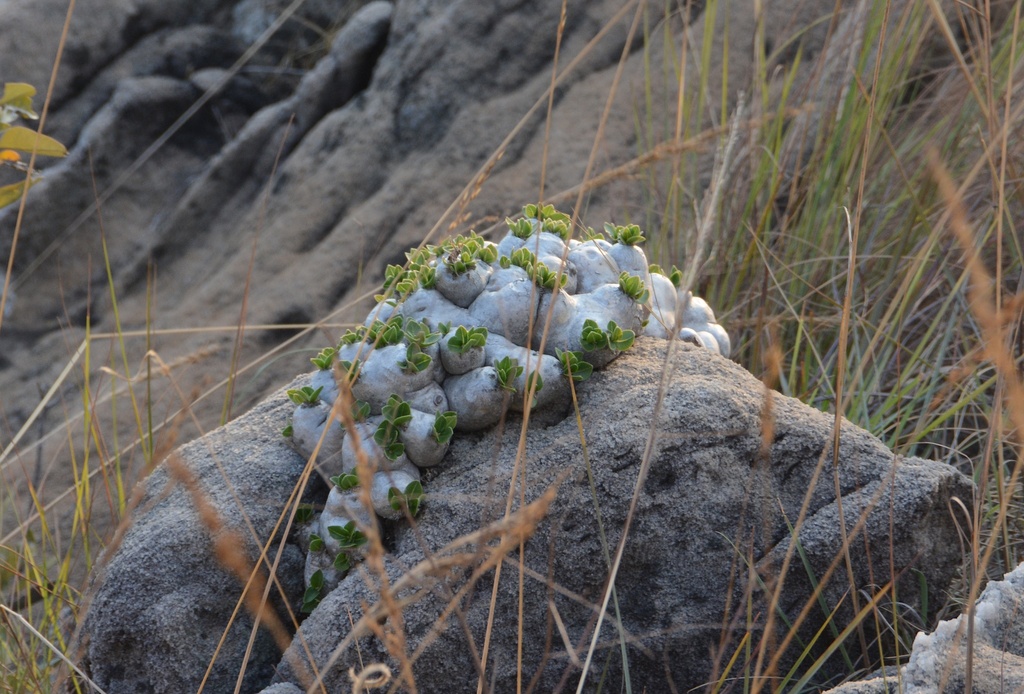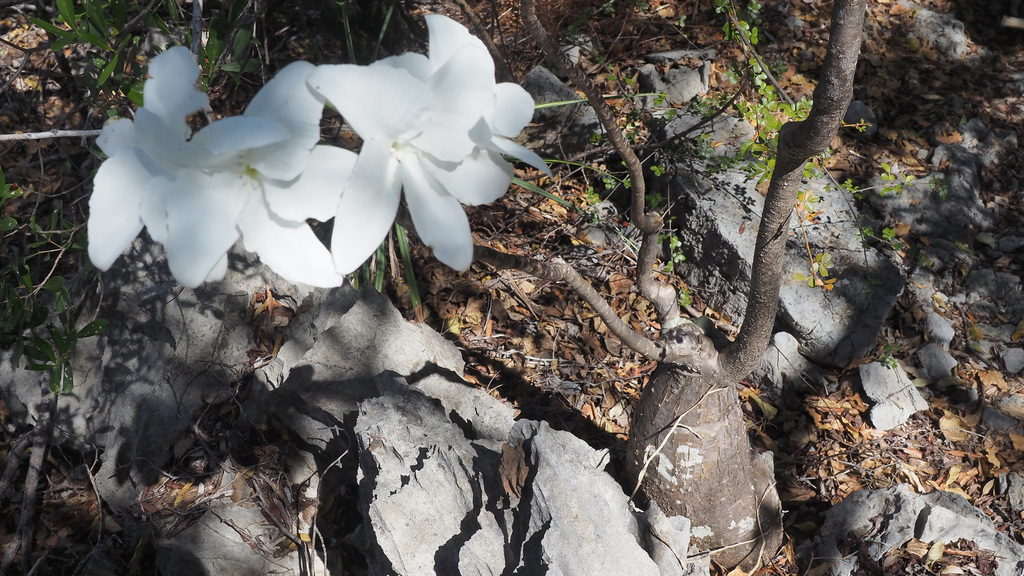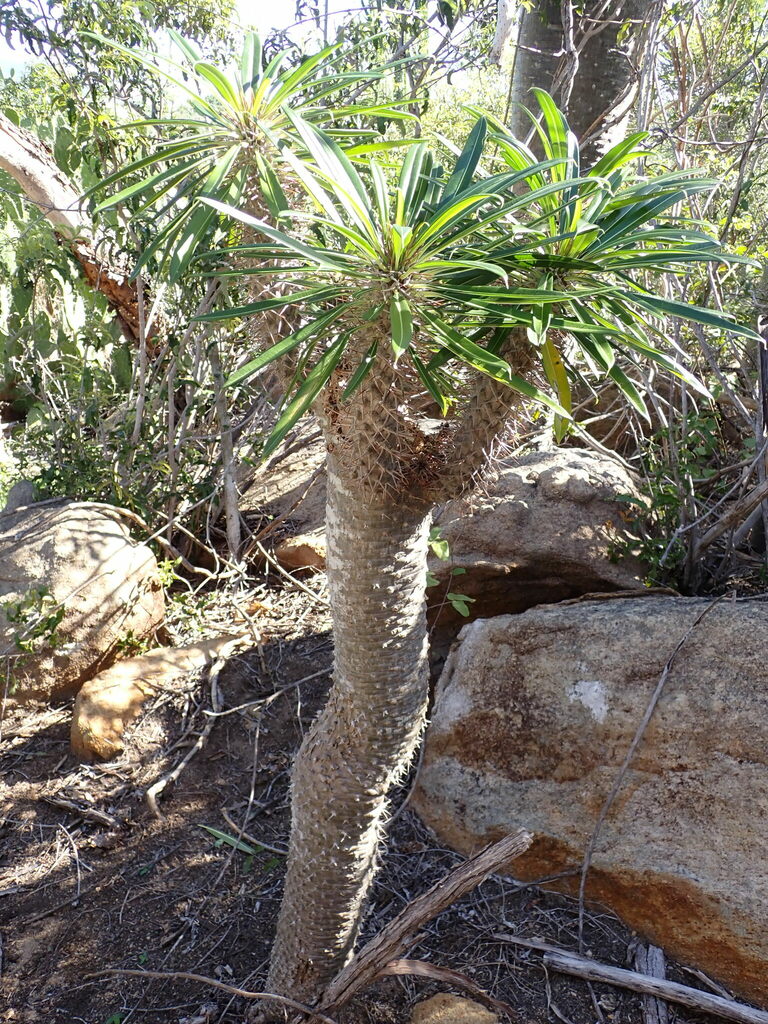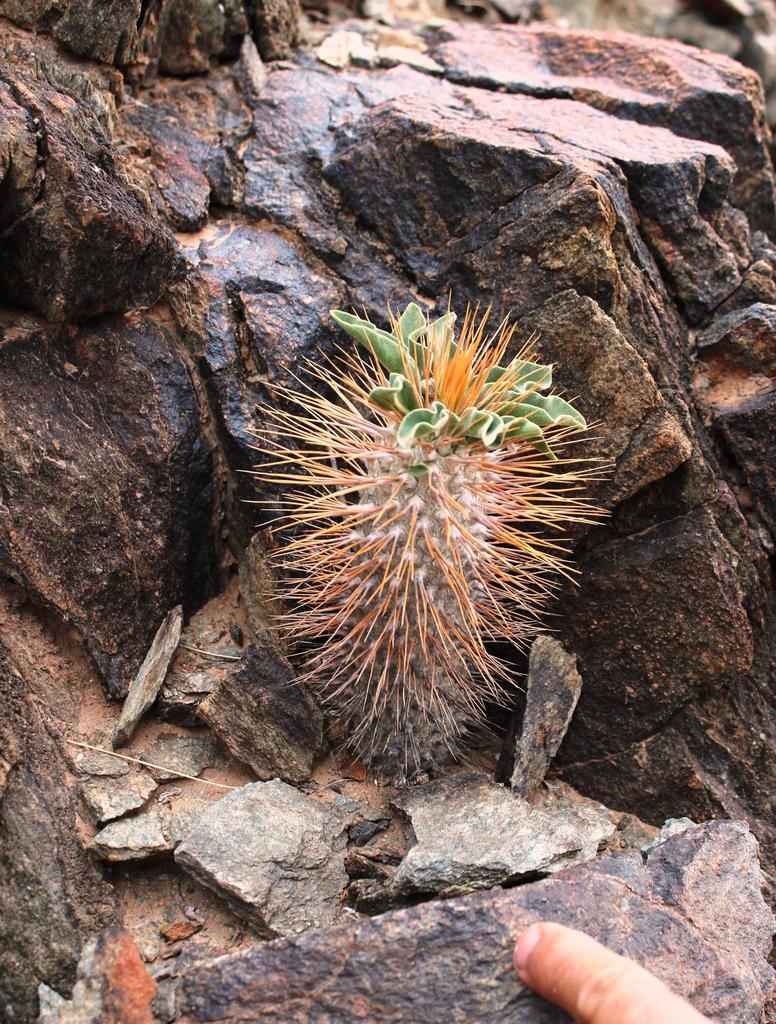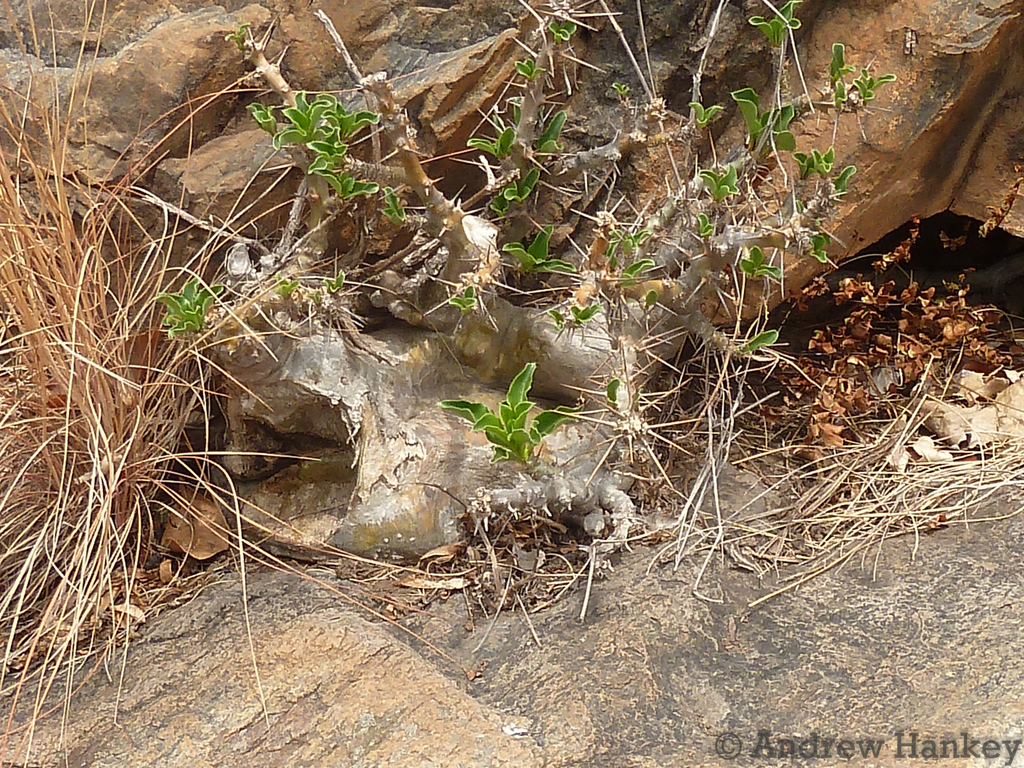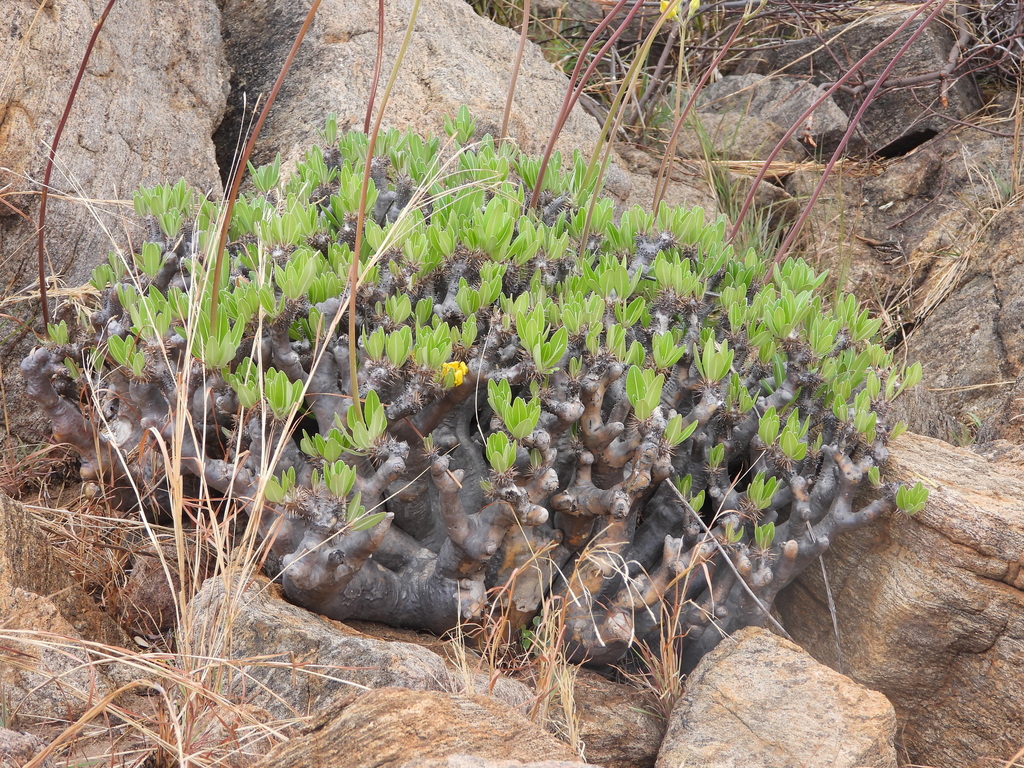
A caudex plant from the rocky reaches of the Ihorombe plain and Isalo Massif in south-central Madagascar. Once treated as Pachypodium rosulatum var. horombense; visually similar to gracilius but taxonomically distinct. The branched silhouette rising from a swollen caudex echoes gracilius, but horombense has a wilder, knottier look and, most distinctively, plump bell- or urn-shaped yellow flowers that have a real charm of their own. Growing in dry rocky terrain with strong sun and pronounced wet-dry cycles, it is reasonably tough in cultivation — anyone who has raised gracilius will feel right at home — though as a rock-dweller it dislikes prolonged rain and stagnant air, so good airflow makes a real difference.
Native climate
Rain concentrates in the warm season, with a dry season of roughly 5 months. Overall a mild climate.
A broad-scale picture of the native range. Real growing spots — rock crevices, fog belts — can be milder.
Sources: climate & elevation WorldClim 2.1 (1970–2000) · occurrences GBIF · native range POWO · current weather Open-Meteo
Care
Light & Placement

Native to the rocky slopes around the Isalo Massif in south-central Madagascar, where it grows under intense sun and sharp wet-dry cycles. Give full sun outdoors throughout the growing season to fatten the caudex. As a rock-dweller it dislikes prolonged rain and stagnant air, so it appreciates around 30% shade and breezy partial shade in Japan's worst midsummer weeks. Raise pots off the ground for airflow and consider an air circulator. Overwinter indoors near a bright window, kept above 5°C and out of rain.
Watering
In active growth, water thoroughly once the surface has dried, fattening the plump caudex. Rock-dwelling and tolerant of wet-dry swings, but not of prolonged damp. Overwinter on the dry side — a misting once or twice a month is plenty once leaves drop.
Substrate
Drainage and aeration first, with an inorganic mix. Akadama : Kanuma : pumice = 4:3:3 is a reliable baseline; a touch more pumice is fine. A taller pot lets the wet-dry cycle do its work and prevents stagnant heat at the caudex base.
Fertilizer & Supplements
A dilute liquid feed once a month in active growth, or a pinch of slow-release at repotting. Overfeeding causes etiolation and root rot, and smooths out the rugged silhouette that's part of this species' appeal — keep it light, aim for slow density.
Temperature & Overwintering
Optimal 20–32°C, with a 5°C winter floor. A rock-dweller that dislikes prolonged rain and stagnant air, so 30% shade and airflow prevent leaf-tip scorch through midsummer. Overwinter bone-dry; damp soil under cold triggers root rot.

Starting from Seed
Where to source seeds
links go directly to the product page; the rest are scientific-name searches. Stock fluctuates — verify availability on the destination site.
Pre-sowing treatment
Soak seeds for about half a day (overnight) in a mix of a registered seed-treatment fungicide (Benlate or Daconil) and a plant tonic (SUPERthrive), each diluted per label. Those still floating are likely past their prime, and fresh seed germinates more evenly.
Substrate
Use a separate seedling mix that's fine-grained and near-sterile: fine Akadama, fine Kanuma, and vermiculite in equal 1:1:1 parts. Sterilize the mix with boiling water or a quick microwave pass before sowing for peace of mind.
Sowing method
Sow with no covering, or only the thinnest dusting of substrate so the seeds remain partly visible. Space seeds at least 1 cm apart and arrange them so they don't clump together or overlap on the surface.
Light & temperature
Keep the tray in bright shade at a steady 25–30°C. Expect germination in 5–14 days. Germination depends on seed freshness, but with fresh seed it is reasonably steady; some seeds wake up days behind the rest, so don't rush to give up on the late ones.
Watering
Bottom-water with the level 1–2 cm up the pot. For the first 2–3 weeks, prioritize not letting things dry out at all, then drop the water level gradually once the seedlings are up and reliably stable.
Fertilizer
No feeding right after germination. Once the true leaves emerge, give a heavily diluted liquid fertilizer once or twice a month — go lighter than the bottle suggests, since young seedlings are easily pushed into etiolation.
From Germination to Repotting
Germination through true leaves (first month)
Keep bottom watering going and hold the humidity. Avoid strong light and keep the tray in bright shade.
Weaning off bottom watering (months 1–2)
Lower the water level gradually, eventually switching to bottom watering from a saucer. A sudden dry-out will kill the seedlings.
First repotting (year 1–2)
The right time is when roots reach the bottom of the pot. As the caudex starts to show, move the plant into a standard inorganic mix.
Common Pitfalls
Mold & damping-off
- Cause: contaminated substrate, excessive moisture, poor ventilation
- Prevention: sterilize the substrate, change the bottom water frequently, use an air circulator for ventilation
Etiolation
- Cause: insufficient light
- Prevention: bring the LED closer right after germination, or move the seedlings to bright shade outdoors
Seeds fail to germinate
- Cause: old seeds, insufficient temperature
- Prevention: choose a trusted source, stabilize temperature with a heat mat
Seedlings die soon after germination
- Cause: abrupt strong light, abrupt drying
- Prevention: change conditions gradually — acclimate over the course of a week
Notes
A rock-dwelling species sensitive to prolonged rain and stagnant air. The sap is mildly toxic.