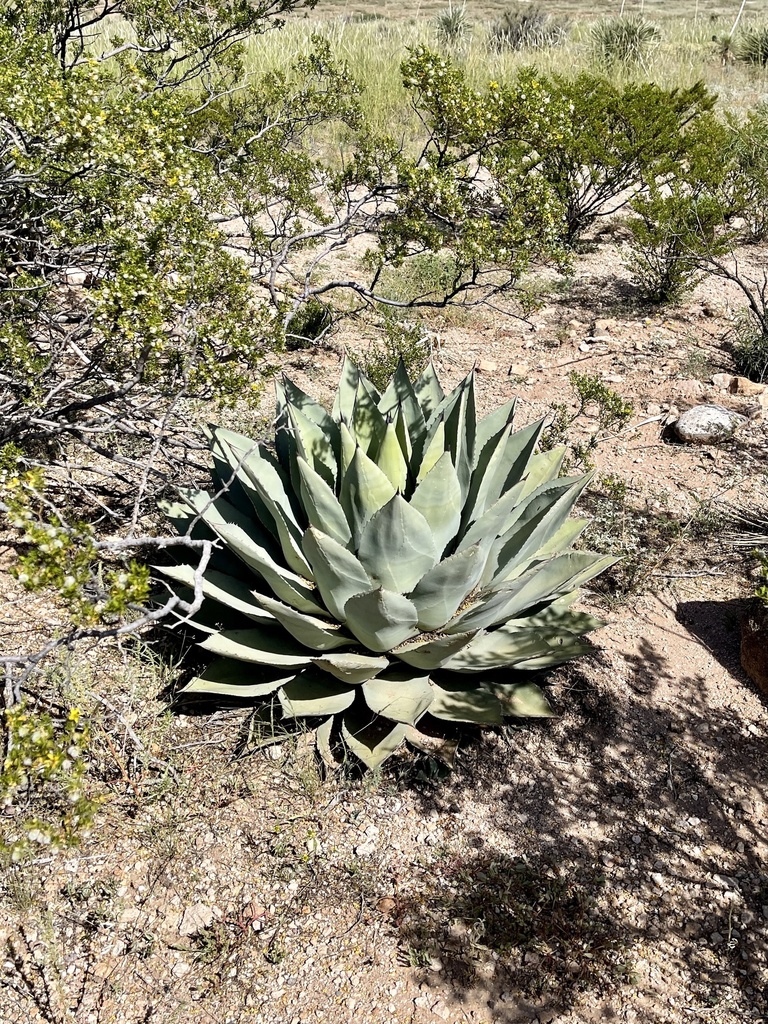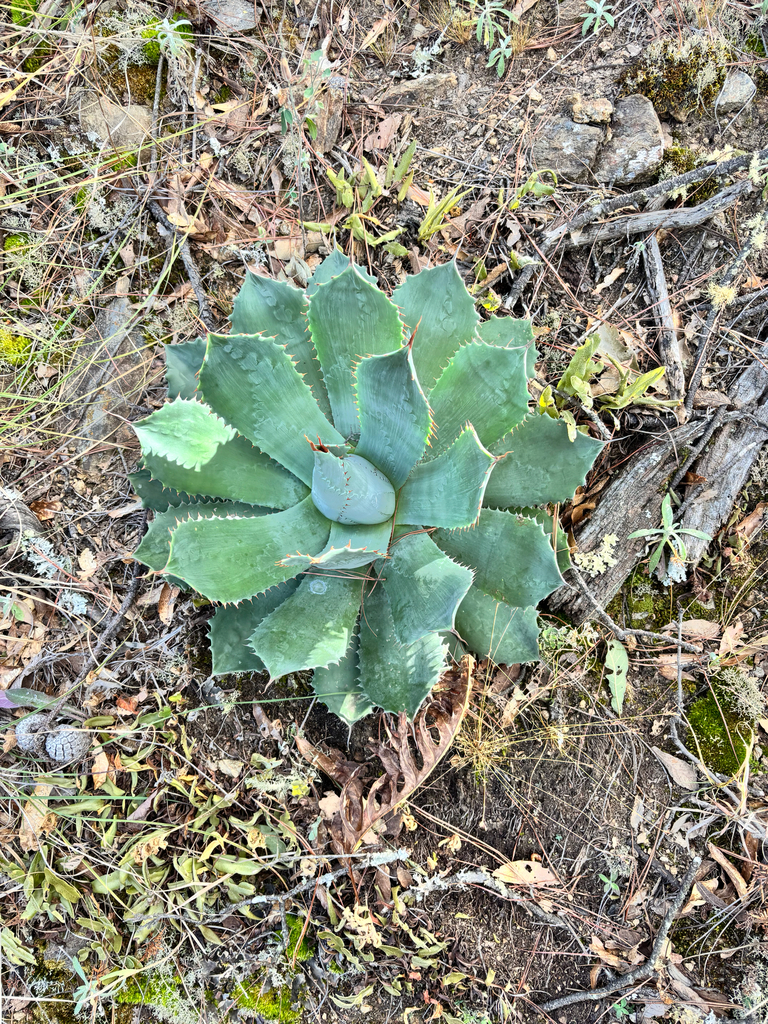
A medium-sized rosette species native to the mixed limestone and volcanic rock slopes between Puebla and Oaxaca, in the area surrounding the Tehuacán–Cuicatlán Valley, at elevations of 1,200–2,500 m. The grey-blue to grey-green leaves carry fine marginal teeth along their undulating edges and terminate in a stout, deep crimson to dark brown spine. Its compact form — reaching just 30–60 cm across — and tightly geometric rosette have long attracted enthusiasts. The species has historically been used as a mezcal source in this region and is assessed as Least Concern on the IUCN Red List. Taxonomically it is accepted as Agave potatorum Zucc. (1832) in POWO, with the epithet potatorum — "of the drinkers" — reflecting its use in fermented beverages.
Native climate
Rain concentrates in the one season, with a distinct dry season. Overall mild, at high elevation.
A broad-scale picture of the native range. Real growing spots — rock crevices, fog belts — can be milder.
Sources: climate & elevation WorldClim 2.1 (1970–2000) · occurrences GBIF · native range POWO · current weather Open-Meteo
Care
Light & Placement

On the Puebla–Oaxaca highlands, plants endure pronounced day-to-night temperature swings and grow under strong sun and open wind during the dry season. Strong light and good airflow suit the species well, though midsummer sun in Japan can deliver more heat than the original highland habitat. Placing plants on a well-ventilated shelf under 20–30% shade cloth through summer helps avoid leaf scorch and overheating. During the spring and autumn growing seasons, outdoor direct sun tightens the rosette and deepens the grey-blue leaf colour. In winter, moving plants to a bright indoor windowsill above 0°C and reducing water keeps them safely dormant. Growth slows during hot, humid summers, so water should be reduced and airflow prioritised.
Watering
During the growing seasons (spring and autumn), water thoroughly once the medium has dried completely, then allow it to dry fully before the next watering. In summer heat and winter dormancy, water is reduced to roughly once or twice a month. Excessive moisture during prolonged rain or warm, muggy nights is the main cause of crown rot.
Substrate
Drainage is the overriding priority — a mostly inorganic mix works well. A base of Akadama fine grain : pumice : Kanuma fine grain in a 4:3:3 ratio, in a tall pot, creates the wet-dry cycle the plant appreciates.
Fertilizer & Supplements
A small amount of slow-release fertiliser during the growing season, supplemented by dilute liquid fertiliser (roughly half the recommended concentration) about once a month, is sufficient. Overfeeding stretches the leaves and disrupts the plant's characteristic geometry.
Temperature & Overwintering
The preferred growing temperature is 15–28°C. Because of its highland origin, growth tends to stall when temperatures rise above 30°C in summer. The minimum is around 0°C; brief frost contact causes damage. In winter, avoid the combination of rain and cold by keeping plants dry and bright indoors.
Seed Sowing
Where to source seeds
International: Köhres / Mesa Garden / Succseed / Unusual Seeds / Cactus Store
Japan — specialty shops: Plant Brothers / SEEDSTOCK / Albino Seinikuten / Nara Succulent Society
Japan — marketplaces: Yahoo Auctions / Mercari / Yahoo! Shopping
Pre-sowing treatment
Seeds are soaked for half a day in a solution of fungicide (Benlate WP, Daconil 1000, or similar) combined with a rooting stimulant (Menedael or equivalent) at the recommended dilution. Seeds that float tend to be those with reduced viability. Sowing as soon as possible after acquisition gives the most reliable results.
Sowing method
Sow without covering, or with only the thinnest possible covering that barely conceals the seeds. Space seeds at least 1 cm apart to avoid crowding.
Light & temperature
Maintain a stable temperature of 23–28°C in bright shade. Germination typically occurs within 7–21 days. Seeds with higher freshness tend to germinate more reliably.
Watering
Manage with bottom watering, keeping 1–2 cm of water in the tray. For the first two to three weeks, preventing the medium from drying out takes priority; once germination is well underway, the water level can be gradually reduced.
Fertilizer & Supplements
No fertiliser is needed immediately after germination. Once true leaves have emerged, a very dilute liquid fertiliser — more than twice the recommended dilution — can be applied once or twice a month, sparingly.
Germination through true leaves
Germination through true leaves (up to 1 month)
Continue bottom watering and keep plants in bright shade.
Weaning off bottom watering (months 1–2)
Gradually lower the water level and transition to tray watering.
First repotting (year 1–2)
The right time is when roots have reached the bottom of the pot.
Common difficulties
Crown rot
- Cause: Water pooling at the crown, prolonged rain, or poor airflow
- Prevention: Shelter from rain exposure; water from the pot rim rather than the centre to prevent pooling at the crown
Sunburn
- Cause: Tissue damage from a sudden move into direct sunlight
- Prevention: Increase light intensity gradually over one to two weeks to allow the plant to acclimate
Etiolation
- Cause: Insufficient light; overwatering during long days compounds the problem
- Prevention: Move the grow light closer immediately after germination, or shift to a bright outdoor shade position
Seeds fail to germinate
- Cause: Reduced seed freshness or insufficient temperature
- Prevention: Source seeds from reliable suppliers and use a heat mat to maintain stable temperature
Seedlings don't match the parent
- Cause: Seed-grown plants do not inherit the traits of selected cultivars
- Prevention: When variegation or unusual forms from select specimens are the goal, understanding that seed-grown plants will not reproduce those traits is part of approaching the process on its own terms
Notes
The terminal spines are thick and hard; sap contact may irritate skin.