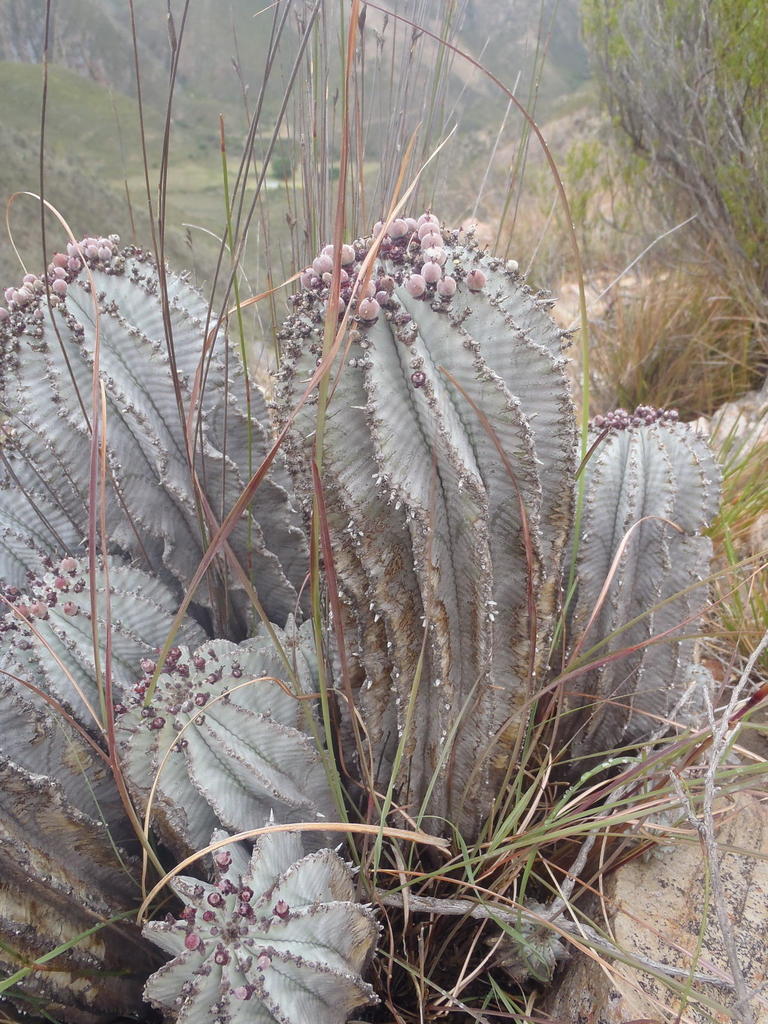
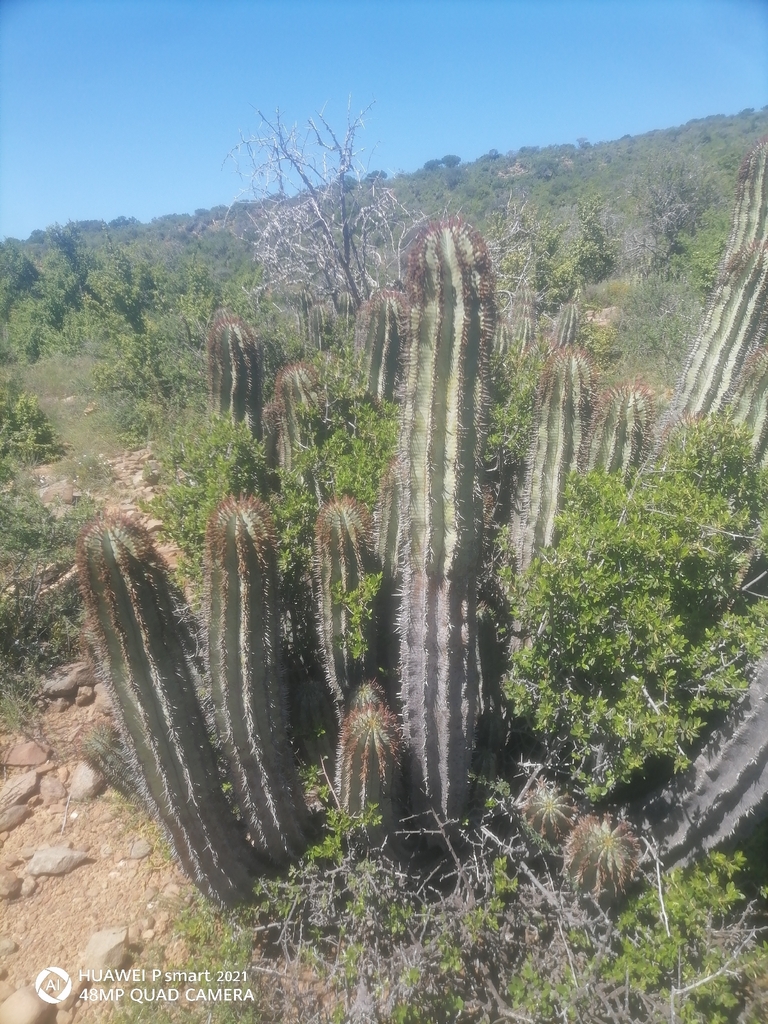
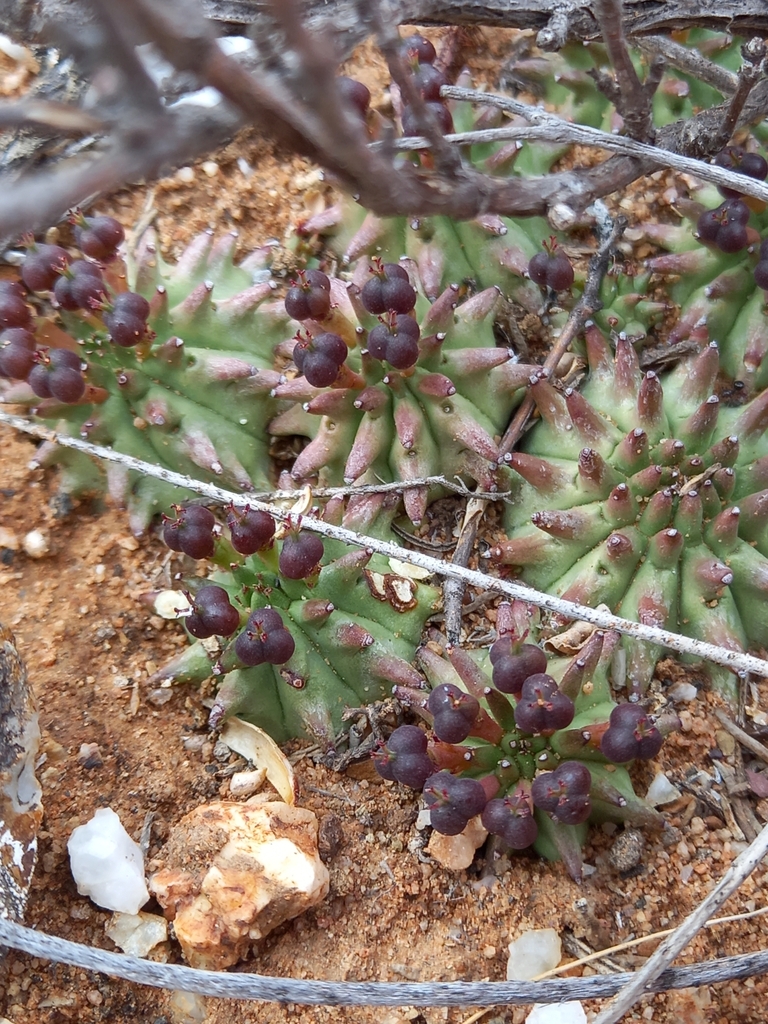
‘White Ghost’ is a cultivar selected from white-variegated forms of Euphorbia lactea — a large spurge native to the dry country of South Asia, mainly the Indian Subcontinent, where it branches into a candelabra of three-ridged columns. In this cultivar almost all the chlorophyll has drained out of those columns, leaving a pale, bone-white frame, with patches of faint green here and there and a soft pink blush along the spine line. With so little chlorophyll, photosynthesis is modest and growth is slow. For the same reason it is more sensitive than the wild form to strong sun and to cold, and the white latex irritates skin and mucous membranes on contact.
Care
Light & Placement
The wild species grows in the bright, sun-baked drylands of the Indian Subcontinent, but ‘White Ghost’ lacks the chlorophyll that shields green skin, so strong direct sun scorches it and the surface breaks down to brown. Bright shade year-round, or soft light through a sheer curtain, suits it best. In the growing season — spring through autumn — keep it outdoors in half shade with good airflow, away from midday and afternoon sun. Indoors, give it a bright window, and resist the urge to compensate for its low chlorophyll with intense close-range light. Steady, moderate brightness — enough to prevent stretching — is the way to keep the white columns firm.
Watering
During growth, water thoroughly only after the substrate has dried out completely, then let it dry again — a clear wet-dry rhythm. Excess moisture leads straight to root rot. In winter dormancy keep it nearly dry, with a sparing drink once or twice a month.
Substrate
Drainage above all, in an inorganic mix. Small-grain Akadama : pumice : Kanuma = 4:3:3 is a reliable baseline. A pinch of slow-release such as Magamp K helps early growth, and a taller pot improves the wet-dry cycle.
Fertilizer & Supplements
A small amount of slow-release during active growth, plus a monthly dilute liquid feed (around twice the label dilution). Because it is naturally slow, overfeeding won't fatten it — it only invites stretching and root damage.
Temperature & Overwintering
Optimal 20–32°C with an 8°C winter floor. It is more sensitive to cold than the wild species, so move it to a bright indoor window as temperatures approach 10°C. Damp soil at low temperatures is often fatal, so taper water from autumn onward.
Starting from Seed
A note on propagation
‘White Ghost’ is a cultivar selected for the white variegation of the wild species; seed does not reliably carry the same white trait, and it is rarely offered as seed. In practice this cultivar is increased not from seed but vegetatively — by stem cuttings or by grafting. What follows describes that vegetative route rather than sowing.
When and how to take cuttings
The growing season, spring through early summer, is the time. Cut a 3–10 cm segment with a clean blade. The white latex will well up, so wear gloves and keep it away from eyes and mouth.
Treating the cut
Rinse the cut to stop the latex, then let it dry in airy shade for about a week so a firm callus forms. Cuttings set without drying tend to rot at the base.
Rooting medium
Set the cutting in a dry, inorganic mix and keep it in bright shade. Withhold water at first, and ease back into watering only once signs of rooting appear.
Grafting as an option
Because variegated forms root slowly and rot easily, grafting onto a sturdy Euphorbia rootstock is also widely used. It takes faster than waiting for roots and tends to grow more steadily.
Common Pitfalls
Rot at the cut or base
- Cause: Cut not dried enough, excess moisture, cold
- Prevention: Let the cut dry about a week before setting, keep the mix on the dry side, avoid working below 10°C
Scorched skin (white columns breaking down to brown)
- Cause: Strong direct sun, abrupt change in conditions
- Prevention: Keep in bright shade; when moving outdoors, acclimate gradually over a week
Stretching & etiolation
- Cause: Insufficient light
- Prevention: Provide steady, moderate brightness year-round
Notes
The white latex strongly irritates skin and eyes — take care with hands and mucous membranes, and keep it away from children and pets.