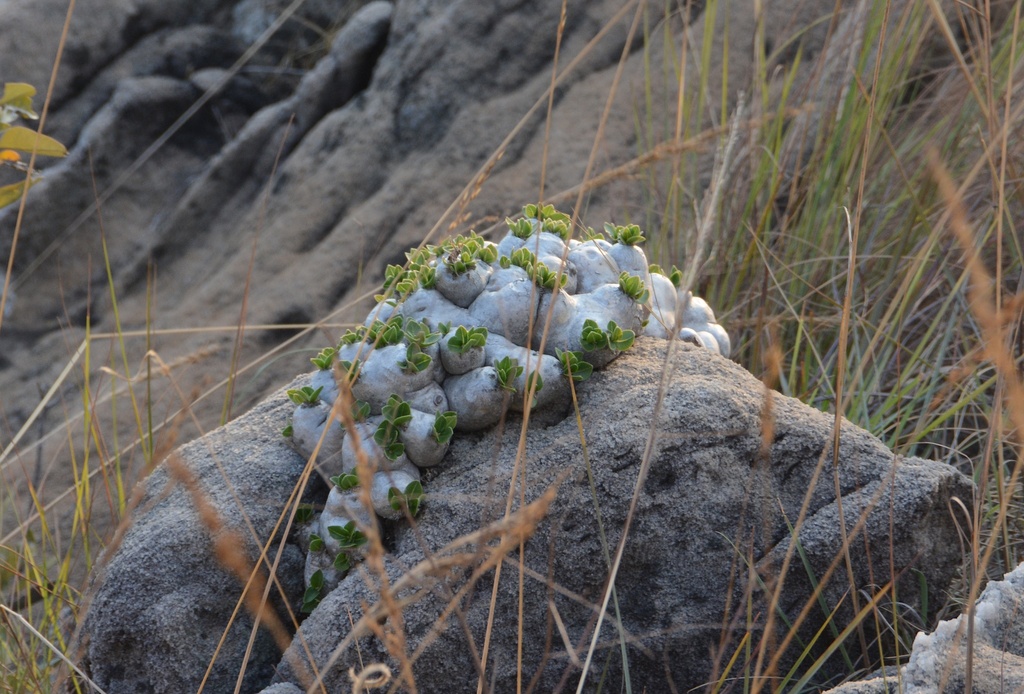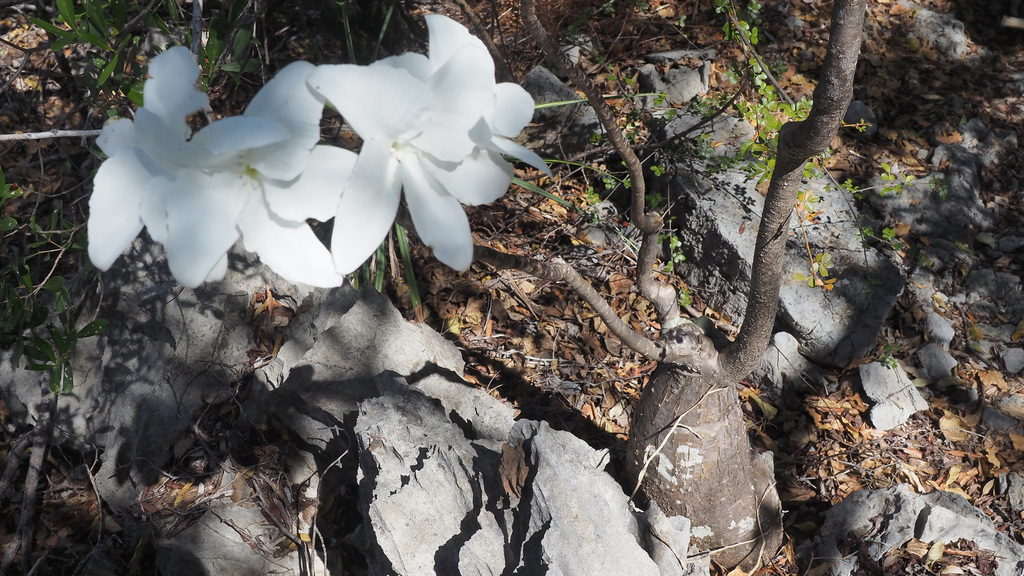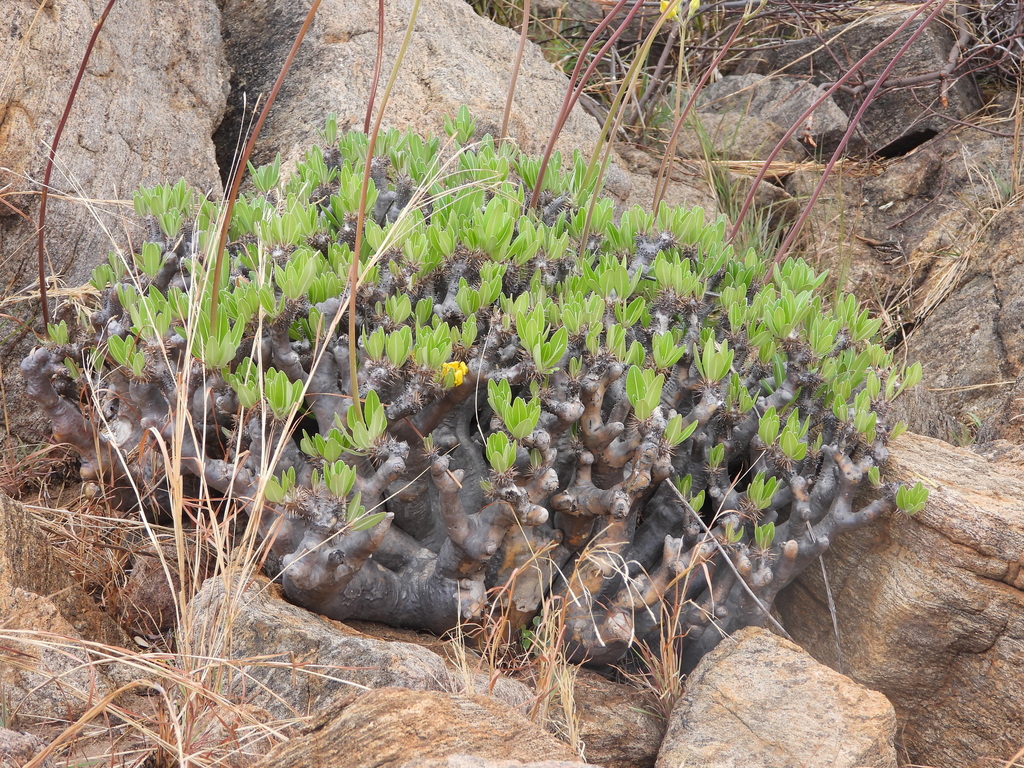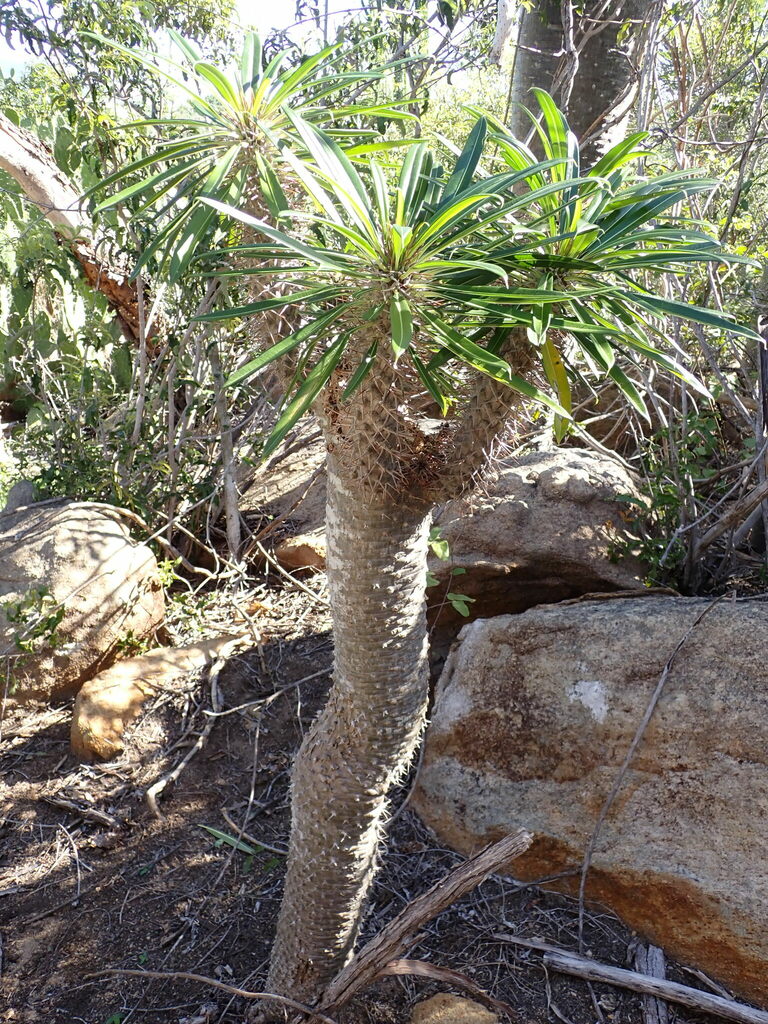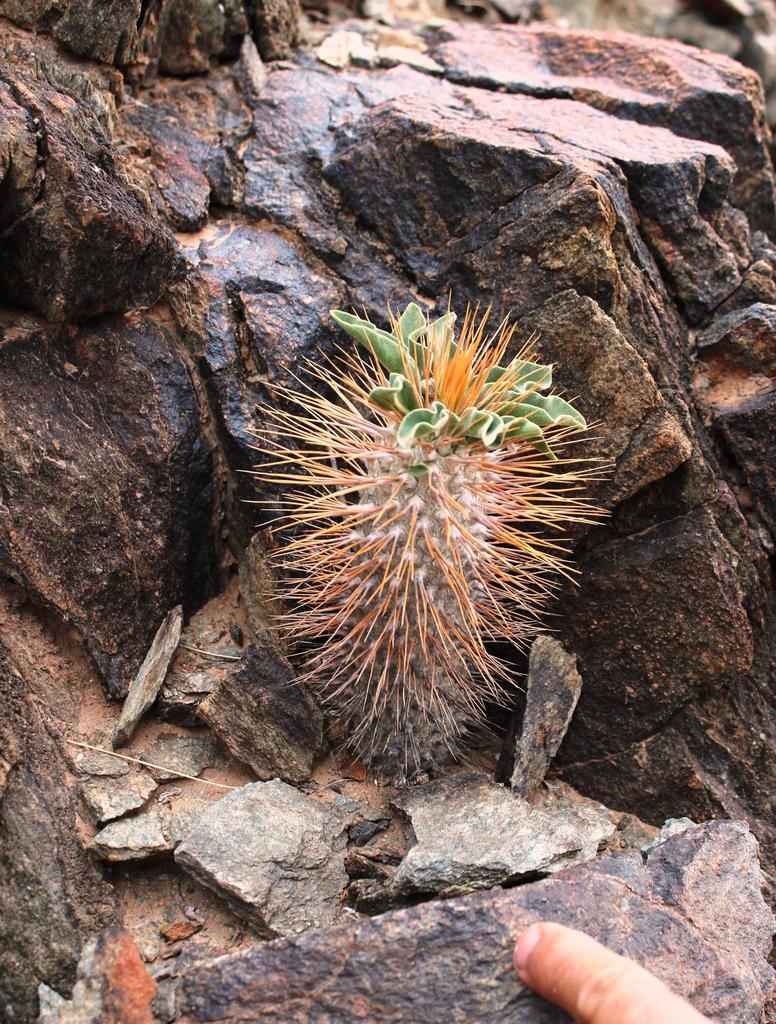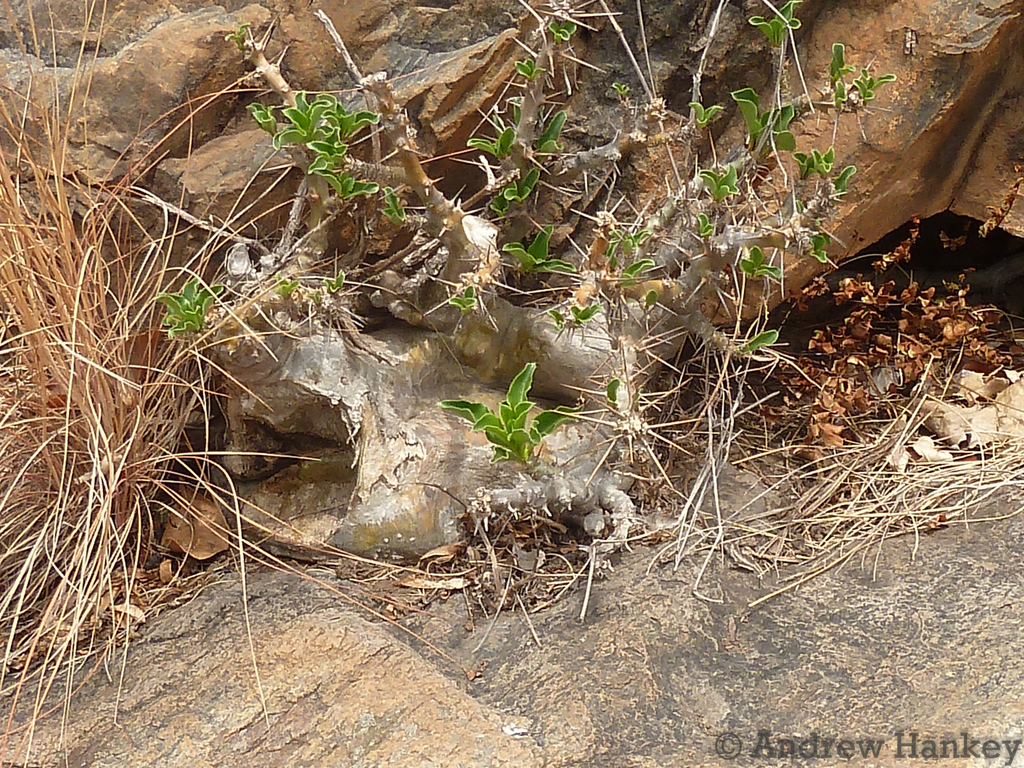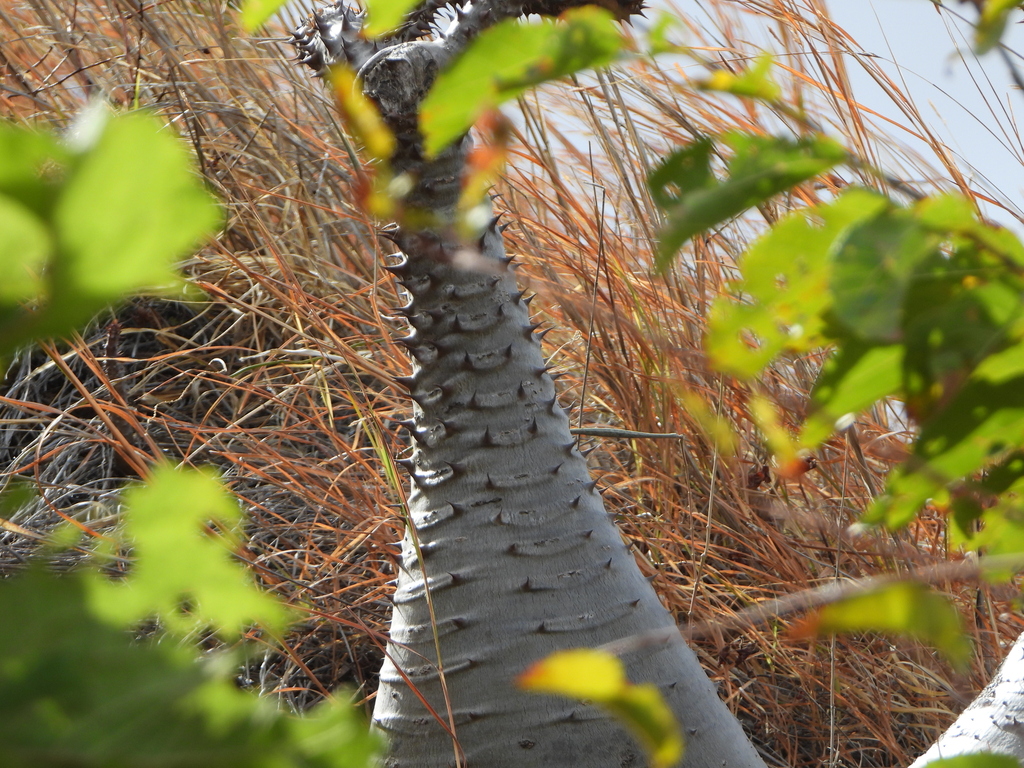
A caudex Pachypodium from the deciduous dry forests of northwestern Madagascar, between Befandriana Nord and Mandritsara, where it grows on calcareous and gneiss outcrops at 300–1,200 m. Described by Costantin & Bois in 1907 and named after the Madagascar plant collector Richard Baron, it circulates in Japan under the romanized name baronii. The round, bottle-shaped caudex, paired short curved spines, and — most distinctively — the deep crimson tubular flowers, a rarity in a genus of mostly yellow and white blooms, make it a coveted collector's piece. Listed on CITES Appendix I and assessed as Endangered (IUCN EN), so seed-grown plants are the responsible route.
Native climate
Rain concentrates in the warm season, with a distinct dry season. Overall a warm climate.
A broad-scale picture of the native range. Real growing spots — rock crevices, fog belts — can be milder.
Sources: climate & elevation WorldClim 2.1 (1970–2000) · occurrences GBIF · native range POWO · current weather Open-Meteo
Care
Light & Placement

Native to the deciduous dry forests of northwestern Madagascar (300–1,200 m on calcareous and gneiss outcrops), this species loves strong sun and a clear wet/dry seasonality. Give it full sun outdoors during the growing season — strong light tightens the caudex and brings out the deep crimson flowers. In Japan's hot, humid midsummer, light shading (around 30–50%) helps prevent scorch and stagnant heat at the base; an air circulator helps too. Raise the pot off the ground for airflow. Overwinter near a bright indoor window kept above 8°C, out of rain, and on the dry side.
Watering
In active growth, water thoroughly once the surface dries to plump the caudex; never leave water in the saucer. As leaves drop, taper off, and overwinter completely dry through dormancy.
Substrate
Drainage and aeration first, with an inorganic mix: Akadama : Kanuma : pumice = 4:3:3 is a safe baseline. A taller pot improves wet-dry cycling and reduces caudex rot.
Fertilizer & Supplements
A dilute liquid feed once a month in active growth, or a pinch of slow-release at repotting. Overfeeding causes etiolation and a stretched caudex — keep it light to bring the crimson flowers out.
Temperature & Overwintering
Optimal 22–35°C, with an 8°C winter floor. Lowland Madagascan origins mean it is less cold-tolerant than Cape species — anything below 5°C risks damage. Wet soil under cold is what kills it, so overwinter bone-dry on a bright indoor window.

Starting from Seed
Where to source seeds
Pre-sowing treatment
Soak seeds for about half a day (overnight) in a mix of a registered seed-treatment fungicide (Benlate or Daconil) and a plant tonic (SUPERthrive), each diluted per label. Any that don't sink tend to have a low germination rate.
Substrate
Use a separate seedling mix that's fine-grained and near-sterile: fine Akadama, fine Kanuma, and vermiculite in equal 1:1:1 parts. Sterilize the mix with boiling water or a quick microwave pass before sowing for peace of mind.
Sowing method
Sow with no covering, or only the thinnest dusting of substrate so the seeds remain partly visible. Space seeds at least 1 cm apart and arrange them so they don't clump together or overlap on the surface.
Light & temperature
Keep the tray in bright shade or under a low-intensity LED at a steady 25–30°C. Expect germination in 7–21 days. Germination depends on seed freshness, but with fresh seed it is reasonably steady; stable warmth gives the most consistent flush.
Watering
Bottom-water with the water level 1–2 cm up the side of the pot. For the first 2–3 weeks, prioritize not letting the substrate dry out at all, then drop the water level gradually once seedlings come up.
Fertilizer
No feeding right after germination. Once the true leaves emerge, give a heavily diluted liquid fertilizer once or twice a month — go lighter than the bottle suggests, since young seedlings are easily pushed into etiolation.
From Germination to Repotting
Germination through true leaves (first month)
Keep bottom-watering to hold the humidity up, and stay out of strong light — bright shade is still right at this stage.
Weaning off bottom watering (months 1–2)
Lower the water level gradually, then switch to watering into the saucer (bottom watering). Drying the seedlings out too suddenly will kill them.
First repotting (year 1–2)
The right time is once roots have reached the bottom of the pot. As the caudex begins to show, move the plant into a normal inorganic mix.
Common Pitfalls
Mold & damping-off
- Cause: microbes in the substrate, excess moisture, poor airflow
- Prevention: sterilize the substrate, change the bottom water often, and keep an air circulator running
Etiolation
- Cause: insufficient light
- Prevention: bring the LED closer right after germination, or move the seedlings to bright shade outdoors
Seeds fail to germinate
- Cause: old seeds, insufficient temperature
- Prevention: choose a trustworthy source and use a heat mat to hold the temperature steady
Seedlings die soon after germination
- Cause: sudden strong light, sudden drying
- Prevention: change conditions in stages — acclimate them little by little over about a week
Notes
A CITES Appendix I species — mind the spines. The sap is mildly toxic.