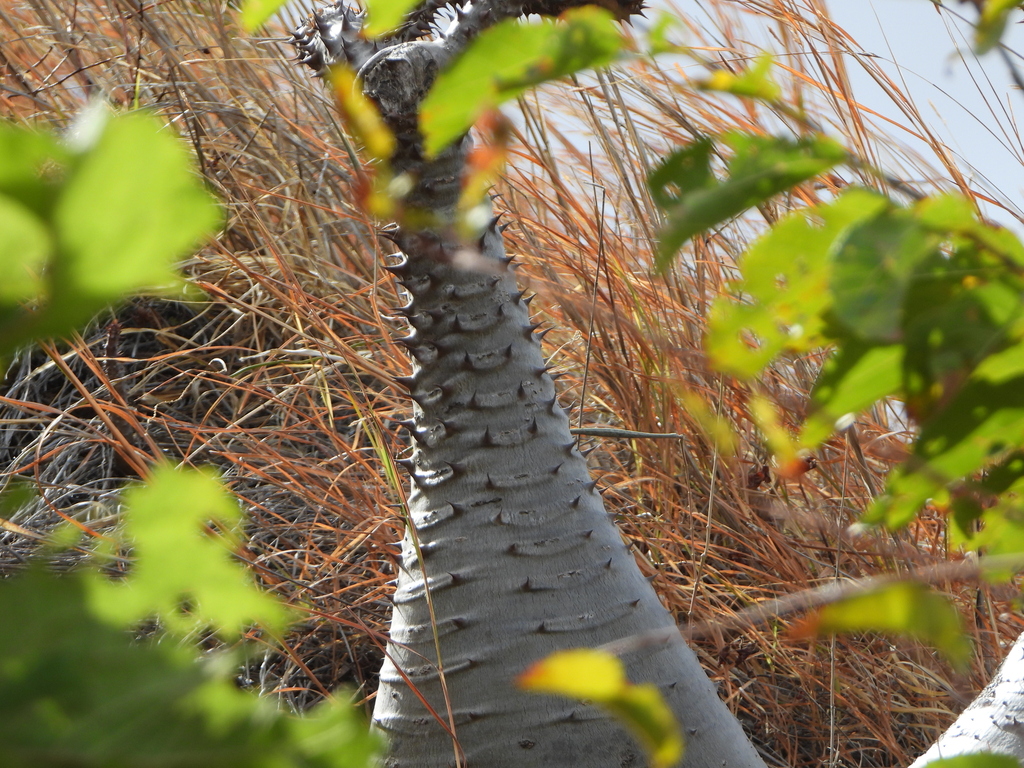
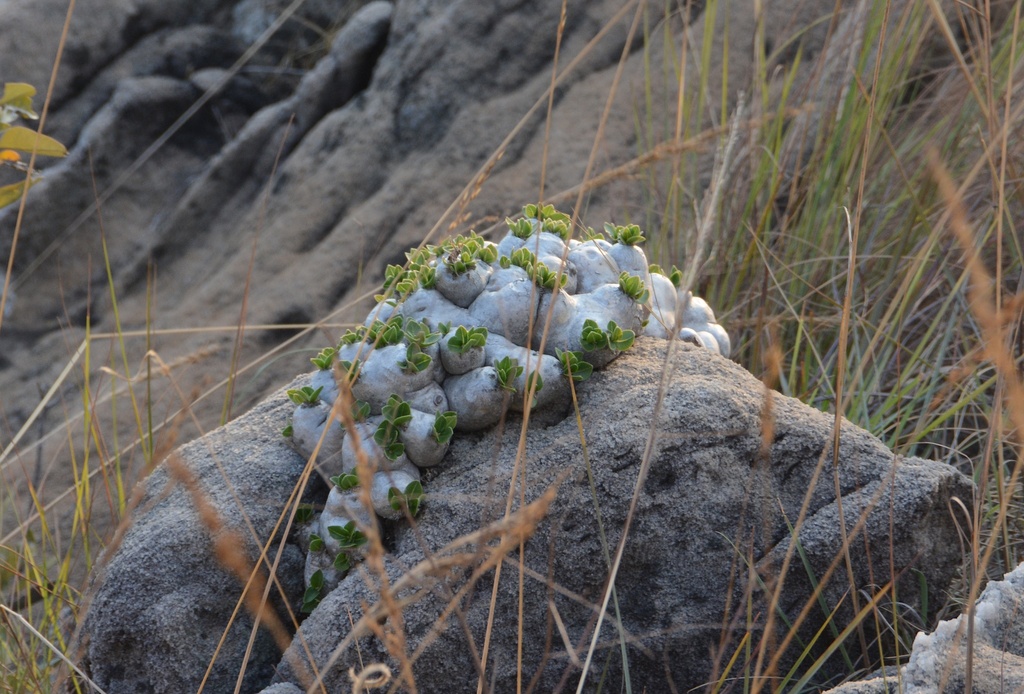
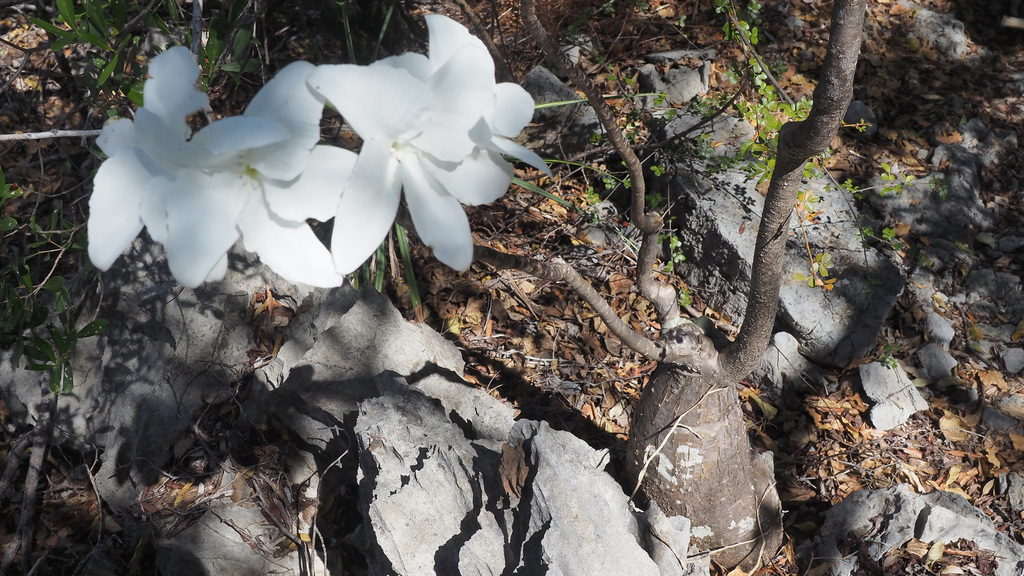
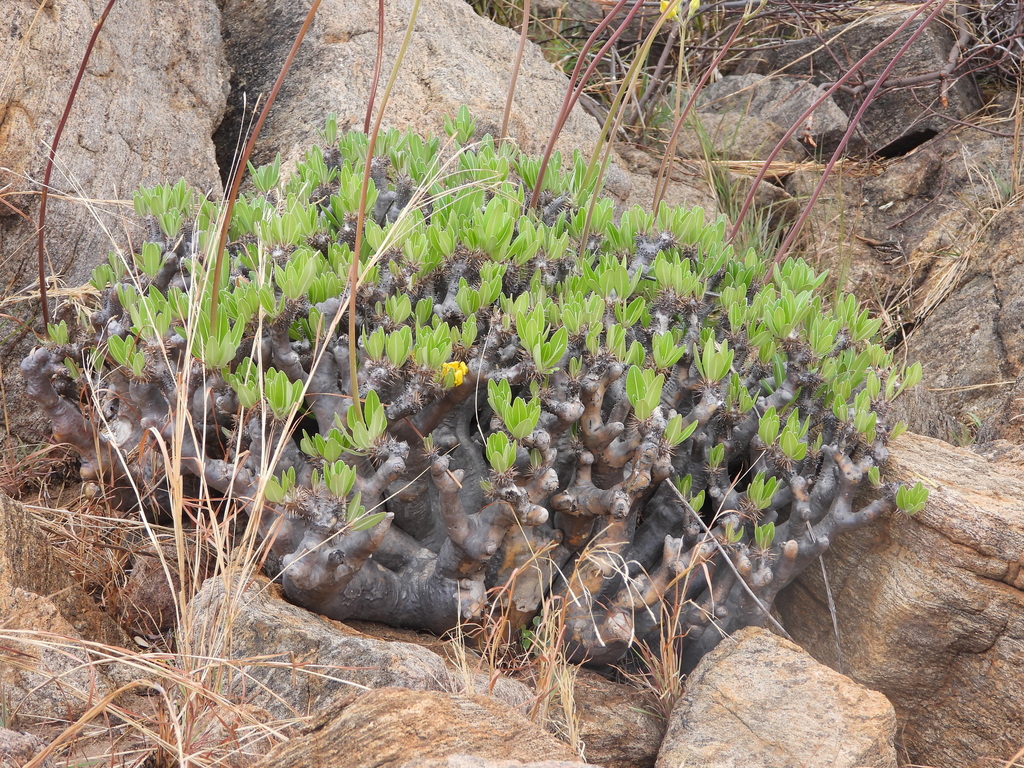
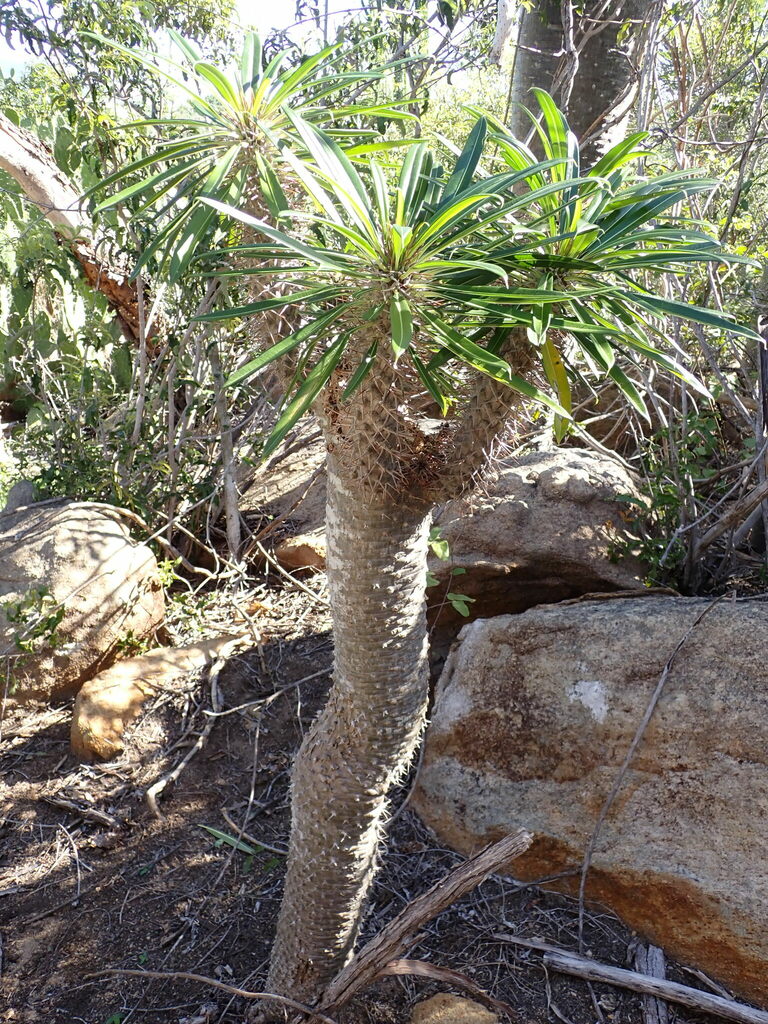
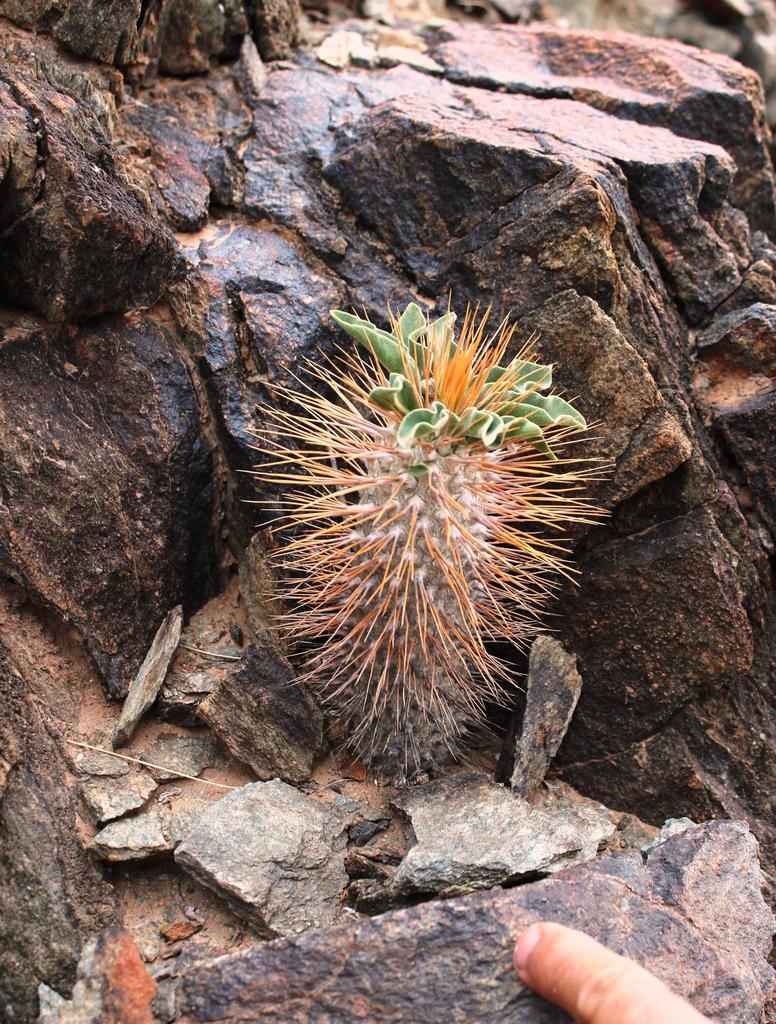
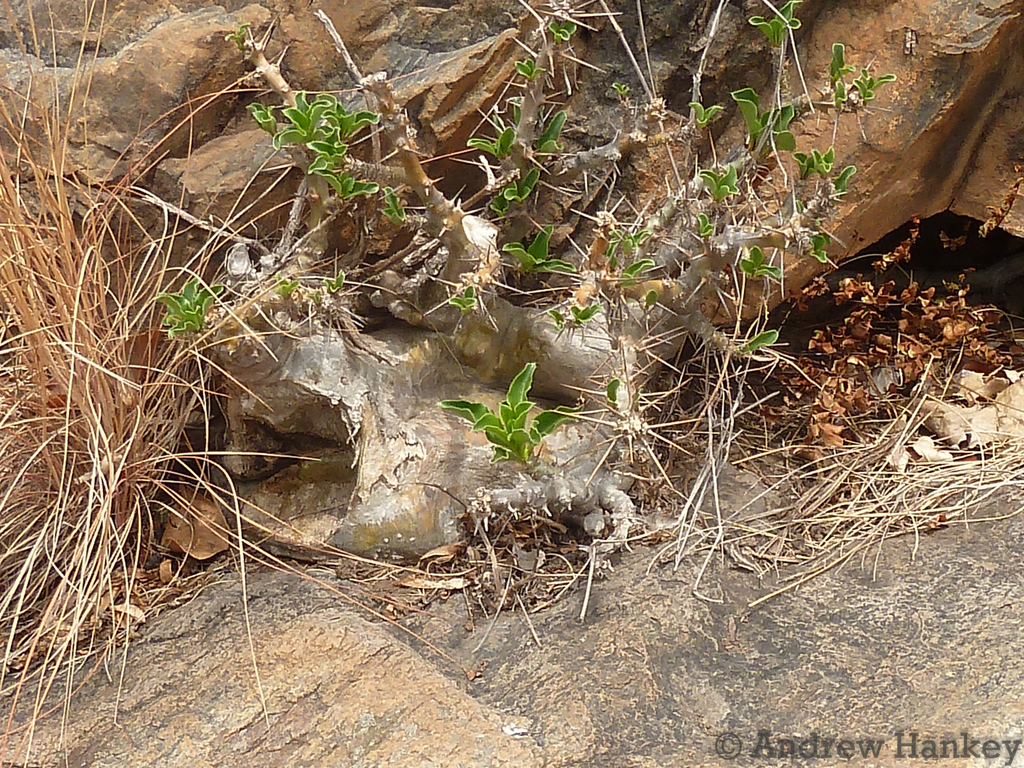
An African-mainland Pachypodium (described by Welwitsch in 1869; the epithet honors the Portuguese officer Fernando da Costa Leal) from the rocky hillsides of southwestern Angola through northwestern Namibia — the Kunene River basin, Kaokoveld, and the Etendeka basalt plateau — reaching 1–6 m in height. It is unmistakable for its pale grey, swollen bottle-shaped trunk, its long spines, and its white to pale yellow tubular flowers that open on bare branch tips in late winter to early spring. Known in English as the Bottle Tree, it is one of the iconic plants of the Namibian arid landscape. CITES Appendix II listed; wild collection remains a concern, but seed-grown plants circulate on the hobbyist market and the dramatic bottle silhouette has earned it a devoted collector following.
Native climate
Rain concentrates in the warm season, with a dry season of roughly 6 months. Overall a mild climate.
A broad-scale picture of the native range. Real growing spots — rock crevices, fog belts — can be milder.
Sources: climate & elevation WorldClim 2.1 (1970–2000) · occurrences GBIF · native range POWO · current weather Open-Meteo
Care
Light & Placement

Native to the rocky hillsides of southwestern Angola and northwestern Namibia at elevations of roughly 1,000–1,600 m, this species lives for full sun. Place it outdoors in direct light through the growing season — without it the trunk stretches vertically and loses the compact bottle shape that defines the species. In Japan's hot, humid midsummer, very light shading (about 20–30%) takes the edge off scorch risk and stagnant heat. Keep airflow generous and raise the pot off the ground. During winter dormancy move it under cover where rain can't reach it, ideally a bright sunny window indoors, and keep it on the dry side. Skimping on light is the fastest way to wreck a young lealii — don't compromise.
Watering
In active growth, water thoroughly once the surface dries — this plumps the bottle trunk. Always empty the saucer. As leaves drop in autumn, taper off; through winter dormancy hold the plant completely dry to overwinter.
Substrate
Prioritize drainage and aeration with an inorganic mix: Akadama : Kanuma : pumice = 4:3:3. A taller pot encourages clean wet-dry cycles and protects the base of the trunk from sitting moisture.
Fertilizer & Supplements
A dilute liquid feed once a month in active growth, or a pinch of slow-release at repotting. Overfeeding causes the trunk to elongate and lose the compact bottle form — go light and aim for slow, dense growth.
Temperature & Overwintering
Active growth runs 22–35°C; aim for an 8°C winter minimum. Among the heat-tolerant arid-zone Pachypodiums, but damp soil under cold is what kills it. Overwinter dry on a bright indoor window; in colder climates, supplemental heating is worth considering.

Starting from Seed
Where to source seeds
links go directly to the product page; the rest are scientific-name searches. Stock fluctuates — verify availability on the destination site.
Pre-sowing treatment
Soak seeds for about half a day (overnight) in a mix of a registered seed-treatment fungicide (Benlate or Daconil) and a plant tonic (SUPERthrive), each diluted per label. Any that don't sink are likely no longer viable. Viability depends on how the seed has been stored, so sowing soon after receipt is the safer course.
Substrate
Use a separate seedling mix that's fine-grained and near-sterile: fine Akadama, fine Kanuma, and vermiculite in equal 1:1:1 parts. Sterilize the mix with boiling water or a quick microwave pass before sowing for peace of mind.
Sowing method
Sow with no covering, or only the thinnest dusting of substrate so the seeds remain partly visible. Space seeds at least 1 cm apart and arrange them so they don't clump together or overlap on the surface.
Light & temperature
Keep the tray in bright shade or under an LED at a steady 25–30°C. Expect germination in 7–21 days. Germination depends on seed freshness, but with fresh seed it is reasonably steady; with steady warmth, fresh seed often pops within a few days.
Watering
Bottom-water with the water level 1–2 cm up the side of the pot. For the first 2–3 weeks, prioritize not letting the substrate dry out at all, then drop the water level gradually once seedlings come up.
Fertilizer
No feeding right after germination. Once the true leaves emerge, give a heavily diluted liquid fertilizer once or twice a month — go lighter than the bottle suggests, since young seedlings are easily pushed into etiolation.
From Germination to Repotting
Germination through true leaves (first month)
Keep bottom watering and hold the humidity up. Avoid strong light and keep the seedlings in bright shade.
Weaning off bottom watering (months 1–2)
Lower the bottom-water level gradually, then switch to watering into the saucer (bottom feeding). Letting the substrate dry out suddenly will kill the seedlings.
First repotting (years 1–2)
The right time is once roots have reached the bottom of the pot. As the base of the trunk begins to swell, move the plant into a standard inorganic-based mix.
Common Pitfalls
Mold & damping-off
- Cause: microbes in the substrate, excess moisture, poor airflow
- Prevention: sterilize the substrate, change the bottom water often, and keep a circulator running for airflow
Etiolation
- Cause: insufficient light
- Prevention: bring the LED closer right after germination, or move the seedlings to bright shade outdoors — for lealii, weak light directly destroys the bottle form
Seeds fail to germinate
- Cause: old seeds, insufficient temperature
- Prevention: choose a reliable seed source and use a heat mat to keep the temperature steady
Seedlings die soon after germination
- Cause: sudden strong light, sudden drying out
- Prevention: make environmental changes gradual — acclimate over the course of a week
Notes
CITES Appendix II species. Watch out for the long spines. The sap is among the more toxic in the genus — keep it away from children and pets.