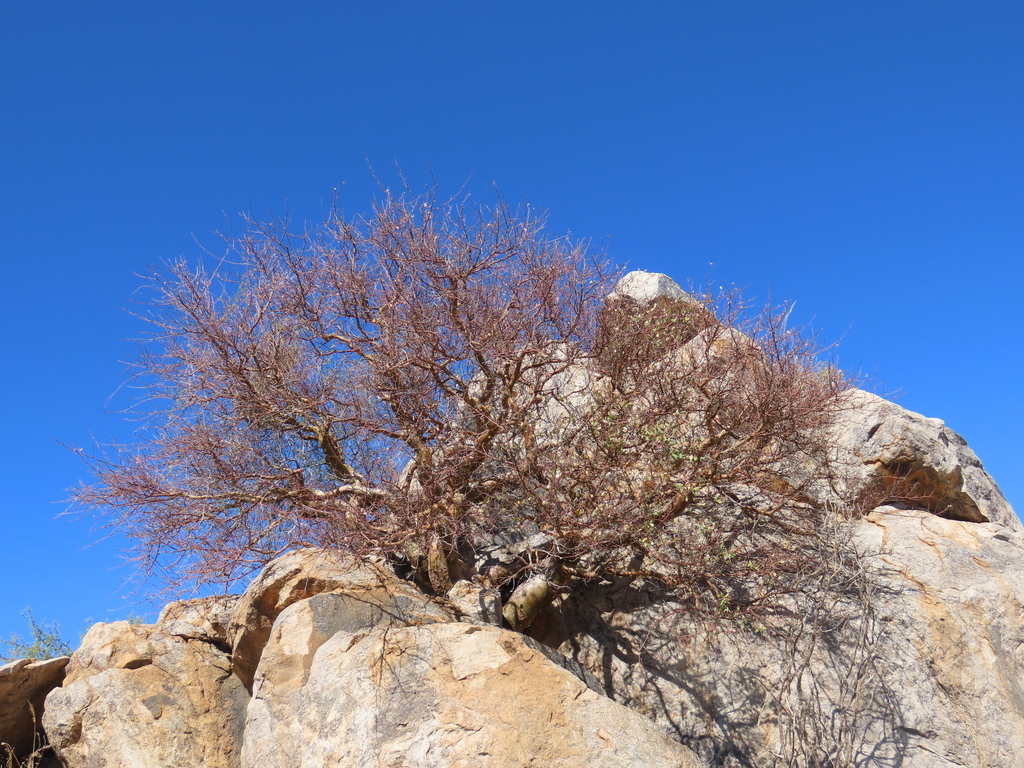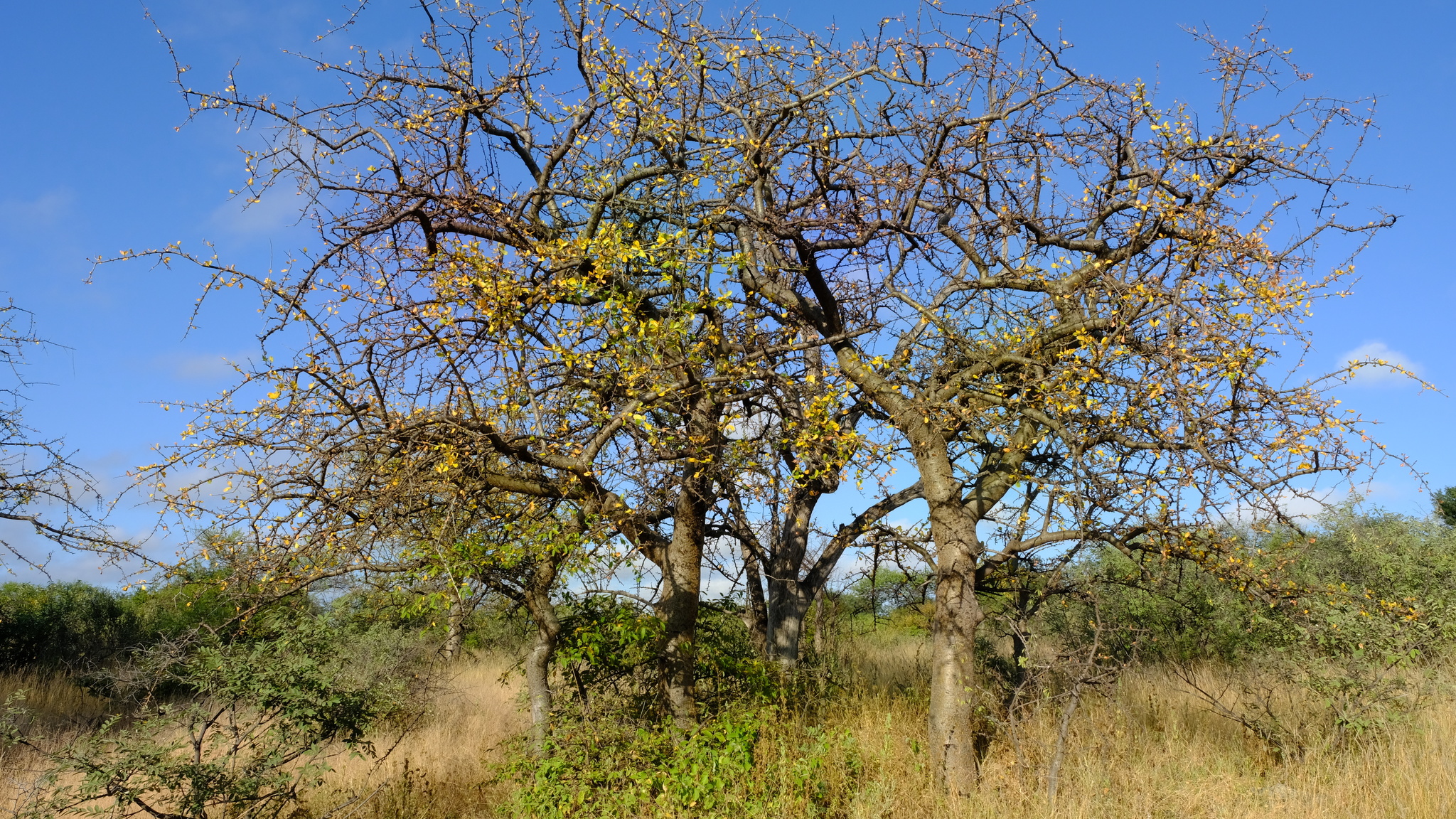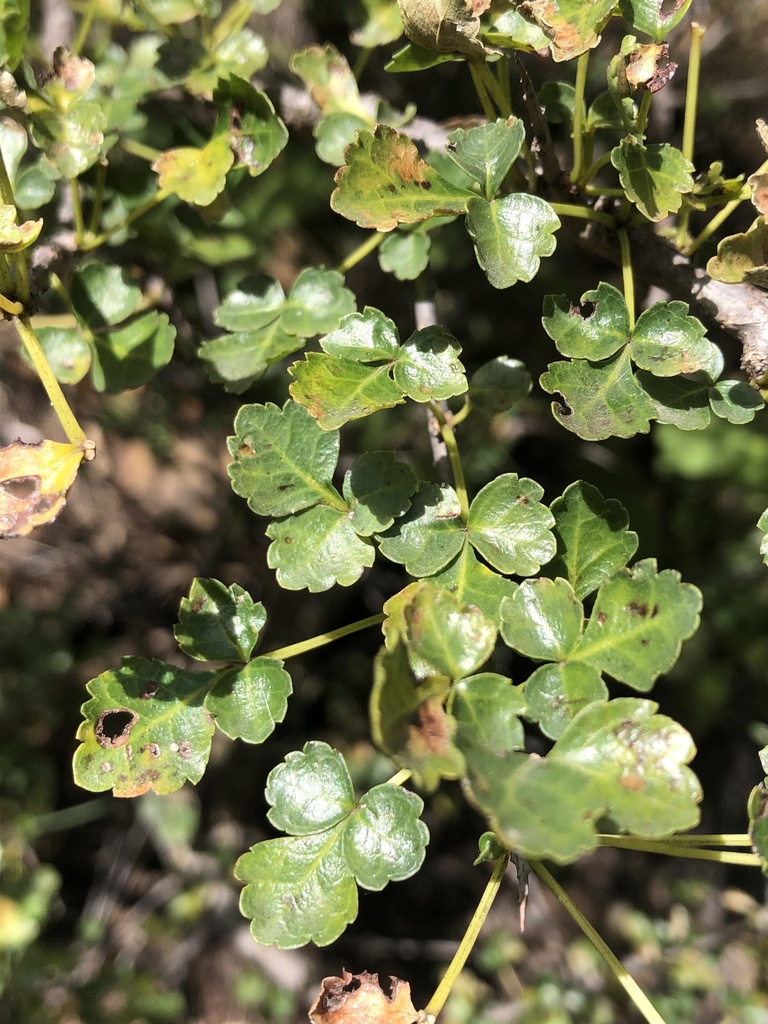
A Commiphora named in honor of the nineteenth-century German botanist Georg Wilhelm Schimper (1804–1878), who spent most of his life collecting type specimens in Ethiopia and helped lay the foundation for the floristic study of northern Africa. Its native range stretches from Eritrea and Yemen south through Ethiopia, Kenya, Tanzania, and Sudan, reaching Botswana and the northeastern provinces of South Africa. It grows in rocky savanna and Brachystegia woodland on well-drained soils, forming a shrub or small tree of 2–6 m. The bark peels first in black disc-like flakes, then in thin yellowish papery strips, building a distinctive surface texture. Leaves are trifoliolate and release a sharp resin scent when bruised. The dense branching habit, combined with bark that takes on an aged character early, makes it a favorite among bonsai enthusiasts within the genus.
Native climate
Rainfall is spread fairly evenly across the year. Overall a mild climate.
A broad-scale picture of the native range. Real growing spots — rock crevices, fog belts — can be milder.
Sources: climate & elevation WorldClim 2.1 (1970–2000) · occurrences GBIF · native range POWO
Care
Light & Placement

A species of eastern African highlands and savannas with strong sun and a clearly defined dry season. Place outdoors in full sun through the growing season — bright light thickens the trunk, sets the bark peeling, and keeps the canopy dense. Japan's worst summer heat can cause sharp moisture swings that injure the roots, so a touch of afternoon shade helps prevent leaf burn. Shelter from monsoon-like humidity by keeping the plant under eaves rather than in open rain. If shaped as a bonsai to take advantage of its dense branching, airflow still comes first. Bring indoors to a bright window before temperatures fall below 8°C, holding bright light and low humidity.
Watering
In active growth, soak thoroughly once the topsoil has fully dried, then dry the surface quickly with good airflow. Withhold water completely through winter dormancy.
Substrate
A sharply draining inorganic mix: akadama : kanuma : pumice at 4:3:3. Sift out fines to avoid compaction and excess moisture. Deep pots help create clear wet-dry cycles.
Fertilizer & Supplements
A dilute liquid fertilizer once a month during active growth. Keep nitrogen low — excess softens trunk character — and lean toward phosphorus and potassium.
Temperature & Overwintering
Optimal 22–35°C, on the hotter end of the genus. Aim for an 8°C floor; brief dips below 5°C bring black blotches and soft rot. Hold fully dry indoors in a bright, warm spot through winter, and keep the plant away from cold windows on freezing nights.

Starting from Seed
Where to source seeds
Pre-sowing treatment
Soak seeds for about 7 hours in a mix of a registered seed-treatment fungicide (Benlate or Daconil) and a plant tonic (Menedael; outside Japan, SUPERthrive or a chelated iron / seaweed extract works similarly), each diluted per label. Freshness strongly governs germination — old seed lots may turn out to be empty, so source recent seed and sow promptly.
Substrate
A fine-grained inorganic mix — fine akadama and fine hyuga at roughly equal parts. Sterilize with boiling water or a brief microwave pass before sowing.
Sowing method
Level the surface and lay seeds on their sides. Cover with the thinnest dusting of substrate, just enough that the seeds remain faintly visible. Avoid deep sowing.
Light & temperature
Bright shade out of direct sun, with temperatures held at 25–32°C. Germination takes 7–21 days. Germination depends on seed freshness, but with fresh seed it is reasonably steady. A heat mat helps stabilize temperatures.
Watering
Bottom-water continuously until germination to keep the mix evenly moist. Once seedlings are up, shift to shallow bottom watering to encourage root extension.
Fertilizer
Once two or three true leaves have emerged, apply a liquid feed diluted to less than half strength, monthly. Stronger doses burn fine roots.
From Germination to Repotting
Germination through true leaves
Continue bottom watering and keep humidity up.
Weaning off bottom watering
Wean gradually over 1–2 months.
First repotting
Year 1–2, once roots have filled the pot.
Common Pitfalls
Mold & damping-off
- Cause: Excess moisture, microbes, poor airflow
- Prevention: Sterilize the substrate, ensure ventilation, shelter from rain
Etiolation
- Cause: Low light, excess fertilizer
- Prevention: Full sun in growing season, keep nitrogen low
Seeds not germinating
- Cause: Stale seed, insufficient heat
- Prevention: Use fresh seed, use a heat mat
Notes
The sap is mildly toxic. Soft rot appears below 5°C.