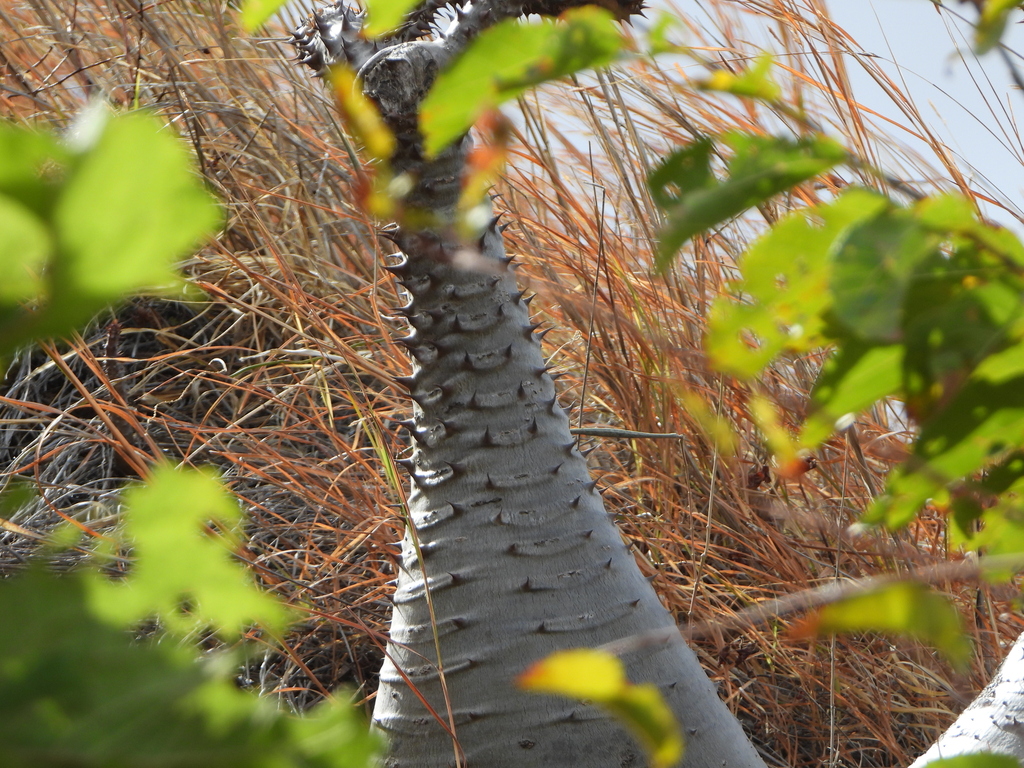
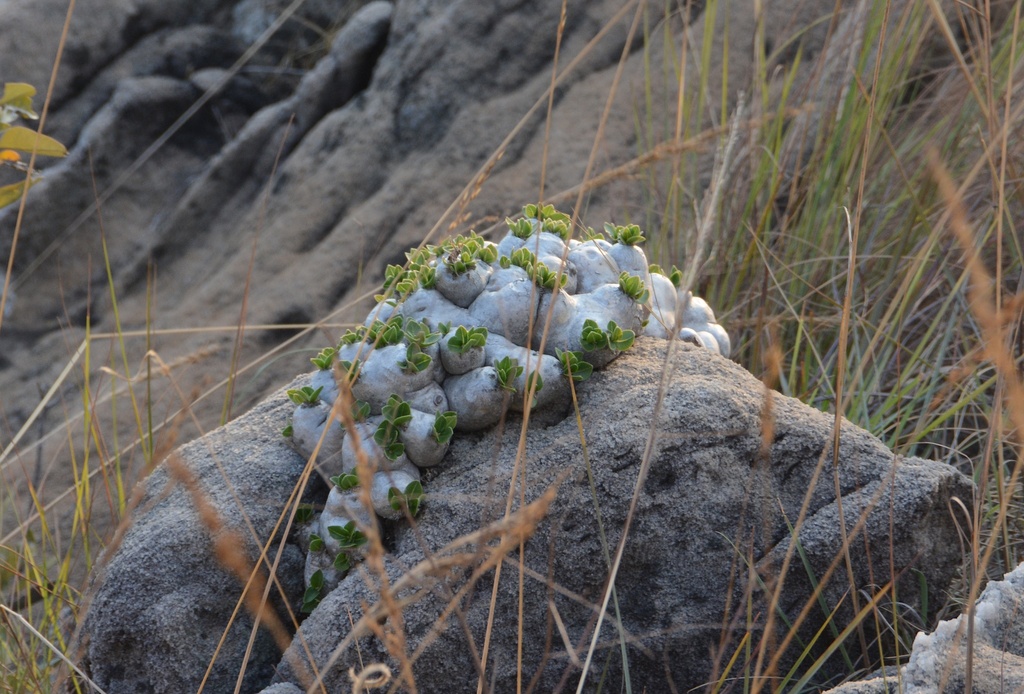
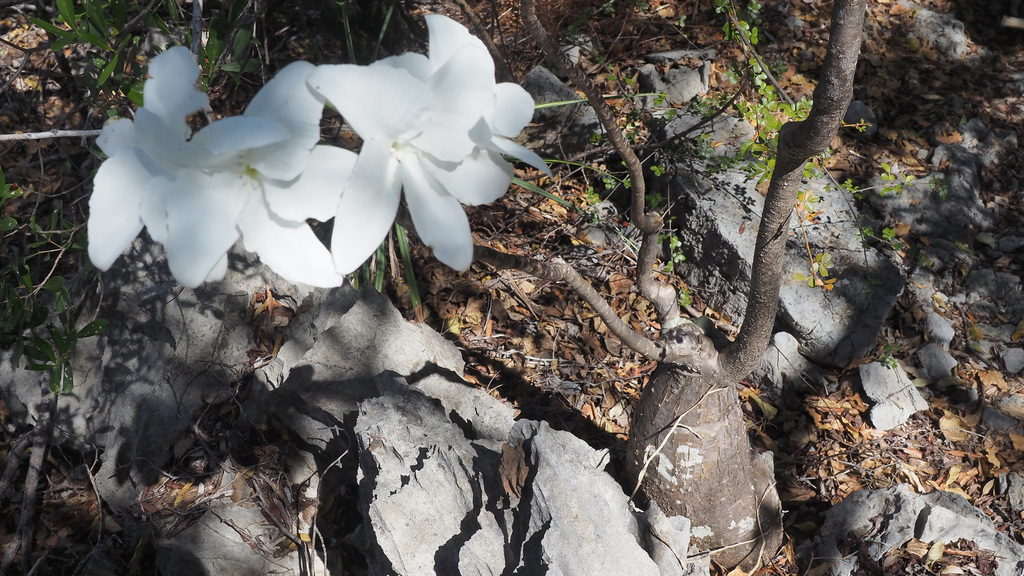
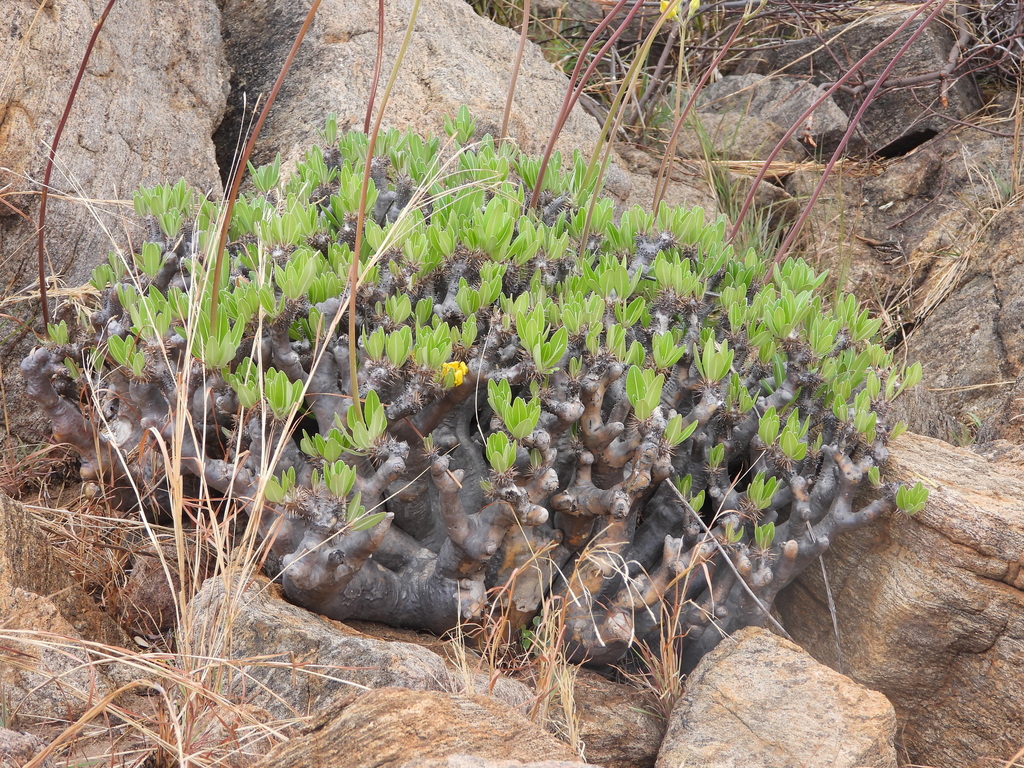
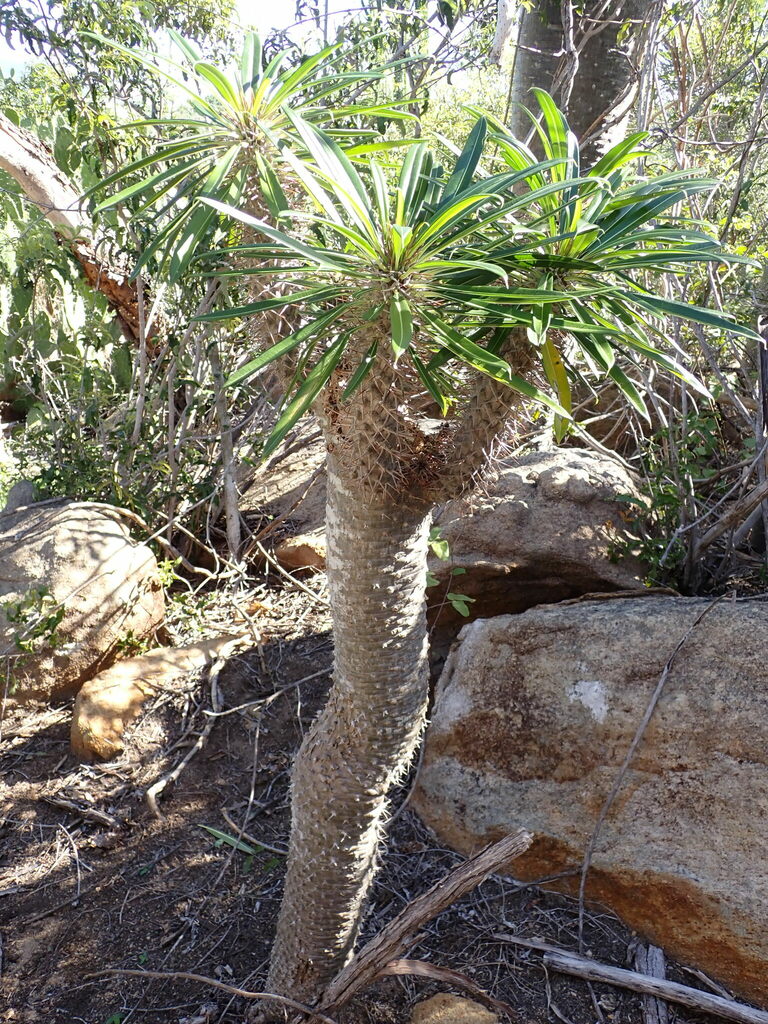
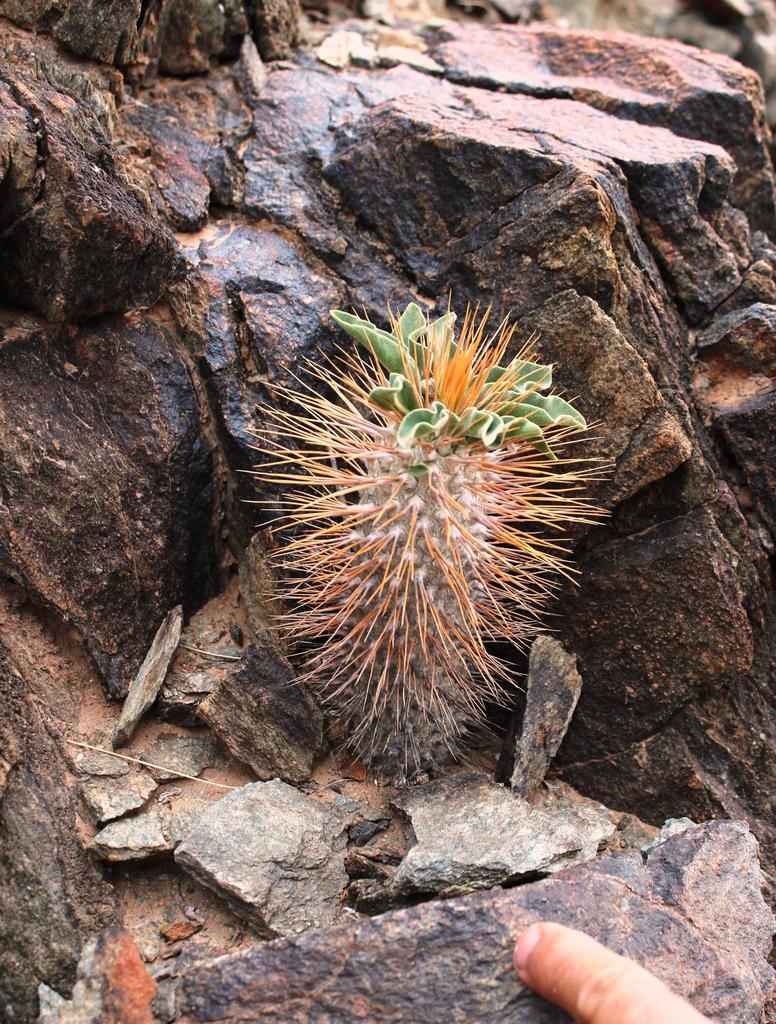
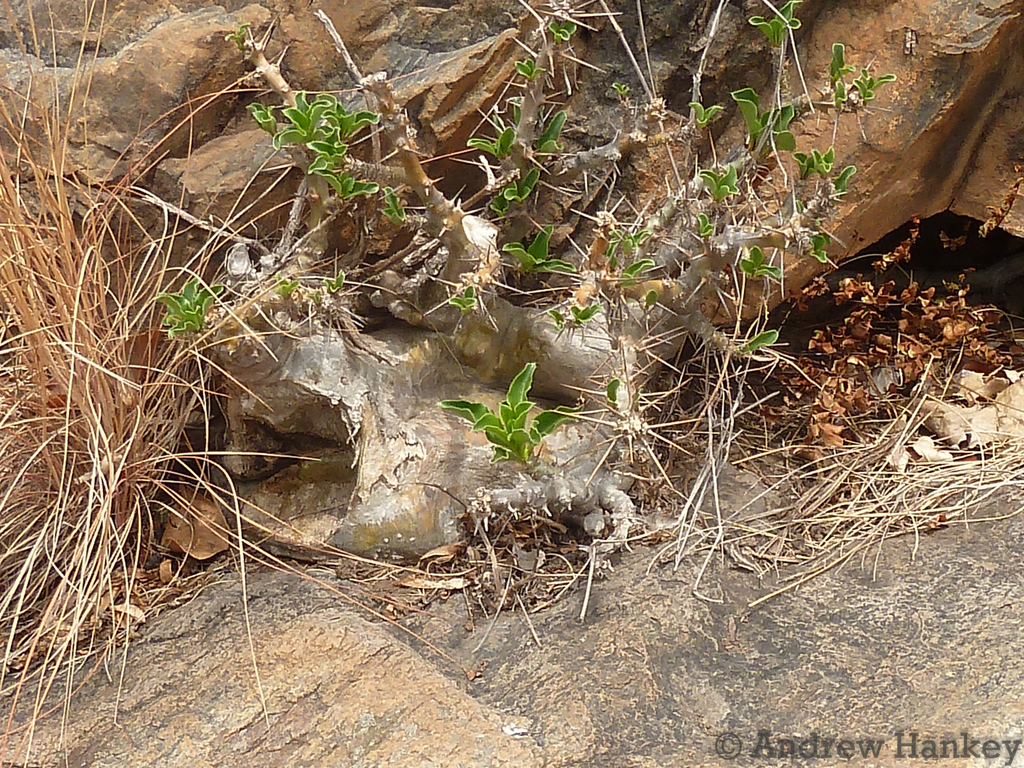
A small species endemic to the limestone karst of the Windsor Castle massif in northern Madagascar — and one of the rarer Pachypodium in the hobby. It forms a compact, neatly swollen caudex with short branches, but the real draw is the flower: vivid red flowers with a yellowish throat, standing alongside P. baronii in the red-flowered group of an otherwise white-and-pink-dominated genus. Often considered close to — or a variant of — P. baronii, it shares that lineage of striking red flowers and has long been a coveted collector's piece. Growing on exposed rock under strong sun, it is more cold-sensitive than most and slow to develop, while seed availability is patchy and germination moderate — very much a species for experienced growers.
Native climate
Rain concentrates in the one season, with a dry season of roughly 5 months. Overall a hot climate.
* Accurate distribution data is scarce for this species, so these values are taken from the climate near the approximate center of its native range instead.
Sources: climate & elevation WorldClim 2.1 (1970–2000) · occurrences GBIF · native range POWO · current weather Open-Meteo
Care
Light & Placement

Endemic to the limestone karst of the Windsor Castle massif in northern Madagascar, growing on exposed rock under strong sun, this species likes bright direct light. Place outdoors in full sun through the growing season — strong light tightens the caudex and deepens the red of the flowers. Japan's most humid midsummer stretches can scorch foliage, so a light 20–30% shade with steady airflow is a safe default. Keep pots up off the ground and consider an air circulator. Because it is more cold-sensitive than most Pachypodium, move it indoors early to a bright window kept above 10°C, and overwinter largely dry.
Watering
In active growth, water thoroughly once the surface has dried — this tightens and fattens the compact caudex. A limestone-hill native, it takes dry well but tolerates stagnant moisture poorly. Through winter dormancy, a small sip once a month is plenty.
Substrate
Drainage and aeration first, with an inorganic mix. Akadama : Kanuma : pumice = 4:3:3 is a reliable baseline; leaning heavier on pumice mirrors its limestone substrate. A taller pot encourages clean wet-dry cycling and protects the caudex from stagnant heat.
Fertilizer & Supplements
A dilute liquid feed about once a month in active growth, or a pinch of slow-release at repotting. Overfeeding causes etiolation and root rot, and dulls both the taut caudex and the depth of red in the flowers — keep it light, aim for slow density.
Temperature & Overwintering
Optimal 20–32°C — one of the more cold-sensitive Pachypodiums, with a 10°C winter floor. Bring indoors early and overwinter essentially dry; damp soil under cold quickly triggers root rot. In peak summer, 20–30% shade and airflow shed heat and protect foliage.

Starting from Seed
Where to source seeds
Pre-sowing treatment
Soak seeds for about half a day (overnight) in a mix of a registered seed-treatment fungicide (Benlate or Daconil) and a plant tonic (SUPERthrive), each diluted per label. Ones that don't sink are likely past their prime, and freshness has a huge effect on success with this species, so source new-harvest seed whenever possible.
Substrate
Use a separate seedling mix that's fine-grained and near-sterile: fine Akadama, fine Kanuma, and vermiculite in equal 1:1:1 parts. Sterilize the mix with boiling water or a quick microwave pass before sowing for peace of mind.
Sowing method
Sow with no covering, or only the thinnest dusting of substrate so the seeds remain partly visible. Space seeds at least 1 cm apart and arrange them so they don't clump together or overlap on the surface.
Light & temperature
Keep the tray in bright shade at a steady 25–30°C. Expect germination in 7–21 days. Germination depends heavily on seed freshness, and even fresh seed stays on the lower side. Be patient and don't give up early.
Watering
Bottom-water with the level 1–2 cm up the pot. For the first 2–3 weeks, prioritize not letting things dry out at all, then drop the water level gradually once the seedlings are up and reliably stable.
Fertilizer
No feeding right after germination. Once the true leaves emerge, give a heavily diluted liquid fertilizer about once a month — keep it lighter than label strength, since this slow-growing species etiolates quickly with excess nutrients.
From Germination to Repotting
Germination through true leaves (first month)
Keep bottom watering going to hold humidity. Avoid strong light and keep the tray in bright shade.
Weaning off bottom watering (months 1–2)
Lower the water level gradually, eventually switching to bottom watering from a saucer. Letting things dry out suddenly will kill seedlings.
First repotting (years 1–2)
The time is right once roots reach the bottom of the pot. As the caudex begins to show, move to a standard inorganic-based mix. This is a slow grower, so there is no need to rush.
Common Pitfalls
Mold & damping-off
- Cause: microbes in the substrate, excess moisture, poor air flow
- Prevention: sterilize the substrate, change the bottom water often, and keep air moving with a circulator
Etiolation
- Cause: insufficient light
- Prevention: bring the LED closer right after germination, or move the seedlings to bright shade outdoors
Seeds fail to germinate
- Cause: old seeds, insufficient temperature
- Prevention: source genuinely fresh seed, and stabilize temperature with a heat mat
Seedlings die soon after germination
- Cause: sudden strong light, sudden drying
- Prevention: change conditions gradually — acclimate over the course of a week
Notes
Seeds for this species are hard to source. Securing genuinely fresh seed is the key to success. The sap is mildly toxic.