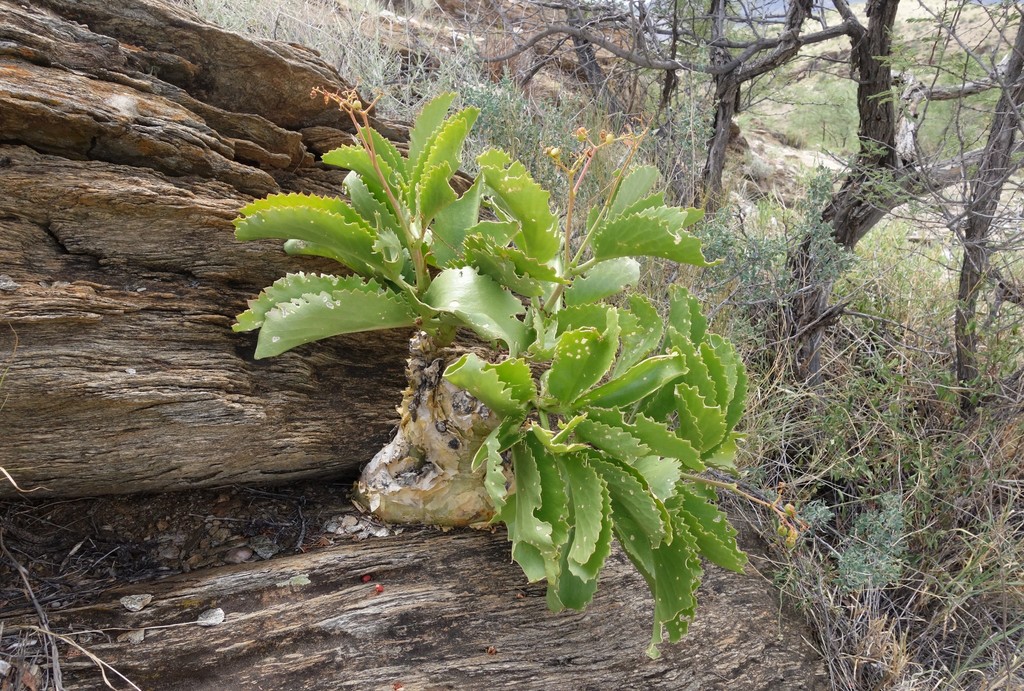
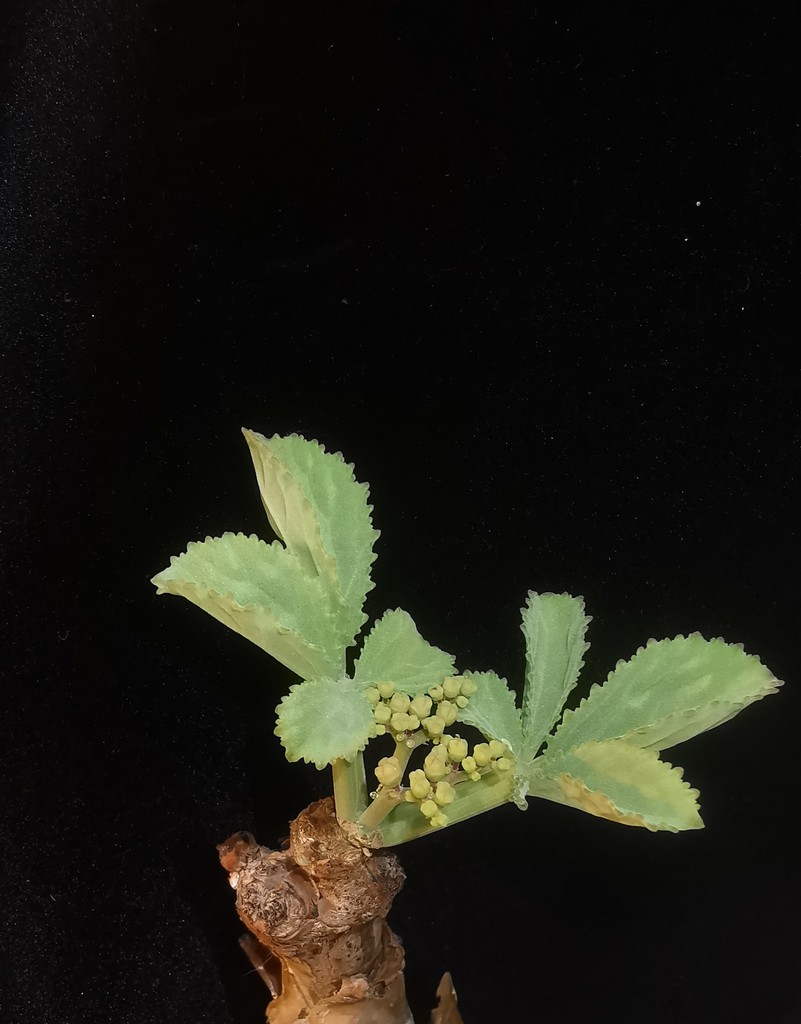
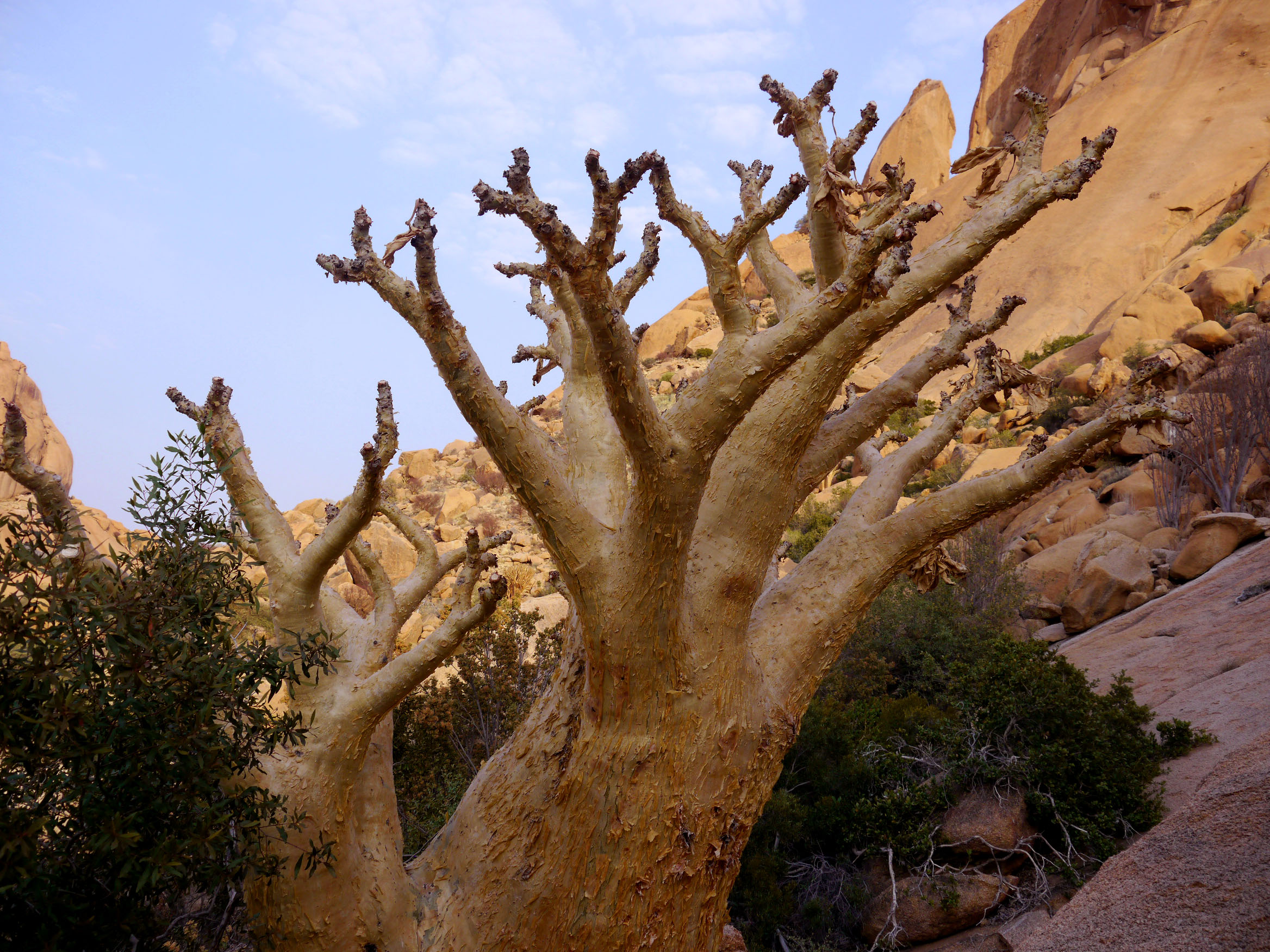
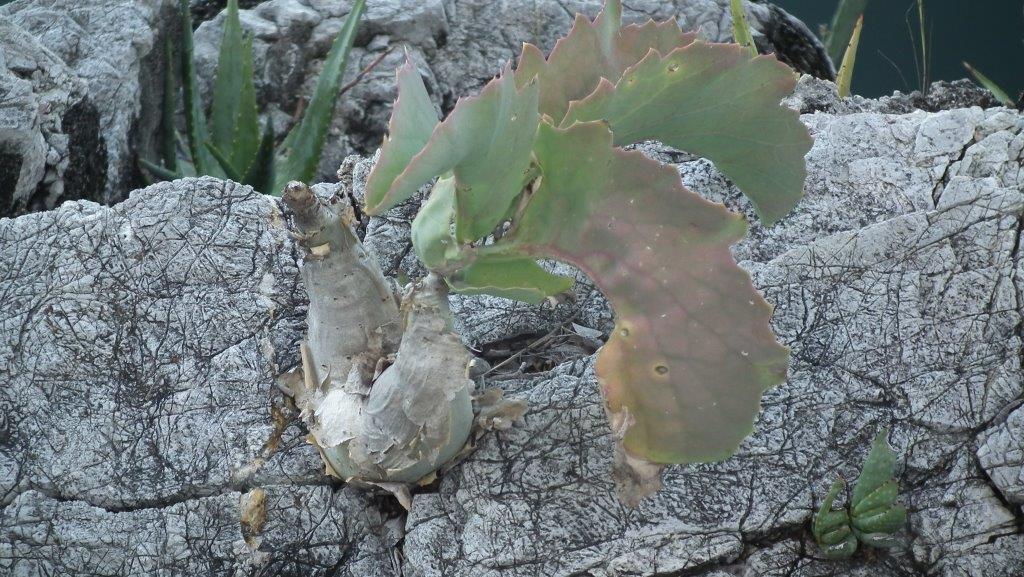
A caudex tree from the rocky terrain of northwestern to north-central Namibia (Damaraland, Kaokoveld and the Otavi Mountains) — among the largest species in the genus Cyphostemma. First described as Cissus juttae by Dinter & Gilg in 1912 and transferred to Cyphostemma by Descoings in 1968. It reaches around 2 m, with a swollen bottle-shaped trunk, a striking yellow-white papery bark that peels in large flakes, broad trifoliate leaves, small greenish-yellow summer flowers and grape-like red autumn fruits. Not listed on CITES, with seed and live plants both readily available, it is one of the standard summer-growing caudex species and a friendly entry point for caudex growing.
Native climate
Rain concentrates in the warm season, with a dry season of roughly 5 months. Overall mild, at high elevation, with a wide temperature range.
A broad-scale picture of the native range. Real growing spots — rock crevices, fog belts — can be milder.
Sources: climate & elevation WorldClim 2.1 (1970–2000) · occurrences GBIF · native range POWO · current weather Open-Meteo
Care
Light & Placement
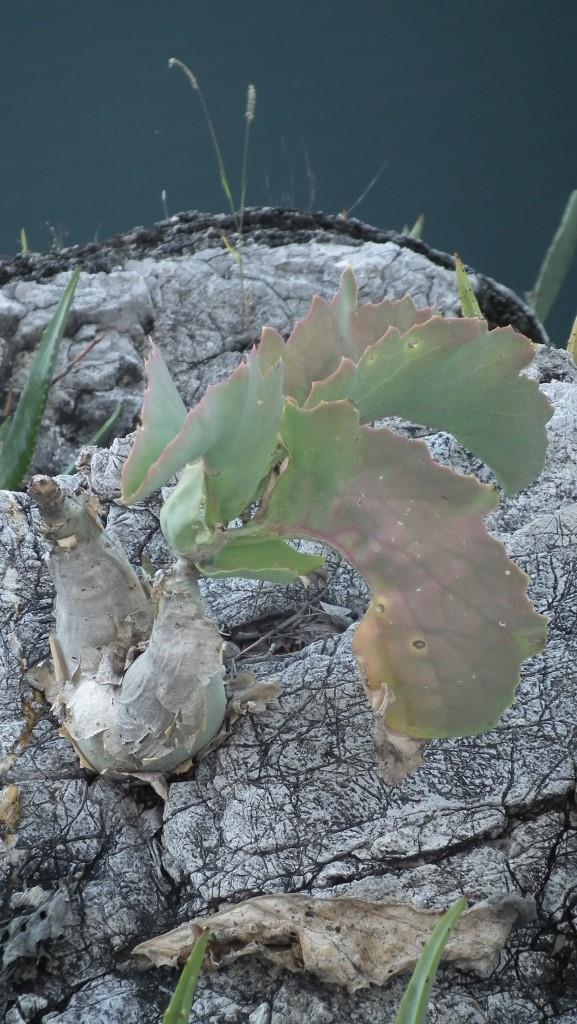
In its Namibian summer-rainfall habitat, this species lives on rocky ground under intense sun and dry air, with annual rainfall of only around 100–200 mm. Give it as much full direct sun as possible during active growth — strong light keeps the white papery bark tight and the petioles short. Through Japan's midsummer, light shading at 20–30% with the pot raised on a bench for airflow keeps it from scorching or stewing in stagnant heat. Once the leaves drop in autumn, move it to a bright sunny window kept above 5°C and overwinter completely dry. The species is forgiving for the genus and rewards consistent light with a nicely set form.
Watering
In active growth, water deeply once the surface has dried thoroughly, then let it dry out fully again. Large leaves mean transpiration is brisk, but overwatering is still the main risk. As leaves change colour in autumn, taper off; through winter dormancy hold the plant fully dry.
Substrate
A sharply draining, inorganic-led mix. Akadama : Kanuma : pumice = 4:3:3. The trunk thickens noticeably with age, so use a deeper pot to let roots run and to support clean wet–dry cycles.
Fertilizer & Supplements
A diluted liquid fertilizer monthly in active growth, or a pinch of slow-release at repotting. The species responds to modest feeding because of its lush leaf canopy, but pushing too hard stretches the petioles and softens the trunk's outline.
Temperature & Overwintering
Optimal 22–35°C, with 5°C as a safe winter floor. Once leafless and bone-dry, it tolerates short dips near 5°C indoors; damp soil in cold weather is fatal. Move outdoors gradually in spring once new shoots appear.
Starting from Seed
Where to source seeds
links go directly to the product page; the rest are scientific-name searches. Stock fluctuates — verify availability on the destination site.
Pre-sowing treatment
Soak seeds for about half a day (overnight) in a mix of a registered seed-treatment fungicide (Benlate or Daconil) and a plant tonic (Menedael; outside Japan, SUPERthrive or a chelated iron / seaweed extract works similarly), each diluted per label. Any that don't sink are likely past their prime. The seed coat is on the harder side — a light scuff with a nail file helps water uptake.
Substrate
A fine-grained, near-sterile seedling mix: fine Akadama, fine Kanuma, and vermiculite in 1:1:1 parts. Sterilize the mix with boiling water or a microwave pass — the broad-leafed seedlings can stretch quickly if anything goes off.
Sowing method
Sow with no covering, or only the thinnest dusting so the seeds remain partly visible. Space the seeds at least 1 cm apart so they don't clump together on the surface.
Light & temperature
Bright shade, 25–30°C steady. Most seeds break ground within 7–21 days. Germination depends strongly on seed freshness, but fresh seed tends to come up well.
Watering
Bottom-water with the level 1–2 cm up the side of the pot. For the first 2–3 weeks, prioritize not letting things dry out, then drop the level gradually once seedlings are stable.
Fertilizer
No feeding right after germination. Once true leaves emerge, give heavily diluted liquid fertilizer once or twice a month at double dilution or weaker.
From Germination to Repotting
Germination through true leaves
Continue bottom watering, in bright shade.
Weaning off bottom watering
Phase it out gradually over 1–2 months.
First repotting
In the first or second year, once roots have filled the pot.
Common Pitfalls
Mold & damping-off
- Cause: excess moisture, contamination, poor air flow
- Prevention: sterilize the substrate, refresh the bottom-water, and keep a circulation fan running
Etiolation
- Cause: insufficient light
- Prevention: bring LEDs closer right after germination, or move the tray to bright shade outdoors. Large-leafed species like this stretch petioles quickly under weak light
Seeds fail to germinate
- Cause: stale seed, insufficient warmth, hard seed coat
- Prevention: source fresh seed, hold 25–30°C on a heat mat, and lightly scuff the coat with a nail file to help water in
Notes
Leaves and sap contain calcium oxalate raphides that irritate skin and mucous membranes — wear gloves when pruning or repotting, and keep away from eyes and mouth. The fruits are also toxic and not edible.