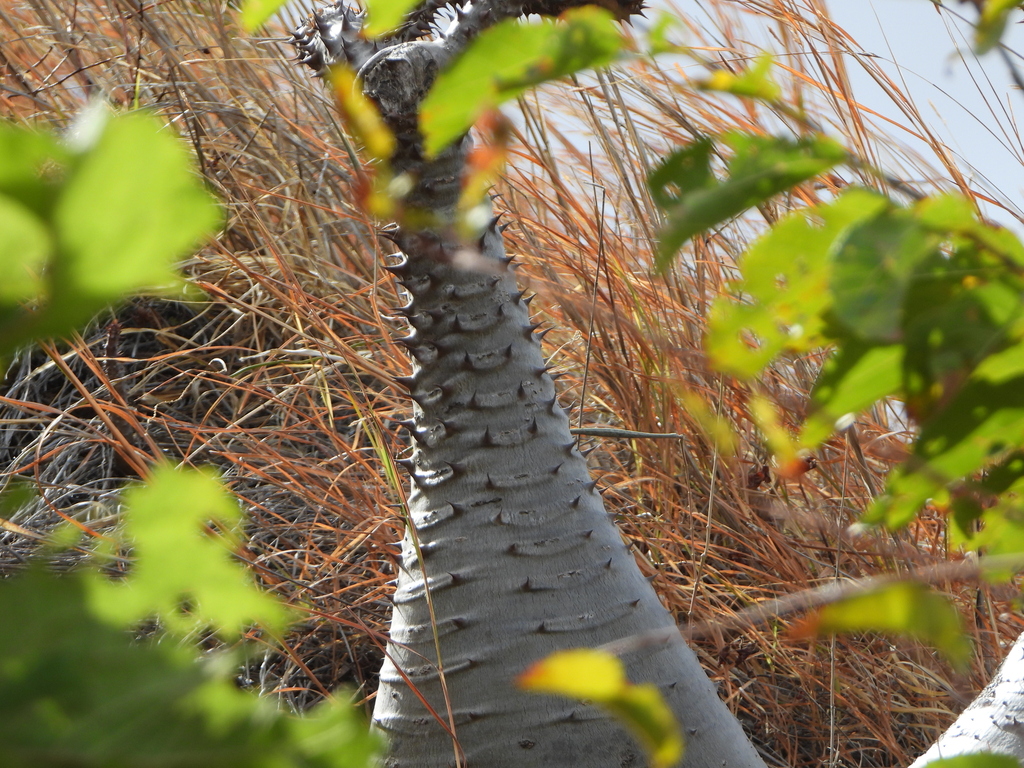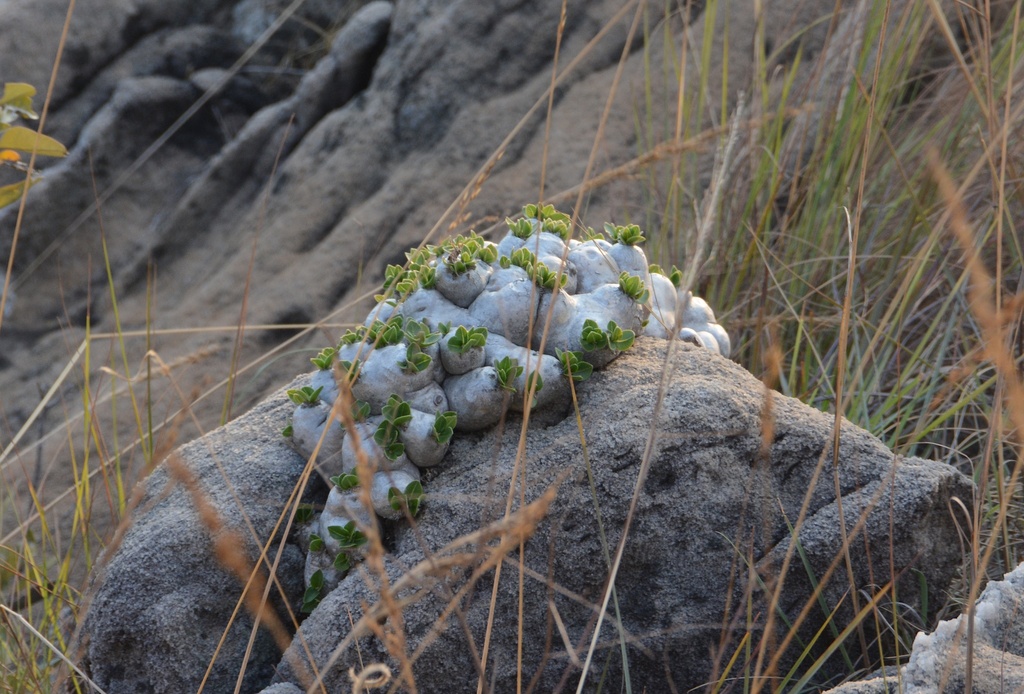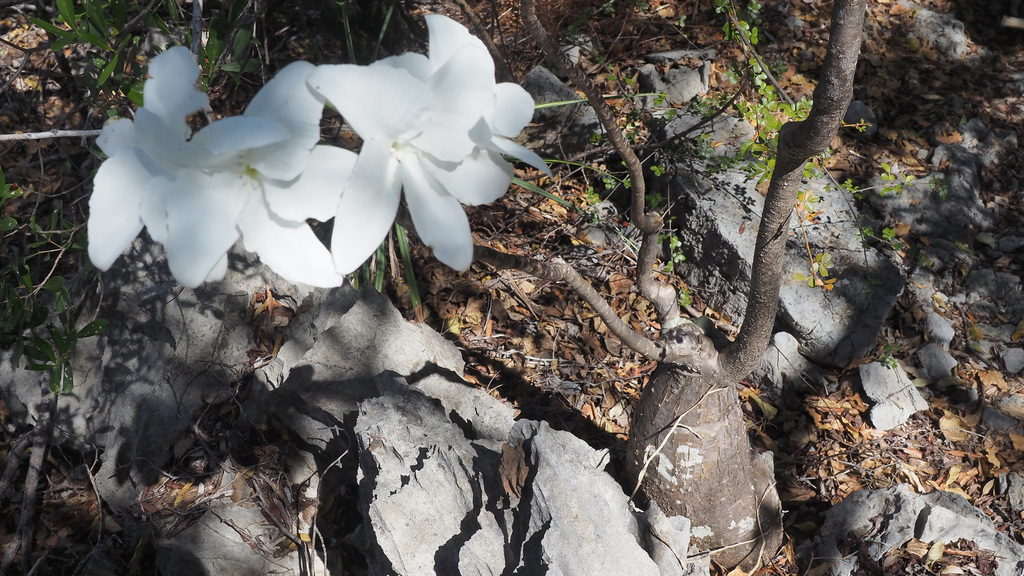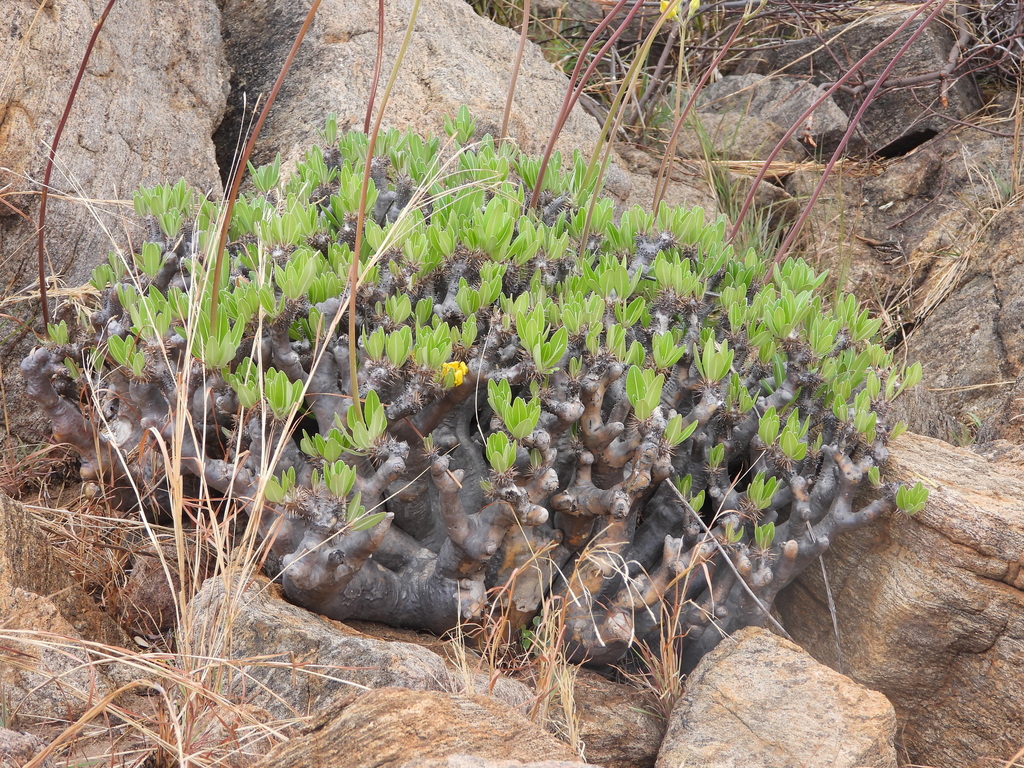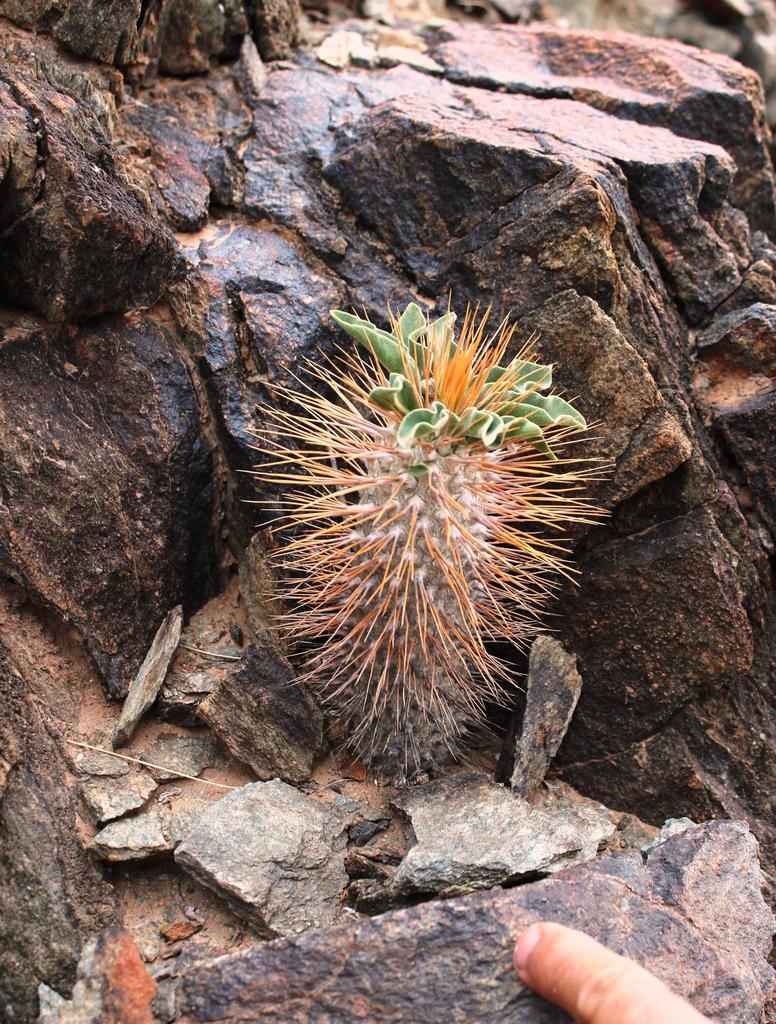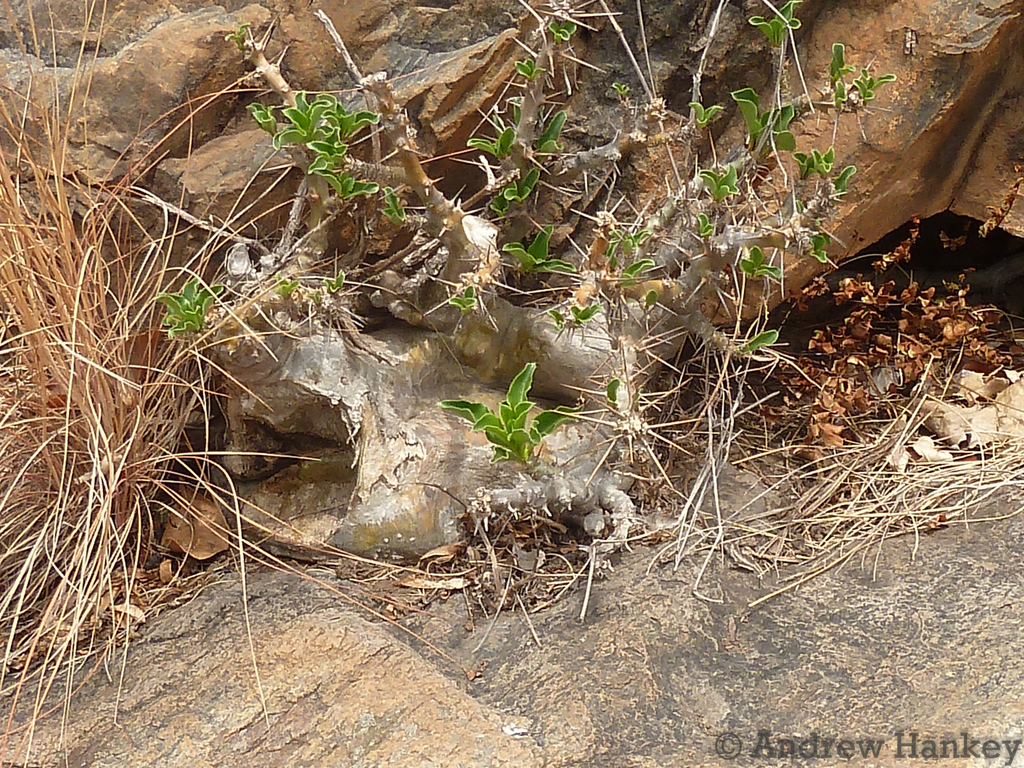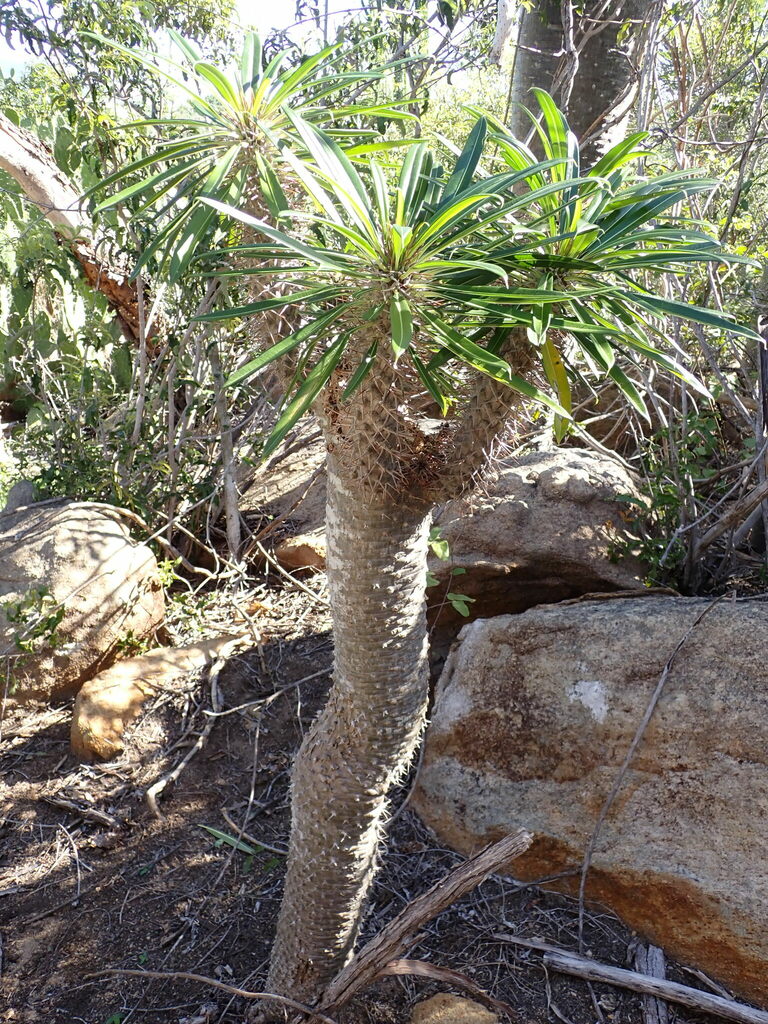
The most widely distributed Pachypodium in the hobby — popularly known as the "Madagascar palm." Native to the dry scrubland of southern and southwestern Madagascar, it forms a straight columnar trunk topped with a radiating crown of long pointed leaves, the stem armed with sharp spines in groups of three. Mature plants branch and eventually produce large white flowers, making for a striking specimen as much as a houseplant. Above all it is forgiving: germination is consistently high, the plant is tough, and growth is relatively quick, so it's the natural entry point into seed-growing with Pachypodium — letting you watch a seedling take on real caudex-like presence on a satisfyingly short timeline.
Native climate
Rain concentrates in the warm season, with a distinct dry season. Overall a warm climate.
A broad-scale picture of the native range. Real growing spots — rock crevices, fog belts — can be milder.
Sources: climate & elevation WorldClim 2.1 (1970–2000) · occurrences GBIF · native range POWO · current weather Open-Meteo
Care
Light & Placement

A tough lowland species from the dry scrub of southern and southwestern Madagascar — it wants strong light and heat. Place outdoors in full sun through the growing season for a straight, thick trunk and tight foliage. Unlike highland Pachypodium, lamerei generally handles Japan's hot, humid summers well and rarely needs shading, though abrupt moves into strong light can still scorch leaves — transition gradually. Keep airflow good and the pot up off the ground. It tolerates indoor culture but etiolates easily, so outdoors is better whenever possible. Overwinter near a bright window above 10°C.
Watering
In active growth, water thoroughly once the surface has dried — this fattens the columnar trunk. Mature plants transpire heavily, so don't let large specimens go bone-dry too long. Hold winter dormancy on the dry side: a small sip once or twice a month.
Substrate
Drainage and aeration first, with an inorganic mix. Akadama : Kanuma : pumice = 4:3:3 is a reliable baseline, and a pinch of slow-release speeds early growth. For larger plants, a taller, deeper pot accommodates the strong taproot.
Fertilizer & Supplements
A dilute liquid feed once a month in active growth, or a small dose of slow-release at repotting. As a fast grower it responds readily to feeding, but overfeeding pushes leafy etiolated growth and invites root rot — keep it modest.
Temperature & Overwintering
Optimal 20–35°C — one of the most heat-tolerant Pachypodiums. Cold tolerance is weaker: aim for a 10°C winter floor. Summers rarely need shading. Brief exposure below 5°C can blacken and rot the trunk, so pull it back from cold panes on freezing nights.

Starting from Seed
Where to source seeds
links go directly to the product page; the rest are scientific-name searches. Stock fluctuates — verify availability on the destination site.
Pre-sowing treatment
Soak seeds for about half a day (overnight) in a mix of a registered seed-treatment fungicide (Benlate or Daconil) and a plant tonic (SUPERthrive), each diluted per label. With fresh seed almost all should sink, and any that don't are typically past their prime. With fresh seed the prep is minimal.
Substrate
Use a separate seedling mix that's fine-grained and near-sterile: fine Akadama, fine Kanuma, and vermiculite in equal 1:1:1 parts. Sterilize the mix with boiling water or a quick microwave pass before sowing for peace of mind.
Sowing method
Sow with no covering, or only the thinnest dusting of substrate so the seeds remain partly visible. Space seeds at least 1 cm apart and arrange them so they don't clump together or overlap on the surface.
Light & temperature
Keep the tray in bright shade at a steady 25–30°C. Expect germination in 5–14 days. Germination depends strongly on seed freshness, but fresh seed tends to come up well.
Watering
Bottom-water with the level 1–2 cm up the pot. For the first 2–3 weeks, prioritize not letting things dry out at all, then drop the water level gradually once the seedlings are up and reliably stable.
Fertilizer
No feeding right after germination. Once the true leaves emerge, give diluted liquid fertilizer once or twice a month — this fast-growing species responds quickly and well, though still keep doses on the lighter side overall.
From Germination to Repotting
Germination through true leaves (first month)
Keep bottom watering and hold the humidity. Avoid strong light and keep the tray in bright shade.
Weaning off bottom watering (months 1–2)
Lower the bottom-water level gradually, finally switching to watering from a saucer. Letting things dry out suddenly will kill the seedlings.
First repotting (year 1–2)
The right time is once the roots have reached the bottom of the pot. As the trunk begins to thicken, move it to a standard inorganic-based mix.
Common Pitfalls
Mold & damping-off
- Cause: microbes in the substrate, excessive moisture, poor airflow
- Prevention: sterilize the substrate, change the bottom water frequently, and keep a circulator running for airflow
Etiolation
- Cause: insufficient light
- Prevention: bring the LED closer right after germination, or move the seedlings to bright shade outdoors
Seeds fail to germinate
- Cause: old seeds, insufficient temperature
- Prevention: choose a reliable source and use a heat mat to keep the temperature steady
Seedlings die soon after germination
- Cause: a sudden jump in light, a sudden drying-out
- Prevention: change conditions gradually — ease them in over the course of a week
Notes
This species grows quickly and gets large — repot on a regular schedule. The sap is mildly toxic.