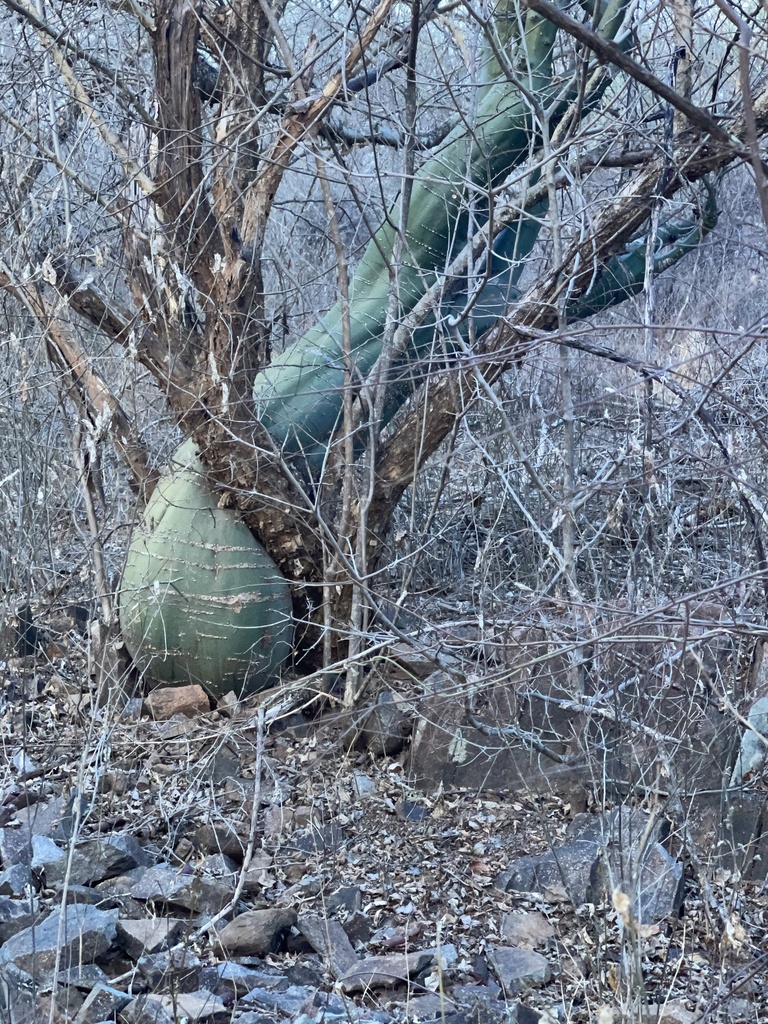
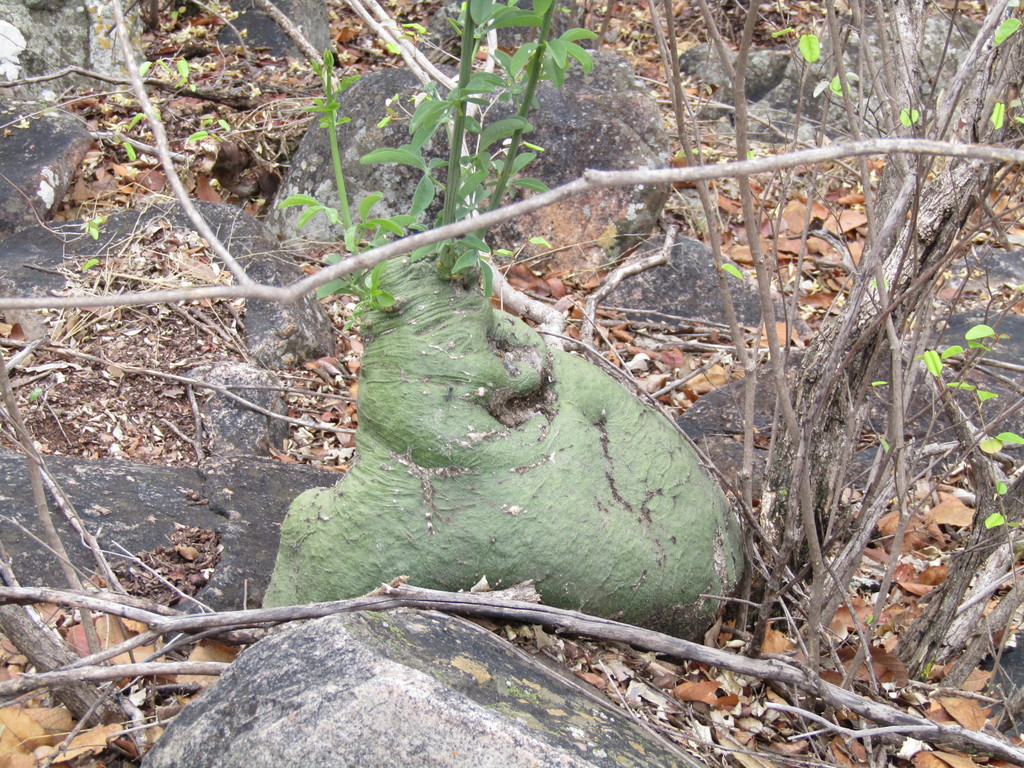
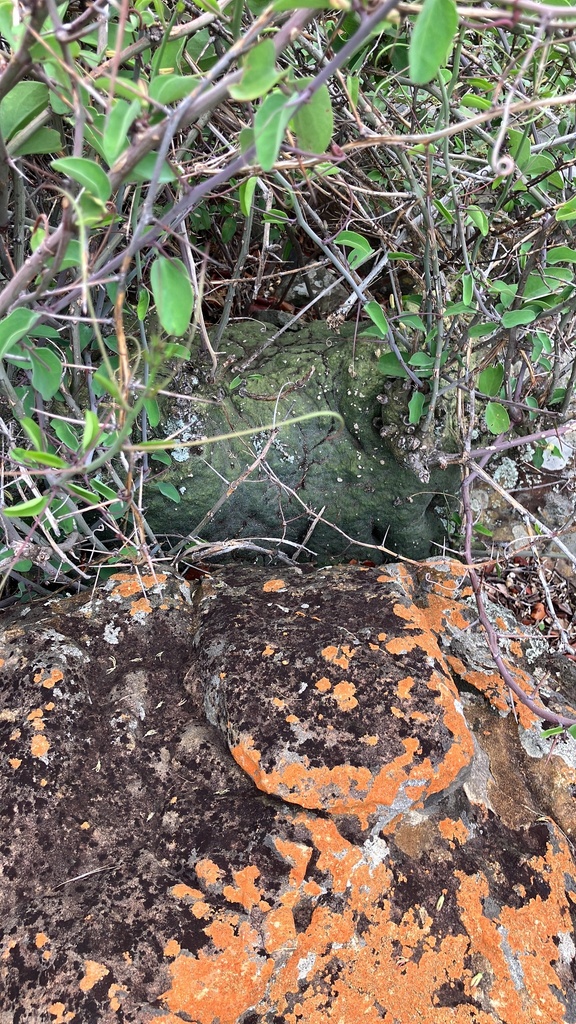
Known as the "desert kohlrabi" (Wüstenkohlrabi) in German and "Elephant's Foot" in English, this Adenia is endemic to Namibia. Described by (Engl.) Harms, the epithet honours the German explorer Moritz Pechuel-Loesche. A pale grey-green caudex swells into a low dome, and from its crown a halo of short, thick branches radiates outward. Unlike its vining relatives glauca and globosa, the branches barely elongate and harden in place into spine-tipped stubs. It anchors itself in cracks of granite outcrops and stony plains in some of Africa's driest country, growing slowly enough that caudex thickening is measured in years — a mid-level caudex plant for keepers willing to read its watering cues carefully.
Native climate
Rain concentrates in the warm season, with a dry season of roughly 9 months. Overall a mild climate.
A broad-scale picture of the native range. Real growing spots — rock crevices, fog belts — can be milder.
Sources: climate & elevation WorldClim 2.1 (1970–2000) · occurrences GBIF · native range POWO · current weather Open-Meteo
Care
Light & Placement

On the granite inselbergs and stony slopes of northwestern Namibia (Kaokoveld), it grows in unrelenting direct sun. Give it full light during active growth — strong sun keeps the caudex grey-green and tight, and the branches short and woody. Through Japan's midsummer, light shading at 20–30% with the pot raised on a bench for airflow is the safer setting. Overwinter on a bright sunny window kept above 8°C and bone-dry.
Watering
In active growth, wait until the caudex shrinks slightly, then water thoroughly and let it dry out fully. Native range receives only around 100 mm annual rainfall, so a glauca-style rhythm will rot it. Go fully dry through winter, at most a light monthly misting.
Substrate
Drainage first, inorganic-led. Akadama : Kanuma : pumice = 3:3:4 — higher pumice than glauca to dry faster. A deeper pot with generous drainage holes.
Fertilizer & Supplements
A pinch of slow-release at repotting, or double-diluted liquid feed once a month in active growth. Overfeeding elongates branches and softens the form.
Temperature & Overwintering
Optimal 22–35°C, 8°C minimum. Habitat winter nights drop to around 5°C in dry air; bone-dry plants tolerate brief cold, but damp soil under 10°C rots the caudex fast. Overwinter on a bright window kept dry.

Starting from Seed
Where to source seeds
Pre-sowing treatment
Soak seeds for about half a day (overnight) in a mix of a registered seed-treatment fungicide (Benlate or Daconil) and a plant tonic (Menedael; outside Japan, SUPERthrive or a chelated iron / seaweed extract works similarly), each diluted per label. Floaters are likely past their prime, and stock of this species loses viability quickly in the pipeline — sow as soon as possible.
Substrate
A fine-grained, near-sterile seedling mix: fine Akadama, fine Kanuma, vermiculite in 1:1:1 parts. Sterilize with boiling water or a microwave pass — this species is unusually prone to damping-off.
Sowing method
Sow with no covering, or only the thinnest dusting so seeds remain partly visible. Space at least 1 cm apart.
Light & temperature
Bright shade at 25–30°C. Germination is slow and uneven — some break ground in two weeks, others take one to two months. Hold steady heat and stay patient with stragglers.
Watering
Bottom-water with the level 1–2 cm up the pot. For the first 2–3 weeks, don't let things dry out, then drop the water level gradually.
Fertilizer
No feeding right after germination. Once true leaves emerge, give heavily diluted liquid fertilizer once or twice a month. Slower than glauca, so don't push the dose.
From Germination to Repotting
Germination through true leaves
Continue bottom watering, avoid strong light.
Weaning off bottom watering
Start drying down earlier than for glauca.
First repotting
In the first or second year, once root-bound.
Common Pitfalls
Mold & damping-off
- Cause: excess moisture, contamination, poor air flow
- Prevention: sterilize substrate, ensure airflow
Etiolation
- Cause: insufficient light
- Prevention: bring LEDs closer or move to bright shade outdoors. Weak light at the seedling stage produces vining stems that rarely revert to the proper stiff, stubby form
Seeds fail to germinate
- Cause: stale seed, insufficient warmth
- Prevention: fresh seed and 25–30°C on a heat mat
Notes
The sap is mildly toxic.