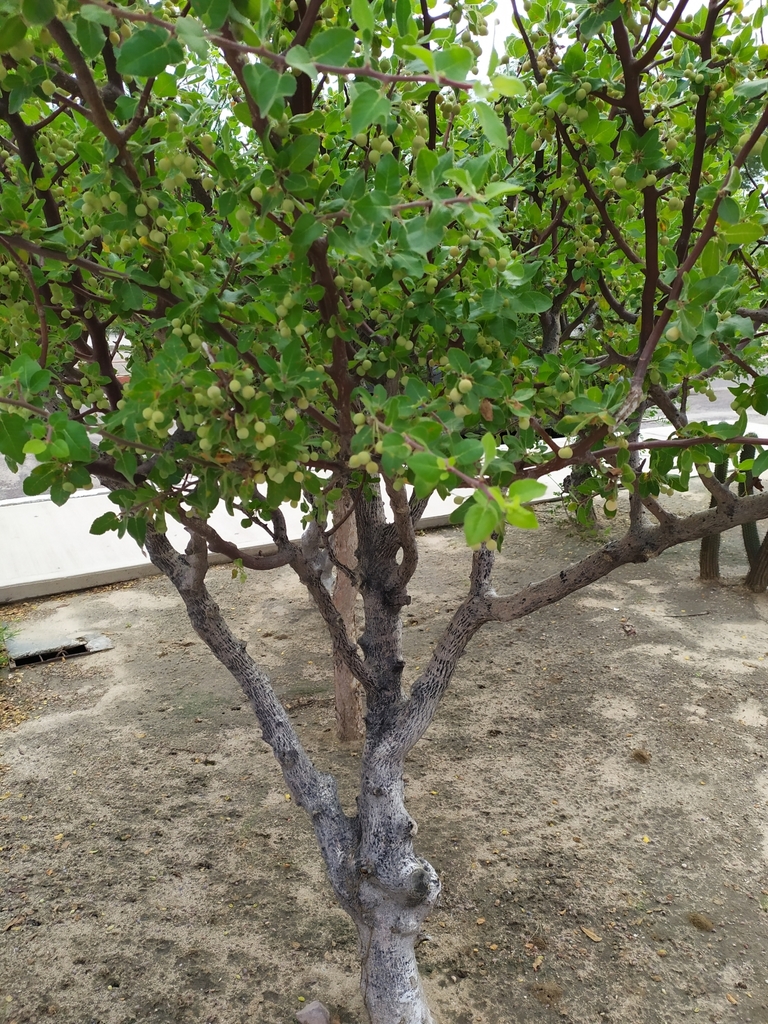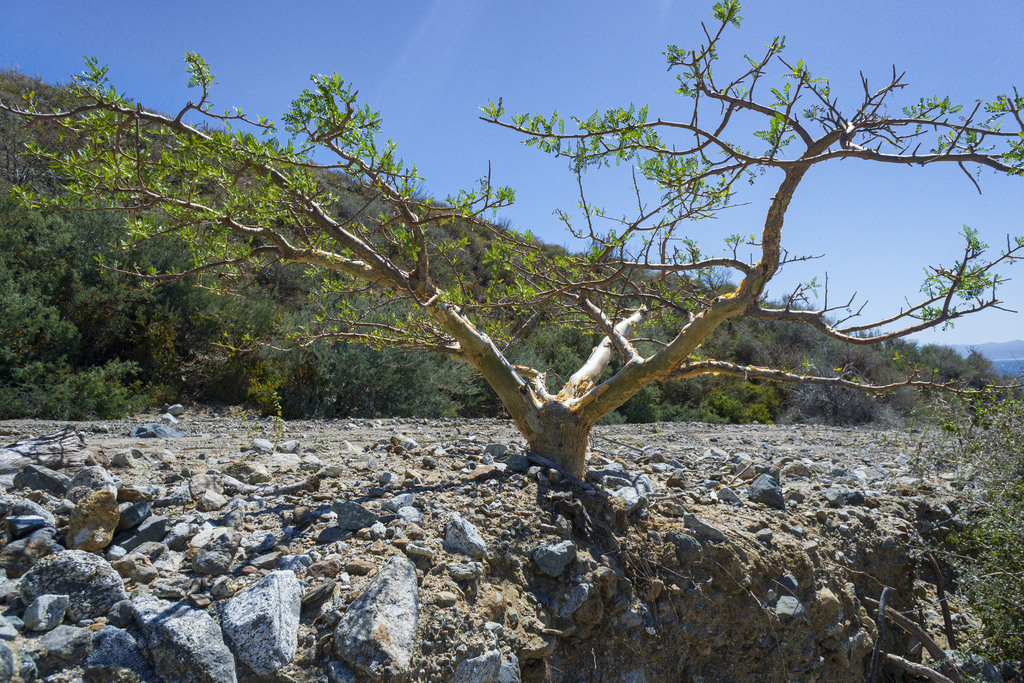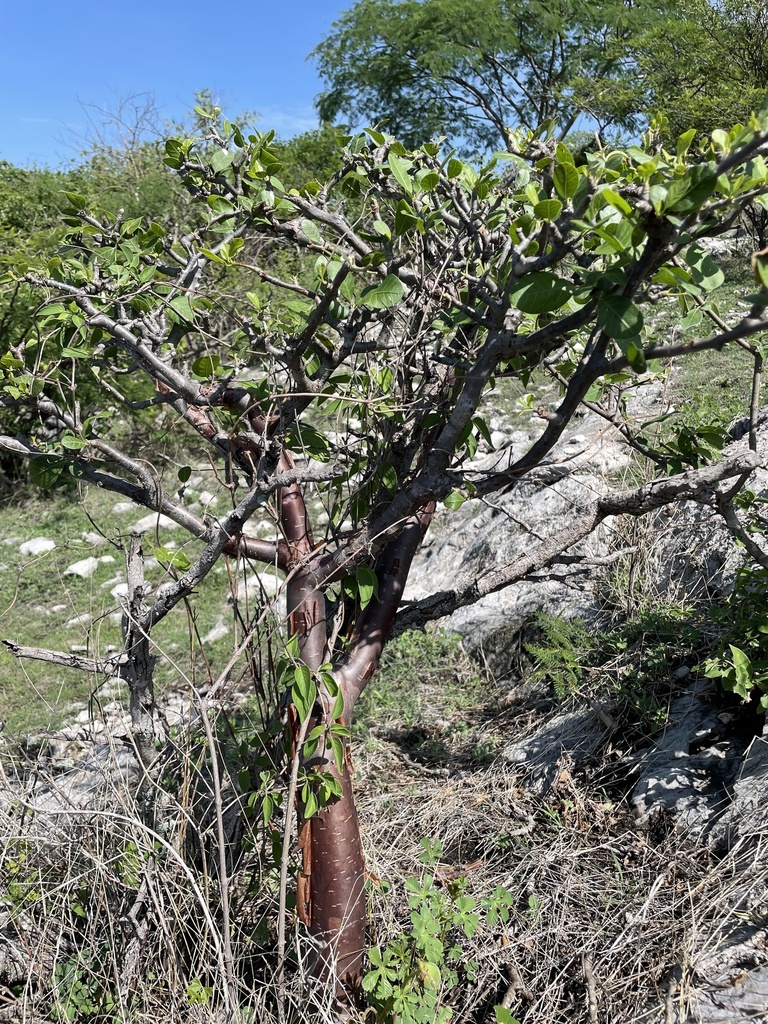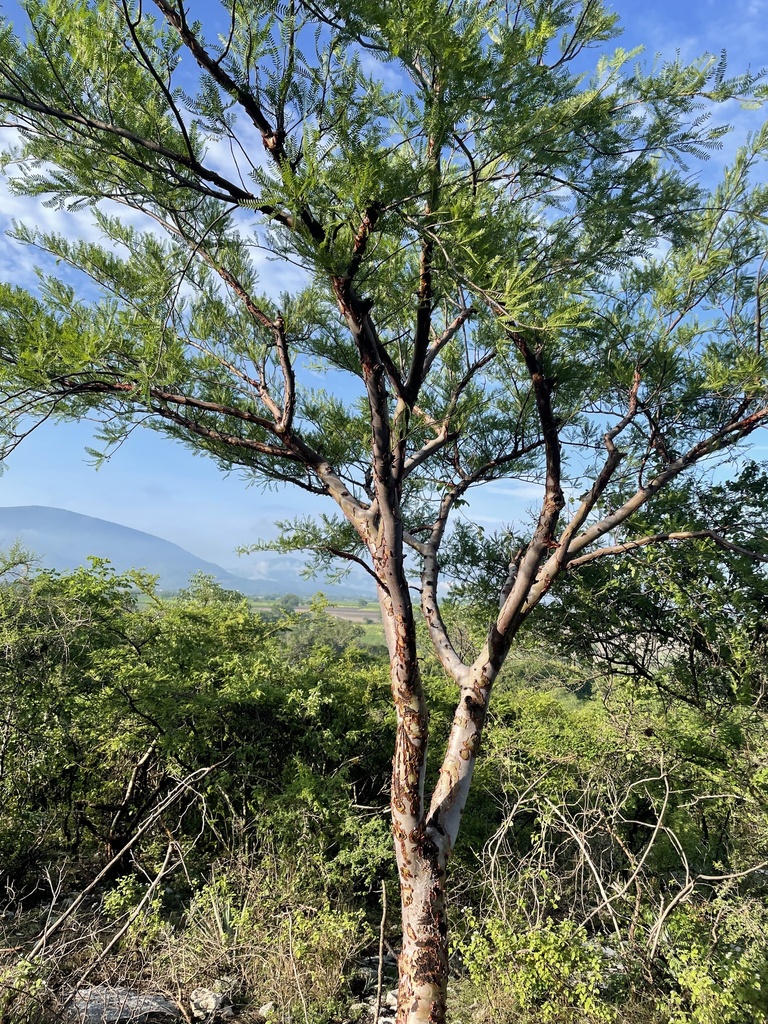
A Mexican endemic whose specific epithet morelensis points to the type locality in Morelos. The species is one of the signature trees of the selva baja caducifolia — the seasonally dry tropical forest of the Tehuacán-Cuicatlán Valley. The bark is its calling card: thin, papery, and a deep brick-red to coppery brown that flakes in fine sheets to reveal a fresh grey-green layer underneath. The Spanish common name cuajiote rojo (red cuajiote) is fitting — within a genus already known for showy bark, this is one of the more vividly coloured species. The trunk thickens readily into a stocky, characterful form, and Japanese caudex enthusiasts have begun growing it from seed for exactly that combination of red bark and stout trunk — a quietly rising mid-level species in the genus.
Native climate
Rain concentrates in the one season, with a distinct dry season. Overall a warm climate.
A broad-scale picture of the native range. Real growing spots — rock crevices, fog belts — can be milder.
Sources: climate & elevation WorldClim 2.1 (1970–2000) · occurrences GBIF · native range POWO · current weather Open-Meteo
Care
Light & Placement

Native to dry montane country at 800–1,400 m in places like the Tehuacán-Cuicatlán Valley, this is a sun-and-heat species. Give full direct sun outdoors through the growing season — strong light deepens the brick-red bark and brings out the layered exfoliation cleanly. It tolerates Japan's hot summers reasonably well but dislikes prolonged moisture, so shelter from rain and keep airflow good on a raised bench. Bring it indoors to a bright window before temperatures fall below 8°C and overwinter dry.
Watering
In active growth, water thoroughly once the topsoil is fully dry and dry the surface quickly with airflow. Native annual rainfall is around 800 mm but sharply seasonal — match the wet/dry contrast. Withhold completely through dormancy.
Substrate
A sharply draining inorganic mix: Akadama : Kanuma : pumice at 4:3:3. Sift out fines to prevent rot. A deeper pot lets the taproot run straight down.
Fertilizer & Supplements
A dilute liquid fertilizer once a month through growth. Keep nitrogen low — excess stretches branches and dulls bark colour. Phosphorus-leaning feeds support trunk thickening and resin scent.
Temperature & Overwintering
Optimal 22–35°C with an 8°C minimum. Native winter lows sit around 15°C — warmer than most Bursera in cultivation — and approaches to 5°C blacken twig tips. Rest fully dry indoors in a bright, warm spot.

Starting from Seed
Where to source seeds
Pre-sowing treatment
Rinse off any fruit pulp. Soak seeds for about 7 hours in a mix of a registered seed-treatment fungicide (Benlate or Daconil) and a plant tonic (Menedael; outside Japan, SUPERthrive or a chelated iron / seaweed extract works similarly), each diluted per label. Freshness strongly governs germination — old seed lots may turn out to be empty, so source recent seed and sow promptly.
Substrate
A fine-grained inorganic mix — fine akadama and fine hyuga at roughly equal parts. Sterilize with boiling water or a microwave pass before sowing.
Sowing method
Level the surface, lay seeds on their sides, cover with the thinnest dusting of substrate. Deep sowing suppresses emergence.
Light & temperature
Bright shade out of direct sun at 25–30°C. Stabilize with a heat mat — drop into the high teens and the rate collapses fast.
Watering
Bottom-water continuously until germination. Continue shallow bottom watering afterward; never let the substrate dry abruptly.
Fertilizer
Once true leaves open, feed liquid fertilizer at half strength or weaker, monthly. Stronger doses scorch fine roots.
From Germination to Repotting
Germination through true leaves
Continue bottom watering, manage in bright shade.
Weaning off bottom watering
Phase down gradually over 1–2 months.
First repotting
Year 1–2, once roots have filled the pot — move to a deeper pot.
Common Pitfalls
Mold & damping-off
- Cause: excess moisture, contamination, poor airflow
- Prevention: sterilize the substrate, refresh the bottom-water, ensure ventilation
Etiolation
- Cause: insufficient light
- Prevention: raise light right after germination — weak light dulls the red bark character later
Seeds fail to germinate
- Cause: stale seed, insufficient warmth
- Prevention: fresh seed, hold 25–30°C steady on a heat mat
Notes
The pine-citrus resin scent is part of the appeal, but sensitive skin can find the sap irritating — wear gloves.