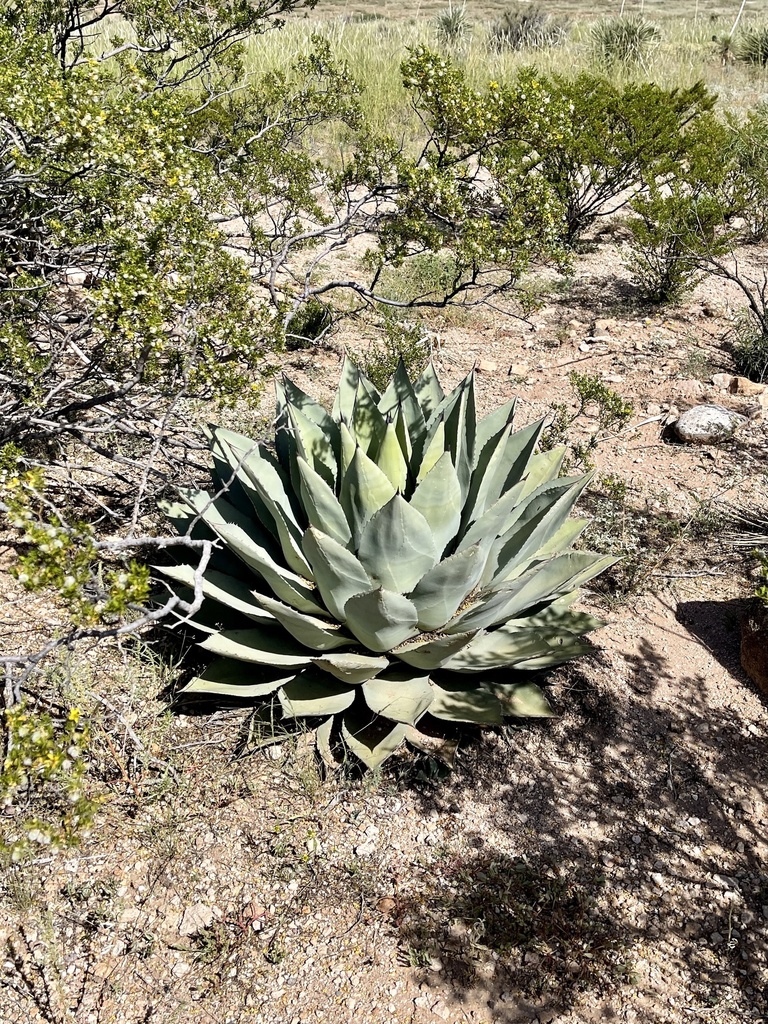
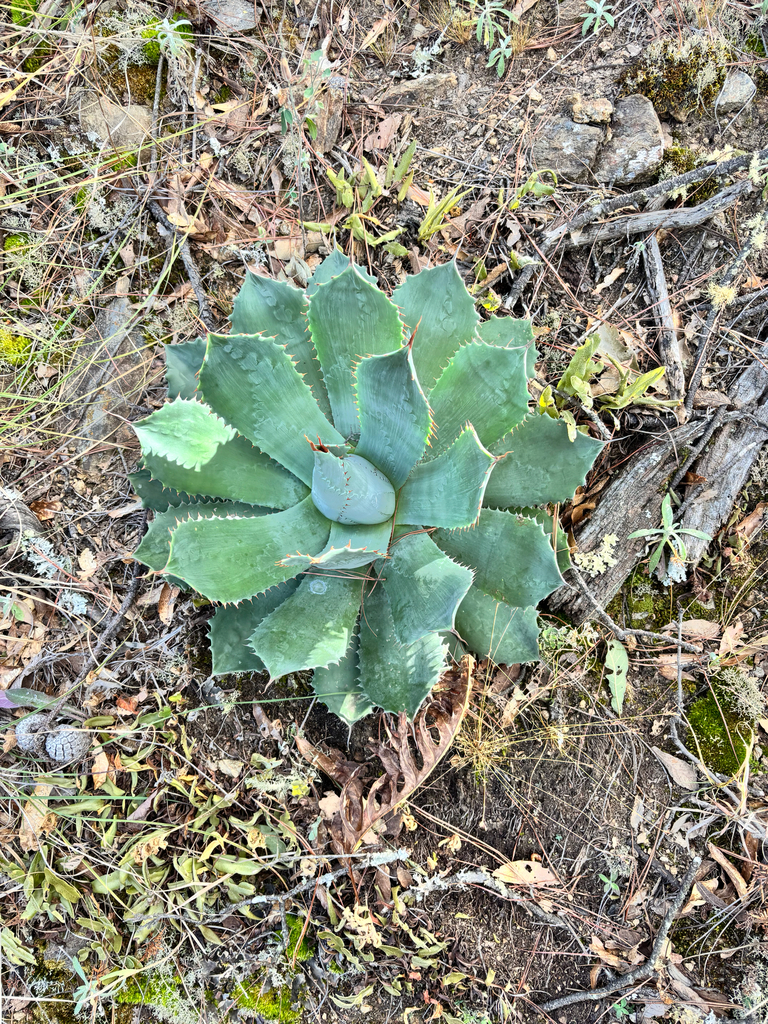
A compact rosette species native to limestone cliffs along the Tehuantepec Isthmus of southern Mexico — spanning Oaxaca and Chiapas states — at elevations of 1,100 to 1,500 m. Rosettes stay small, reaching just 15 to 30 cm in diameter, with densely packed triangular leaves in a distinctive gray-blue to gray-green. Deep spine imprints mark the leaf surfaces, and dark brown to red-brown terminal spines tip each leaf. Historically treated as Agave potatorum var. minima, it is accepted by POWO as a distinct species described by García-Mend. & F.Palma in 2002. Not listed under CITES. Not Evaluated (NE) by the IUCN.
Native climate
Rain concentrates in the one season, with a dry season of roughly 6 months. Overall a warm climate.
* Accurate distribution data is scarce for this species, so these values are taken from the climate near the approximate center of its native range instead.
Sources: climate & elevation WorldClim 2.1 (1970–2000) · occurrences GBIF · native range POWO · current weather Open-Meteo
Care
Light & Placement

In habitat this plant grows on open limestone cliff faces under strong light with good air movement and low humidity — conditions that translate directly into a sunny, well-ventilated position in cultivation. During the growing season, a full-sun spot outdoors on a raised bench keeps the rosette tight and the leaf color richly blue-gray. Japan's humid summers and warm nights are more demanding than the native climate, so light shade of around 20% and steady airflow help prevent excessive scorch. In winter, a sheltered spot under deep eaves or a bright indoor windowsill is the reliable choice.
Watering
In active growth, water thoroughly only once the substrate has fully dried, then let it dry again. Crown rot from prolonged wet conditions or poor airflow is the primary concern. In winter, hold well back — once or twice a month at most.
Substrate
Drainage above all, in an inorganic mix. Small-grain Akadama : pumice : Kanuma = 4:3:3 is a reliable baseline. A taller pot aids wet-dry cycling and keeps water from pooling at the crown.
Fertilizer & Supplements
A small amount of slow-release fertilizer during active growth, plus a monthly liquid feed at roughly half the label rate. Overfeeding loosens the rosette and blurs the characteristic compact form.
Temperature & Overwintering
Optimal 20–32°C; the minimum to target in cultivation is around 3°C. In colder climates, outdoor overwintering is not advisable — a bright, frost-free indoor windowsill with near-dry substrate is the standard approach. The combination of cold temperatures and wet substrate is the main overwintering risk.
Starting from Seed
Where to source seeds
Pre-sowing treatment
Soak seeds for half a day in a solution of fungicide (Benlate, Daconil) and a plant tonic (Menedael; outside Japan SUPERthrive or a chelated iron / seaweed extract serves a similar purpose), each at the label dilution rate. Seeds that remain floating are likely past their prime.
Substrate
Prepare a separate seedling mix that is fine-grained and near-sterile: fine Akadama, fine Kanuma, and vermiculite in equal 1:1:1 parts. Sterilize the mix with boiling water or a brief microwave pass before sowing.
Sowing method
Sow the flat seeds with no covering, or only the thinnest dusting of substrate so they are just barely hidden. Space seeds at least 1 cm apart and avoid clustering.
Light & temperature
Keep the tray in bright shade at a steady 25–30°C. Germination typically occurs within 7–21 days. With fresh seed, germination is generally reliable (easy to moderate).
Watering
Bottom-water with the level 1–2 cm up the pot. For the first 2–3 weeks, prioritize keeping the medium consistently moist, then lower the bottom-water level in steady stages as seedlings establish.
Fertilizer
No feeding right after germination. Once the true leaves emerge, give a heavily diluted liquid fertilizer once or twice a month — go lighter than the bottle suggests, as overfeeding promotes etiolation.
From Germination to Repotting
Germination through true leaves (first month)
Continue bottom watering in bright shade.
Weaning off bottom watering (months 1–2)
Lower the water level gradually, then switch to saucer watering.
First repotting (year 1–2)
Once roots reach the bottom of the pot, it's time.
Common Pitfalls
Mold & damping-off
- Cause: soil pathogens, excess moisture, poor airflow
- Prevention: sterilize the seedling mix, refresh bottom-water regularly, use a fan for air circulation
Sunburn
- Cause: an abrupt move into direct sun causing tissue damage
- Prevention: ramp light up gradually over one to two weeks
Seeds fail to germinate
- Cause: old seeds, insufficient temperature
- Prevention: choose a trusted seed source, stabilize temperature with a heat mat
Notes
The terminal spines are sharp — handle with care.