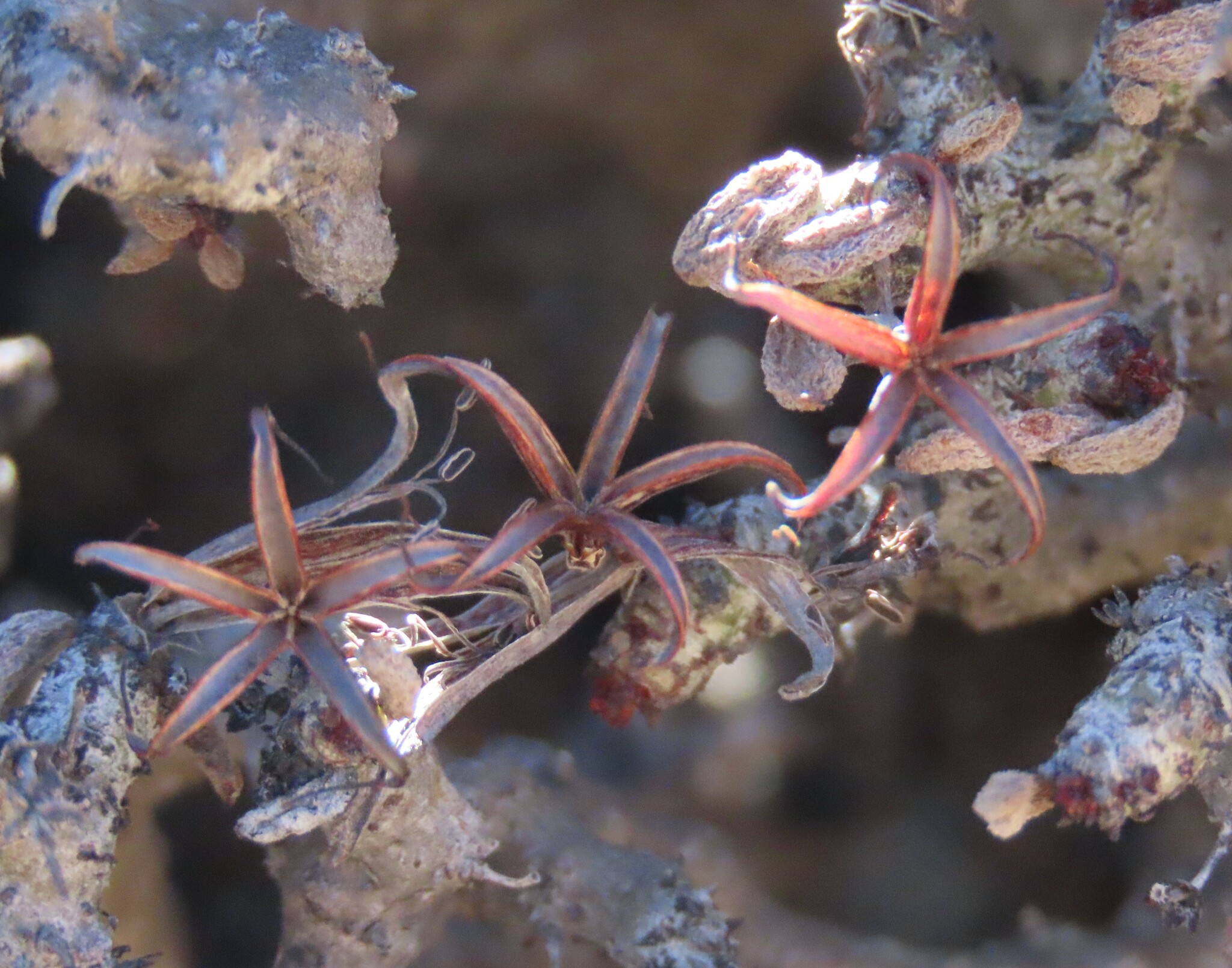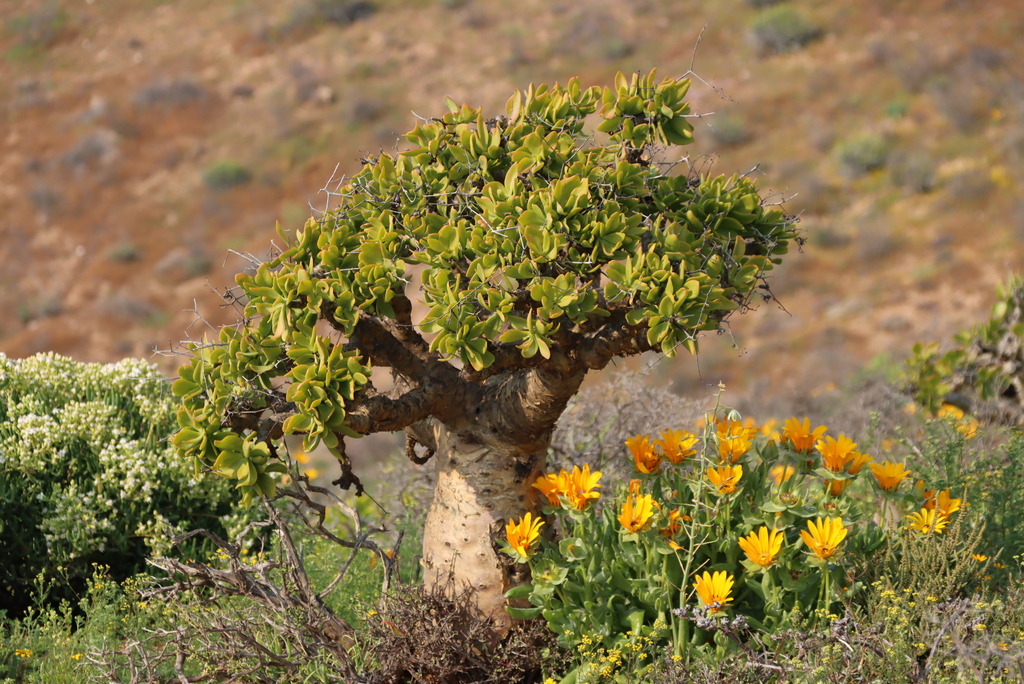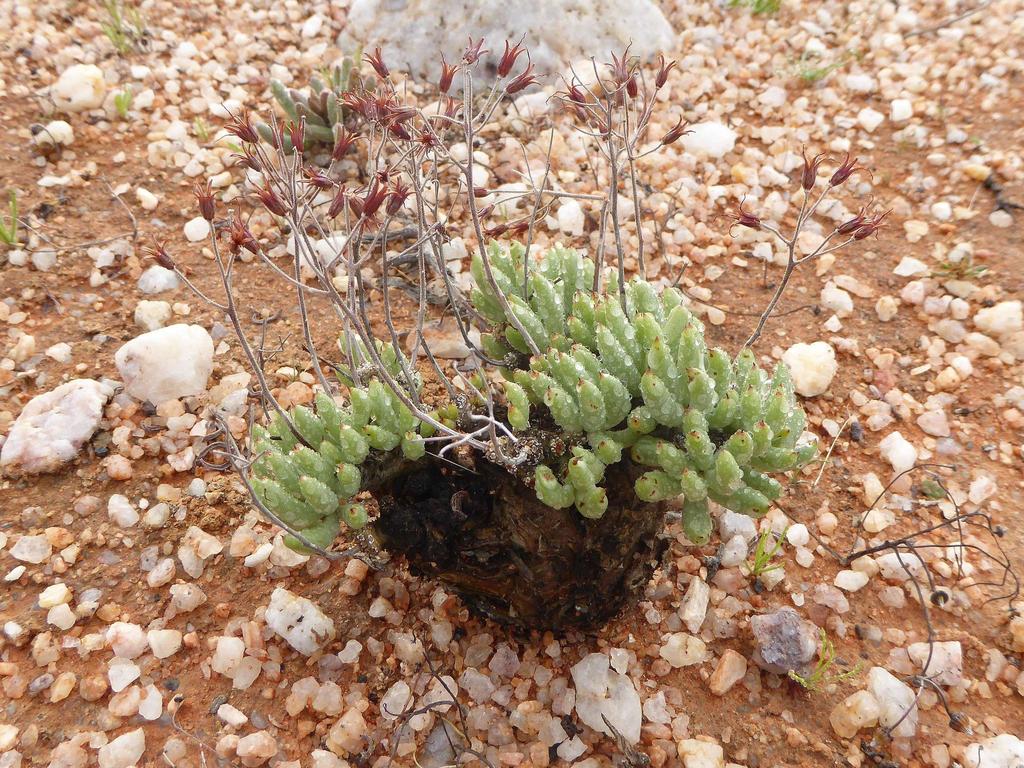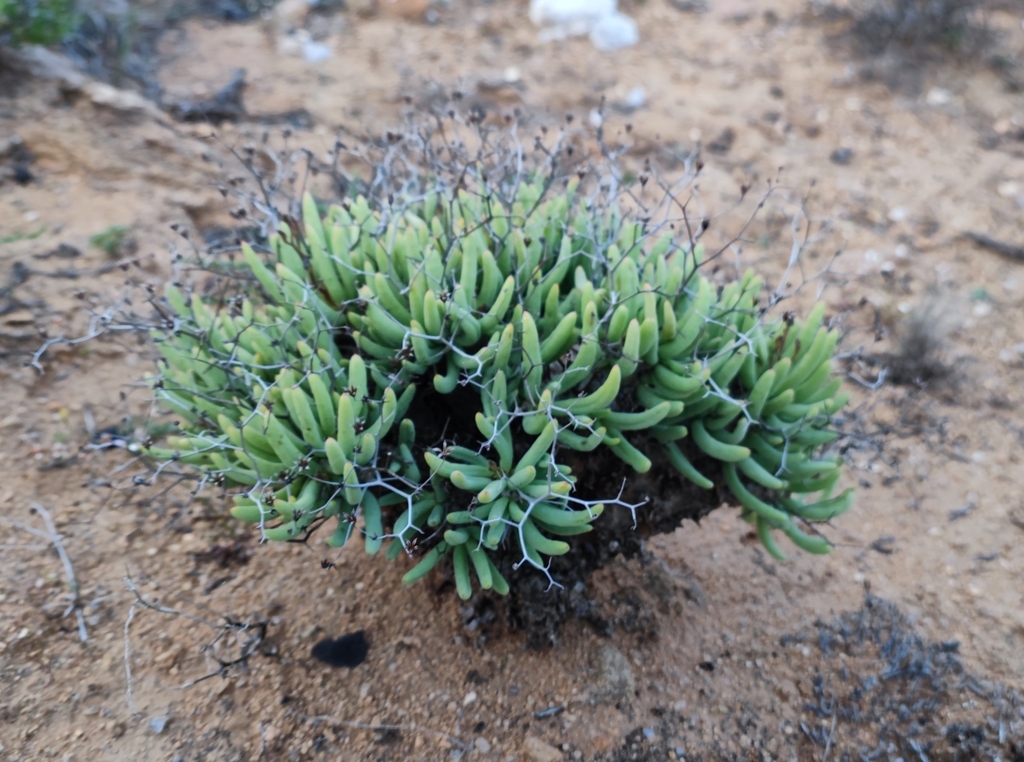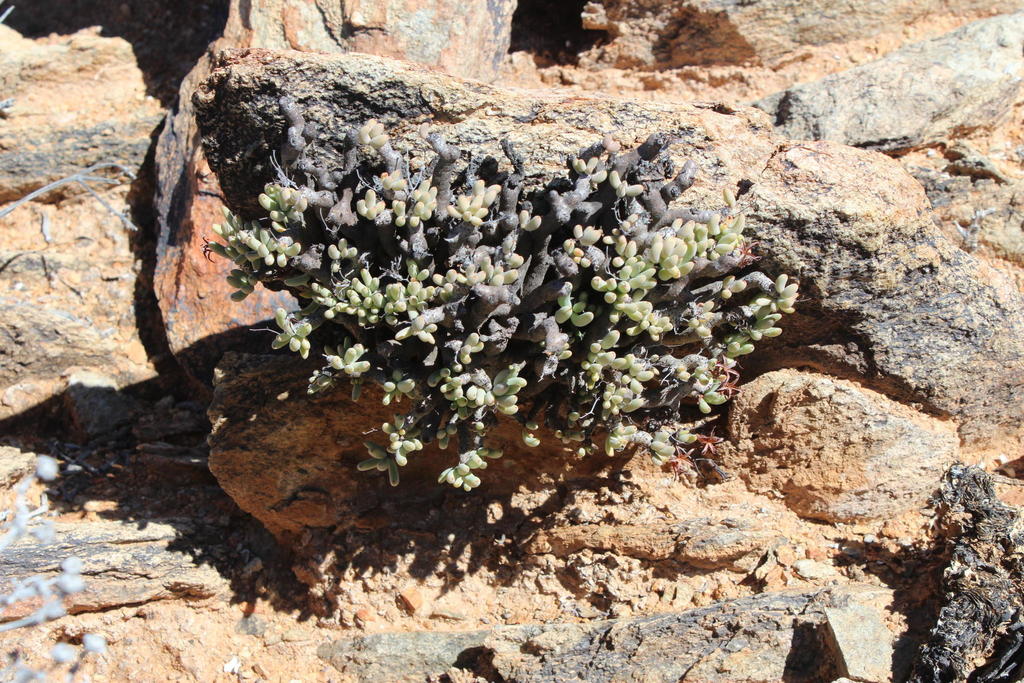
A small Tylecodon distributed from the Richtersveld in South Africa's Northern Cape, down the coastal Namaqualand strip, and into the fog desert of southwestern Namibia. Unlike most caudiciforms it never builds an obvious thickened trunk; instead a tangle of slim, jointed grey-green cylindrical branches divides and re-divides until the plant looks closer to a Euphorbia or Senecio than to its leafy Tylecodon relatives. Tiny leaves emerge briefly in the cool season and drop again, leaving the plant naked through summer. Winter-growing, and one of the species transferred from Cotyledon when Tölken erected Tylecodon in 1978. Among the most rot-prone in the genus — a mid-to-advanced caudex plant for keepers comfortable with strict winter growing.
Native climate
Very little rain falls all year — an arid setting. Overall a mild climate.
A broad-scale picture of the native range. Real growing spots — rock crevices, fog belts — can be milder.
Sources: climate & elevation WorldClim 2.1 (1970–2000) · occurrences GBIF · native range POWO · current weather Open-Meteo
Care
Light & Placement
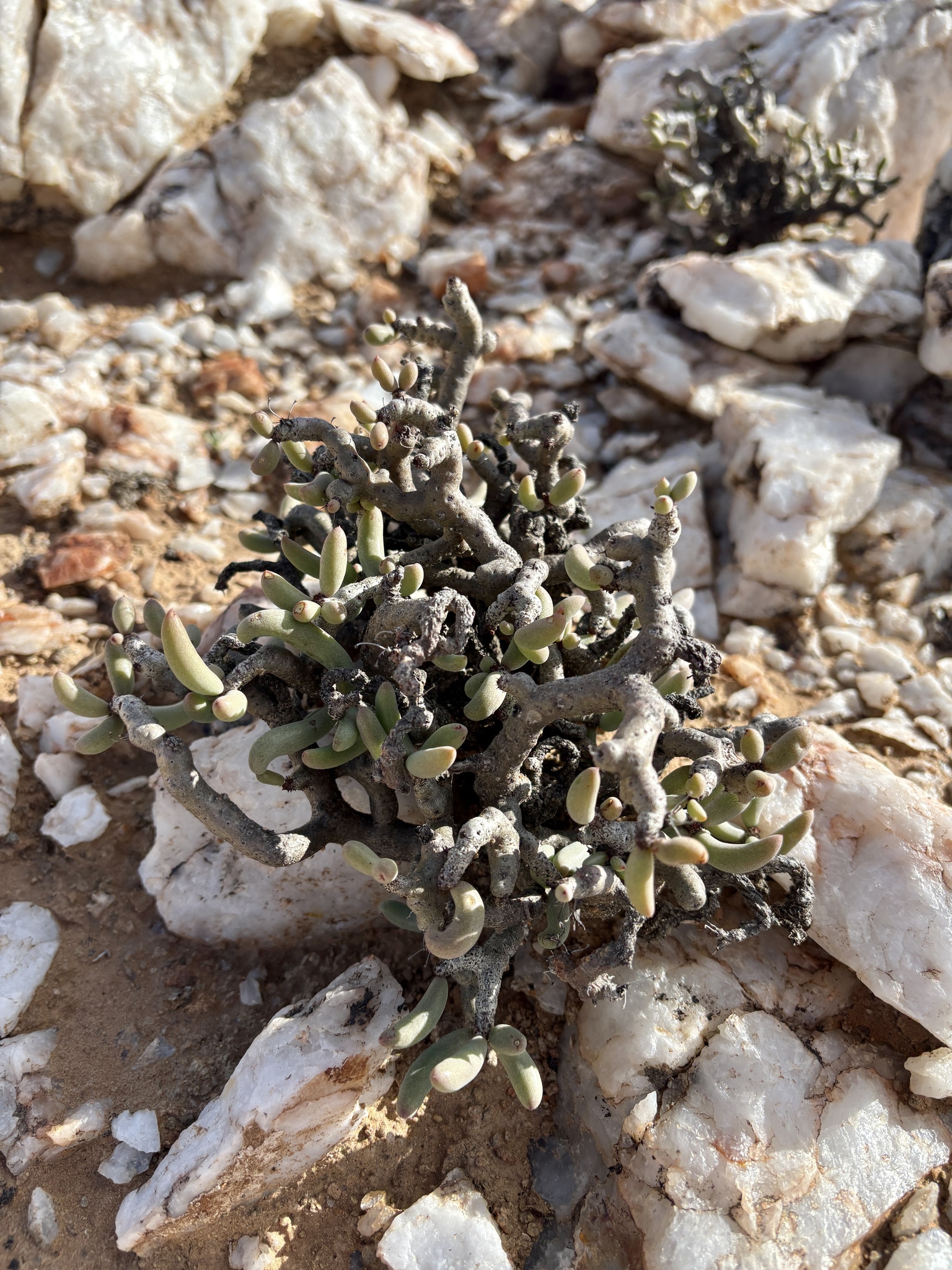
In its native ground on the rocky slopes of the Richtersveld and the fog-cooled coastal hills of Namaqualand, it anchors in cracks of bedrock where the sun is intense but the air stays cool and maritime fog is the main moisture source. In Japan, give it bright outdoor or windowsill light through the active autumn-to-spring season — strong light keeps the branches grey-green and tightly jointed rather than soft. The hard part is summer: from after the rainy season, 30–50% shade and unrestricted airflow are non-negotiable, kept out of rain and parked in the coolest, breeziest spot you have. An air-conditioned room is a reasonable retreat.
Watering
Restart watering gradually from September into October as nights cool down, and water through the leaf-flush from late autumn until spring. The Richtersveld receives only ~70 mm of rain a year, so this species is unusually rot-prone even within the genus. Taper from April–May and go fully dry through summer. Bare branches with no leaves is the correct summer state; watering out of concern is the single most common way to lose this plant.
Substrate
Drainage first, inorganic-led. Akadama : Kanuma : pumice = 3:3:4 — a higher pumice fraction to dry out faster. A shallow rather than deep pot works well so the surface dries down hard between waterings.
Fertilizer & Supplements
Liquid feed at heavy dilution once a month during the active season, or a pinch of slow-release at repotting. Habitat soils are extremely poor; pushing too hard softens the stiff jointed form. Nothing through summer dormancy.
Temperature & Overwintering
Optimal 15–25°C — clearly cooler than summer-grower caudex plants. Aim for a 5°C minimum; in a Japanese winter it is safer to bring the pot indoors. The real watch-out is summering: sustained nights above 35°C combined with any residual moisture will rot the base fast. Hold it on shade, airflow, and complete dryness through summer.
Starting from Seed
Where to source seeds
Pre-sowing treatment
Soak seeds for about half a day (overnight) in a mix of a registered seed-treatment fungicide (Benlate or Daconil) and a plant tonic (Menedael; outside Japan, SUPERthrive or a chelated iron / seaweed extract works similarly), each diluted per label. The seeds are tiny and float easily, so a sink/float test is unreliable — laying them out on damp paper to swell makes the next step easier. Stock loses viability quickly.
Substrate
A separate seedling mix, fine-grained and near-sterile: fine Akadama, fine Kanuma, and vermiculite in 1:1:1, sterilized with boiling water or a microwave pass. A thin layer of coarse sand on the surface anchors the seeds — this species is unusually prone to damping-off.
Sowing method
Sow with no covering, or only the thinnest dusting. Place minute seeds one at a time with a damp toothpick or use a paper funnel. Aim for 5 mm to 1 cm of spacing.
Light & temperature
Bright shade, 15–22°C. Seeds won't germinate under midsummer heat — wait until temperatures drop. September through November is the right window in Japan. A heat mat is unnecessary.
Watering
Bottom-water 1–2 cm up the pot. Don't let things dry out for the first 2–3 weeks, then drop the level gradually. Avoid cold water; room-temperature is preferable.
Fertilizer
None right after germination. Once true leaves emerge, a heavily diluted liquid feed once or twice a month. Growth is slow — first-year seedlings reach only a few mm to ~1 cm.
From Germination to Repotting
Germination through true leaves
Continue bottom watering, keep in bright shade.
Weaning off bottom watering
Phase out gradually over 1–2 months.
First repotting
In the second or third year (~2 years to reach 1 cm), in autumn, into a shallow pot.
Common Pitfalls
Mold & damping-off
- Cause: excess moisture, contamination, poor airflow
- Prevention: sterilize the substrate, refresh the bottom-water, run a fan. Don't let seedlings stew on warm days in the first week or two
Etiolation
- Cause: insufficient light
- Prevention: move LEDs closer, or shift to bright shade outdoors. Weak light at the seedling stage produces soft, vining growth that rarely returns to the proper jointed form
Seeds fail to germinate
- Cause: stale seed, temperature too high
- Prevention: sow as soon as a batch arrives. Avoid summer sowing entirely — wait for autumn
Summer stall and rot
- Cause: watering on a summer-grower schedule leads to base rot under hot, humid Japanese summers. The single biggest risk specific to this species
- Prevention: taper water from April–May and go fully dry before the rainy season. Through summer, hold under 30–50% shade with airflow in the coolest spot; an air-conditioned room is a legitimate option. Bare branches is the correct summer state
Notes
All Tylecodon contain potent bufadienolide cardiac glycosides (cotyledoside, tyledoside). Cause of livestock krimpsiekte ("shrinking sickness"). Sap irritates skin and mucous membranes; wear gloves and keep away from children and pets.