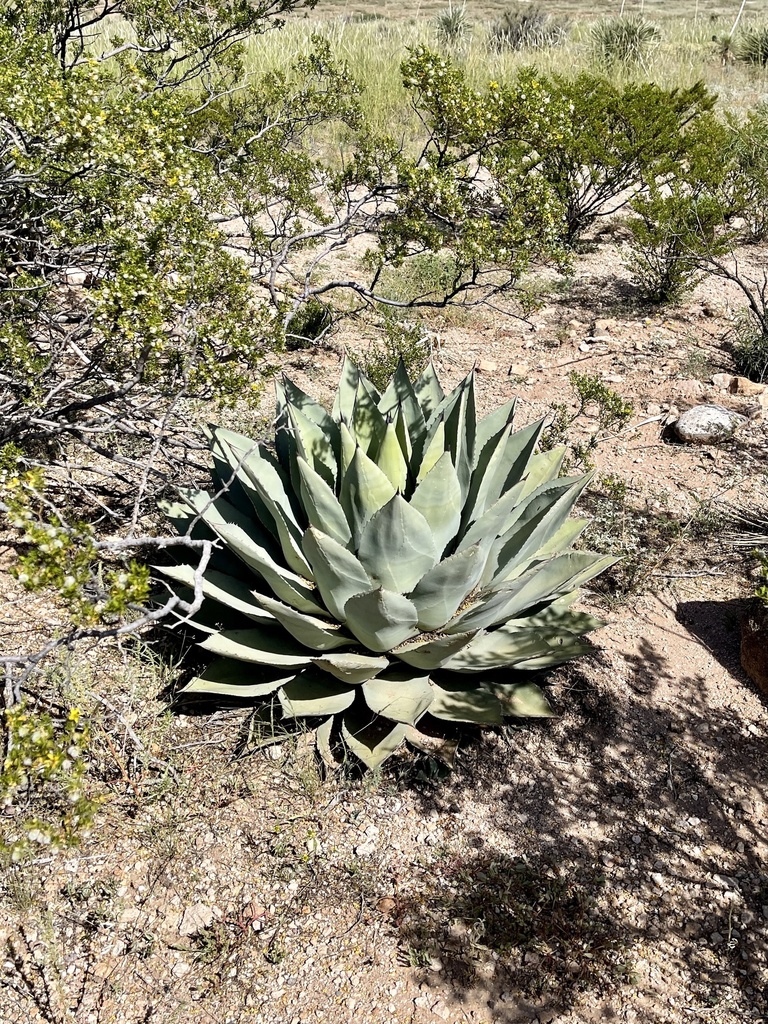
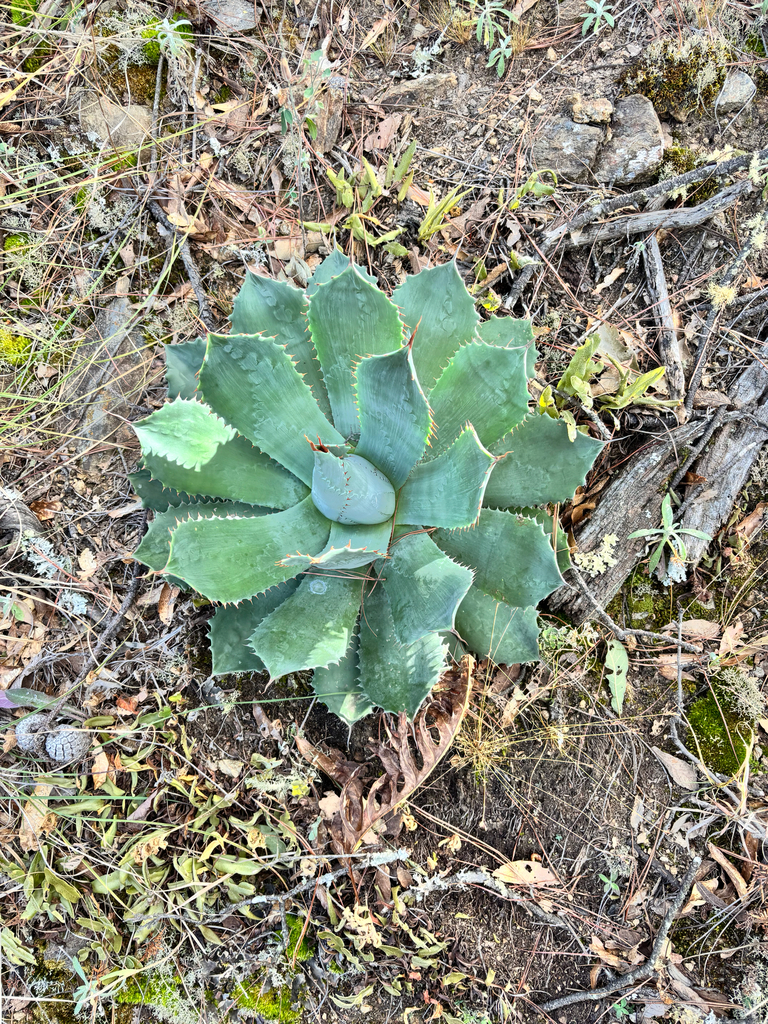
A small to mid-sized rosette native to high desert and limestone cliffs of the southwestern United States — Arizona, Utah, Nevada, and eastern California — at 1,200 to 2,400 m. Winter temperatures in parts of its range drop to −25°C or below, placing it among the most cold-hardy Agave species. Leaves reach 15 to 40 cm with a long terminal spine; var. eborispina stands out for its striking ivory-colored spines. Several varieties and subspecies are recognized, varying notably in spine length, leaf width, and overall size. Not listed under CITES.
Native climate
Very little rain falls all year — an arid setting. Overall mild, with a wide temperature range, and cold winters.
* Accurate distribution data is scarce for this species, so these values are taken from the climate near the approximate center of its native range instead.
Sources: climate & elevation WorldClim 2.1 (1970–2000) · occurrences GBIF · native range POWO · current weather Open-Meteo
Care
Light & Placement

In habitat this plant grows on open limestone faces and ridges under strong high-elevation sunlight and cold, dry wind, so full light and good airflow are the key demands. During the growing season, a full-sun position outdoors on a raised bench keeps the rosette tight and the leaf color silvery. Japan's humid summer nights are harsher than the native climate, so light shade of around 20% and steady air movement help avoid scorch. Cold hardiness is among the best in the genus — open-ground or eaves overwintering is a realistic option across much of central and southern Japan. In rainy winters, sheltering under deep eaves or on a bright indoor windowsill is the safer path.
Watering
In active growth, water thoroughly only once the substrate has fully dried, then let it dry again. Crown rot from prolonged wet or poor airflow is the main risk. In winter, hold well back — once or twice a month at most.
Substrate
Drainage above all, in an inorganic mix. Small-grain Akadama : pumice : Kanuma = 4:3:3 is a reliable baseline. A taller pot helps wet-dry cycling; keeping the crown area free of standing water reduces crown-rot risk.
Fertilizer & Supplements
A small amount of slow-release fertilizer during active growth, plus a monthly liquid feed diluted to roughly half the label rate. Overfeeding loosens the rosette and blurs the leaf form — restraint keeps it in shape.
Temperature & Overwintering
Optimal 18–32°C. Cold hardiness is among the strongest in the genus — in dry conditions, cultivation floors of −10 to −15°C are reported. In the wild, some populations endure −25°C or colder; in a Japanese garden, dry substrate and shelter from winter rain are the prerequisites for pushing the limits. Across central and southern Japan, eaves overwintering is well within reach.
Starting from Seed
Where to source seeds
Pre-sowing treatment
Soak seeds for half a day in a fungicide solution (Benlate or Daconil) mixed with a plant tonic (Menedael or equivalent), each at label dilution. Seeds that remain floating are likely past their prime.
Substrate
Use a separate seedling mix that's fine-grained and near-sterile: fine Akadama, fine Kanuma, and vermiculite in equal 1:1:1 parts. Sterilize the mix with boiling water or a quick microwave pass before sowing.
Sowing method
Sow the flat, medium-sized seeds with no covering, or only the thinnest dusting of substrate. Space seeds at least 1 cm apart and arrange them so they don't clump together.
Light & temperature
Keep the tray in bright shade at a steady 25–30°C. Expect germination in 7–21 days. Germination depends on seed freshness, but with fresh seed it is reasonably steady.
Watering
Bottom-water with the level 1–2 cm up the pot. For the first 2–3 weeks, prioritize keeping the medium moist, then drop the bottom-water level in steady stages as seedlings establish.
Fertilizer
No feeding right after germination. Once the true leaves emerge, give a heavily diluted liquid fertilizer once or twice a month — go lighter than the bottle suggests, as overfeeding leads to etiolation.
From Germination to Repotting
Germination through true leaves (first month)
Continue bottom watering in bright shade.
Weaning off bottom watering (months 1–2)
Lower the water level gradually, then switch to saucer watering.
First repotting (year 1–2)
Once roots reach the bottom of the pot, it's time.
Common Pitfalls
Crown rot
- Cause: prolonged rain, poor airflow, water pooling in the crown
- Prevention: shelter from open rain and water from the pot edge rather than over the rosette
Sunburn
- Cause: an abrupt move into direct sun causing tissue damage
- Prevention: ramp light up gradually over a week or two
Etiolation
- Cause: insufficient light
- Prevention: bring the LED closer right after germination, or move the seedlings to bright shade outdoors
Seeds fail to germinate
- Cause: old seeds, insufficient temperature
- Prevention: choose a trusted source, stabilize temperature with a heat mat
Notes
The leaf-tip spines are sharp and stiff.