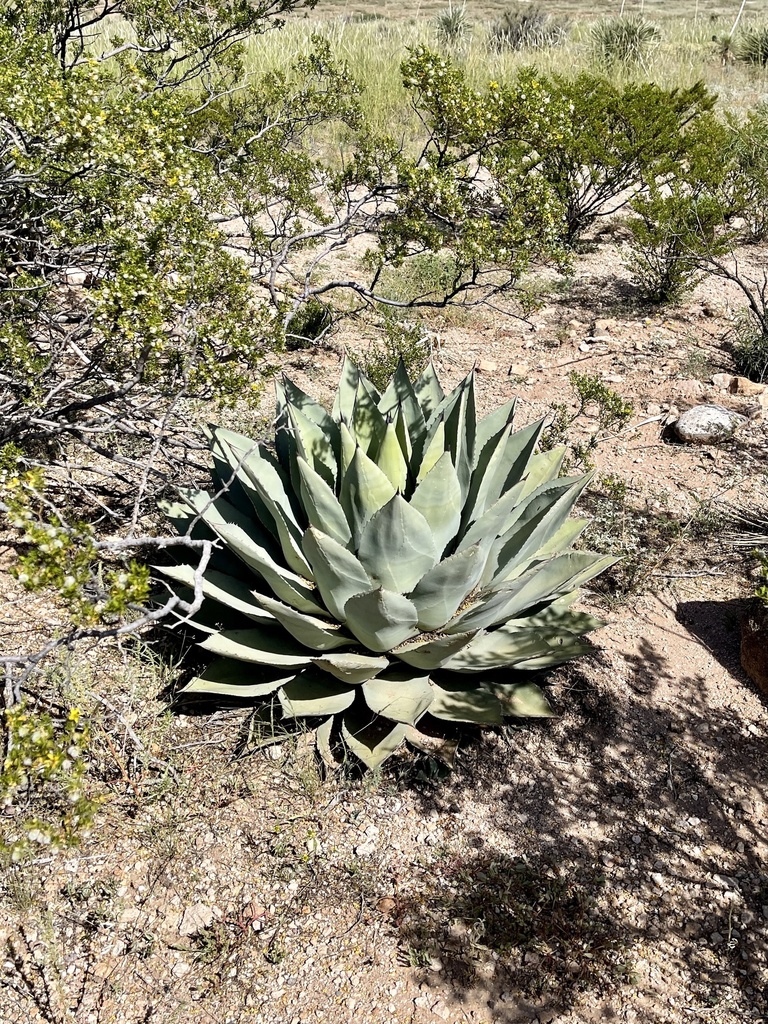
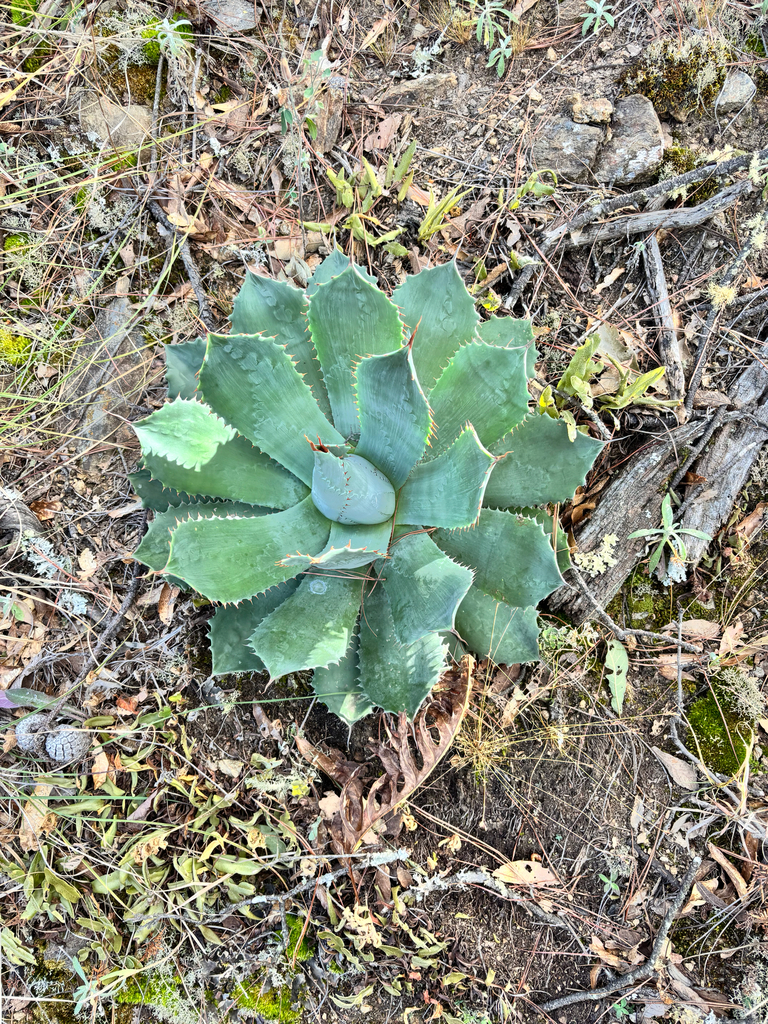
A small-to-medium Agave from the limestone cliffs of the southern Chihuahuan Desert in northern Mexico — long known in the Japanese hobby under the name "Sasa-no-yuki" (snow-on-bamboo-leaf). Short, thick, tightly-packed triangular leaves are edged with white margins that trace each keel, giving the plant its distinctive geometric silhouette. The rosette stays compact at roughly 30–50 cm across, with dark red terminal spines. Long-lived at 20–30 years but monocarpic — the mother rosette dies after flowering. The IUCN classifies the species as Least Concern (assessed 2018), with groundwater drawdown and illegal collection noted as pressures although the population trend is considered stable; it is listed under CITES Appendix II. Seed-growing is on the easier end for the genus, and there is a particular pleasure in raising those white-margined geometric leaves from seed.
Native climate
Rainfall is spread fairly evenly across the year. Overall mild, with a wide temperature range.
A broad-scale picture of the native range. Real growing spots — rock crevices, fog belts — can be milder.
Sources: climate & elevation WorldClim 2.1 (1970–2000) · occurrences GBIF · native range POWO · current weather Open-Meteo
Care
Light & Placement

In habitat it grows on Chihuahuan Desert limestone cliffs under strong sun and dry air, so give it as much light as possible. Through the spring and autumn growing periods, full sun outdoors keeps leaves short and tight and lets the white margins read clearly against the green. Midsummer brings a partial rest, so 30% shade and good airflow help avoid heat-and-humidity stress. Raise pots off the ground and use a circulator. Cold tolerance is among the better in the genus — to about −5°C bone-dry — but for cultivation, a bright indoor window kept above 0°C and on the dry side is the safer winter setup.
Watering
In active growth, water thoroughly only after the substrate has fully dried, then let it dry again — that wet-dry rhythm keeps leaves tight. Cut back in midsummer and winter to once or twice a month. Don't let water pool at the leaf bases.
Substrate
Drainage above all, in an inorganic mix. Small-grain Akadama : Kanuma : pumice = 4:3:3 is the baseline; since it is a limestone-cliff species, a pinch of dolomite lime fits the plant well. A taller pot improves the wet-dry cycle.
Fertilizer & Supplements
A small amount of slow-release during active growth, plus a monthly dilute liquid feed (around twice the label dilution). Overfeeding stretches the leaves and blurs the geometric line of the white margins — keep things lean and tight.
Temperature & Overwintering
Optimal 18–32°C — among the more heat- and cold-tolerant Agaves — with a 0°C winter floor. A light shade and airflow carry it through tropical summer nights. Overwinter dry on a bright window; cold combined with damp soil is the main risk.
Starting from Seed
Where to source seeds
Pre-sowing treatment
Soak seeds for about half a day (overnight) in a mix of a registered seed-treatment fungicide (Benlate or Daconil) and a plant tonic (Menedael; outside Japan, SUPERthrive or a chelated iron / seaweed extract works similarly), each diluted per label. Seeds left floating tend to be past their prime. Viability depends on how the seed has been stored, so sowing soon after receipt is the safer course.
Substrate
Use a separate seedling mix that's fine-grained and near-sterile: fine Akadama, fine Kanuma, and vermiculite in equal 1:1:1 parts. Sterilize the mix with boiling water or a quick microwave pass before sowing for peace of mind.
Sowing method
Sow with no covering, or only the thinnest dusting of substrate so the seeds remain partly visible. The seeds are flat and thin — lay them on their flat side and space at least 1 cm apart.
Light & temperature
Keep the tray in bright shade at a steady 25–30°C. Expect germination in 7–21 days. Germination depends strongly on seed freshness, but with fresh seed it is reasonably steady.
Watering
Bottom-water with the level 1–2 cm up the pot. For the first 2–3 weeks, prioritize not letting things dry out at all, then drop the water level in steady stages once the seedlings have come up.
Fertilizer
No feeding right after germination. Once the true leaves emerge, give a heavily diluted liquid fertilizer once or twice a month — go lighter than the bottle suggests, since young seedlings are easily pushed into etiolation.
From Germination to Repotting
Germination through true leaves (first month)
Continue bottom watering; keep the humidity up and manage in bright shade.
Weaning off bottom watering (months 1–2)
Drop the water level in stages and switch to saucer-fed watering.
First repotting (year 1–2)
Once roots fill the pot, move into a standard inorganic mix.
Common Pitfalls
Mold & damping-off
- Cause: contaminated substrate, excessive moisture, poor ventilation
- Prevention: sterilize the substrate, change the bottom water frequently, use an air circulator for ventilation
Stretched leaves & blurred margins
- Cause: insufficient light, overfeeding
- Prevention: keep the plant under strong light and feed sparingly — tighter leaves sharpen the white-margin contrast
Seeds fail to germinate
- Cause: old seeds, insufficient temperature
- Prevention: choose a trusted source, stabilize temperature with a heat mat
Leaf base rot
- Cause: water pooled in the rosette center, high midsummer humidity
- Prevention: water at the base rather than from above; shade and ventilate through the worst of summer
Notes
The terminal spines are sharp — keep plants out of eye-level reach.