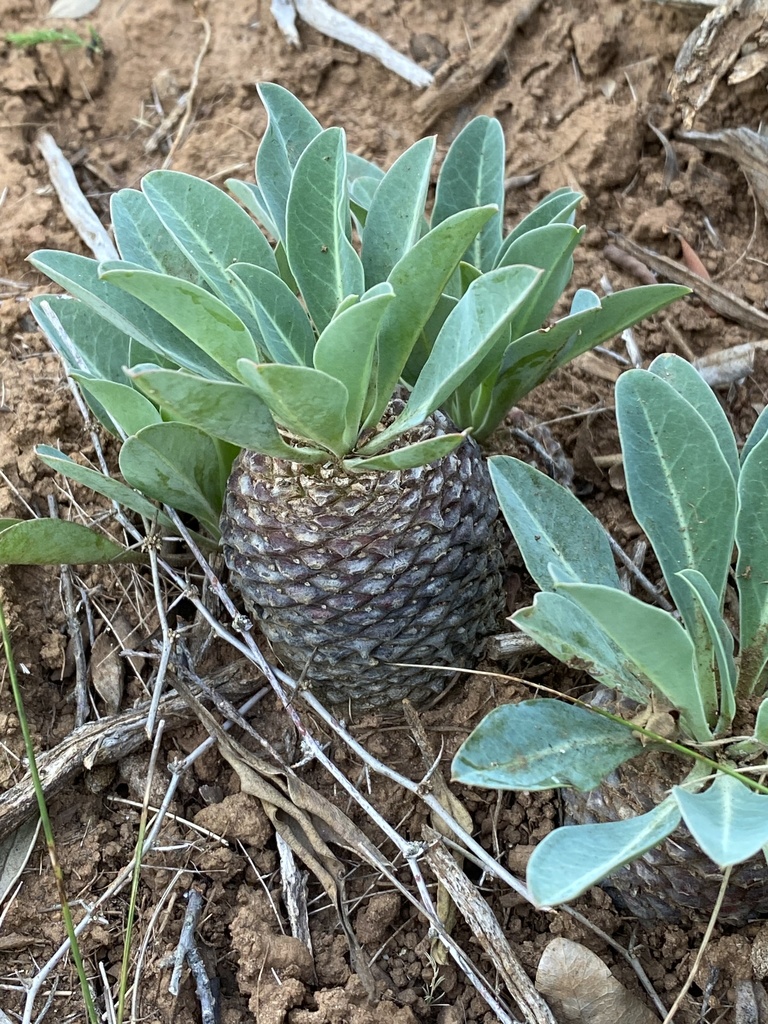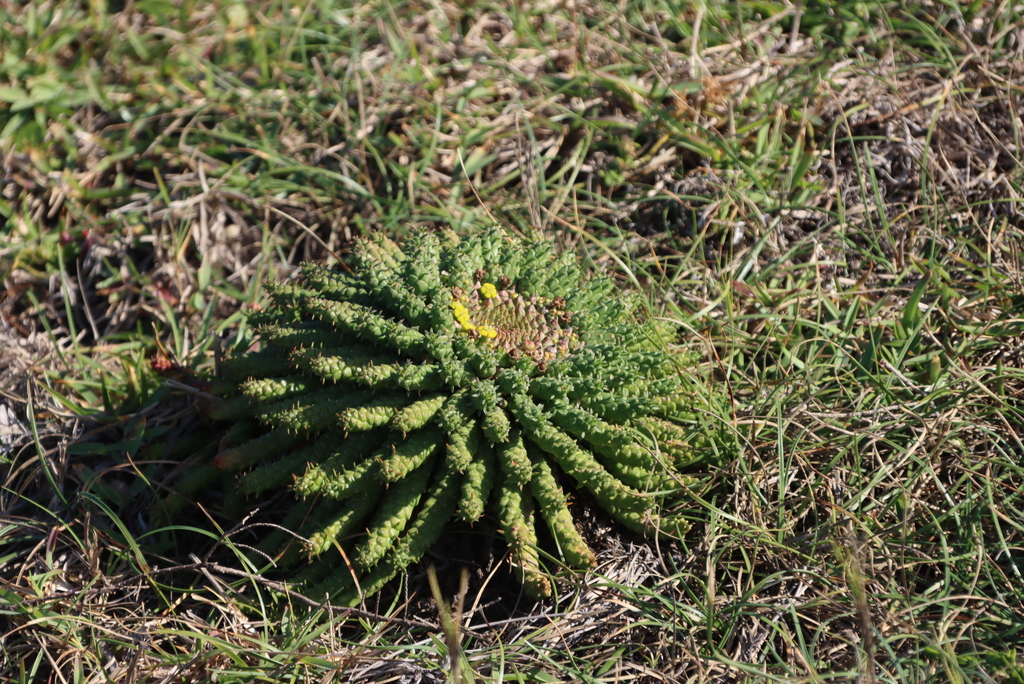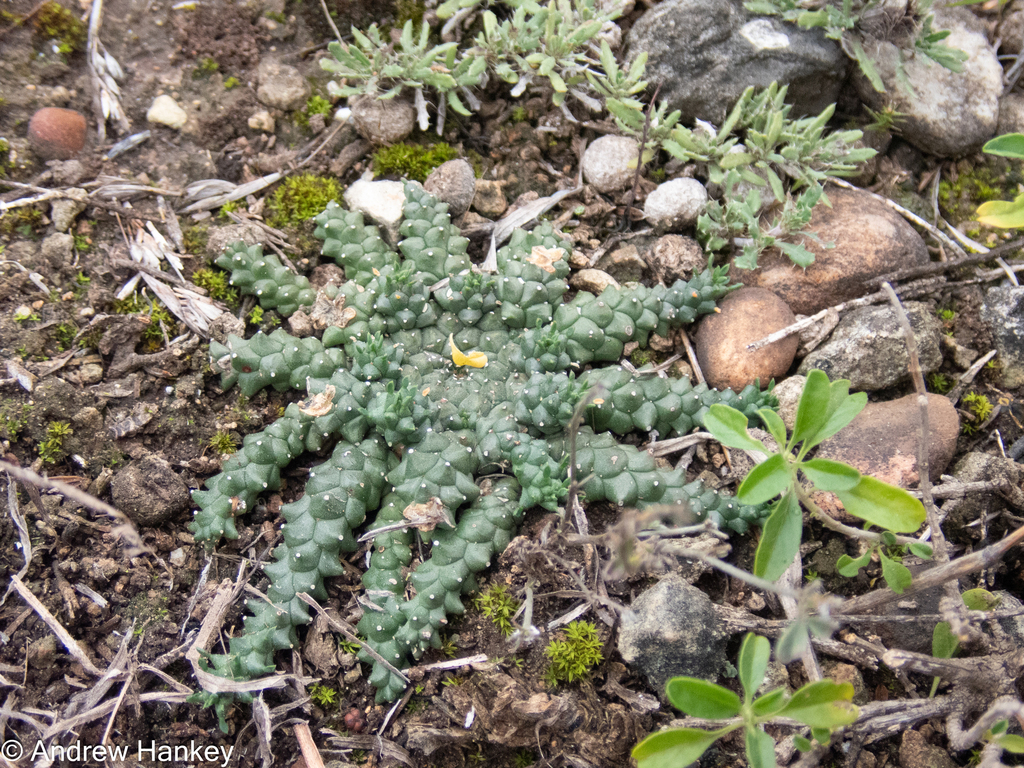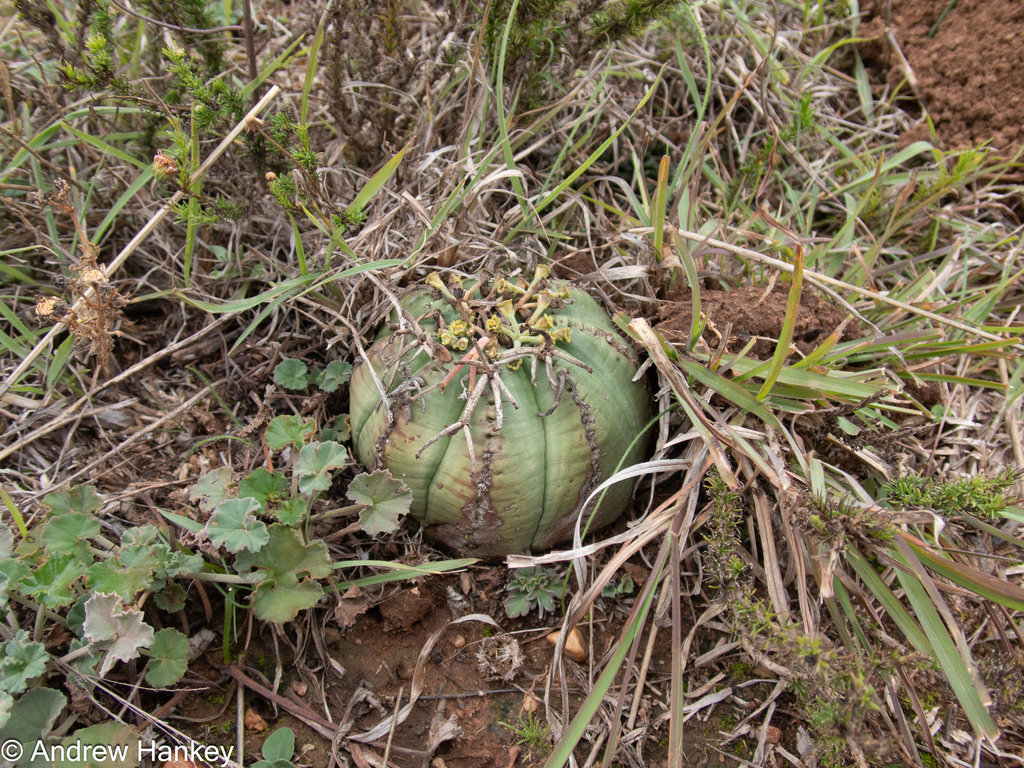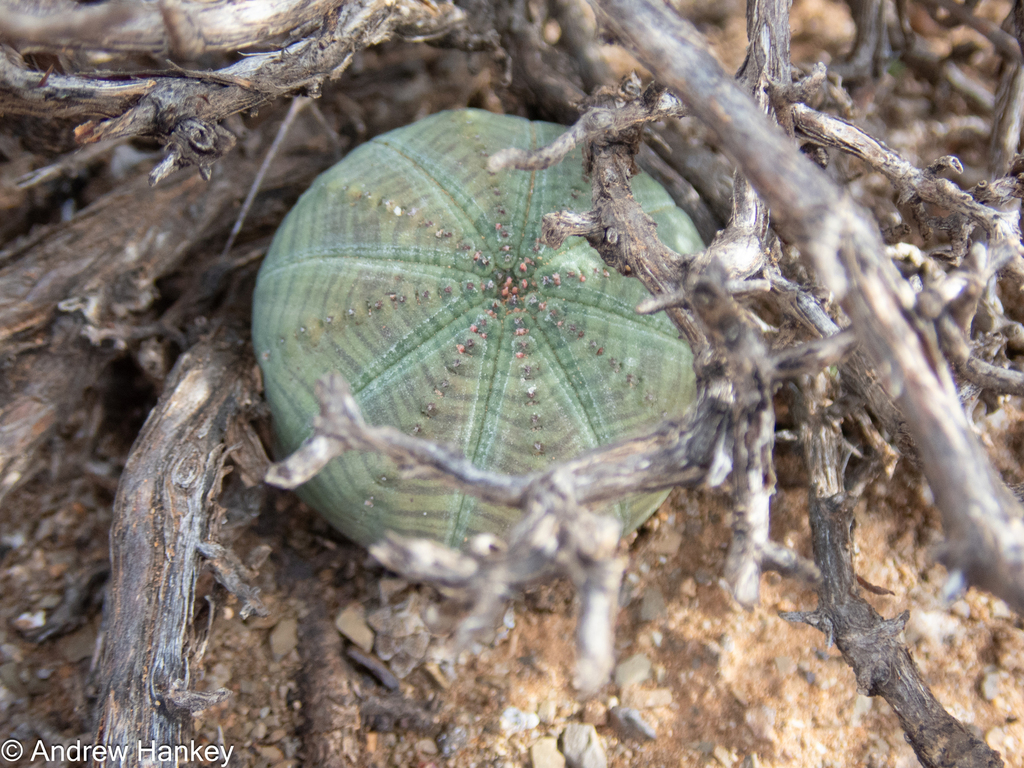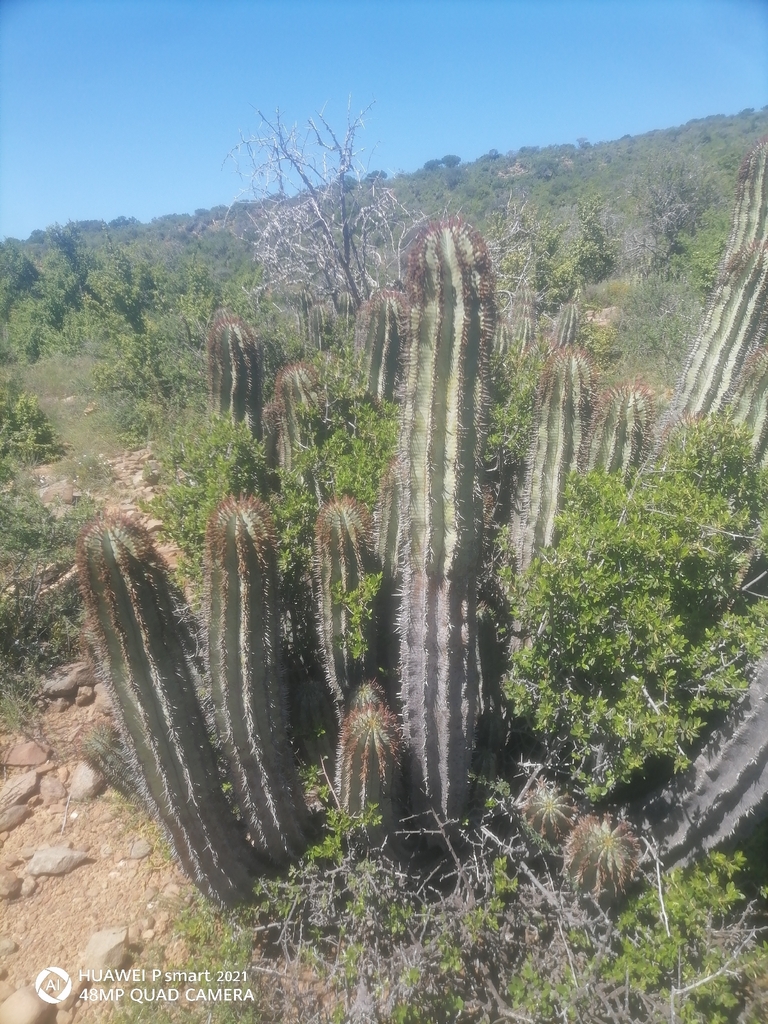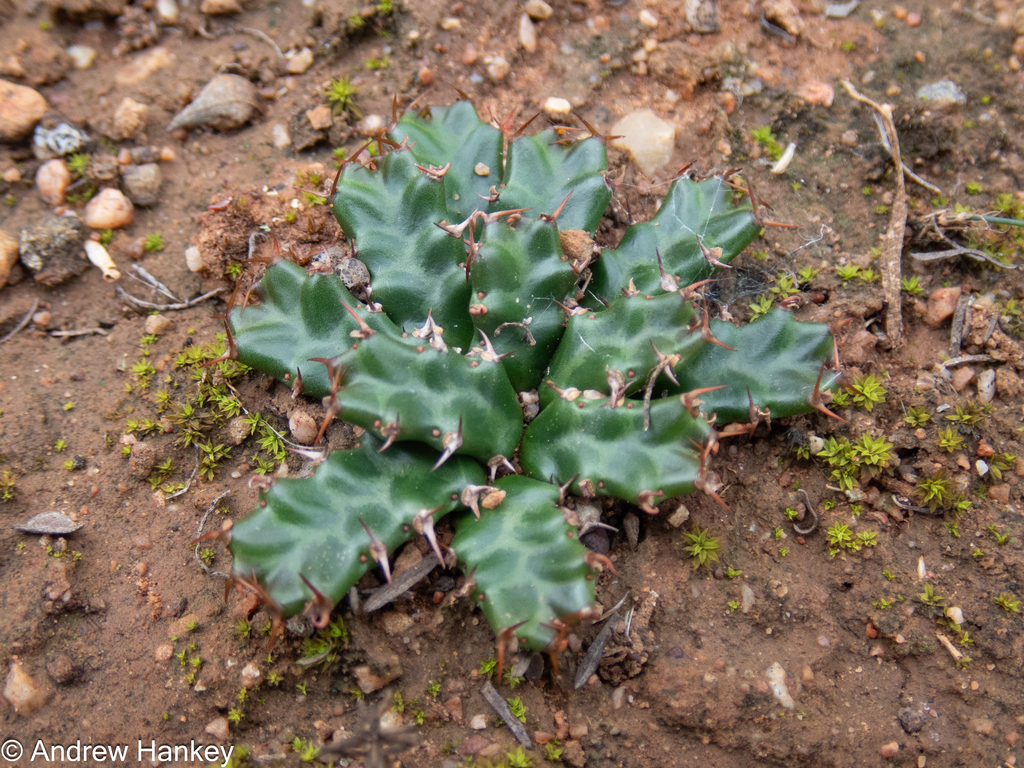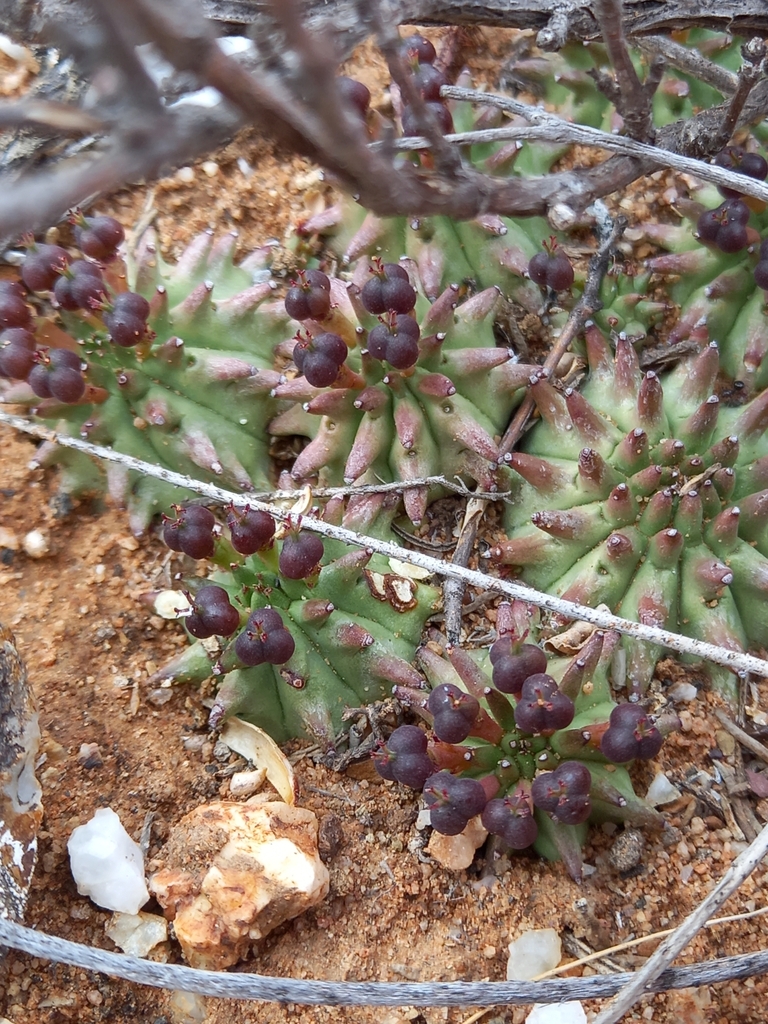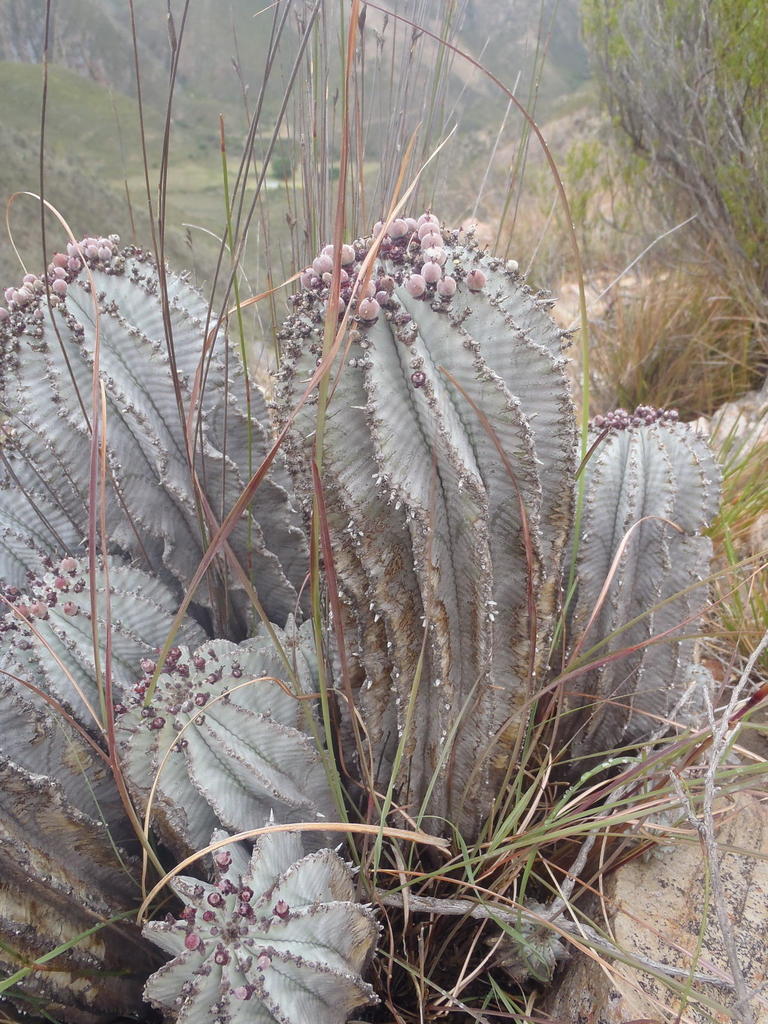
Known as the "African Milk Barrel," this cactus-like Euphorbia hails from the rocky, arid scrublands of South Africa's Cape Province. Stout, columnar grey-green stems are ribbed and armed with sharp spines, giving it the unmistakable look of something that has earned its place in a harsh environment. With age it offsets generously from the base to form clustering colonies that echo the rugged feel of its native habitat. Drought-tolerant and relatively forgiving, it's a favorite among growers who love cacti but want to explore the Euphorbia world. Its milky-white sap is caustic and should be handled with light care.
Native climate
Rainfall is spread fairly evenly across the year. Overall mild, with a wide temperature range.
* Accurate distribution data is scarce for this species, so these values are taken from the climate near the approximate center of its native range instead.
Sources: climate & elevation WorldClim 2.1 (1970–2000) · occurrences GBIF · native range POWO · current weather Open-Meteo
Care
Light & Placement

A columnar Euphorbia from the rocky slopes of South Africa's Cape Province, it thrives in strong light and dry air. Give it full direct sun outdoors through the growing season to tighten the ribs and bring out the grey-green tone. In Japan's harshest midsummer weeks, a light 20–30% shade and good airflow on a raised shelf prevent scorch and stagnation. Move to a bright indoor window, out of rain, for winter.
Watering
In active growth, water thoroughly only after the substrate has fully dried, then let it dry again — that wet-dry rhythm tightens the ribs. Prolonged rain causes rapid root damage, so shelter under eaves. In winter, mist once or twice a month.
Substrate
Drainage above all, in an inorganic mix with a high proportion of pumice. Small-grain Akadama : Kanuma : pumice = 3:3:4 is a reliable baseline. A pinch of slow-release such as Magamp K helps early growth, and a taller pot reduces rot risk.
Fertilizer & Supplements
A small amount of slow-release during active growth, plus a monthly dilute liquid feed (around twice the label dilution). Overfeeding causes etiolation, ribs to bulge unevenly, and root rot — aim for slow density on the dry side.
Temperature & Overwintering
Optimal 20–32°C — one of the more cold-tolerant Euphorbias — with a 5°C winter floor. Damp soil combined with cold is the main risk. When color shifts, taper water and overwinter dry on a bright indoor window, out of rain.

Starting from Seed
Where to source seeds
links go directly to the product page; the rest are scientific-name searches. Stock fluctuates — verify availability on the destination site.
Pre-sowing treatment
Soak seeds for about half a day (overnight) in a mix of a registered seed-treatment fungicide (Benlate or Daconil) and a plant tonic (Menedael; outside Japan, SUPERthrive or a chelated iron / seaweed extract works similarly), each diluted per label. The ones that don't sink usually germinate poorly.
Substrate
Use a separate seedling mix that's fine-grained and near-sterile: fine Akadama, fine Kanuma, and vermiculite in equal 1:1:1 parts. Sterilize the mix with boiling water or a quick microwave pass before sowing.
Sowing method
Sow with no covering, or only the thinnest dusting of substrate so the seeds remain partly visible. Space them at least 1 cm apart so they don't clump or overlap on the surface.
Light & temperature
Keep the tray in bright shade at a steady 22–28°C. Expect germination in 10–21 days. Germination depends heavily on seed freshness, and even fresh seed stays on the lower side.
Watering
Bottom-water with the level 1–2 cm up the pot. For the first 2–3 weeks, prioritize not letting things dry at all, then drop the level in steady stages once the seedlings have come up.
Fertilizer
No feeding right after germination. Once the true leaves emerge, give a heavily diluted liquid fertilizer once or twice a month — go lighter than the label suggests for safety.
From Germination to Repotting
Germination through true leaves
Continue bottom watering and avoid strong light.
Weaning off bottom watering
Wean off gradually over 1–2 months.
First repotting
In year 1 or 2, once the plant becomes root-bound.
Common Pitfalls
Mold & damping-off
- Cause: Excess moisture, contamination
- Prevention: Sterilize substrate, ensure ventilation
Etiolation
- Cause: Insufficient light
- Prevention: Move the LED closer right after germination, or move outdoors to bright shade
Seeds fail to germinate
- Cause: Stale seeds, insufficient temperature
- Prevention: Use fresh seeds and a heat mat
Notes
The latex can irritate if it gets on skin or mucous membranes — take care with hands and eyes.