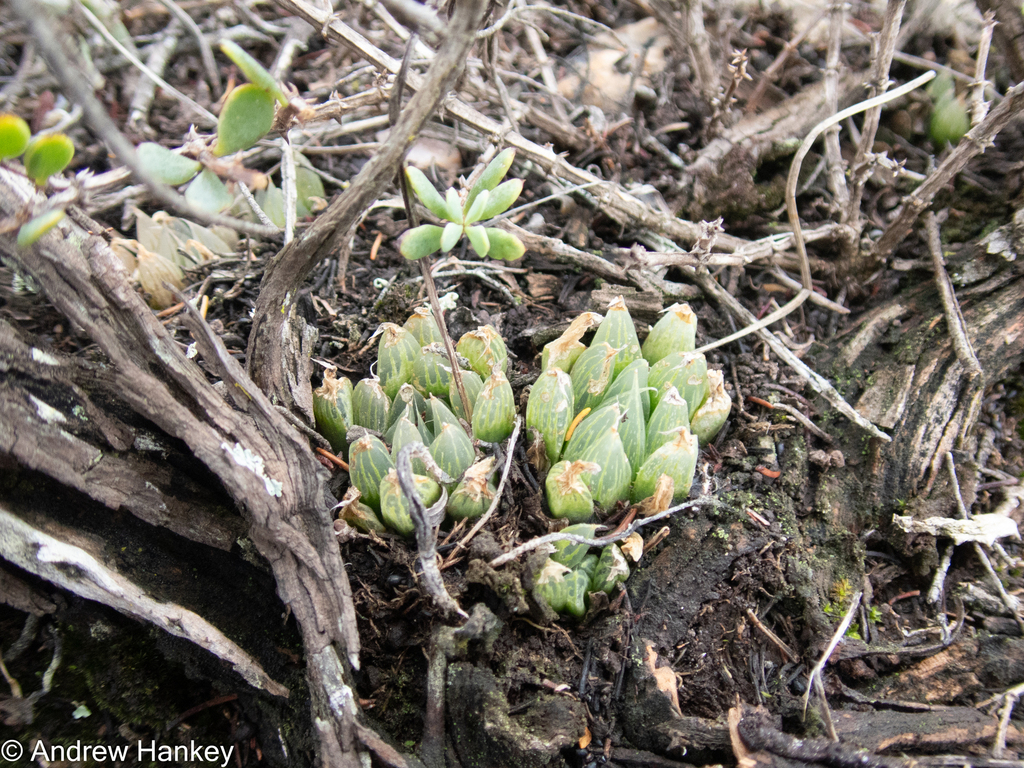
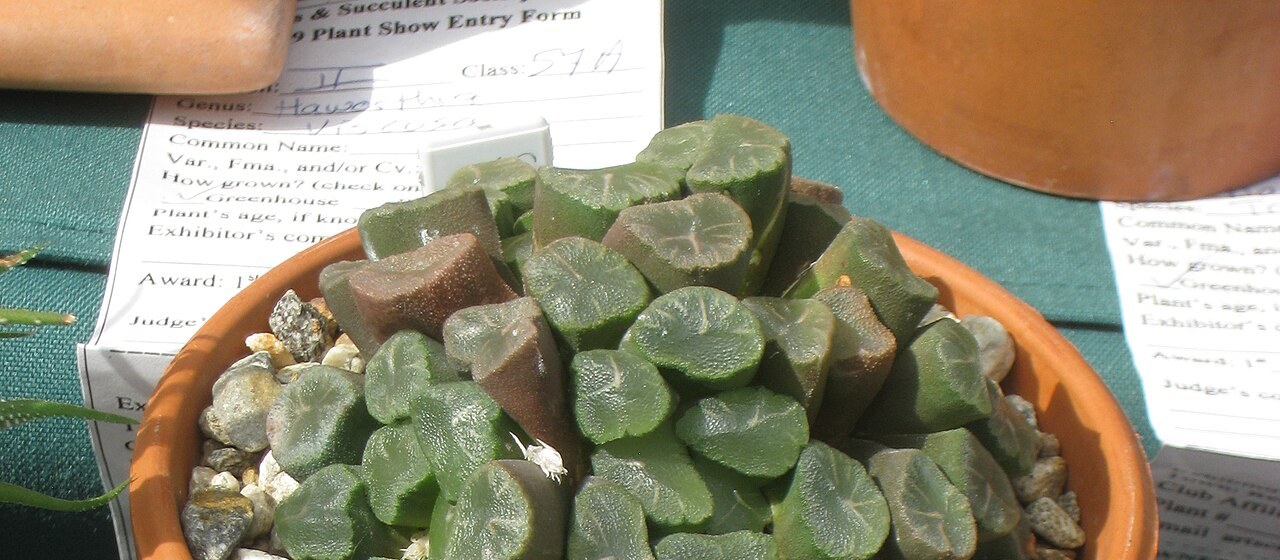
Endemic to a narrow range of quartz-gravel patches in the Little Karoo of South Africa's Western Cape, this is one of the most unmistakable Haworthias. Leaves form a flat, two-ranked (distichous) fan-shaped rosette and end in a sharply truncated tip, capped by a translucent "window." In habitat the plant is almost entirely buried in the substrate, with only those windows exposed at ground level to let in light. Long established in Japanese cultivation under the name "玉扇 (gyokusen)," the species has produced many selected forms prized for window pattern, but this page treats the wild type as grown from seed. Described by Schönland (1910). IUCN status: Endangered (EN).
Native climate
Rain concentrates in the cool season, with a dry season of roughly 6 months. Overall mild, with a wide temperature range.
* Accurate distribution data is scarce for this species, so these values are taken from the climate near the approximate center of its native range instead.
Sources: climate & elevation WorldClim 2.1 (1970–2000) · occurrences GBIF · native range POWO · current weather Open-Meteo
Care
Light & Placement
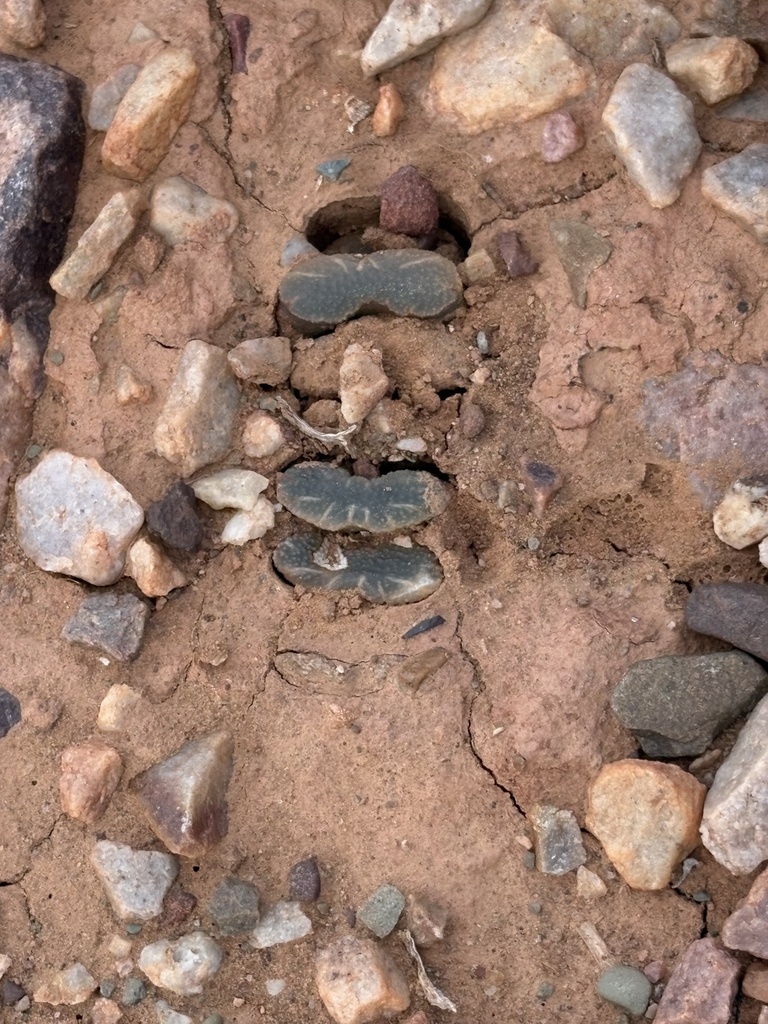
In habitat it sits half-buried in quartz gravel, taking only filtered light through the leaf-tip windows, so strong sun isn't needed or wanted. During the active season, bright shade or 30–50% shade cloth holds a tight rosette best — direct sun bleaches and reddens the windows. A south- or east-facing window indoors, or a shaded outdoor bench, suits the species. Through the hot summer half-dormancy, deepen the shade and prioritize airflow. Overwinter on a bright, frost-free indoor window, kept above 3°C.
Watering
In spring and autumn growth, water thoroughly a few days after the substrate has dried, and avoid letting water sit in the leaf windows. Ease back in summer half-dormancy, and limit winter watering to once or twice a month.
Substrate
Drainage above all, in an inorganic mix. Small-grain Akadama : Kanuma : pumice = 4:3:3 is a good baseline; lean a little more on pumice or Kiryu sand to echo the quartz-gravel habitat. A taller pot improves wet-dry cycling.
Fertilizer & Supplements
A small amount of slow-release during active growth, plus a monthly dilute liquid feed (around twice the label dilution). Overfeeding stretches the leaves and dulls window patterning — aim for slow density, not fast bulk.
Temperature & Overwintering
Optimal 15–28°C; as a spring/autumn grower it eases into half-dormancy and stops growing once temperatures cross 30°C. Overwinter dry on a bright window with a 3°C floor. Heat-and-damp stagnation in midsummer, and cold combined with damp soil in winter, are the main risks.
Starting from Seed
Where to source seeds
Pre-sowing treatment
Soak seeds for about half a day in a mix of a registered seed-treatment fungicide (Benlate or Daconil) and a plant tonic (Menedael; outside Japan, SUPERthrive or a chelated iron / seaweed extract serves a similar purpose), each diluted per label. Haworthia seed is fine and loses viability quickly, so sowing soon after receipt is the safer course. Seeds left floating tend to be past their prime.
Substrate
Use a separate seedling mix that's fine-grained and near-sterile: fine Akadama, fine Kanuma, and vermiculite in equal 1:1:1 parts. Sterilize the mix with boiling water or a quick microwave pass before sowing.
Sowing method
The seeds are small, so sow with no covering or only the thinnest dusting of substrate so the seeds remain partly visible. Space seeds at least 5 mm apart and arrange them with tweezers so they don't overlap on the surface.
Light & temperature
Keep the tray in bright shade at a steady 22–28°C. Expect germination in 7–21 days. Germination is moderate and depends strongly on seed freshness. Keep direct sun off the tray throughout.
Watering
Bottom-water with the level 1–2 cm up the pot. For the first 2–3 weeks, prioritize not letting things dry out at all, then drop the water level in steady stages once the seedlings have come up.
Fertilizer
No feeding right after germination. Once two or three true leaves have emerged, give a heavily diluted liquid fertilizer once or twice a month — go lighter than the bottle suggests, since young seedlings are easily pushed into etiolation.
From Germination to Repotting
Germination through true leaves (first month)
Continue bottom watering, keep in bright shade.
Weaning off bottom watering (months 1–2)
Lower the water level, move to saucer-based bottom watering.
First repotting (year 1–2)
Repot into a primarily inorganic mix.
Common Pitfalls
Mold & damping-off
- Cause: contaminated substrate, excessive moisture, poor ventilation
- Prevention: sterilize the substrate, change the bottom water frequently, use an air circulator for ventilation
Sun scorch & bleached windows
- Cause: abrupt strong light, no shading in midsummer
- Prevention: manage under 30–50% shade; outdoors, place on a fully shaded bench
Seeds fail to germinate
- Cause: old seeds, insufficient temperature
- Prevention: choose a trusted source, stabilize temperature with a heat mat
Summer rot & heat stagnation
- Cause: damp soil in heat, enclosed shelving
- Prevention: ease back on water through midsummer and prioritize airflow above all else
Notes
Selected-form window patterns rarely come true from seed.