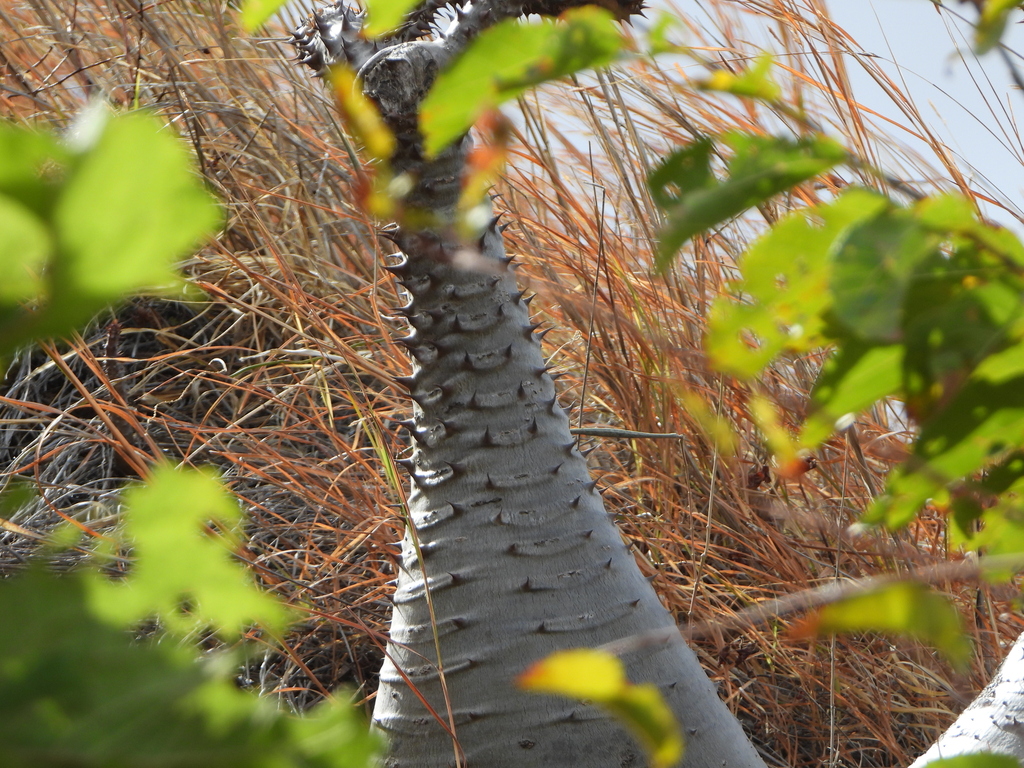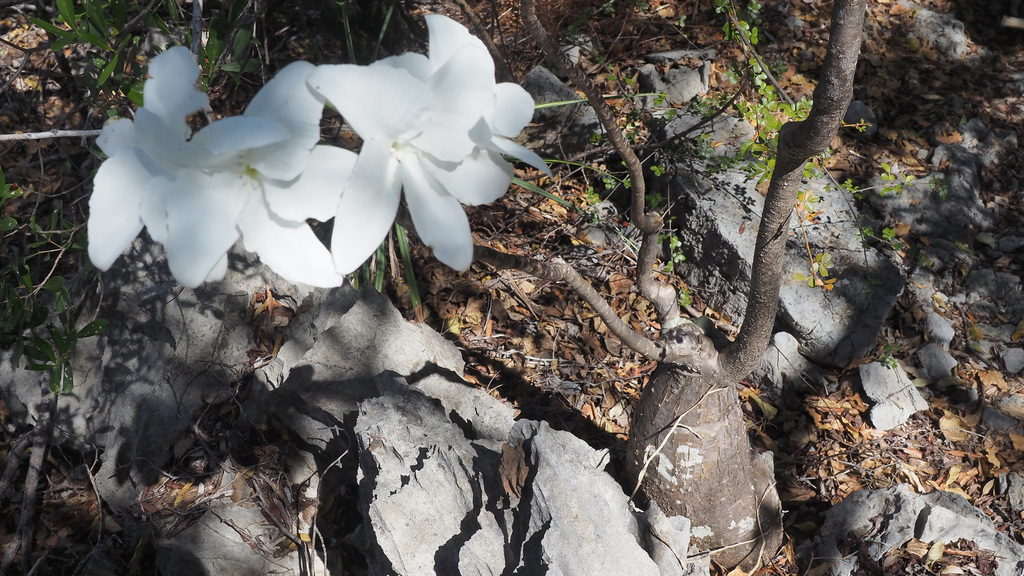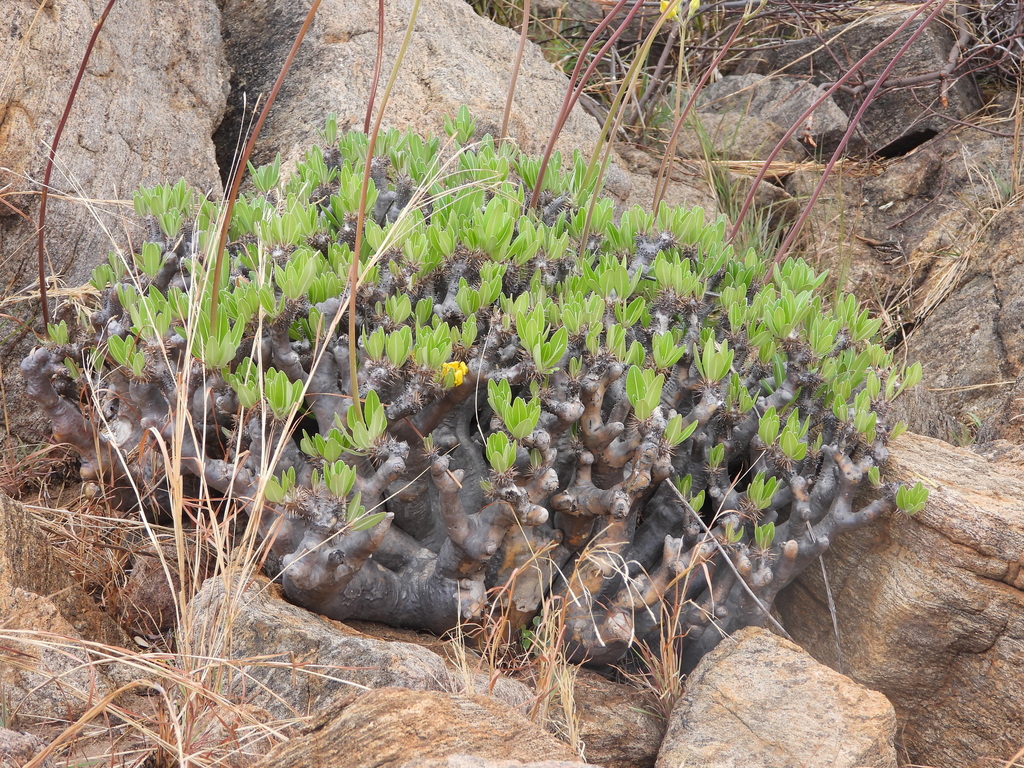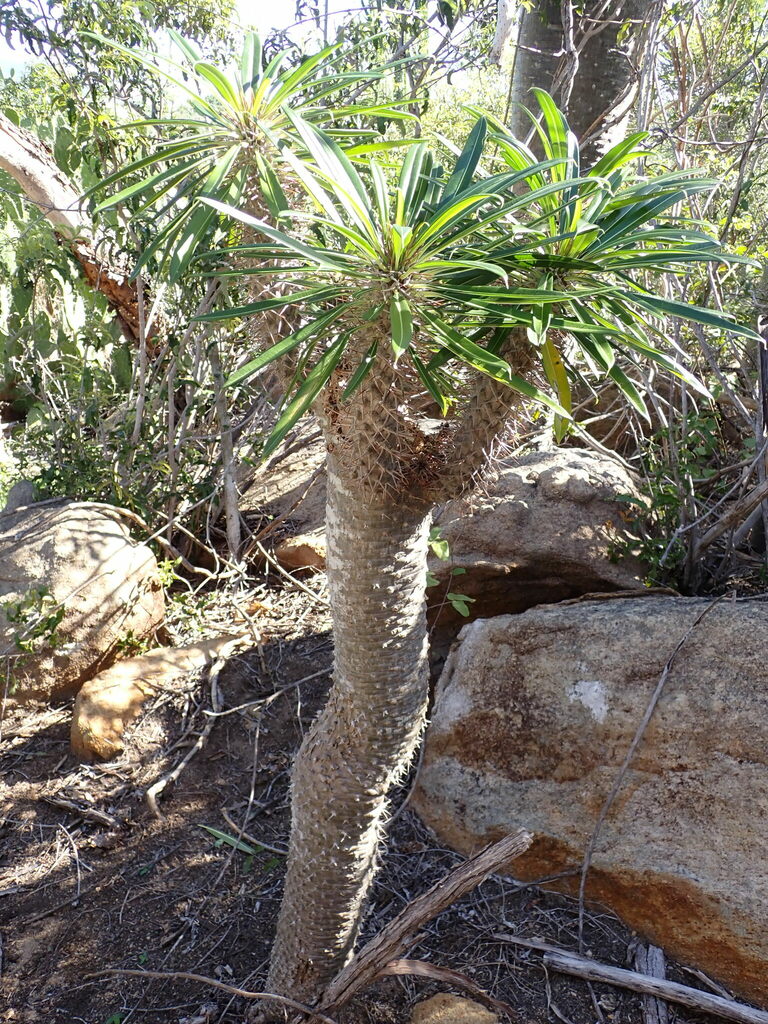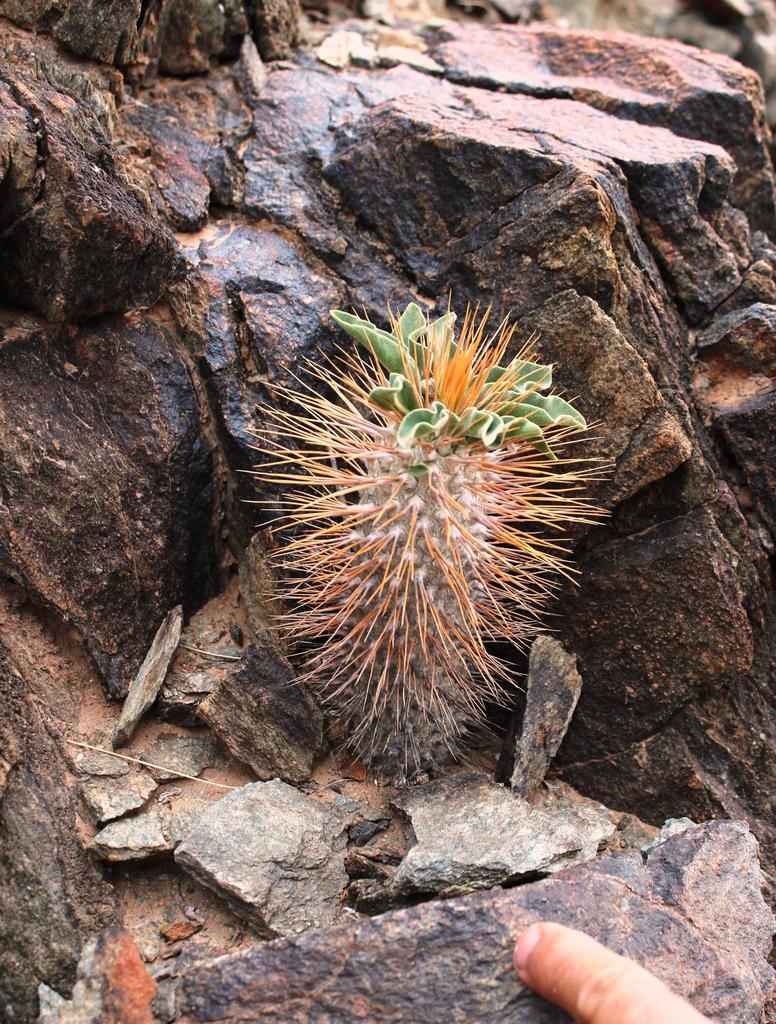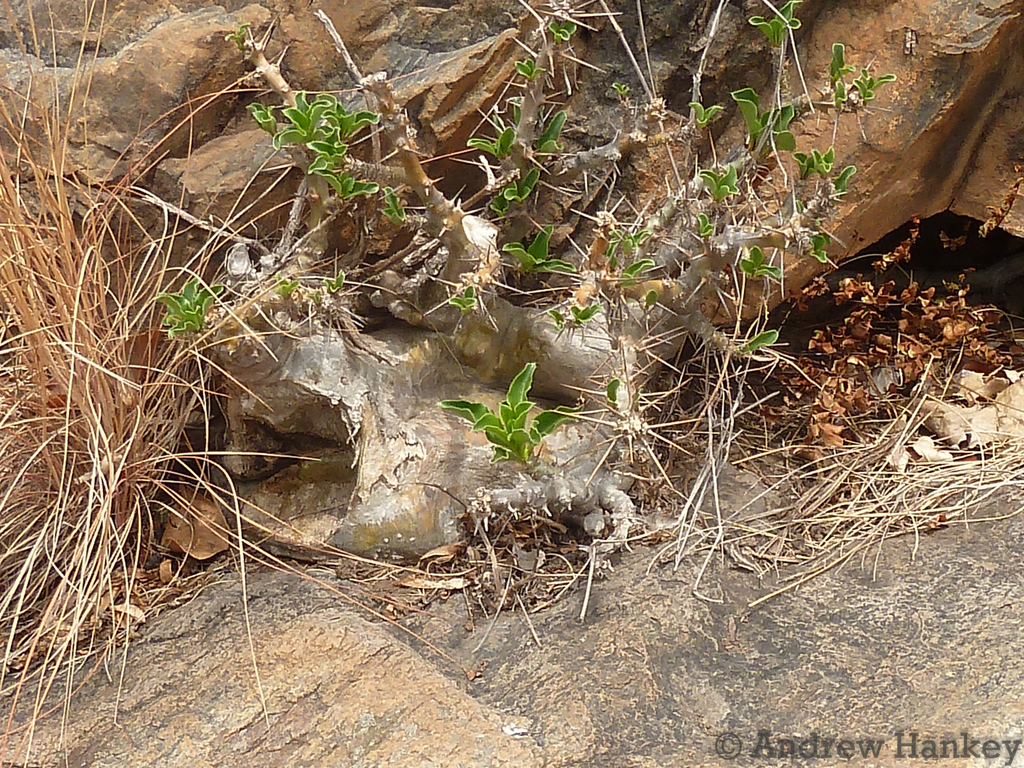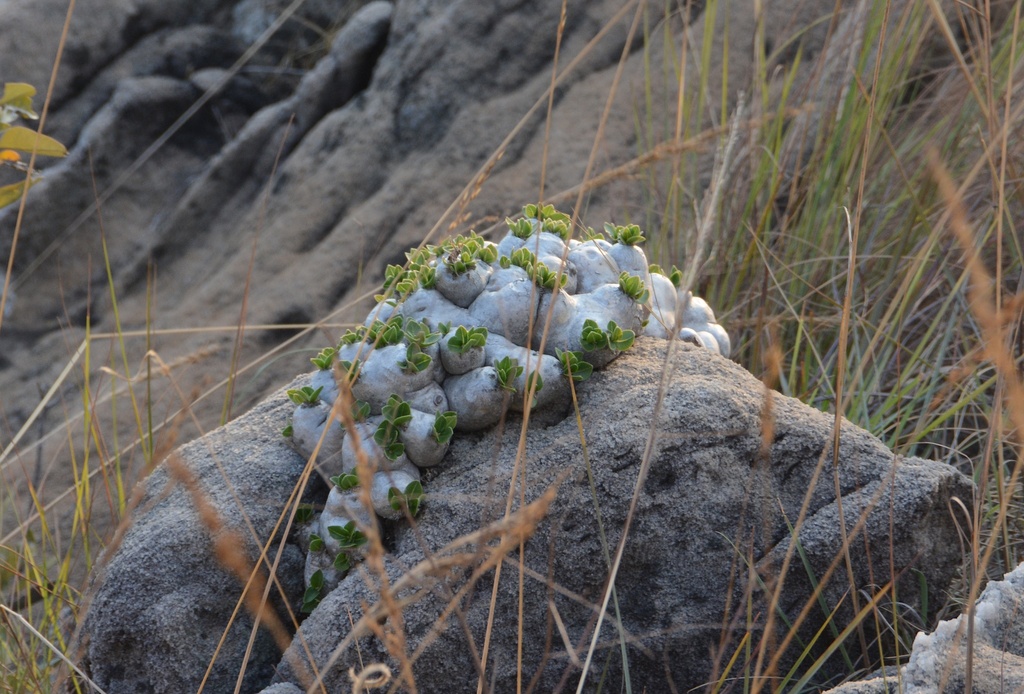
One of the most iconic Pachypodium species, known in Japan as "Ebisu-warai" (Ebisu's smile). Native to the rocky outcrops of Madagascar's central highlands, it presses itself low against the stone — a flat, spreading caudex topped with bright yellow flowers in early spring. The rock-mimicking silhouette has long fascinated caudex enthusiasts. Growth is famously slow, sometimes barely perceptible across a whole summer, but seed-grown plants developed over years take on a one-of-a-kind character. Its weakness is the hot, humid summers of lowland climates — heat-and-humidity stress and root rot come easily — so it suits intermediate-to-advanced growers willing to fine-tune ventilation and substrate.
Native climate
Rain concentrates in the warm season, with a distinct dry season. Overall a mild climate.
A broad-scale picture of the native range. Real growing spots — rock crevices, fog belts — can be milder.
Sources: climate & elevation WorldClim 2.1 (1970–2000) · occurrences GBIF · native range POWO · current weather Open-Meteo
Care
Light & Placement

Native to rocky outcrops in Madagascar's cool central highlands, this species enjoys strong light but suffers badly in lowland summer heat and humidity. Give full sun outdoors in spring and autumn, and shift to about 50% shade — or a breezy, east-facing spot — through midsummer. Ventilation is the single most important variable: run an air circulator and raise pots off the ground. Avoid pure indoor culture year-round (it etiolates easily), but in winter dormancy move it to a bright window indoors, keeping temperatures above 5°C.
Watering
In active growth, water thoroughly only after the substrate dries out completely, then let it dry again. As a rock-dwelling highland species it hates stagnant moisture — skip a watering on cool or overcast stretches. Overwinter completely dry.
Substrate
Drainage and aeration come first. Lean on pumice: Akadama : Kanuma : pumice = 3:3:4, skipping top dressing. A taller pot lets the base breathe and reduces rot under the flat caudex.
Fertilizer & Supplements
A very dilute liquid feed less than once a month in active growth, or a pinch of slow-release at repotting. Growth is genuinely slow, and overfeeding causes etiolation, a distorted caudex, and outright rot — keep it lean.
Temperature & Overwintering
Optimal 18–30°C, with a 5°C winter floor. This highland species stalls in 35°C tropical heat and scorches leaf tips, so partial shade and a fan are essential in peak summer. Withhold water in winter on a bright dry windowsill.

Starting from Seed
Where to source seeds
links go directly to the product page; the rest are scientific-name searches. Stock fluctuates — verify availability on the destination site.
Pre-sowing treatment
Soak seeds for about half a day (overnight) in a mix of a registered seed-treatment fungicide (Benlate or Daconil) and a plant tonic (SUPERthrive), each diluted per label. Anything still on the surface is unlikely to be fresh, and freshness matters a great deal with this highland species, so seek out new-harvest seed whenever possible.
Substrate
Use a separate seedling mix that's fine-grained and near-sterile: fine Akadama, fine Kanuma, and vermiculite in equal 1:1:1 parts. Sterilize the mix with boiling water or a quick microwave pass before sowing for peace of mind.
Sowing method
Sow with no covering, or only the thinnest dusting of substrate so the seeds remain partly visible. Space seeds at least 1 cm apart and arrange them so they don't clump together or overlap on the surface.
Light & temperature
Keep the tray in bright shade at a steady 25–30°C. Expect germination in 5–21 days. Germination depends on seed freshness, but with fresh seed it is reasonably steady; stable warmth makes a real difference, since this highland species rarely flushes evenly under fluctuating temperatures.
Watering
Bottom-water with the level 1–2 cm up the pot. Highland species hate stagnant air, so run a small fan to keep airflow moving while you hold firm humidity through the first 2–3 weeks after sowing.
Fertilizer
No feeding right after germination. Once the true leaves emerge, give a heavily diluted liquid fertilizer about once a month — keep it lighter than label strength, since this slow-growing highland species etiolates quickly with excess nutrients.
From Germination to Repotting
Germination through true leaves (first month)
Keep bottom watering to hold humidity, and run a small air circulator for ventilation. Avoid strong light and keep the tray in bright shade. As a highland species prone to stagnant-air rot, be especially attentive to airflow.
Weaning off bottom watering (months 1–2)
Lower the water level gradually, finally switching to bottom feeding from a saucer. Since this species dislikes stagnant moisture, don't rush the steps — ease it over 2–3 months. Letting it dry out abruptly will kill the seedlings.
First repotting (years 2–3)
Growth is genuinely slow, so it takes time for roots to reach the bottom of the pot. When the caudex begins to flatten and spread, move it into a standard inorganic mix with a higher proportion of pumice.
Common Pitfalls
Mold & damping-off
- Cause: pathogens in the substrate, heat-and-humidity stress, poor ventilation
- Prevention: sterilize the mix, change the bottom water often, and keep a circulator running for airflow
Etiolation
- Cause: insufficient light
- Prevention: bring the LED closer right after germination, or move the tray to bright shade outdoors
Seeds fail to germinate
- Cause: stale seed, insufficient warmth
- Prevention: source from reliable suppliers and stabilize temperature with a heat mat
Seedlings die soon after germination
- Cause: sudden strong light, abrupt drying, summer rot
- Prevention: change conditions gradually, easing the seedlings in over about a week
Notes
The sap is mildly toxic.