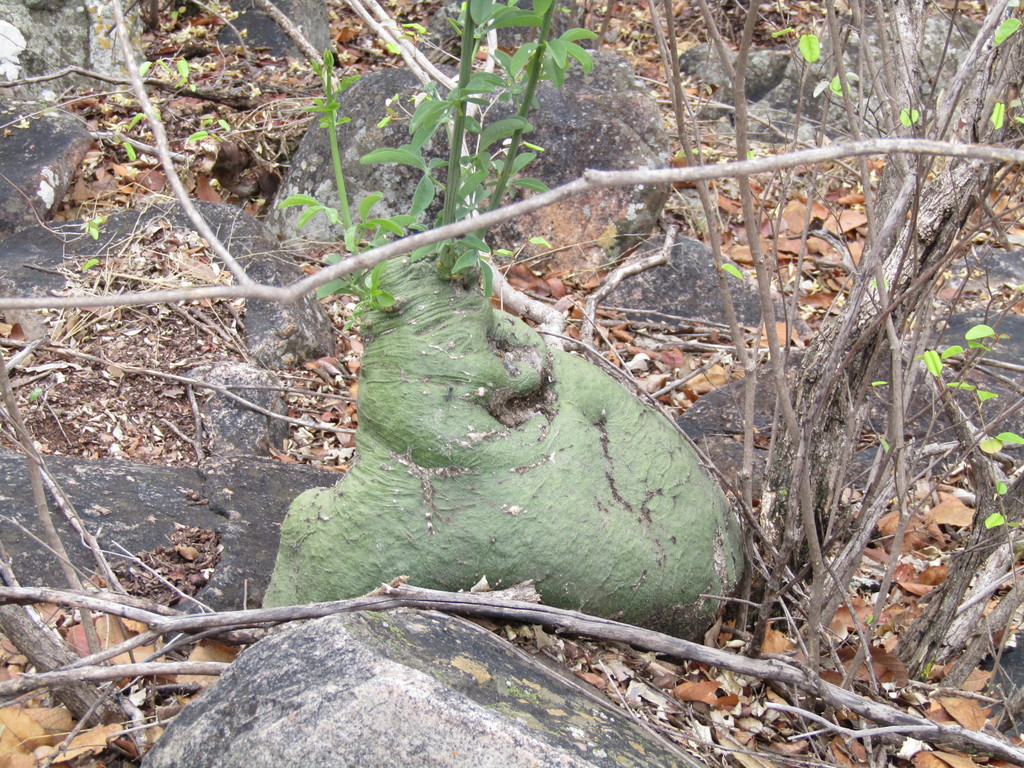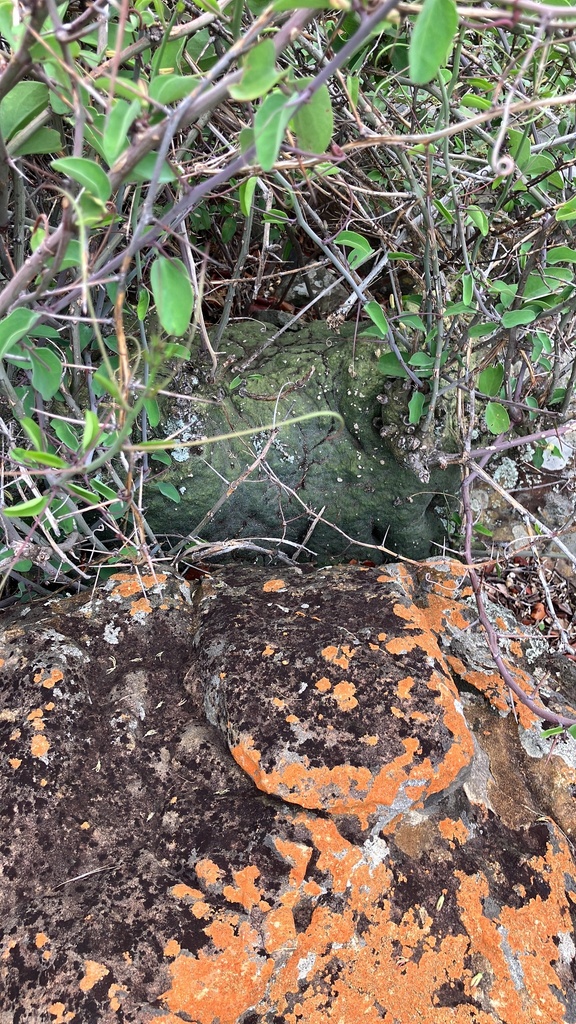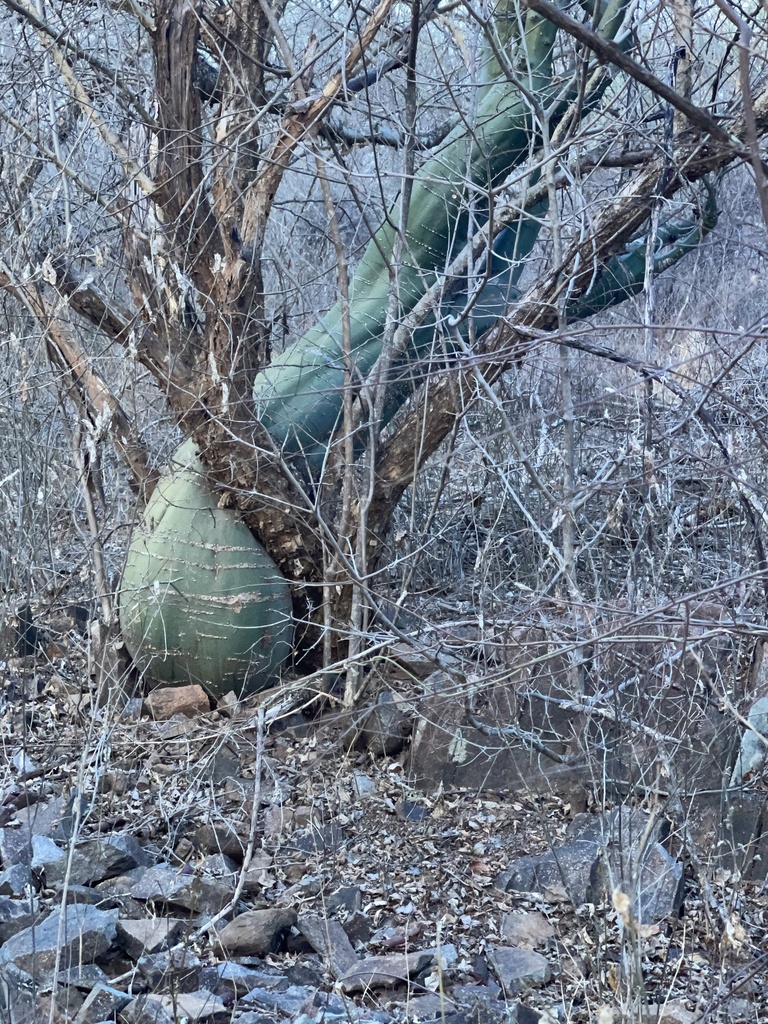
The species name fruticosa means "shrubby," and the plant lives up to it: a thick green caudex sends out whip-like branches to form the silhouette of a low shrub. It is endemic to the rocky bushveld of Limpopo and Mpumalanga in South Africa, particularly on weathered dolomite, granite, and quartzite soils, and the type subspecies is listed as Near Threatened on the SANBI Red List. The caudex thickens fairly quickly and readily takes on a bonsai-like form in a pot. Unlike its close relative A. spinosa, the branches carry no spines — a quietly distinctive mid-level Adenia for growers willing to take it slowly from seed.
Native climate
Rainfall is spread fairly evenly across the year. Overall a mild climate.
A broad-scale picture of the native range. Real growing spots — rock crevices, fog belts — can be milder.
Sources: climate & elevation WorldClim 2.1 (1970–2000) · occurrences GBIF · native range POWO · current weather Open-Meteo
Care
Light & Placement

Its native rocky bushveld in Limpopo and Mpumalanga endures intense sun and a long dry season. Give full direct sun outdoors during active growth to keep the caudex tight and leaves compact. A 20–30% shade cloth helps through Japan's harshest midsummer. The green caudex skin itself photosynthesizes, so place the pot where light reaches the very base. Raise pots off the ground for airflow; overwinter on a bright sunny window kept above 8–10°C and dry.
Watering
In active growth, water deeply once the substrate has dried completely, then let it dry out fully again. The caudex is sensitive to overwatering, and a poorly ventilated wet spell rots roots quickly. After leaves drop, ease into near-dormancy with at most one or two light mistings a month.
Substrate
Drainage first, inorganic-led. Akadama : Kanuma : pumice = 4:3:3. Plant with the green caudex exposed in a deeper or medium-deep pot. A pinch of slow-release helps it thicken steadily.
Fertilizer & Supplements
A dilute liquid feed once a month, or a pinch of slow-release at repotting. Overfeeding pushes leggy branches and breaks the shrubby form.
Temperature & Overwintering
Optimal 22–35°C, 8°C minimum. Native range is summer-rainfall country with a dry, frost-free winter. Taper water early in autumn, let it defoliate, then keep fully dry. Damp soil combined with cold rots the caudex fast — the biggest risk for this species.

Starting from Seed
Where to source seeds
links go directly to the product page; the rest are scientific-name searches. Stock fluctuates — verify availability on the destination site.
Pre-sowing treatment
Soak seeds for about half a day (overnight) in a mix of a registered seed-treatment fungicide (Benlate or Daconil) and a plant tonic (Menedael; outside Japan, SUPERthrive or a chelated iron / seaweed extract works similarly), each diluted per label. Floaters often signal stale stock, and Adenia seed circulates in low volumes with old stock often slipping in, so prioritize fresh seed.
Substrate
A fine-grained, near-sterile mix: fine Akadama, fine Kanuma, vermiculite in 1:1:1 parts. Sterilize with boiling water or a microwave pass to reduce damping-off losses.
Sowing method
Sow with no covering or the thinnest dusting so seeds remain partly visible. Space at least 1 cm apart.
Light & temperature
Bright shade at 25–30°C. Germination is slower and patchier than A. glauca, surfacing over 14–30 days. Give the tray a full 1–2 months before giving up.
Watering
Bottom-water with the level 1–2 cm up the pot. For the first 2–3 weeks, don't let things dry out, then drop the water level gradually.
Fertilizer
No feeding right after germination. Once true leaves emerge, give double-diluted liquid fertilizer once or twice a month.
From Germination to Repotting
Germination through true leaves
Continue bottom watering, avoid strong light.
Weaning off bottom watering
Phase out gradually over 1–2 months.
First repotting
In the first or second year, once root-bound.
Common Pitfalls
Mold & damping-off
- Cause: excess moisture, contamination, poor air movement
- Prevention: sterilize substrate, ensure airflow
Etiolation
- Cause: insufficient light
- Prevention: bring LEDs closer or move to bright shade outdoors
Seeds fail to germinate
- Cause: stale seeds, insufficient warmth
- Prevention: fresh seed and 25–30°C on a heat mat
Notes
The sap is mildly toxic.