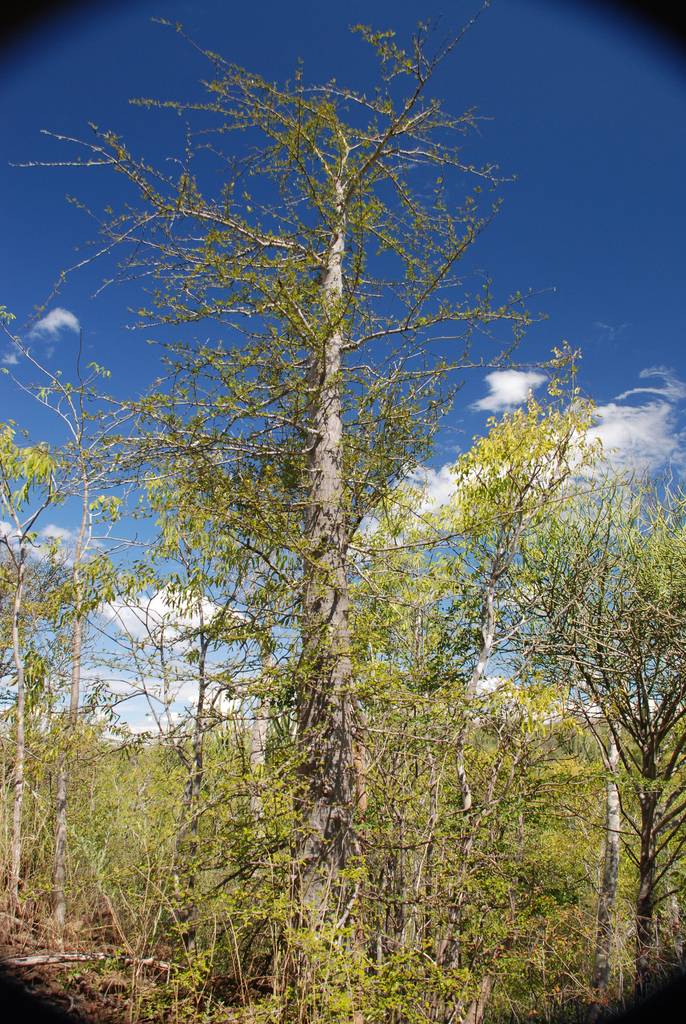
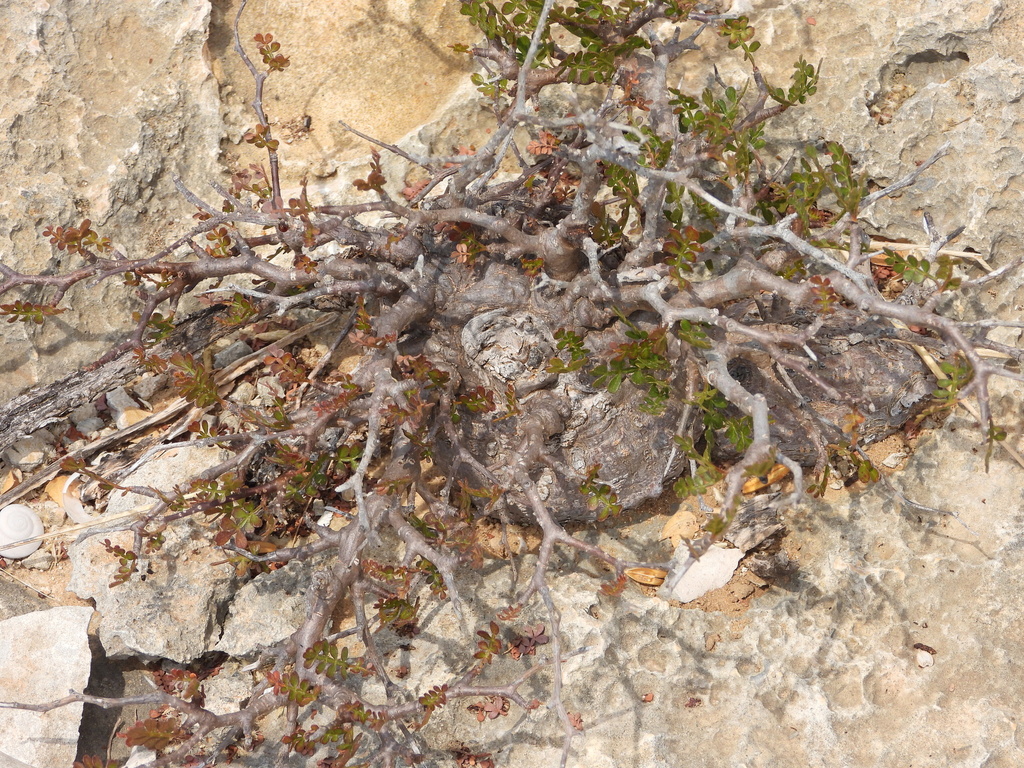
An Operculicarya of the arid south and southwest of Madagascar — another member of this cashew-family genus endemic to the island. Compared with the more commonly grown O. decaryi, it branches more densely and lower down, building a thick, lumpy caudex from which a tangle of short, knotted limbs radiates almost from ground level. The bark is brown to dark grey, deeply cracked and rough to the touch, and the sheer density of trunk character gives small plants the look of a much older tree. That intensely sculptural quality has made it a favorite for bonsai-style training and wabi-sabi pot pairings, with popularity among caudex enthusiasts growing noticeably in recent years.
Native climate
Rain concentrates in the warm season, with a distinct dry season. Overall a warm climate.
* Accurate distribution data is scarce for this species, so these values are taken from the climate near the approximate center of its native range instead.
Sources: climate & elevation WorldClim 2.1 (1970–2000) · occurrences GBIF · native range POWO · current weather Open-Meteo
Care
Light & Placement

The deeply ridged, knotted bark texture that defines this species is built under the strong light and heat of southwestern Madagascar, so generous direct sun is the fastest route to its bonsai-like character. Grow it outdoors in full sun through the growing season on an airy bench, then move it to a bright indoor window before the weather turns cool.
Watering
In active growth, water thoroughly only after the topsoil has dried completely, then dry the rootball quickly with strong airflow to mimic the natural soak-and-bake rhythm. Taper through autumn, and once it is fully dormant, withhold water entirely until spring movement resumes.
Substrate
Drainage above all else. Aim for akadama : kanuma : pumice at roughly 4:3:3, topped with a thin cap of fine pumice grit so the surface dries quickly. A shallow unglazed terracotta or proper bonsai pot complements the lumpy, knotted trunk and keeps stagnant moisture away from the roots.
Fertilizer & Supplements
Feed sparingly through midsummer with a liquid fertilizer diluted to around half the label rate, no more than once a month. Heavy feeding stretches shoots and softens the dense, knotted character, so combine the minimal feed with a tonic such as Menedael to preserve the aged silhouette.
Temperature & Overwintering
Optimal 20–35°C with a 5°C winter floor. Expect a semi-deciduous to fully deciduous response from autumn onward; leaf drop into dormancy is normal. Overwinter dry on a bright indoor window, kept clear of rain. Cold combined with damp soil is the principal risk to manage.

Starting from Seed
Where to source seeds
links go directly to the product page; the rest are scientific-name searches. Stock fluctuates — verify availability on the destination site.
Pre-sowing treatment
If fruit pulp remains, soak briefly to soften it and remove it completely before treating. Soak seeds for about half a day (overnight) in a mix of a registered seed-treatment fungicide (Benlate or Daconil) and a plant tonic (Menedael; outside Japan, SUPERthrive or a chelated iron / seaweed extract works similarly), each diluted per label. The firm husk means uneven, drawn-out emergence.
Substrate
Use a fine-grained inorganic mix of roughly equal parts small akadama and hyuga-tsuchi, and always sterilize beforehand with boiling water or a fungicide drench. Level the surface with very fine grit.
Sowing method
Cover the seed with only a very thin layer of fine substrate — just deep enough to hide the seed at about its own diameter, so the surface does not dry out too quickly.
Light & temperature
Hold the tray at 25–30°C until germination, in bright shade out of direct sun. A heat mat stabilizes the temperature overnight and noticeably improves germination percentages.
Watering
Bottom-water through the wait so the mix stays uniformly damp without standing water on top, paired with constant airflow from a circulator. Stay patient through a long emergence window.
Fertilizer
Once two or three true leaves have opened, begin a liquid fertilizer at half the label rate or weaker, applied very lightly every two or three weeks.
From Germination to Repotting
Germination through true leaves
Continue bottom watering and avoid strong light.
Weaning off bottom watering
Wean gradually over 1–2 months.
First repotting
From year 2 onward, once roots have filled the pot.
Common Pitfalls
Mold & damping-off
- Cause: Excess moisture, microbes
- Prevention: Sterilize the substrate, ensure ventilation
Uneven germination
- Cause: Inherent seed behavior, unstable temperature
- Prevention: Keep heating consistent and accept that this is a long game
Etiolation
- Cause: Insufficient light
- Prevention: Manage light levels
Notes
Like other Anacardiaceae, the sap can cause skin reactions in sensitive people. Wet soil paired with cold is the biggest risk.